
Cat Body Language: Complete Visual Guide (2026)
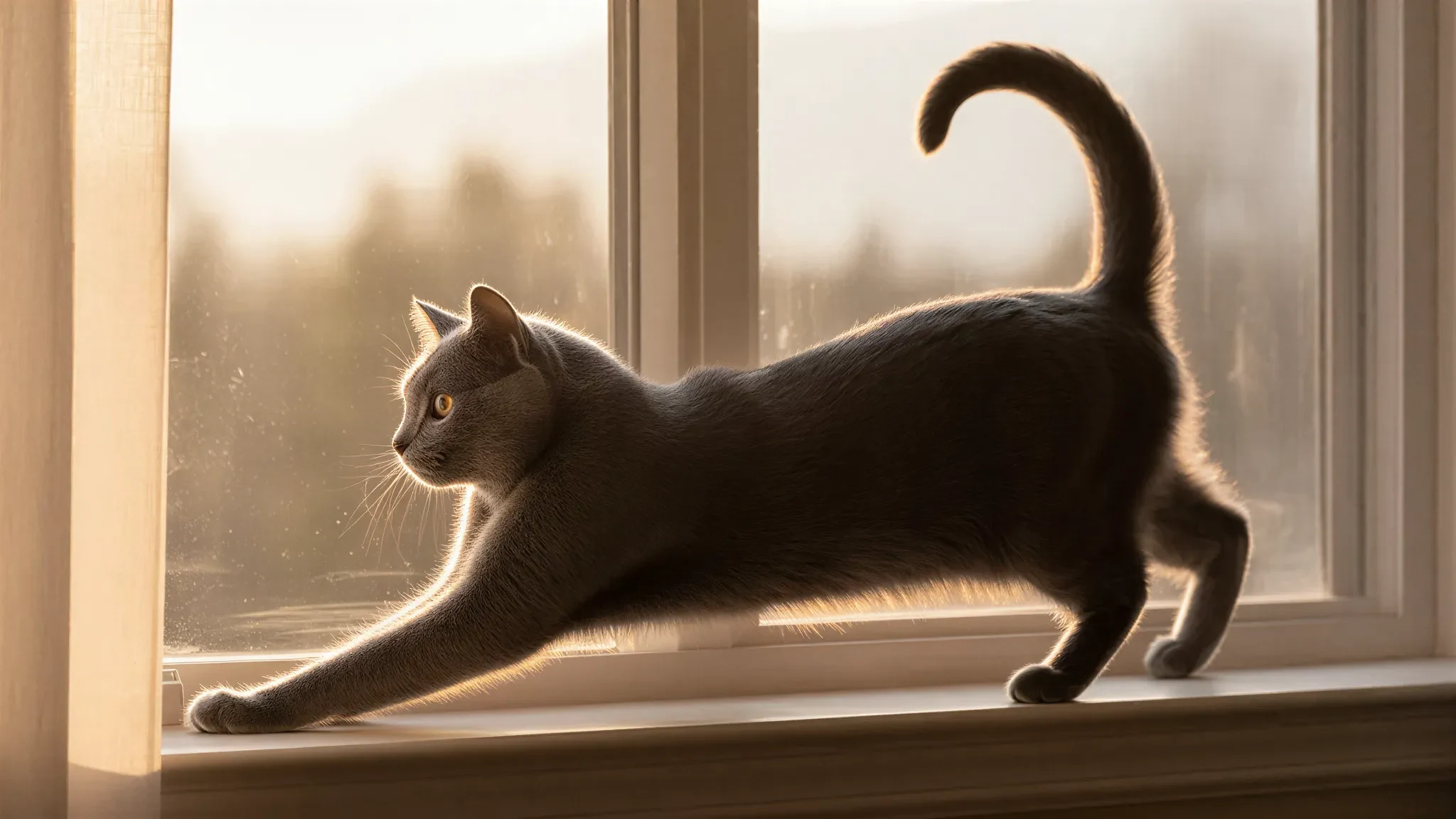
Understanding cat body language is essential for building a strong relationship with your feline friend. Cats communicate primarily through body position, tail carriage, ear placement, and eye contact. Learning to read these signals helps you respond appropriately to your cat’s needs and avoid misunderstandings. This complete guide covers everything you need to know about cat body language: tail positions, ear signals, eye communication, body postures, and vocalizations.
Reading Tail Positions
The cat tail is one of the most expressive communication tools. Tail position and movement convey mood, intention, and comfort level. Learning tail language helps you understand what your cat is feeling.
A tail held high with a slight curve at the tip signals confidence and friendliness. This is a greeting posture. Cats approaching you with tails up are saying hello and inviting interaction. This is the ideal tail position for positive interactions.
A tail tucked between the legs or held low signals fear or submission. Cats in this posture feel threatened or insecure. Give these cats space and avoid forcing interaction. They need time to feel safe.
A puffed-up tail indicates fear or aggression. The cat is trying to appear larger to intimidate threats. This is a defensive posture that may escalate to aggression if the cat feels cornered. Back away and give the cat space.
A twitching or lashing tail signals irritation or agitation. The faster the tail moves, the more agitated the cat. Stop whatever you’re doing when you see tail twitching. Continuing may result in scratching or biting.
A tail wrapped around another cat or human signals affection and trust. This is a bonding posture. Cats who wrap their tails around you are claiming you as family and expressing comfort.
Understanding Ear Signals
Cat ears are highly mobile and expressive. Ear position communicates mood and intention clearly. Combined with other body language, ear signals provide complete emotional pictures.
Ears facing forward signal alertness and interest. Your cat is engaged with something in their environment. This is a neutral to positive posture indicating curiosity or attention.
Ears flattened against the head signal fear or aggression. This is a defensive posture. Cats with flattened ears feel threatened and may escalate to hissing or scratching. Give these cats space immediately.
Ears rotated sideways or back signal irritation or anxiety. This is often seen during petting when cats are becoming overstimulated. Stop petting when you see ears rotating back to prevent overstimulation.
Ears twitching or swiveling signal alertness to sounds. Cats can rotate their ears independently to locate sounds. This is normal behavior indicating your cat is monitoring their environment.
One ear forward and one ear back signals confusion or mixed feelings. Your cat is uncertain about a situation. Proceed cautiously and watch for other body language signals.
Eye Communication
Cat eyes communicate emotion and intention. Eye shape, pupil size, and blinking patterns all convey information. Understanding eye signals helps you read your cat’s emotional state.
Slow blinking signals trust and affection. When your cat slow blinks at you, they’re saying they feel safe and comfortable. Slow blink back to communicate the same feeling. This is a bonding behavior.
Dilated pupils (large, round pupils) can signal excitement, fear, or low light. Context matters. Dilated pupils during play indicate excitement. Dilated pupils with flattened ears indicate fear. Low light naturally causes dilation.
Constricted pupils (small slits) signal aggression or bright light. Cats in aggressive postures often have constricted pupils. Combined with other aggression signals, this indicates a cat who may attack.
Direct staring signals challenge or threat. Cats don’t maintain eye contact with strangers unless challenging them. Don’t stare directly at unfamiliar cats. Soft, indirect eye contact is less threatening.
Half-closed eyes signal relaxation and contentment. Cats who nap with half-closed eyes feel safe and comfortable. This is a positive posture indicating your cat feels secure in their environment.
Body Postures
Overall body posture combines all elements of body language. The complete picture tells you what your cat is feeling and intending. Learning to read postures helps you respond appropriately.
The relaxed posture indicates a comfortable, content cat. Body is loose, tail is still or gently moving, ears are forward. This cat is open to interaction and feeling secure. Approach and interact normally.
The crouched posture indicates fear or hunting mode. Fear crouches are low to the ground with ears back. Hunting crouches are focused and still with forward ears. Context tells you which is which.
The arched back posture indicates fear or aggression. Combined with puffed fur, this is a defensive display meant to intimidate. The cat is trying to appear larger. Back away and give space.
The rolling posture can indicate playfulness or defense. Belly-up rolling during play invites interaction. Belly-up rolling with claws out is defensive. Never grab a cat’s belly during defensive rolling.
The stretch posture indicates relaxation and comfort. Cats who stretch in front of you feel safe. This is a vulnerable position that indicates trust. Your cat feels secure enough to expose their belly.
Vocalizations and Body Language
Vocalizations combined with body language provide complete communication. The same vocalization can mean different things depending on body posture. Always consider the complete picture.
Purring with relaxed body language indicates contentment. This is the classic happy cat. Purring with tense body language may indicate pain or stress. Context matters for interpreting purring.
Meowing with tail up indicates greeting and friendliness. This is a positive vocalization inviting interaction. Meowing with flattened ears indicates distress or complaint. The body language tells you which.
Hissing with arched back and puffed fur indicates fear-based defense. This cat feels threatened and is warning you to back off. Hissing with crouched posture indicates fear without aggression.
Growling with constricted pupils indicates serious aggression. This cat may attack if provoked. Back away immediately and give space. Don’t attempt to handle an aggressively growling cat.
Chirping and trilling indicate excitement and friendliness. These vocalizations are typically positive. Combined with tail up and forward ears, this cat is happy and engaged.
Common Body Language Mistakes
Misreading cat body language leads to scratches, bites, and damaged relationships. Learning common mistakes helps you avoid them. Understanding what signals really mean prevents misunderstandings.
Assuming a wagging tail means happiness like dogs is a common mistake. Cats wag tails when irritated, not happy. Tail wagging in cats signals agitation, not pleasure. Stop what you’re doing when you see tail wagging.
Interpreting belly exposure as an invitation to rub is dangerous. Cats who expose bellies may be relaxed or defensive. Never grab a cat’s belly unless you know they enjoy it. Many cats find belly touching threatening.
Missing overstimulation signals leads to scratches. Tail twitching, ear rotation, and skin rippling all signal overstimulation. Stop petting before your cat reaches the hissing point. Learn your cat’s tolerance level.
Assuming a quiet cat is always happy is incorrect. Cats who are very quiet may be stressed or ill. Sudden silence in a normally vocal cat warrants attention. Monitor for other signs of stress or illness.
Frequently Asked Questions
What does it mean when my cat’s tail twitches?
Tail twitching signals irritation or agitation. Stop whatever you’re doing. Continuing may result in scratching or biting. The faster the twitching, the more agitated your cat.
Why does my cat slow blink at me?
Slow blinking signals trust and affection. Your cat is saying they feel safe with you. Slow blink back to communicate the same feeling. This is a bonding behavior.
Is a purring cat always happy?
Not always. Purring usually indicates contentment but can also signal pain or stress. Consider body language context. Tense body with purring may indicate discomfort.
What does it mean when my cat shows me their belly?
Belly exposure can indicate trust or defense. Relaxed belly exposure with half-closed eyes indicates trust. Defensive belly exposure with claws out means “don’t touch.” Know your cat’s preferences.
How do I know if my cat is overstimulated?
Watch for tail twitching, ear rotation back, skin rippling, and tension. Stop petting before your cat reaches the hissing point. Learn your cat’s tolerance level for petting.
What does flattened ears mean?
Flattened ears signal fear or aggression. This is a defensive posture. Give cats with flattened ears space. Don’t force interaction with a cat showing this signal.
Why does my cat stare at me?
Direct staring can signal challenge or affection depending on context. Soft, indirect eye contact is friendly. Hard staring with constricted pupils indicates challenge. Slow blinking indicates affection.
Want to understand more cat behaviors? Read our Why Do Cats Purr guide or explore Why Do Cats Hiss for more behavior insights.