

Litter Box Bullying: How to Stop Passive Guarding
Stop litter box bullying in multi-cat homes: spot passive guarding, eliminate hallway choke-points, and create safe, open-sightline elimination stations.
Cats tell you a lot with their ears, tail, eyes and posture, and most "problem" behavior makes sense once you know what the cat is reacting to.
Start with body language, then look up the specific behavior you are seeing.





Stop litter box bullying in multi-cat homes: spot passive guarding, eliminate hallway choke-points, and create safe, open-sightline elimination stations.

Understand cat redirected aggression: why bonded cats suddenly fight, the 72-hour adrenaline timeline, and a step-by-step sanctuary reset to restore peace.
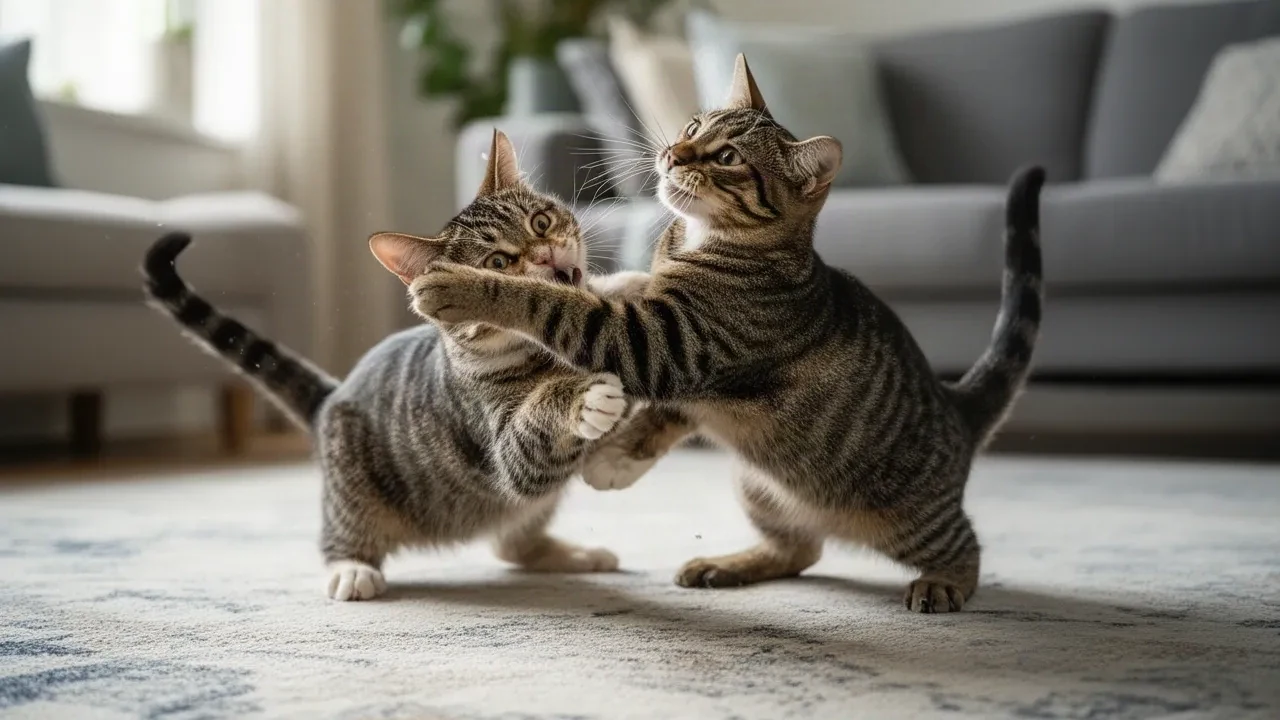
Are your cats playing or fighting? Learn the 6 behavioral differences, key findings from the 2023 Nature study, and how to safely interrupt rough play.

Why do cats expose their belly and then bite when petted? Learn the evolutionary biology of the feline abdomen, the trust greeting, and safe petting zones.

Why do cats headbutt you and rub their cheeks on furniture? Learn the science of head bunting, facial scent glands, colony scents, and important medical cues.

Decode cat ear positions: learn what forward alert ears, independent 180-degree swivels, airplane ears, and flattened defensive ears reveal about your cat.
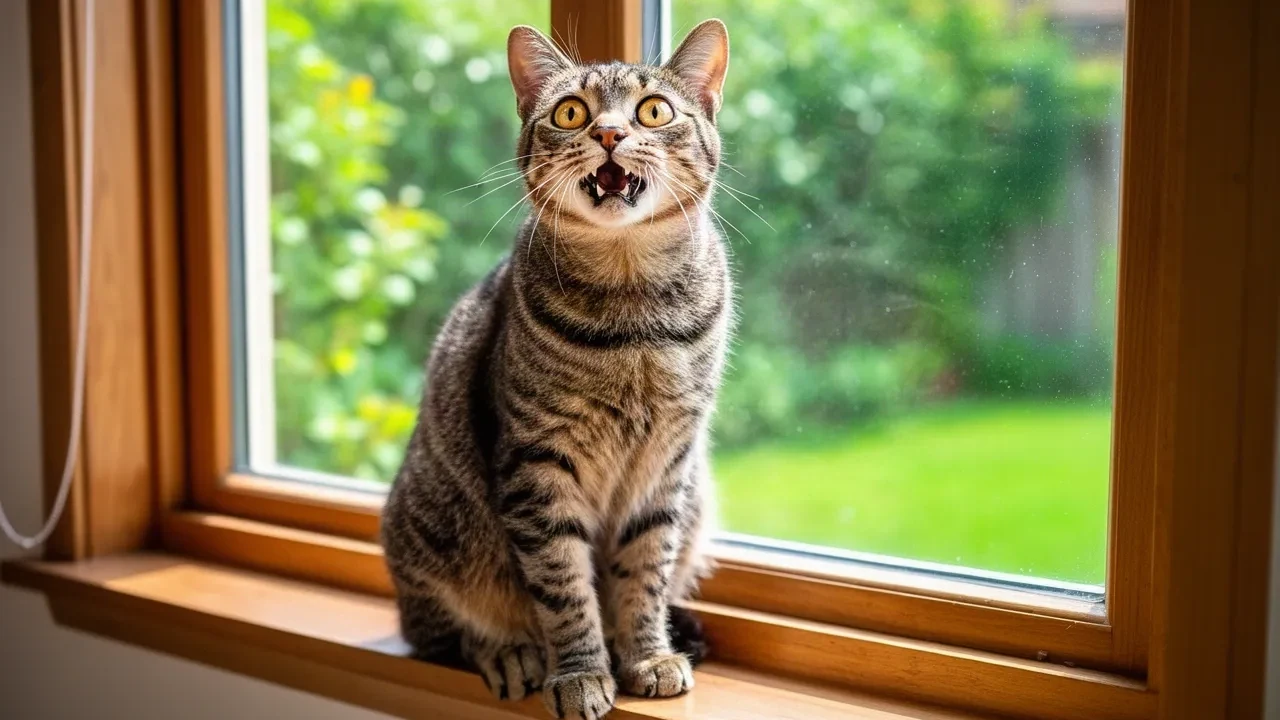
Why do cats chatter at birds through the window? Discover the neuromuscular kill-bite reflex, predatory frustration, and vocal mimicry in feline hunting.

Master the cat slow blink: understand the science of feline eye communication, learn the 4-phase slow blinking technique, and build trust with shy or new cats.

Why do cats purr? Discover the biomechanics of 25–150 Hz frequencies, 4 types of purrs, the solicitation cry, and how purring heals bones and relieves pain.

Decode your cat's body language — the loaf, the turkey position, belly-up, tail signals, and airplane ears — and what each pose says about how your cat feels.

The best cat selfies on the internet — accidental phone-grabs, snapchat-filter cats, and aesthetic close-ups — plus how to take a good selfie with your cat.

Curled up, belly-up, the loaf, one paw over the face — what your cat's sleeping position says about comfort, trust and temperature, plus when to worry.
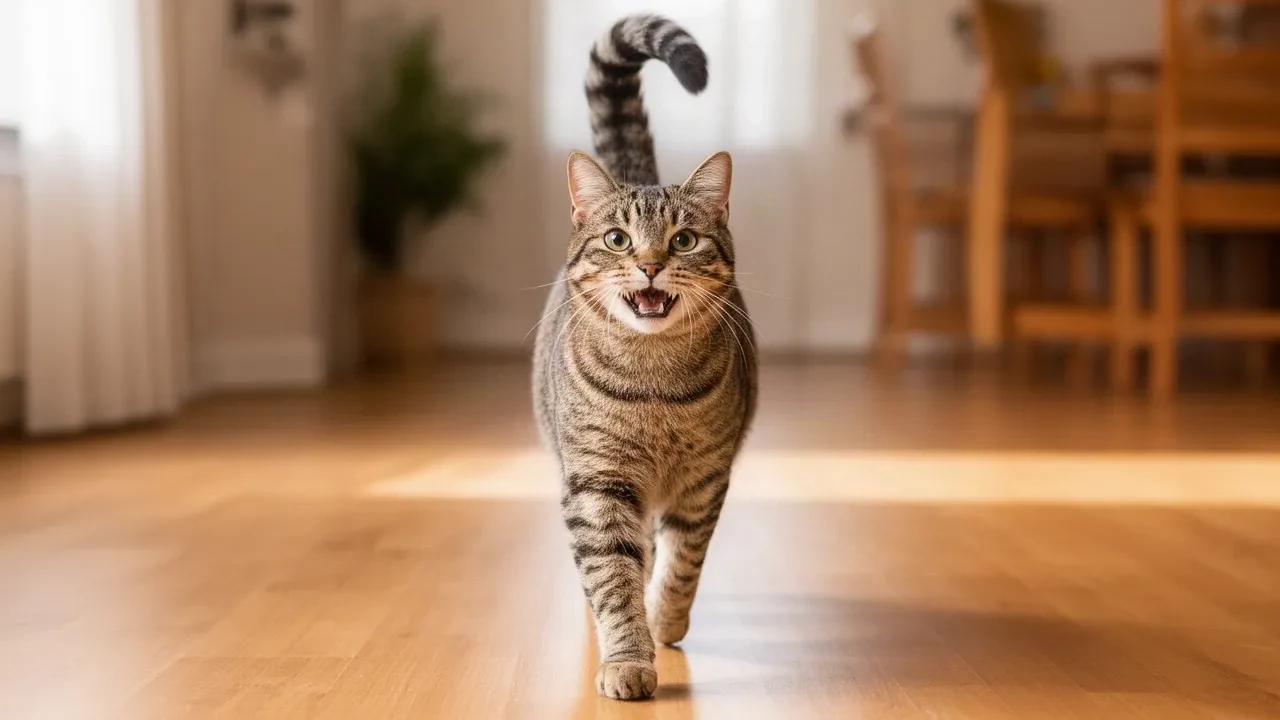
Decode cat tail language: learn what swishes, upright question marks, greeting quivers, and bottlebrush puffs mean. Complete visual guide backed by science.

The cat fist, chemistry cat, the standing munchkin, the real Pusheen — the funniest famous cat photos on the internet and what's actually going on in each one.

Grumpy frowns, smug smirks, silly tongue-out bleps — the funniest cat faces, what your cat's expression actually means, and how to catch it on camera.

Cat aggression explained: learn the types, including fear biting and petting aggression, what causes them, and when to seek help from a vet or behaviorist.

Do cats get lonely? Learn the signs a solo cat needs more company, which cats cope well alone, and how enrichment or a second cat can help them thrive.

How do cats show affection? Learn 10 signs, from slow blinks to head bunts and kneading, that reveal how your cat expresses love, trust, and attachment.
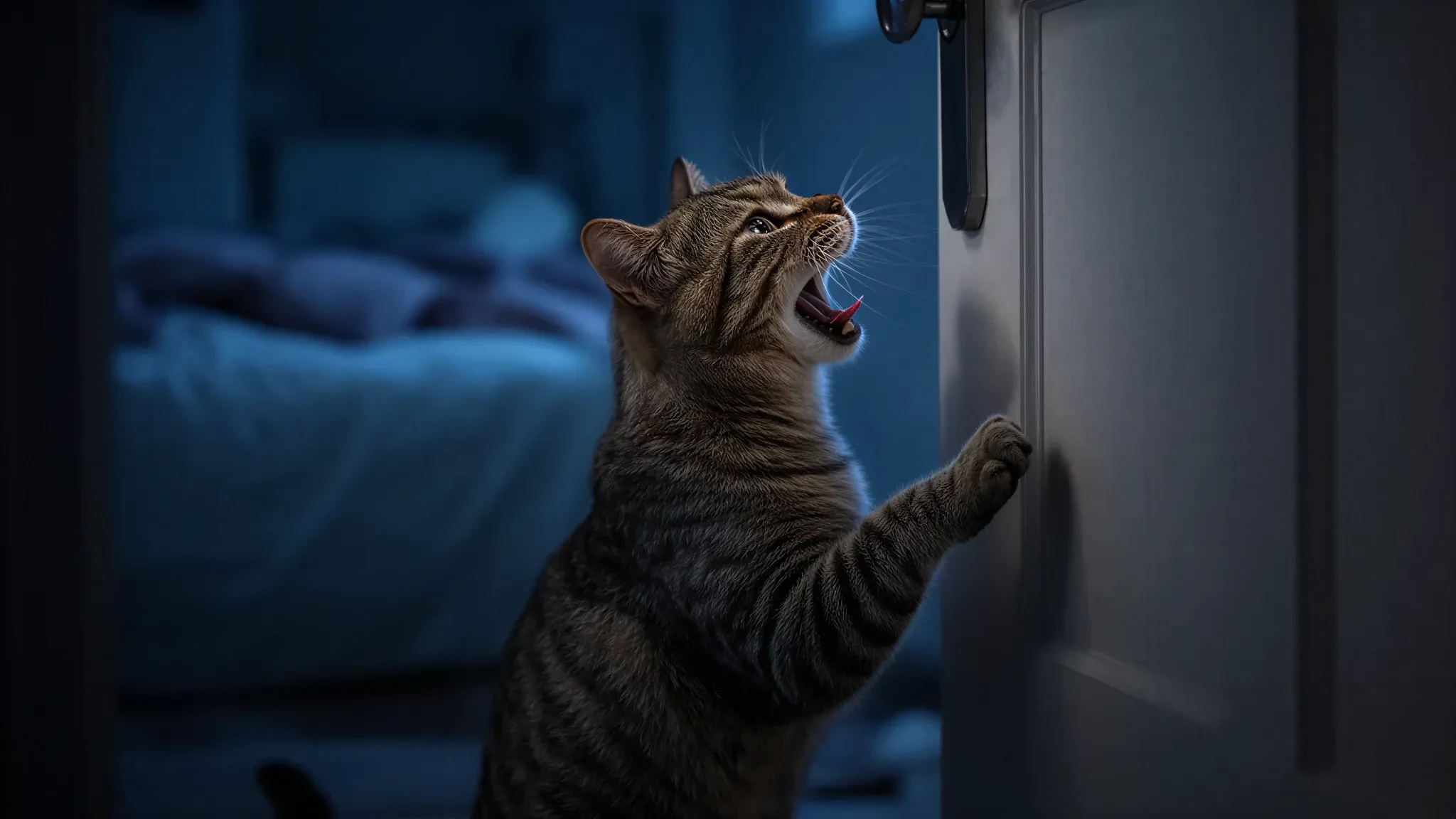
Night meowing keeping you awake? Learn how to stop it with routine, enrichment, and a check of medical causes so you and your cat can finally sleep well.

Manage a peaceful multi-cat home: social structure, resources, territory, and slow introductions. Learn to troubleshoot conflict and when to get help.