Famous Funny Cat Photos and the Stories Behind Them
Updated
On this page (8 sections)
Some cat photos escape their owners and become internet fixtures — the raised “fist,” the lab-coat chemist, the little cat that stands up like a meerkat. After years of scrolling (and taking plenty of my own), here are the famous funny cat photos people keep searching for, and what’s genuinely going on in each one — because most of them are funnier once you know the story.
The Cat Fist
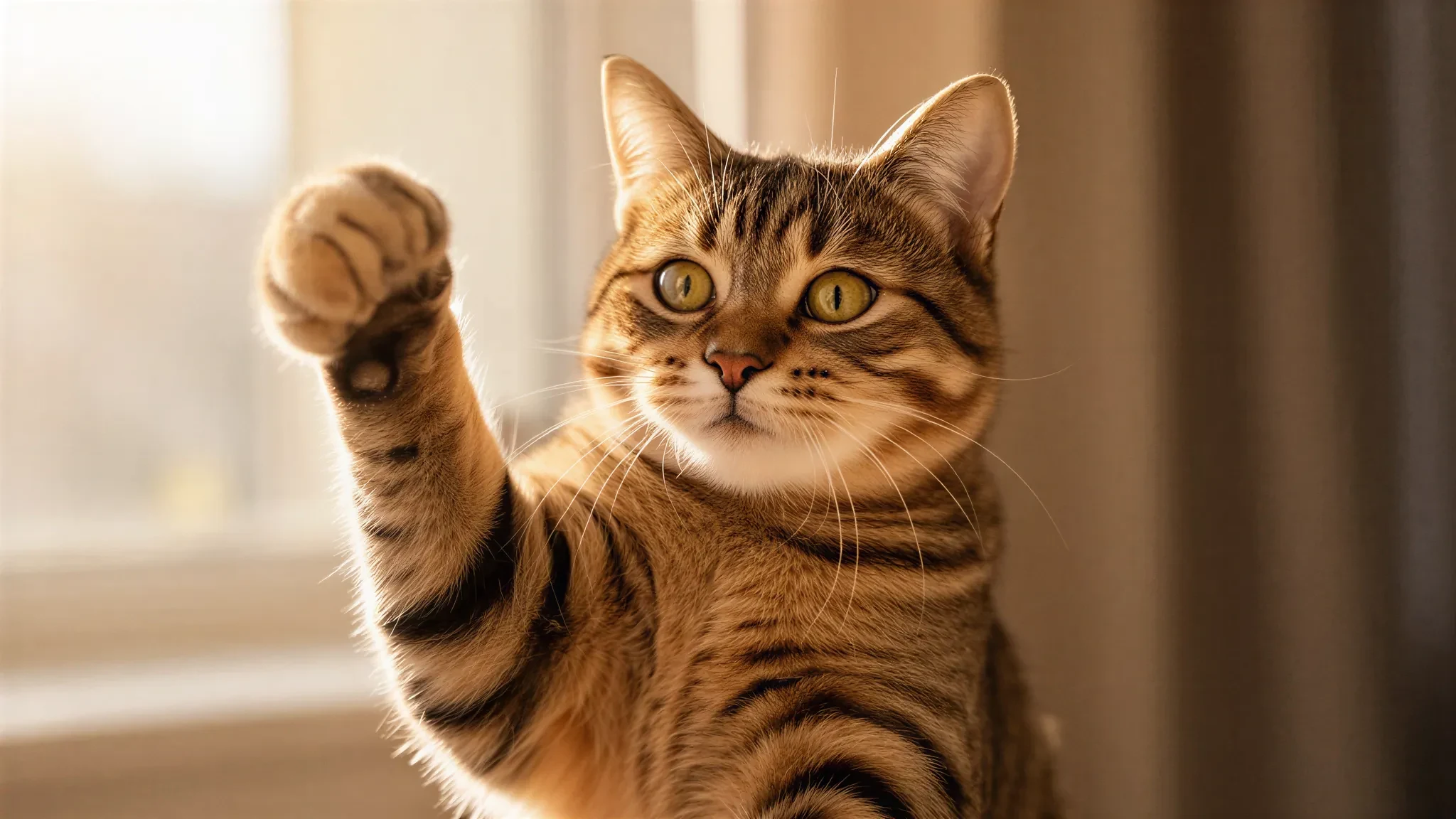
The “cat fist” is exactly what it looks like: a cat mid-reach or mid-stretch, one paw raised and curled just enough to look like a tiny clenched fist ready to throw a punch. There’s no anger behind it — the cat is usually reaching for a toy, batting at something, or just stretching a front leg. But freeze that frame at the right instant and you get a cat that appears to be squaring up for a fight. It’s one of the most reliably funny poses to catch, and a burst of photos while your cat plays will land it eventually.
What makes the fist read as “furious” is our own wiring. Humans read a curled, raised appendage as a fist because that’s what our hands do, and a cat’s paw happens to fold in a way that resembles it. The cat is just doing normal cat things — reaching, kneading the air, retracting claws against a toy. The joke is a translation error, and knowing that only makes the photo better.
Chemistry Cat
Chemistry Cat is a proper image-macro meme: a cat dressed in a lab coat and glasses, captioned with science puns — “I’ve got my ion you,” “I think you’re sodium-fine.” It works because the setup is so absurdly formal and the delivery is a cat that clearly did not consent to wearing glasses. It’s one of the older cat memes and still gets shared because the joke format never really ages.
The humor there is pure anthropomorphism — dressing an animal that takes itself with total seriousness in the costume of a profession. Cats already have that unimpressed, judging expression built in, so the lab coat doesn’t have to do much work. The cat supplies the attitude; the props just give it a job title.
The Standing Munchkin
Munchkin cats have very short legs — the result of a natural genetic mutation — and one of their signature moves is popping up onto their haunches like a meerkat to survey the room. Owners call it “prairie-dogging,” and because a munchkin’s back legs are so stubby, the standing pose looks even more comical than it does on a long-legged cat. Worth a quick honest note: the short-leg gene that defines munchkins is a topic of real debate among breeders and vets, so the standing cuteness comes with an asterisk.
The standing itself is ordinary cat behavior — any cat will rear up to get a better view of something interesting. The difference is proportion. When a long-legged cat rises up, it still looks like a cat; when a munchkin does it, the silhouette becomes almost human, and that’s the entire joke. If the breed and its health considerations interest you, we cover both sides in the munchkin cat guide.
The “Airplane Ears” Flip
When a cat rotates its ears out to the sides, cat people call it airplane ears — and it makes for a genuinely funny photo. Here’s the honest part, though: airplane ears are usually a mild “I’m annoyed or overstimulated” signal, not a happy one. So the funniest, kindest version of this shot is the one you catch naturally when your cat is mid-grump — not one you create by physically flipping a relaxed cat’s ears, which just irritates them for real.
Ears are one of the clearest windows into a cat’s mood, and the sideways position sits on a spectrum between alert and outright flattened. A cat with ears pinned flat back is signaling fear or defensiveness; a cat with ears just slightly out is more likely mildly fed up. Learning to read the difference turns the funny photo into useful information, and our cat body language guide walks through the whole range of signals.
The Real Pusheen
Every so often a round, short, grey-tabby cat turns up looking exactly like Pusheen, the cartoon cat from the stickers and comics — same chunky proportions, same permanently pleased expression. There’s no single “real Pusheen,” just a steady supply of cats that happen to match the drawing, and the internet delights in finding each new one.
Pusheen’s shape is what cartoonists call “bean-shaped” — a soft, rounded silhouette with no hard angles — and plenty of real cats carry a version of it, especially the heavier-set ones photographed from a low angle. It’s a reminder that some of the funniest cat photos need no setup at all: the cat just exists in the right shape and the camera does the rest.
Why Some Cat Photos Become Famous
Strip away the captions and the famous ones all share a formula. There’s a split-second of perfect timing, a pose that reads as unmistakably human — a fist, a stance, a facepalm — and zero effort to pose the cat. You can’t manufacture it; you can only be ready. Keep your phone handy, shoot in bursts, and let the cat write its own caption.
The deeper reason so many cat photos go viral is that exaggeration wins. A slightly flatter face, a slightly shorter leg, a slightly wider pair of eyes — small differences from the average cat are what make a photo memorable, because they push the image toward cartoon. That same trait that makes a cat famous can also be the very thing to keep an eye on, which is where the honest part of this article comes in.
When to See a Vet
Some of the features that make famous cats funny are the same ones that come with health considerations. Flat-faced breeds like Persians and Exotic Shorthairs are brachycephalic, meaning a shortened skull can crowd the airways, tear ducts, and teeth — a permanent frown is part of that anatomy, and so is a higher chance of breathing and eye problems. The short legs of a munchkin can be associated with spinal and joint issues as the cat ages. A tongue that’s always hanging out, rather than appearing in one caught-off-guard photo, can point to dental or oral discomfort, and eyes that are constantly squinting may signal pain rather than attitude.
None of this means a funny face is automatically a sick one. It means the joke and the anatomy sometimes share a source, and knowing which is which is worth a conversation with your vet if anything changes.
If you notice any of these signs, consult your veterinarian. This article is for informational purposes and does not replace professional veterinary advice.
Frequently Asked Questions
What is the most famous funny cat photo?
That depends on how you measure it, but Grumpy Cat is the most recognizable by name — a cat whose scowl came from an underbite and a form of dwarfism, not a bad mood. The raised-paw “cat fist,” Chemistry Cat, and the standing munchkin all sit in the same pantheon of widely shared images.
Why do cats look angry in photos?
Mostly anatomy, not mood. A flat or short muzzle, a downturned mouth line, heavy brow markings, and an underbite all read as a scowl to human eyes. The cat can be perfectly content. In the moment, a hard stare or flattened ears are the real signals to pay attention to, not the resting face.
Are munchkin cats healthy?
The short legs come from a genetic mutation that can bring spinal and joint issues with it, and the breed remains genuinely debated among breeders and vets. If you’re considering one, ask about the cat’s individual health history and go through a reputable source. The standing-up pose is cute; the health question behind the breed is worth taking seriously.
Made one of your own? Add the caption with our free meme generator, see more in funny cat faces and cat selfies, or name your little comedian with the cat name generator. Curious about the signals hiding in those poses? Our cat body language guide is the place to start.
Written by Max
Max is a lifelong cat owner and runs CuteCatsHQ. Health and care guides are checked against the veterinary sources listed with each article.
Keep reading
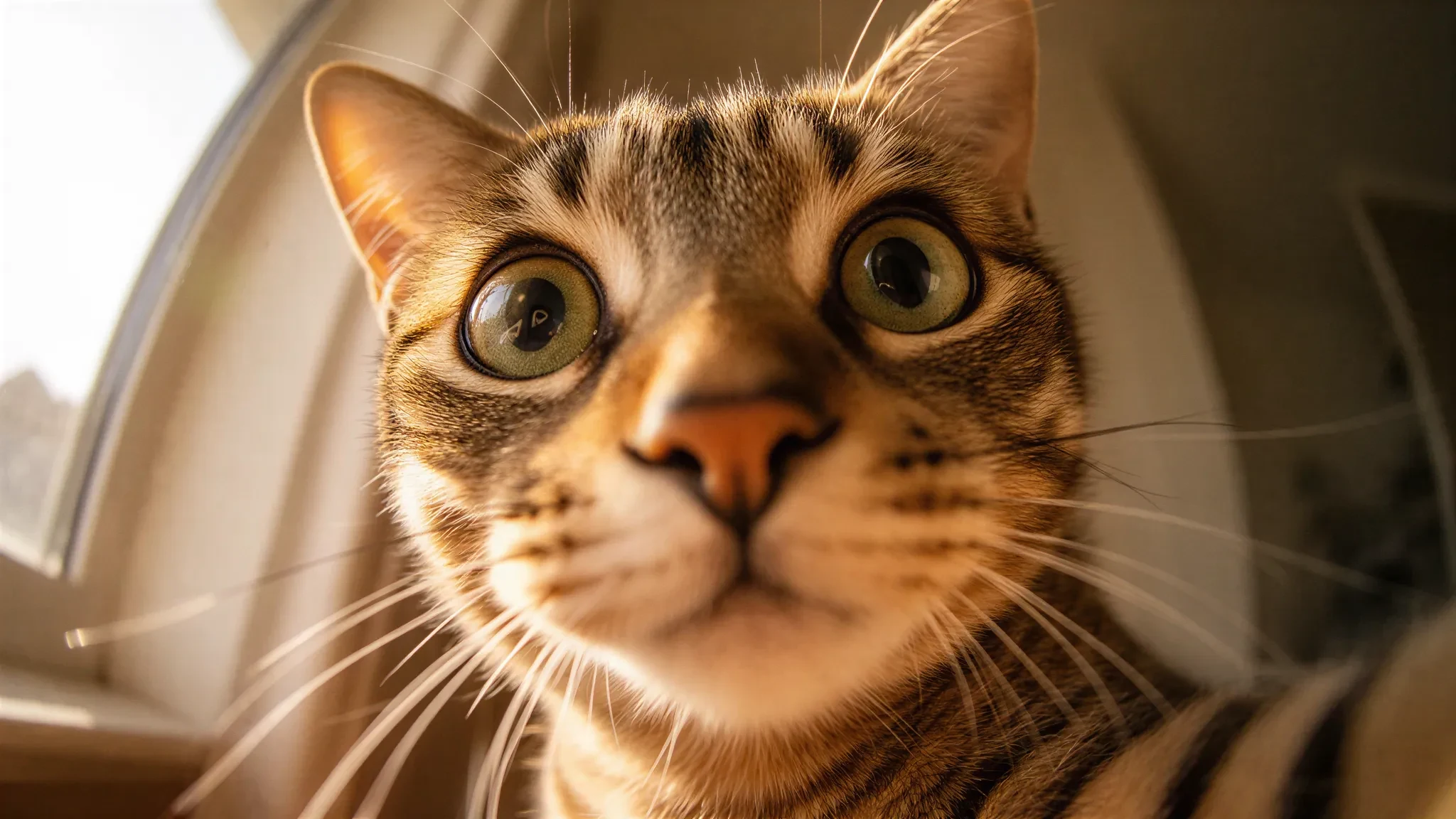
Cat Selfies: The Funniest Cat Self-Portraits
The best cat selfies on the internet — accidental phone-grabs, snapchat-filter cats, and aesthetic close-ups — plus how to take a good selfie with your cat.
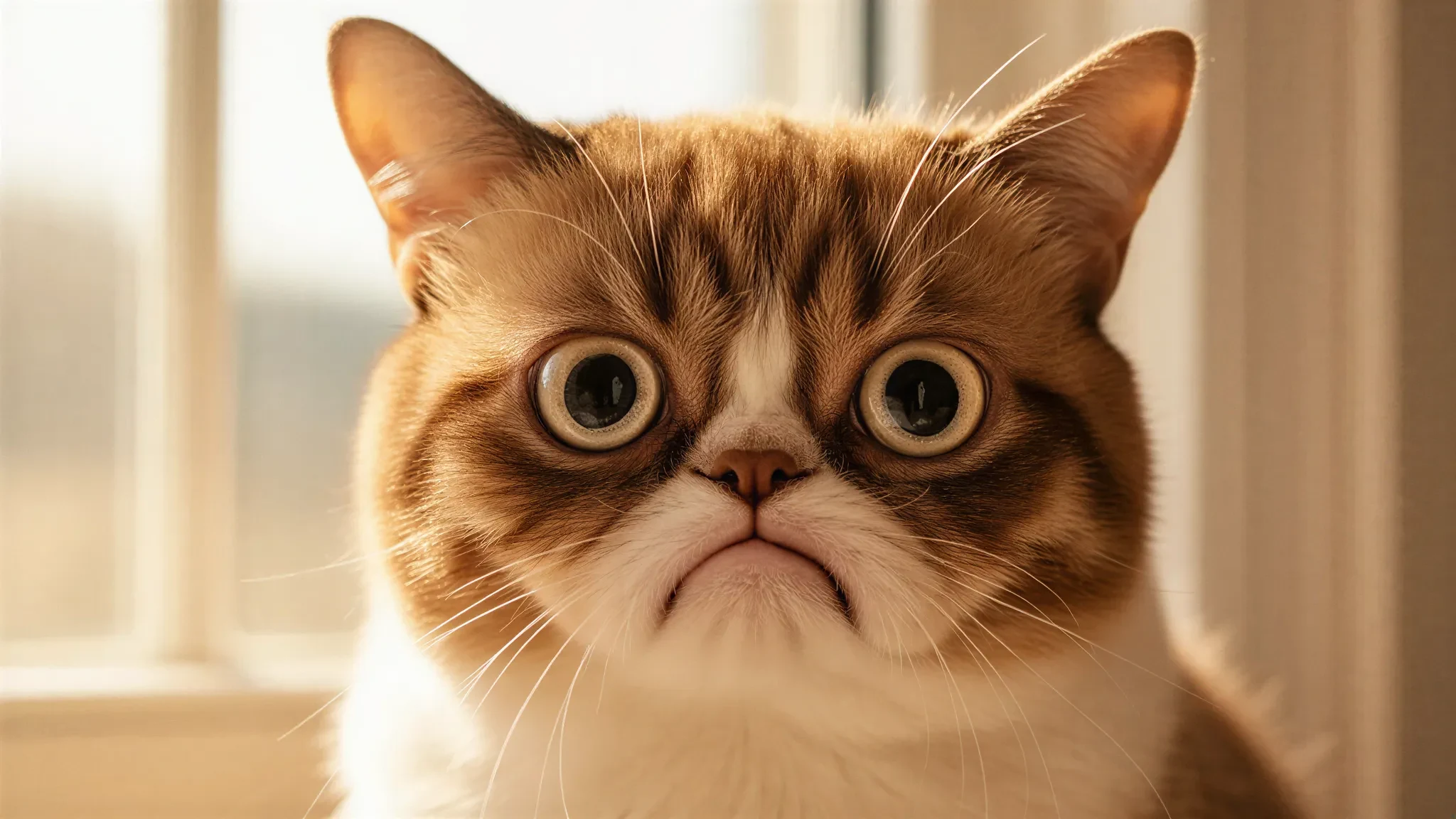
Funny Cat Faces: Grumpy, Smug & Silly Expressions
Grumpy frowns, smug smirks, silly tongue-out bleps — the funniest cat faces, what your cat's expression actually means, and how to catch it on camera.
Cat Redirected Aggression: Causes, Timeline & Fix
Understand cat redirected aggression: why bonded cats suddenly fight, the 72-hour adrenaline timeline, and a step-by-step sanctuary reset to restore peace.