Funny Cat Faces: Grumpy, Smug & Silly Expressions
Updated
On this page (8 sections)
After thirty years of living with cats, I’ve taken thousands of photos, and the ones everyone actually laughs at are never the elegant poses — they’re the faces. The permanent frown. The smug little smirk after knocking a glass off the counter. The tongue left hanging out mid-thought. Here are the funniest cat faces, what each one is really telling you, and how to catch your own cat’s best expression on camera.
The Grumpy Face
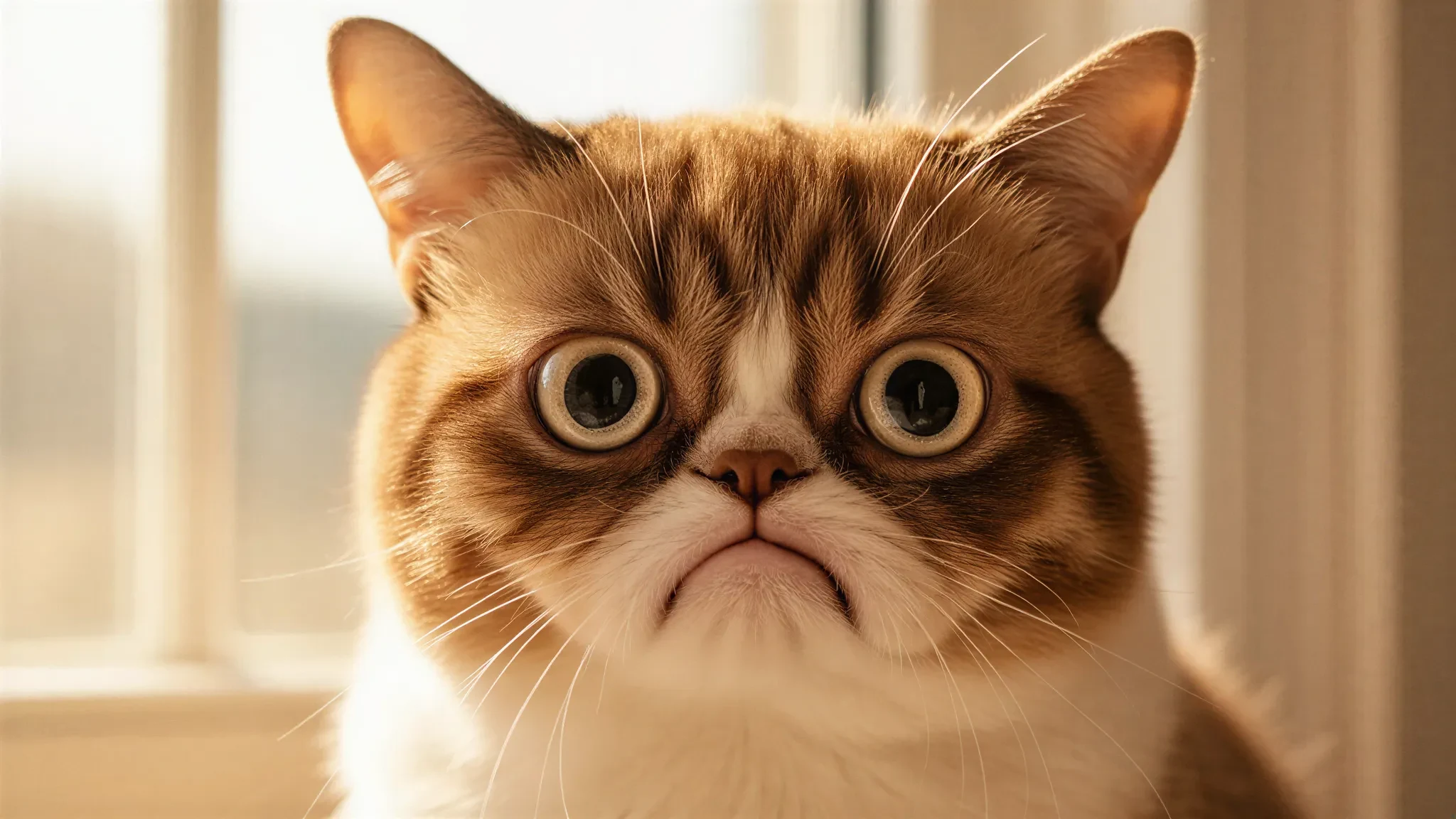
Some cats just look furious all the time, and it usually has nothing to do with their mood. A “grumpy” face is almost always anatomy: a flat or short muzzle, a downturned mouth line, heavy brow markings, or an underbite. Flat-faced breeds like Persians and Exotic Shorthairs are the classic offenders. The internet’s original Grumpy Cat looked that way because of a feline underbite and a form of dwarfism — she was, by all accounts, a perfectly content cat wearing a permanent scowl. So if your cat looks personally offended by your existence, relax: it’s the face, not you.
Breed plays a bigger role here than most people realize. A Persian or Exotic Shorthair carries a brachycephalic skull shape — short and broad — which flattens the muzzle and pulls the mouth into a frown by default. Those same structural features are why flat-faced breeds are prone to eye drainage and breathing difficulties, so the look that reads as “majestic and grumpy” is also a feature to keep an eye on.
The Smug Look
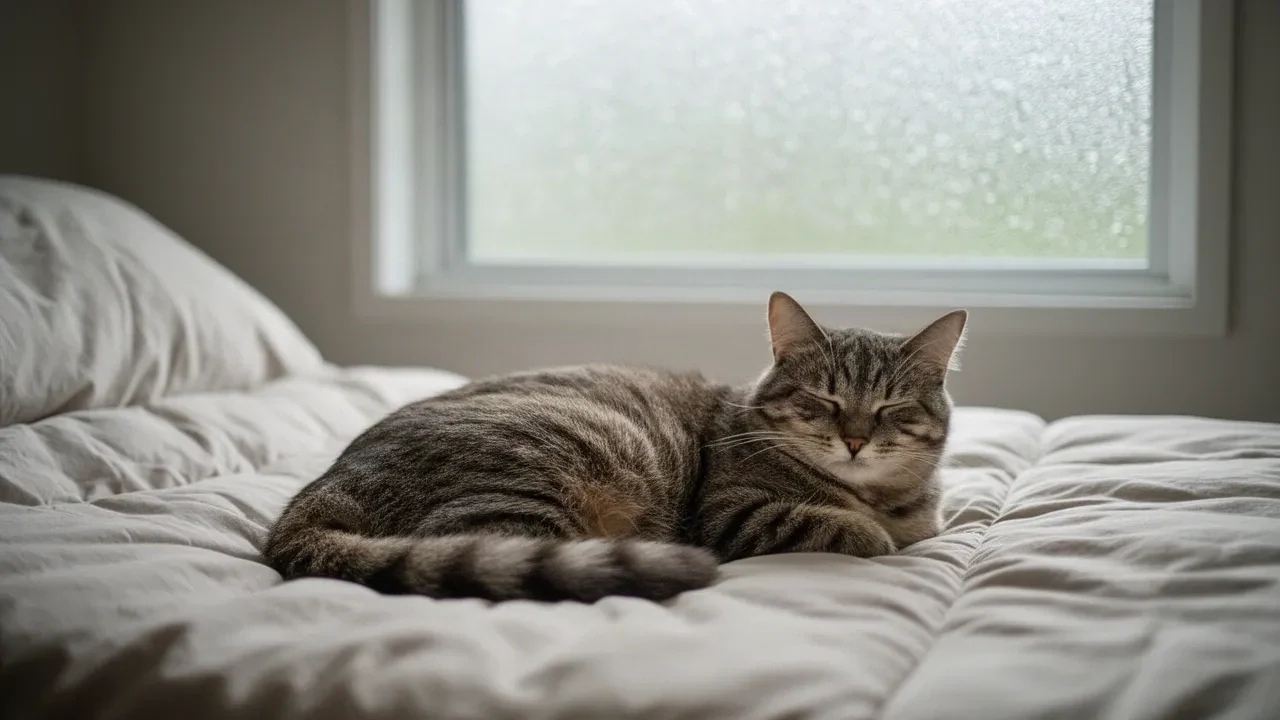
The half-lidded, self-satisfied smirk — usually spotted right after your cat has done something it absolutely knew it wasn’t supposed to. There’s no science saying cats feel smug, but there is a real signal hiding in that look: half-closed eyes are a sign of a relaxed, comfortable cat. A cat that slow-blinks at you with droopy lids is telling you it feels safe. So the “smug” face is really the face of a cat that owns the place and knows it.
Read it as trust, not sass. When a cat lets its eyelids drop around you, it’s choosing not to watch you closely, and in cat terms that’s a compliment. The slow blink is the clearest version of it — return the gesture and you’re having an actual conversation. We go deeper on that in how cats show affection.
Tongue-Out and Silly
Cat people call it the blep — the little tongue left poking out. It happens when a cat gets distracted mid-groom and simply forgets to retract its tongue, or when it’s so relaxed the jaw goes slack. You’ll also see a more deliberate open-mouthed, slightly stunned look called the Flehmen response: the cat is pulling a scent onto a special organ in the roof of its mouth to “taste” it. It looks ridiculous. It’s completely normal.
The key difference is frequency. A blep that shows up now and then is a harmless quirk. A tongue that hangs out all the time, or drooling that accompanies it, is a different story — it can point to dental disease, a mouth injury, or a tooth that’s bothering the cat. If the silly face becomes the default face, that’s worth a vet look.
The Wide-Eyed “Wow”
Big round eyes and dilated pupils read as adorable surprise in a photo, but in the moment they usually mean arousal or alertness — excitement, play, or a sudden noise. Wide pupils can signal a hyped-up, playful cat or a startled one, so read the ears and tail alongside the eyes. In a still photo, though, it’s just pure “wow.”
Pupils are one of the most reliable mood indicators a cat gives you, and they change fast. Fully dilated in bright light is unusual and can indicate pain or overstimulation; narrow slits in bright light are normal and often mean a calm, comfortable cat.
Do Cats Actually Make Expressions?
Here’s the honest answer: not the way we do. Cats have far fewer facial muscles than humans, and they don’t smile or frown on purpose. Most of what we read as an “expression” is a mix of fixed anatomy (markings, face shape) and us projecting human feelings onto it. Where cats do communicate is through their ears, eyes, whiskers, and body posture — a slow blink means affection and trust, flattened ears mean fear or irritation, and forward whiskers mean curiosity.
If you want to actually read your cat, treat the face as one clue among several. The ears are the quickest tell: forward and relaxed means engaged and friendly, sideways means mildly annoyed, and pinned flat against the head means frightened or defensive. The whiskers move with mood too — pushed forward means interested or excited, pulled back against the cheeks means anxious. The tail finishes the picture, and its position matters more than most people assume. Putting those three together tells you far more than the face ever will. For more on the specific signals, see our guides on how cats show affection, the small tells in why cats hiss, and the full breakdown in cat tail language.
How to Catch Your Cat’s Funniest Face
The faces that make everyone laugh are over in a fraction of a second, so the approach matters as much as the cat. Start by getting down to eye level rather than shooting from above, which flattens the expression and turns a great face into a foreshortened blob. Then lean on burst mode. The best faces never sit still long enough to time a single shot, so hold the shutter and pick the winner afterward instead of trying to nail it live.
Sound is your secret weapon. A squeak, a click, or a phone notification tone will snap the ears forward and widen the eyes for the half-second before the cat figures out there’s no bird involved, and that’s exactly the frame you want. Shoot in natural light — a window beats a flash every time, and a flash leaves an unflattering eye-shine that buries the very expression you’re trying to catch. Most of all, be patient and don’t force it. The funny face shows up when a cat is relaxed and doing its own thing, not when you’re following it around the house with a lens. Set up near a warm spot, wait, and the cat will eventually give you the material.
When to See a Vet
Some of the faces that make us laugh are worth a second look. A tongue that stays out constantly — rather than appearing in one caught-off-guard blep — can signal dental disease, a sore mouth, or a problem with the jaw, and persistent drooling alongside it is a real reason to call your vet. Constant squinting, keeping one eye partly closed, or eyes that look cloudy or watery in photo after photo can point to eye pain or injury, which cats often hide. The flat-faced breeds that look so grumpy are also more prone to eye irritation and breathing trouble, so watch for discharge or noisy breathing in a Persian or Exotic Shorthair rather than writing it off as part of the look.
The rule is the same as with any quirk: a face that appears occasionally is a personality trait, and one that becomes the new normal is a symptom until proven otherwise.
If you notice any of these signs, consult your veterinarian. This article is for informational purposes and does not replace professional veterinary advice.
Frequently Asked Questions
Why does my cat always look grumpy?
It’s usually anatomy rather than mood. A flat muzzle, a downturned mouth line, heavy brow markings, or an underbite all read as a scowl to human eyes. Flat-faced breeds like Persians and Exotic Shorthairs are built this way. Check the ears, whiskers, and tail for the real mood; the face itself is just the cat’s resting expression.
What does it mean when a cat sticks its tongue out?
Usually nothing serious. A blep is often a cat that got distracted mid-groom and forgot to retract its tongue, or one relaxed enough for the jaw to go slack. A tongue that hangs out constantly, or drooling that comes with it, can signal dental or oral problems and is worth a vet visit.
Do cats understand human facial expressions?
Cats are more tuned to your voice and body language than to the fine details of your face, and they don’t mirror expressions the way humans do. What they read well is your tone, your posture, and your habits. A slow blink from you, though, is something they’ll often answer, because in cat terms it means trust.
Got a keeper? Turn it into a caption with our free meme generator, or if this is a brand-new arrival still working on its signature scowl, find the perfect name with our cat name generator. For the rest of what that face is signaling, start with our cat body language guide and the ear tells in the cat ear positions guide.
Written by Max
Max is a lifelong cat owner and runs CuteCatsHQ. Health and care guides are checked against the veterinary sources listed with each article.
Keep reading
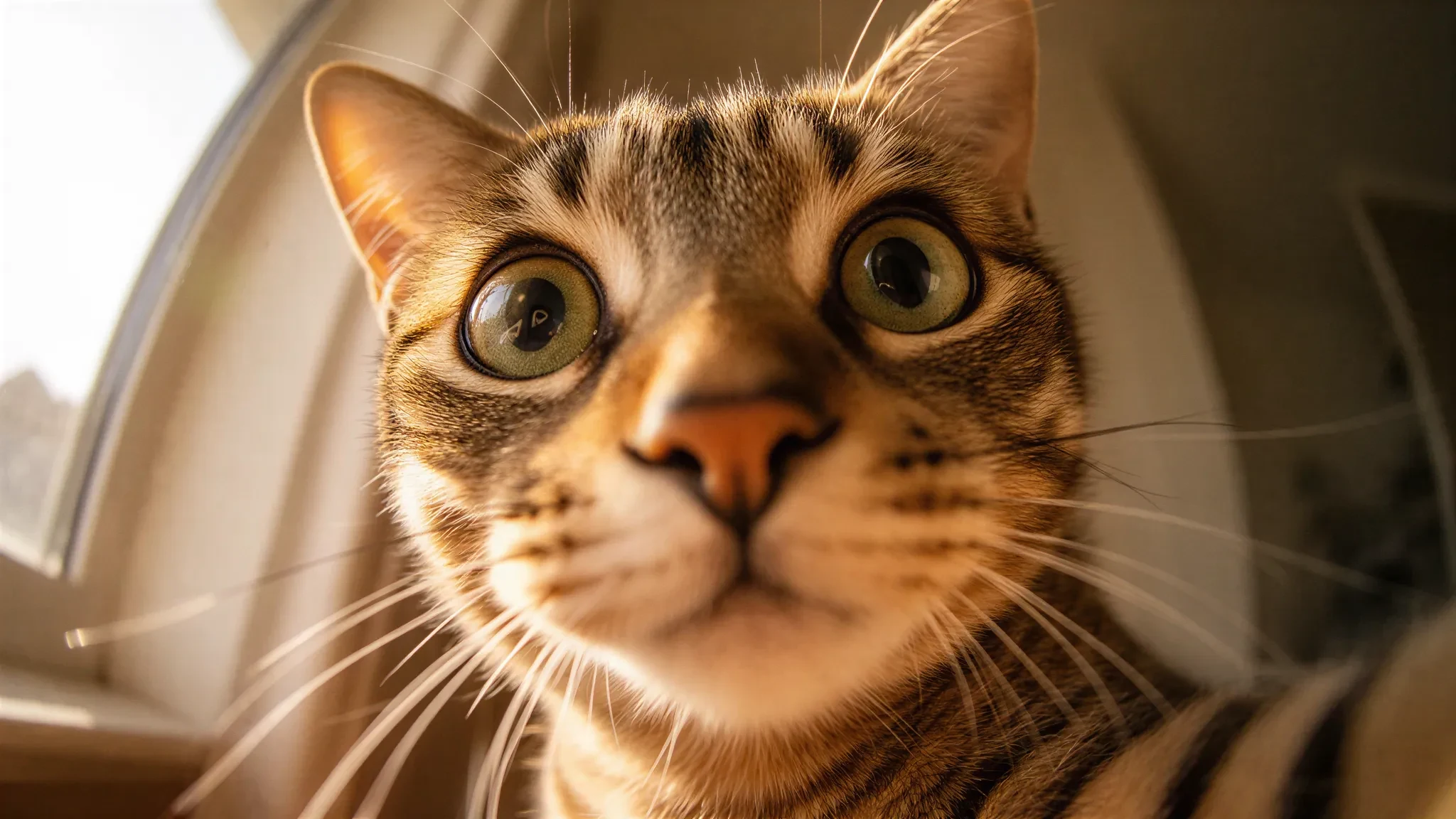
Cat Selfies: The Funniest Cat Self-Portraits
The best cat selfies on the internet — accidental phone-grabs, snapchat-filter cats, and aesthetic close-ups — plus how to take a good selfie with your cat.
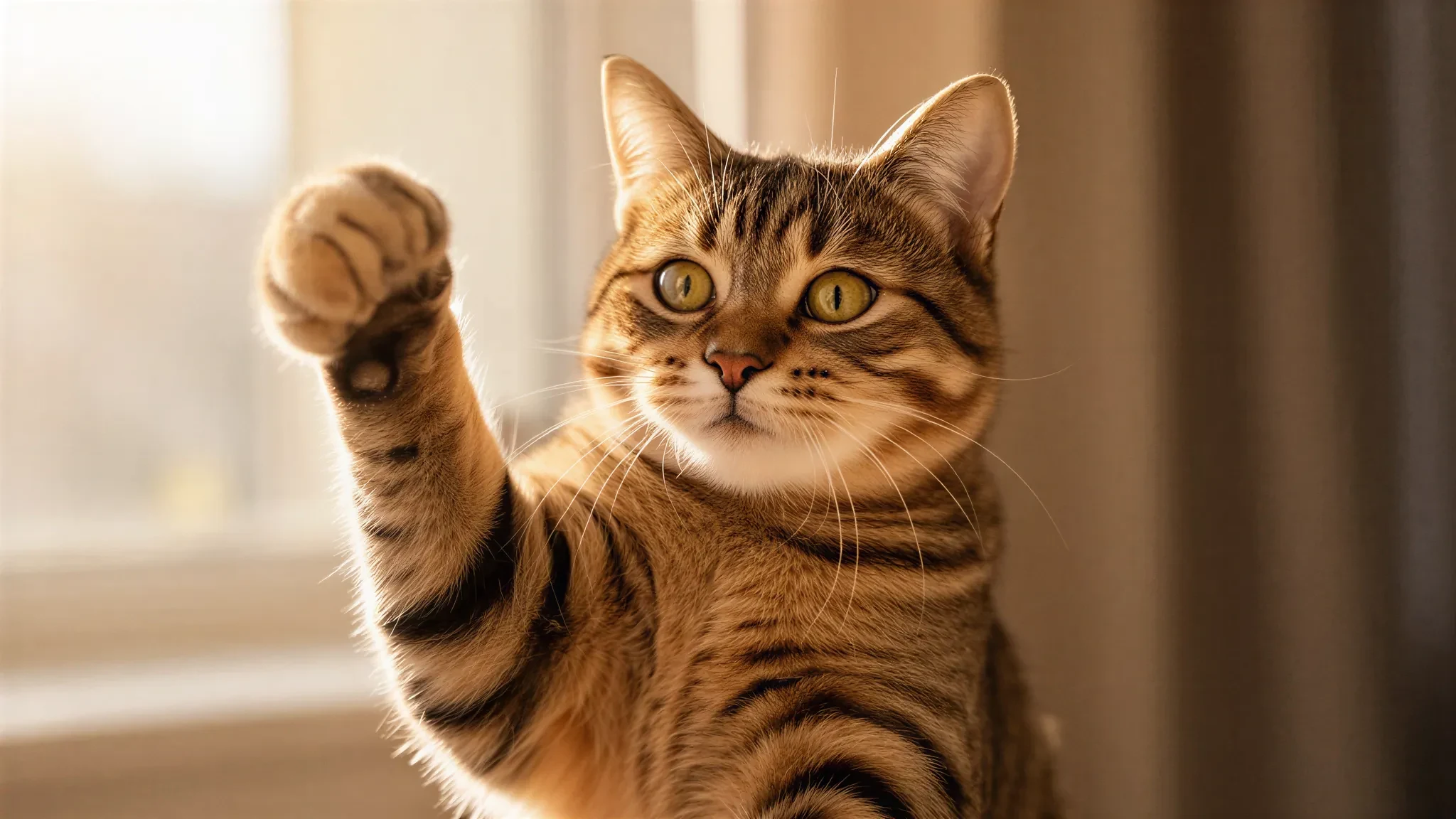
Famous Funny Cat Photos and the Stories Behind Them
The cat fist, chemistry cat, the standing munchkin, the real Pusheen — the funniest famous cat photos on the internet and what's actually going on in each one.
Cat Redirected Aggression: Causes, Timeline & Fix
Understand cat redirected aggression: why bonded cats suddenly fight, the 72-hour adrenaline timeline, and a step-by-step sanctuary reset to restore peace.