
Cat Selfies: The Funniest Cat Self-Portraits
Updated
On this page (8 sections)
No cat has ever meant to take a selfie. And yet the internet is full of them — the wide-eyed phone-grab, the accidental front-camera masterpiece, the cat wearing a dog-ear Snapchat filter and somehow pulling it off. After thirty years of cats and a phone full of failed attempts, I’ve collected the best cat selfies out there and worked out what actually makes a good one. Here they are, plus how to get your own cat to sit still long enough for a keeper.
The Accidental Selfie
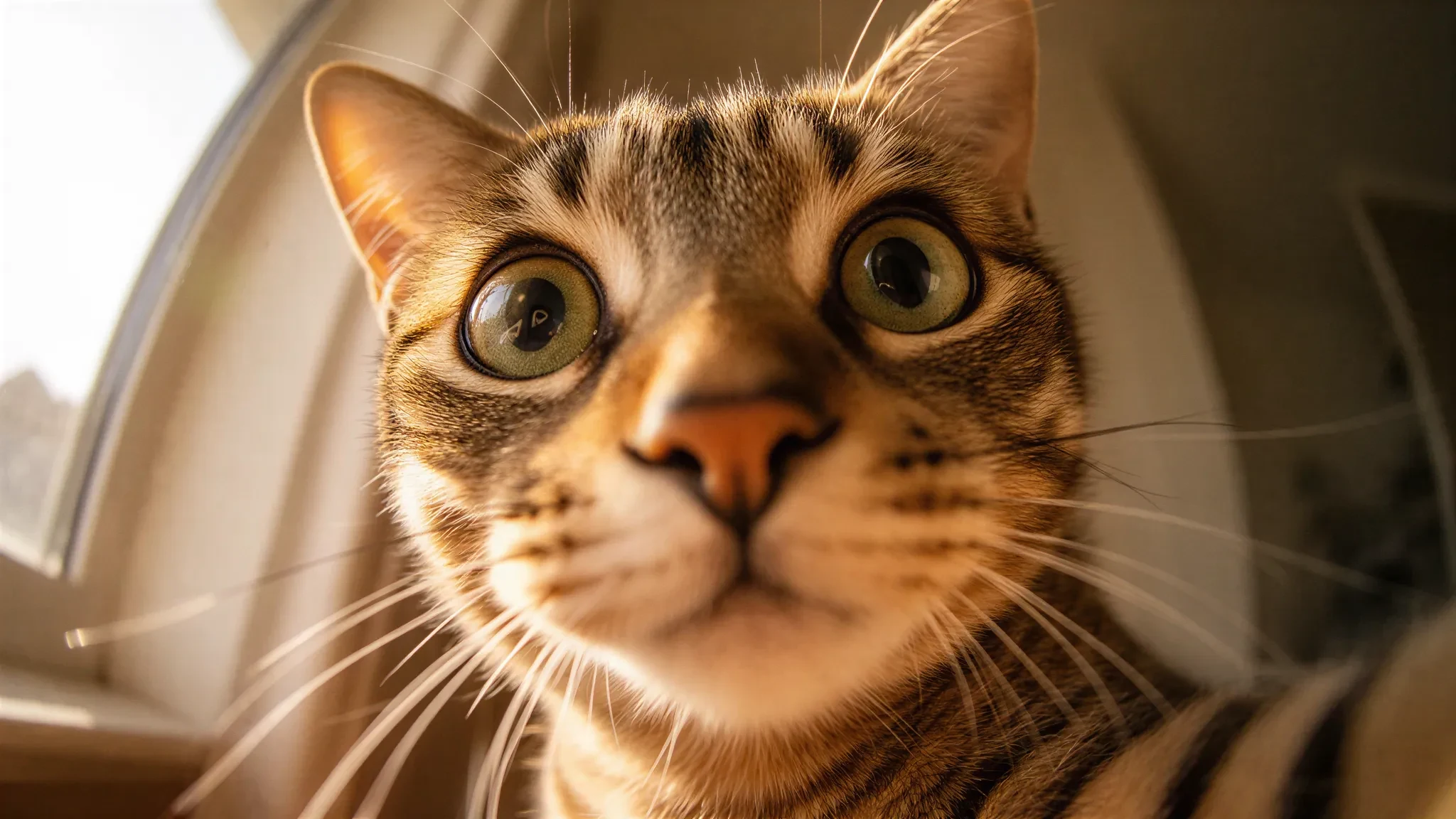
The classic. You unlock your phone, the cat walks across it, the front camera fires, and you’re left with a blurry, extreme-close-up nose shot that’s somehow better than anything you’d have set up on purpose. These happen because cats are drawn to a warm, glowing screen and your undivided attention — and the front-facing camera is right there at nose level. The best accidental selfies are all nose, one giant eye, and a whisker across the lens. In thirty years I’ve learned not to delete these on sight; the blurry ones are often the ones people send around.
Why Cats React to Phones and Cameras
There’s a reason your cat either investigates your phone or turns away the second you lift it. A screen is warm, it glows, and a scrolling feed puts small, fast movement right at a cat’s eye level — three things that trigger a hunting cat’s attention. A cat that bats at your thumb while you type isn’t being rude; it’s tracking what looks, to its brain, like prey skittering across a bright surface.
The camera itself is another story. To a cat, a big round lens held at face height can read like a fixed, unblinking stare. In cat body language, a hard stare is a challenge, which is why so many cats glance away or close their eyes the moment the lens goes up. A slow blink and looking off to the side yourself tells the cat you’re not a threat, and it’s the single best trick for getting a relaxed subject. The ASPCA’s cat body language guide describes that soft, relaxed look, and it’s exactly the face you want in a portrait.
Sound matters too. The shutter click, a squeak, or a rustle will snap a cat’s ears forward and widen its eyes for a half-second — perfect for a shot, but it’s also an alert response, so read the ears before you assume that wide-eyed look is joy.
Snapchat-Filter Cats
Somewhere along the way, people discovered that face-tracking filters sometimes lock onto a cat’s face — and the result is pure comedy. A cat with cartoon dog ears, a flower crown, or big anime eyes hits a specific kind of funny that a plain photo never will. Filters are hit-or-miss on cats since they’re built for human faces, so it’s a numbers game: keep the filter running, wait for the cat to look straight at the camera, and grab the frame when it locks on.
The filters that work best are the ones that don’t obscure the eyes. A cat’s face is already expressive enough on its own, and a filter that covers the eyes buries the very thing that makes the photo work. Stick to ears and crowns and you’ll keep the shot.
The Aesthetic Close-Up
Not every cat selfie is a joke. Get in close, catch the light in the eyes, and a phone camera can produce a genuinely striking portrait — the “cat selfie aesthetic” that people actually search for. The trick is the eyes: sharp, catchlit eyes make the shot, and everything else can be soft. A window as your light source and a calm cat is all you need.
I’ve spent whole afternoons doing nothing but this, and the pattern is consistent. The keeper always comes when the cat is warm, fed, and halfway to a nap. A cat that’s fully alert is too twitchy; a cat that’s deeply asleep looks like a rug. That drowsy in-between state is where the best portraits live.
Photos as a Bonding Habit
There’s a quieter reason to keep photographing your cat that has nothing to do with internet points. A running photo record is genuinely useful for noticing change over time. Because cats hide discomfort well, small shifts — a slightly cloudier eye, a coat that’s lost its shine, a posture that’s a little more hunched than last season — are easy to miss when you see the cat every day but jump out when you flip back through a month of photos.
I started comparing pictures after a vet asked me whether one of my cats had always carried her tail that way, and I couldn’t answer confidently. Now I scroll back and check. It’s not medical training; it’s just a before-and-after view you already have in your pocket. A sequence of normal selfies becomes a baseline you can compare against when something feels off.
How to Take a Good Selfie With Your Cat
Getting yourself and the cat in one frame is the real challenge, and the details are what separate a keeper from a blur of fur and a thumb. Hold a treat or a small toy right beside the lens so the cat’s eyes land on the camera instead of drifting off to the side. Shoot with the front camera in burst mode — you can see the framing in real time, and the burst catches the half-second when the cat actually looks up. A short, sudden sound made the instant before you shoot gets the ears forward and the eyes wide.
Then think about the angle. Cheek to cheek, with the camera held slightly above, flatters both of you and keeps the cat’s whole face in frame instead of a foreshortened nose. Above all, do this when your cat is already relaxed and near you, not when it’s been cornered. A stressed cat that wants to leave will never give you the shot, and you should never restrain a cat for a photo — not only because it’s unkind, but because the resulting picture will look exactly like a cat being held against its will. The best selfies are the ones where the cat genuinely doesn’t mind being there.
When to See a Vet
Photos are fun, but they can also be the first place you notice something wrong. If your cat starts squinting in every picture, keeps one eye partly closed, or the eyes look cloudy, hazy, or watery in shot after shot, that’s worth a look from a vet — eye problems in cats can move quickly. A tongue that stays out constantly rather than appearing in a single blep, or drooling you can spot in photos, can point to dental or oral discomfort. A cat that flinches from the camera light or whose pupils are unequal in a still photo deserves attention too. None of these are things to diagnose from a selfie, but they’re good reasons to book an appointment.
If you notice any of these signs, consult your veterinarian. This article is for informational purposes and does not replace professional veterinary advice.
Frequently Asked Questions
Why does my cat always look away when I try to take its picture?
Cats read a large, unblinking lens held at face height as a stare, and in cat language a direct stare can signal a threat. The look-away is a polite way of defusing it. Try slow-blinking at your cat, lowering the phone, and letting it approach on its own terms; the relaxed shot will follow.
Do cats know they’re being photographed?
There’s no evidence a cat understands what a camera is the way we do. What a cat reacts to is the object itself — the movement, the lens, the sounds — and the shift in your attention. Some cats seek out that attention, which is why a few become unbothered models while others vanish the moment the phone comes out.
Why is my cat’s eye color different in photos?
Lighting and the angle of the flash change how a cat’s eye color renders, and a tapetum lucidum behind the retina reflects light back, which is what creates the glowing-eyes effect in dim photos. Color shifts from photo to photo are usually just that. A change you can see in person, or cloudiness that persists, is a different matter and worth a vet check.
Landed a good one? Add a caption with our free meme generator, see more expressions in funny cat faces, and if your new model still needs a name, try the cat name generator. For the bigger picture of what your cat is signaling, start with our cat body language guide and the relaxed half-closed eyes in how cats show affection.
Written by Max
Max is a lifelong cat owner and runs CuteCatsHQ. Health and care guides are checked against the veterinary sources listed with each article.
Keep reading
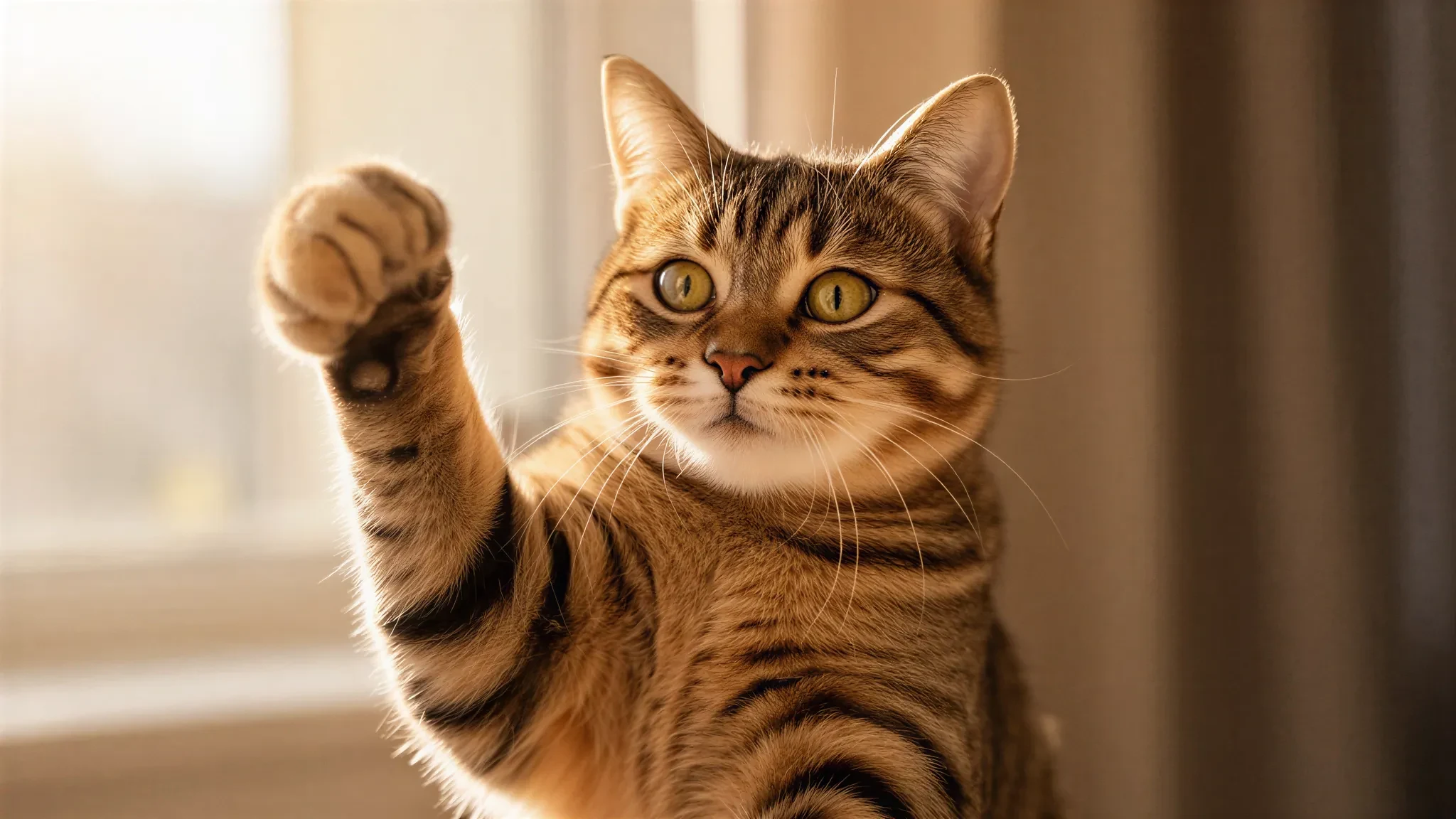
Famous Funny Cat Photos and the Stories Behind Them
The cat fist, chemistry cat, the standing munchkin, the real Pusheen — the funniest famous cat photos on the internet and what's actually going on in each one.
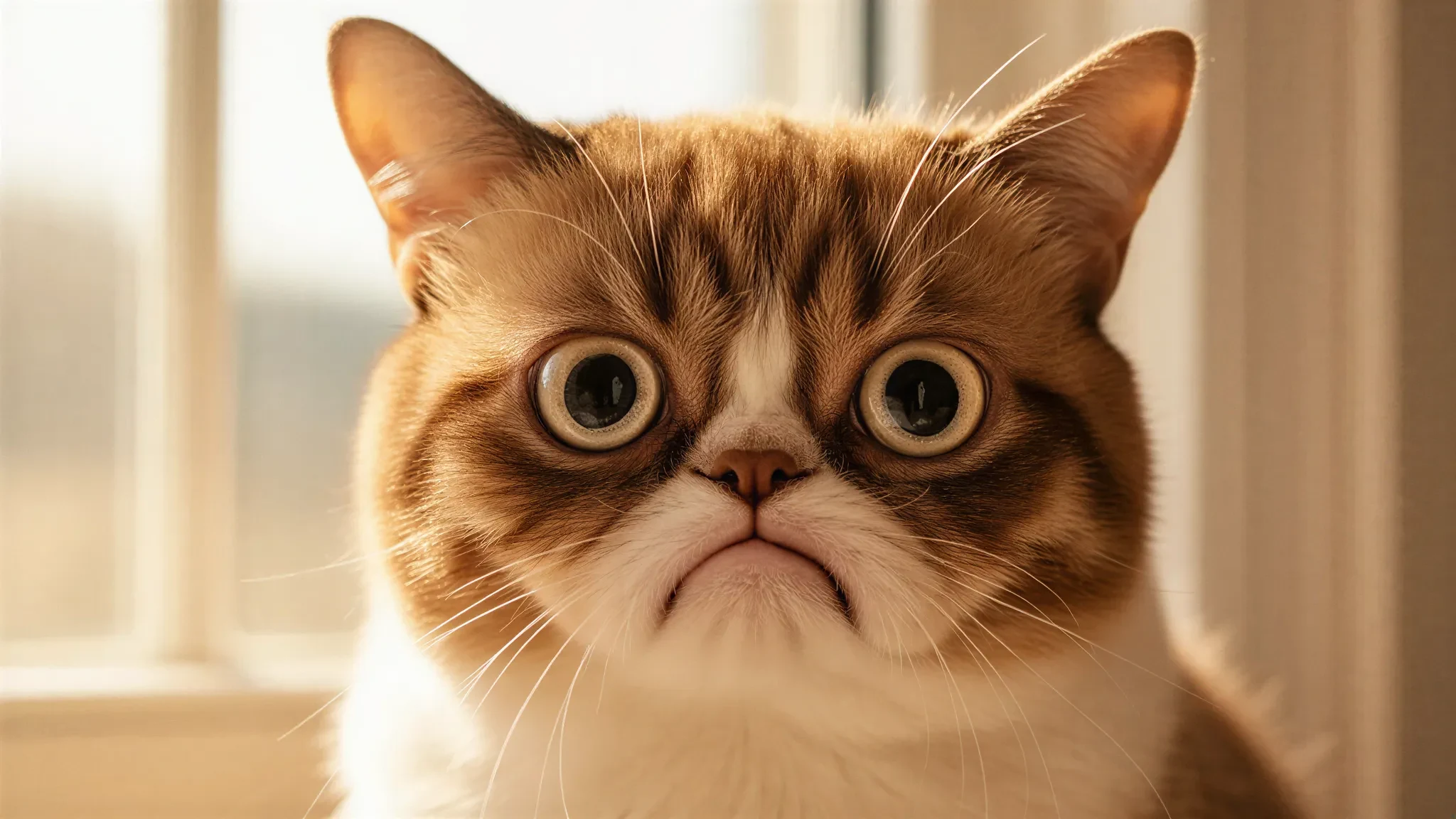
Funny Cat Faces: Grumpy, Smug & Silly Expressions
Grumpy frowns, smug smirks, silly tongue-out bleps — the funniest cat faces, what your cat's expression actually means, and how to catch it on camera.
Cat Redirected Aggression: Causes, Timeline & Fix
Understand cat redirected aggression: why bonded cats suddenly fight, the 72-hour adrenaline timeline, and a step-by-step sanctuary reset to restore peace.