
Cat Sleeping Positions and What They Really Mean
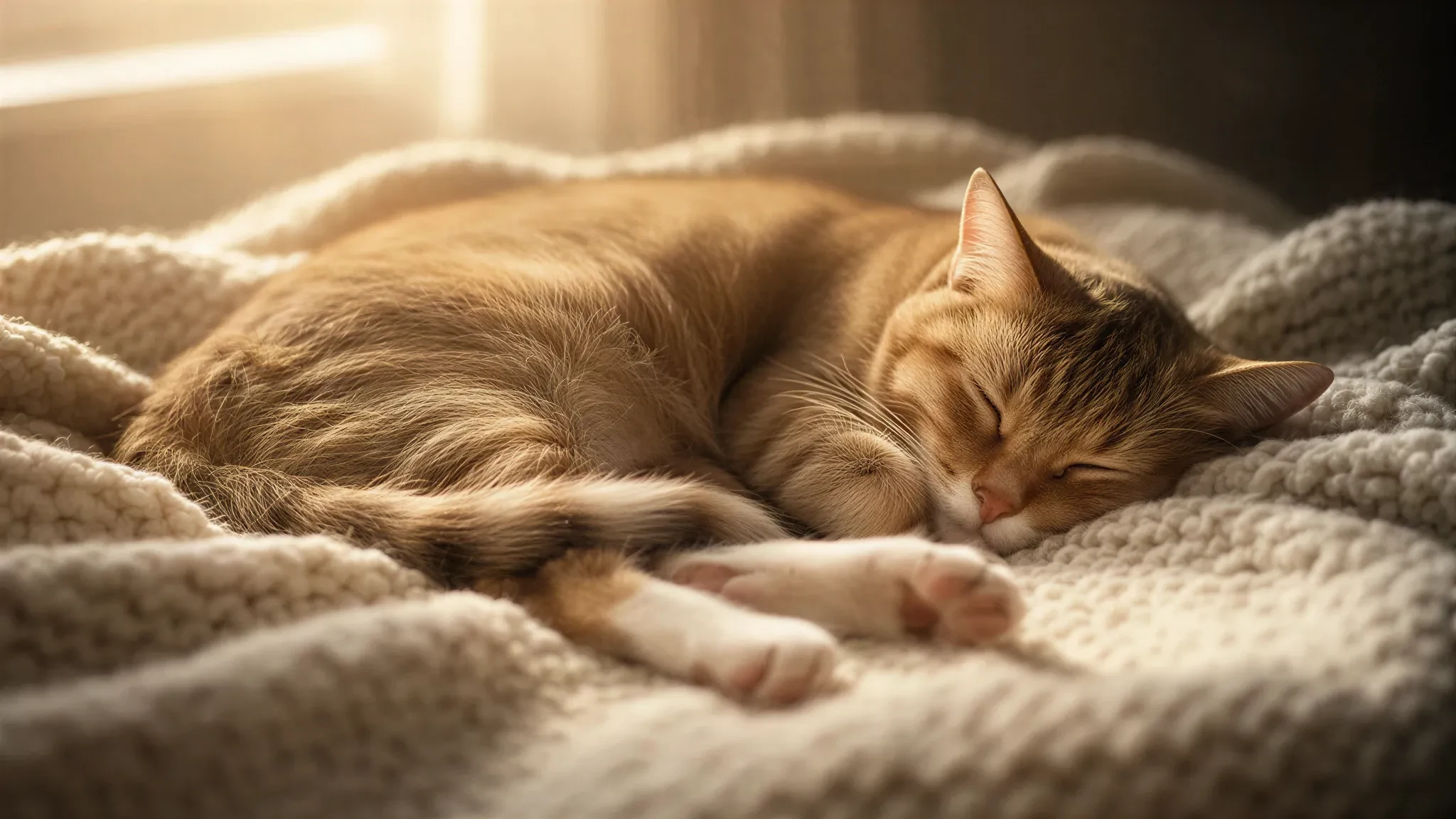
Cats sleep 12 to 16 hours a day — kittens and seniors even more — so you’ll see them sleep in every shape imaginable. And the position they choose is rarely random: it says something about how safe, warm, and relaxed they feel. Here are the classic cat sleeping positions and what each one really means, plus the signs that a sleeping pattern is worth a closer look.
Curled in a Ball
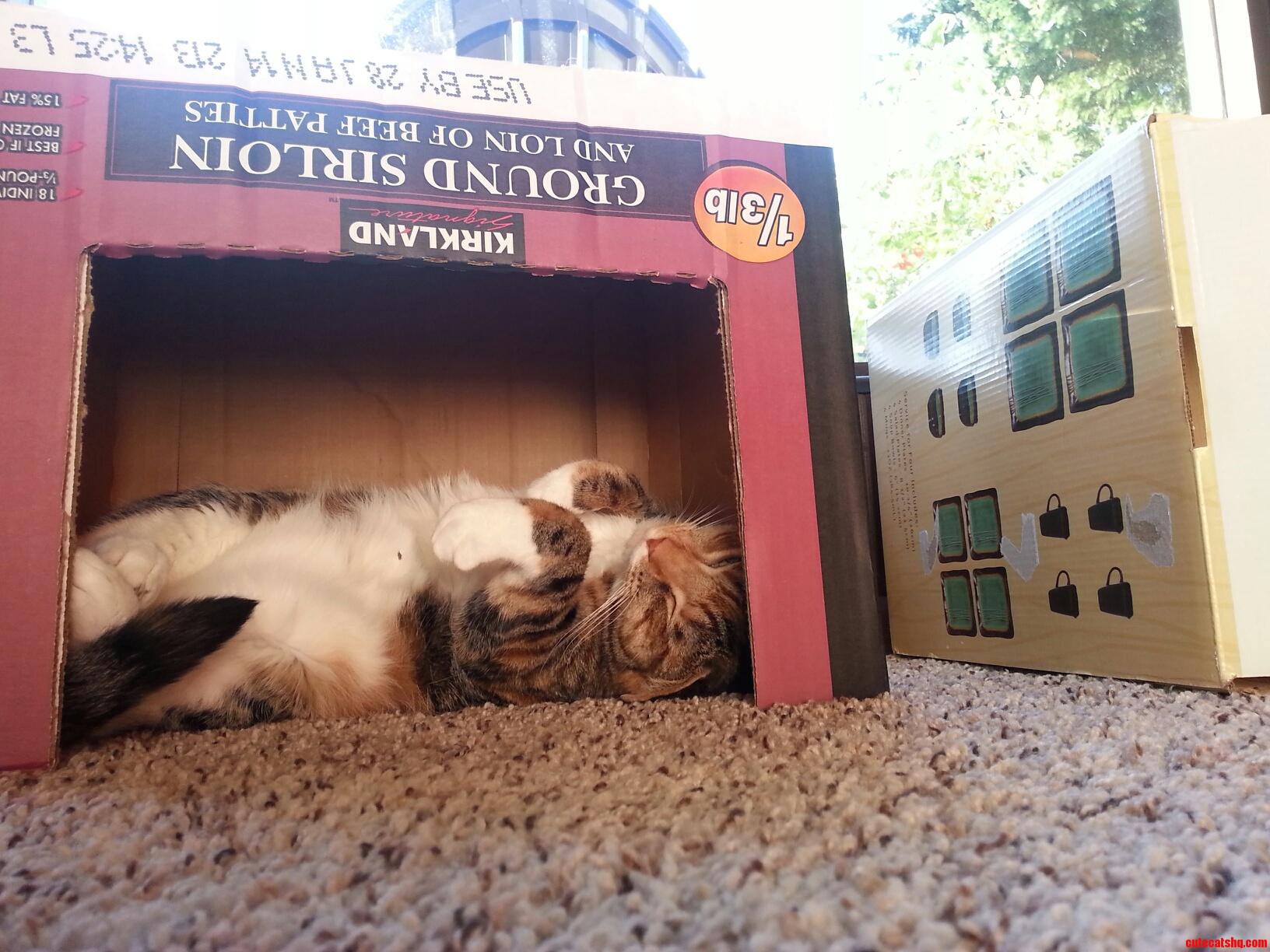
The tight, nose-to-tail curl is the oldest position in the book. It conserves body heat and protects the vital organs and throat, which is why it’s the default when a cat is a little cool or sleeping somewhere less than totally secure. It’s a comfortable, instinctive pose — not a worried one — but you’ll see more of it in winter and less on a warm summer afternoon.
Belly-Up
Sleeping on the back with the belly exposed is the position of a cat that feels completely safe. The belly is the most vulnerable part of a cat, so a cat that sleeps this way is telling you it has zero worries about its surroundings — the highest compliment a cat can pay your home. As always, admire the belly; don’t assume it’s an invitation to rub it.
The Sleeping Loaf
The loaf — asleep sitting up with paws tucked underneath — is a light, ready-for-anything doze. The cat is resting but not fully committed to sleep, keeping itself tidy and warm while staying able to pop up in an instant. It’s the feline version of a quick nap on the couch versus getting fully into bed.
Stretched Out
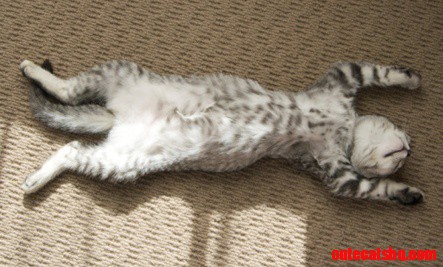
A cat sprawled full-length — sometimes called the “superman” when the legs stretch front and back — is a relaxed, comfortable, and often warm cat. Stretching out increases the body’s surface area to shed heat, so you’ll see a lot of it on hot days and on cool floors. A cat that sleeps sprawled and loose is a content one.
One Paw Over the Face

The paw-over-the-eyes look is equal parts adorable and practical: it blocks out light so the cat can sleep through a bright afternoon, much like we throw an arm over our eyes. It usually means the cat is in a deep, committed sleep and would rather not be disturbed.
Sleeping On You
If your cat sleeps on your chest, lap, or right against you, that’s warmth plus security plus bonding. You’re a heat source, and being close to you means safety. Many cats also gravitate to a spot near your head or feet at night for the same reasons. It’s one of the clearest signs your cat is genuinely attached to you.
When a Sleeping Position Is Worth Watching
Position itself is rarely a problem — but a change in how your cat sleeps or rests can be a clue. Talk to your vet if you notice:
- A cat that suddenly sleeps hunched and tense, tucked away, and is also off its food or less active — that “meatloaf of misery” posture can signal pain or illness.
- A big, unexplained increase in total sleep, or the opposite — restlessness and an inability to settle.
- Sleeping in unusually cold, hidden, or out-of-the-way spots, which cats sometimes do when they feel unwell.
For the full picture on cat sleep, including how much is normal, see why cats sleep so much and, for the youngest sleepers, kittens napping.
Frequently Asked Questions
What does it mean when a cat sleeps curled in a ball?
Curling nose-to-tail conserves heat and protects the cat’s vital organs. It’s a comfortable, instinctive position, and you’ll see more of it when it’s cool or when the cat is somewhere slightly less secure.
Why does my cat sleep on its back?
Sleeping belly-up means your cat feels completely safe, since it’s exposing its most vulnerable area. It’s a strong sign of trust in you and its environment.
Why does my cat sleep on me?
You’re warm, and being close to you means security. A cat that sleeps on your chest or lap is bonding with you — it’s one of the clearest signs of feline attachment.
Should I worry about my cat’s sleeping position?
The position alone rarely matters. What matters is a change — especially a tense, hunched posture combined with reduced appetite or activity, which can signal pain and is worth a vet visit.
Read more on how cats communicate in cat body language.