
Why Do Cats Chatter at Birds? The Predatory Chirp Explained
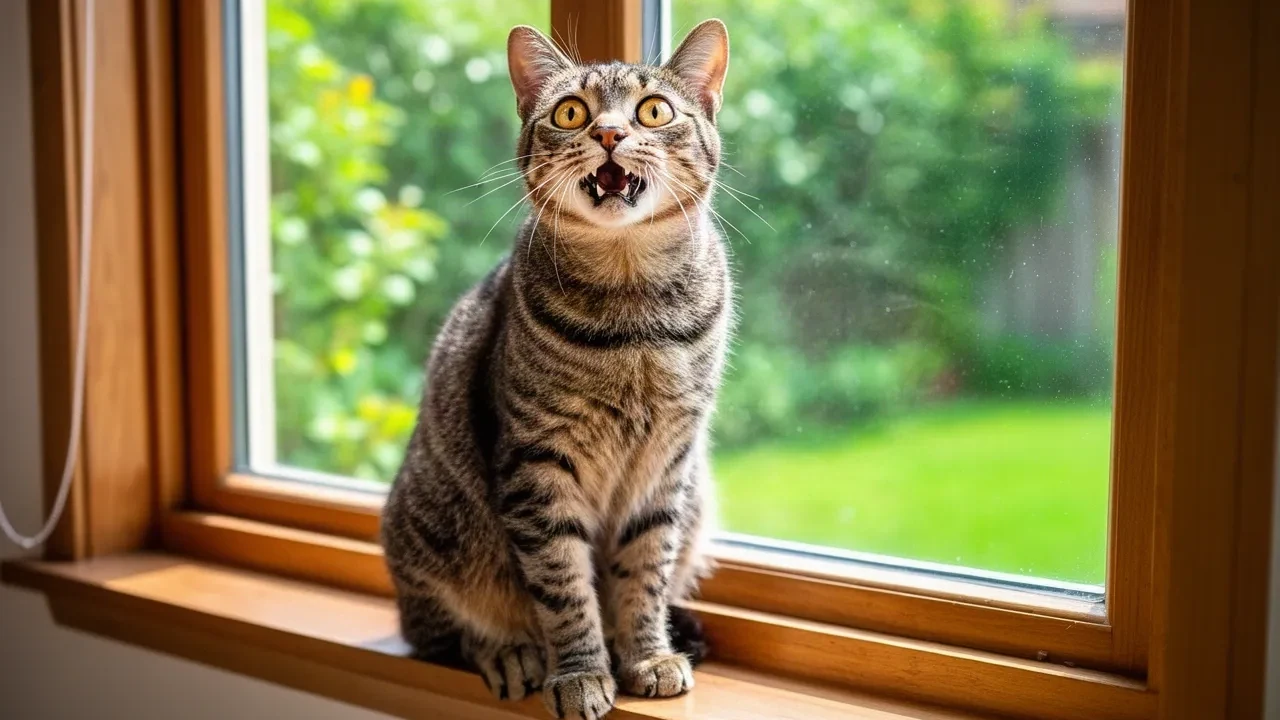
Cats chatter at birds because of an involuntary neuromuscular predatory reflex, intense adrenaline-fueled barrier frustration, and ancient hunting instincts. When your cat watches prey through glass, their jaw vibrates rapidly to rehearse the specialized fatal neck bite used to sever vertebrae, while vocal cords emit high-pitched clicks and chirps. Read our complete behavioral breakdown below, or explore our companion guide on cat body language poses to decode your cat’s full physical posture.
What Feline Predatory Chattering Looks and Sounds Like
Every cat owner has witnessed the spectacle: your cat perches motionless on the windowsill, eyes locked on a robin or sparrow outside in the yard. Their body stiffens into a coiled crouch, the tip of their tail gives an erratic rhythmic twitch, their whiskers thrust forward, and suddenly their lower jaw begins vibrating at lightning speed.
The sound produced during this trance-like state is unlike any standard feline vocalization. It is a rapid sequence of high-frequency clicks, clacks, and staccato chirps that sounds almost mechanical. The teeth chatter against one another while air pushes past the larynx in short, rhythmic bursts. If you gently touch your cat’s chest during chattering, you can feel their heart racing with intense predatory arousal.
In my thirty years living with and observing domestic cats, this behavior never fails to fascinate. Whether displayed by a delicate indoor tabby or a high-energy Bengal, predatory chattering is one of the clearest windows into the untamed evolutionary wiring preserved within every domestic feline.
The 3 Scientific Theories Behind Window Chattering
Animal behaviorists and evolutionary ethologists have studied feline predatory chatter for decades. Rather than a single isolated emotion, chattering represents an intersection of neurobiology, biomechanics, and predatory drive. Three primary scientific theories explain why cats display this distinctive jaw vibration.
1. The Fatal Neck Bite Motor Reflex (Cervical Severance)
The leading anatomical explanation in veterinary ethology focuses on the specialized mechanics of the feline killing bite. In the wild, felids do not simply maul prey; they execute a precise, rapid killing bite delivered directly to the back of the neck.
A domestic cat’s four elongated canine teeth are embedded with specialized proprioceptive nerve endings that act like tactile sensors. When capturing small birds or rodents, the cat clamps down with rapid, vibrating micro-bites. These rapid jaw oscillations allow the canines to wedge between the prey’s cervical vertebrae, instantly severing the spinal cord with minimal struggle.
When an indoor cat sits at a window watching a bird flit across the glass, visual predatory circuits in the brainstem fire at maximum intensity. Because the cat’s neural motor cortex is primed for the kill, the jaw muscles—primarily the masseter and temporalis—fire involuntarily in phantom rehearsal of that specialized cervical killing bite. The cat is literally executing the muscular motor program of the final capture before physical contact is made.
2. The Adrenaline-Frustration Barrier Hypothesis
The second major driver of window chattering is acute emotional conflict caused by an impassable barrier. When a cat spots prey, their sympathetic nervous system releases a surge of adrenaline, cortisol, and dopamine. In a natural outdoor hunt, this biochemical energy is immediately channeled into stalking, sprinting, and pouncing.
In an indoor home environment, a solid glass window pane blocks the execution of the hunt. The cat experiences intense predatory excitement coupled with absolute physical helplessness.
This emotional collision creates what ethologists call “vacuum activity” or displacement behavior. The cat cannot sprint forward, so the pent-up neurochemical arousal overflows through the vocal tract and jaw muscles. The chattering noise and tail-tip twitching serve as an involuntary valve releasing extreme predatory tension.
3. The Evolutionary Vocal Mimicry Theory
A fascinating evolutionary hypothesis emerged from field research conducted by the Wildlife Conservation Society (WCS) in the Amazon basin. Researchers documented a wild Margay cat (Leopardus wiedii) vocalizing with high-pitched chirps to imitate the distress calls of pied tamarin monkeys, successfully luring curious prey within striking distance.
While domestic cats are not consciously strategizing complex deceptive deceptions, evolutionary biologists suggest that the high-pitched chirping sounds emitted during chattering may share an ancestral acoustic root. In the wild, subtle chirps and squeaks can momentarily confuse small birds or rodents, causing them to freeze or approach foliage to investigate, giving an ambush predator a split-second tactical advantage.
Predatory Chattering vs. Other Feline Vocalizations
To understand where chattering fits within your cat’s vocal repertoire, compare its acoustic triggers and physiological drivers against everyday sounds:
| Vocalization Type | Primary Physiological Driver | Target Audience | Physical Body Posture |
|---|---|---|---|
| Predatory Chattering | Neuromuscular kill-bite reflex & barrier frustration | Unconscious motor reflex (prey focused) | Tense crouch, forward whiskers, twitching tail tip |
| Standard Meowing | Learned social communication & human solicitation | Human caregivers | Upright posture, relaxed body, direct eye contact |
| Greeting Trill / Chirp | Affiliative social bonding & friendly recognition | Humans and bonded cats | Upright question-mark tail, soft blinking eyes |
| Defensive Hissing | Fear, territorial defense, warning escalation | Potential threats & rivals | Pinned ears, arched spine, piloerection (puffed fur) |
| Contentment Purring | Endorphin release, self-soothing, relaxation | Self, kittens, or trusted companions | Kneading paws, half-closed eyes, relaxed muscles |
To explore how cats communicate through voice and posture, read our complete guide on why do cats meow and how vocalizations evolve with age.
High Prey Drive Breeds and Window Fixation
While virtually all domestic felines possess the innate neural wiring for predatory chattering, certain breeds display noticeably higher intensity and frequency.
Breeds with recent wild ancestry or high working heritage—such as the Bengal, Savannah, and Abyssinian—possess exceptionally high prey drive. These cats will often spend hours perched at windows, chattering loudly and pawing urgently against the glass whenever pigeons, squirrels, or chipmunks come into view.
Conversely, more sedentary and placid breeds like the Ragdoll or Persian may watch outdoor birds with mild, sleepy curiosity, chattering only intermittently when prey lands directly on the windowsill. You can track your cat’s developmental milestones and instinctual energy levels with our Cat Age Calculator.
How to Set Up Safe “Cat TV” Without Chronic Frustration
Watching outdoor wildlife provides invaluable mental enrichment for indoor cats, preventing boredom and sedentary weight gain. However, prolonged window fixation without an outlet can occasionally escalate into chronic frustration or redirected aggression toward other household pets.
Follow these practical guidelines to create an enriching, stress-free window viewing station:
First, install a sturdy, cushioned window perch in a quiet room overlooking garden foliage or shrubbery. A secure platform allows your cat to recline comfortably without straining their neck or slipping off narrow sills.
Second, position bird feeders and bird baths roughly ten to fifteen feet away from the window glass. Placing feeders directly against the glass can over-arouse excitable cats, while a moderate distance allows realistic visual tracking without inducing frantic barrier scratching.
Third, monitor interactions between multiple cats sharing a window perch. If one cat becomes intensely aroused by an outdoor squirrel and begins lashing their tail, give them space to decompress to avoid sudden swatting matches. For more on reading tail arousal, consult our guide on cat tail language.
The Predatory Wind-Down Play Protocol
When your cat has spent twenty minutes intently chattering at birds through the glass, they have accumulated a massive reserve of adrenaline that needs physical release. Without a structured outlet, this predatory energy can manifest as sudden ankle-stalking, frantic carpet tearing, or tension with other pets.
Implement this simple three-step wind-down routine whenever you notice your cat chattering at the window:
- Initiate an Interactive Wand Chase: Gently draw your cat away from the window using an interactive feather wand or teaser toy. Mimic the erratic, fluttering flight of a bird across the living room carpet to engage their full sprinting and leaping instincts.
- Allow a Definitive Physical Catch: After five to ten minutes of vigorous chasing, slow the toy down and allow your cat to capture the “prey” securely beneath their front paws and deliver real bites. Completing the physical capture satisfies the neuromuscular drive rehearsed at the window.
- Reward with a Crunchy Protein Treat: Immediately offer a small portion of freeze-dried meat treats or crunchy kibble. In feline biology, the natural predatory sequence follows five distinct stages: Stalk, Chase, Catch, Kill, and Eat. Providing a real protein meal completes the cycle, triggering the release of satiety hormones that guide your cat into calm grooming and restful sleep.
When Jaw Clicking Indicates Dental Disease vs. Hunting Reflex
In the overwhelming majority of cases, jaw chattering is a harmless, normal behavioral quirk displayed exclusively in the presence of prey. However, cat owners should know how to distinguish normal predatory chattering from pathological jaw clicking caused by oral pain.
Clinical Red Flags for Oral Disease
If your cat exhibits jaw clicking, chattering, or tooth chattering outside the context of window prey watching, schedule a prompt veterinary examination. Several dental conditions cause abnormal jaw tremors. Feline tooth resorption (FORLs) creates painful erosive lesions at the gumline that expose sensitive tooth nerves, triggering sudden jaw spasms when the cat eats or swallows. Degenerative joint disease or trauma in the jaw hinge, called temporomandibular joint (TMJ) arthritis or subluxation, produces an audible click when the mouth opens. Chronic oral inflammation and loose teeth from severe periodontal disease or stomatitis can cause involuntary mouth trembling and difficulty chewing, and feline orofacial pain syndrome (FOPS)—a neuropathic disorder seen most often in Burmese cats—shows up as frantic pawing at the mouth with jaw chattering. Drooling, dropping dry food, foul breath, reduced appetite, or face pawing alongside the clicking all strengthen the case for a dental workup rather than a hunting quirk.
If you notice any of these signs, consult your veterinarian. This article is for informational purposes and does not replace professional veterinary advice.
Frequently Asked Questions
Do big wild cats chatter at prey like house cats?
Yes, medium and small wild felids—including ocelots, lynx, cougars, and margays—produce predatory chattering and chirping sounds when stalking prey. However, roaring cats like lions and tigers possess a different hyoid apparatus and larger vocal cords, generally relying on silent stalking and throat-crushing suffocating bites rather than high-frequency cervical chattering.
Why does my cat chirp at bugs and laser pointers on the wall?
Cats chatter and chirp at flies, moths, and moving laser dots for the exact same reasons they chatter at birds. An erratic flying moth or an elusive red laser dot triggers rapid visual hunting circuits that stimulate involuntary jaw motor rehearsal and barrier frustration when the prey remains out of reach.
Is my cat angry or distressed when they chatter at birds?
Your cat is not angry in the human emotional sense, but they are experiencing high emotional arousal and mild frustration. The rapid jaw clicks reflect intense predatory excitement combined with the physical inability to bridge the barrier between the living room and the bird outside.
Can window chattering cause redirected aggression?
Yes. If a cat becomes severely overstimulated by outdoor prey they cannot reach, a sudden touch from a human or the close approach of another household cat can trigger an immediate defensive swat or bite. When your cat is intensely fixated on a window, speak softly and redirect their energy with a toy rather than abruptly scooping them up from behind.