
Cat Head Bunting: Why Cats Headbutt & Rub Their Cheeks
Updated
On this page (7 sections)
- The Affectionate Headbutt Explained
- The Anatomy of Feline Facial Scent Glands
- The “Colony Scent” and Allorubbing in Feline Ethology
- Summary: The 4 Facial Gland Zones & Their Functions
- CRITICAL MEDICAL WARNING: Head Bunting vs. Head Pressing
- How to Respond to Your Cat’s Head Bunting
- Frequently Asked Questions
Cats headbutt humans and rub their cheeks against furniture through an affiliative social behavior known as head bunting (or head butting) and allorubbing. By pressing their forehead, chin, and lips against you, cats deposit calming facial pheromones from specialized sebaceous scent glands to create a shared “colony scent,” marking you as trusted family and claiming their environment as secure. Read our complete guide below, or explore our companion article on how cats show affection to decode feline love languages.
The Affectionate Headbutt Explained
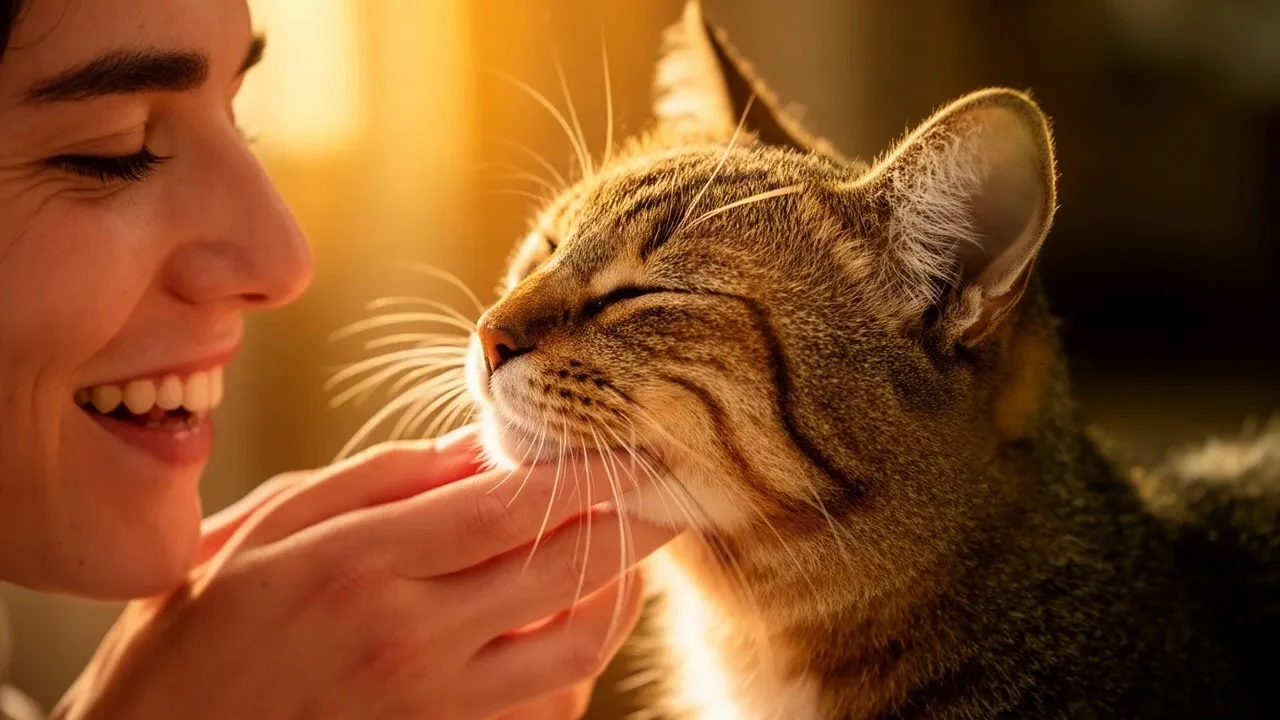
You are sitting on the couch reading a book when your cat approaches, hops onto the armrest, leans in close, and delivers a firm, deliberate thud with their forehead straight into your chin or cheek. As you smile and reach out to pet them, they glide the side of their face along your hand, curving their lips and chin along your knuckles while purring loudly.
In feline ethology, this behavior is known as head bunting (when pushing with the forehead or crown of the skull) and cheeking (when wiping the lips and jawline against a person, companion animal, or object).
While human beings perceive headbutts as comical or slightly clumsy, in the feline world, bunting is one of the highest forms of social affection, mutual bonding, and chemical communication. In my thirty years living with cats, receiving a firm, slow headbutt from a formerly timid rescue cat is the defining moment that confirms they have finally accepted you as their safe harbor.
The Anatomy of Feline Facial Scent Glands
To understand why cats lead with their faces during social greetings, you must look at feline skin anatomy. A cat’s body contains several clusters of specialized sebaceous scent glands, with the highest concentration clustered strategically around the cranial and facial regions.
These facial scent glands continuously produce complex chemical secretions called pheromones. Pheromones are odorless to human noses but carry dense biological information for other felines, signaling identity, reproductive status, emotional calmness, and social familiarity.
Four primary facial scent gland zones power head bunting and cheek rubbing:
- The Temporal Glands: Situated in the slightly sparse fur zone directly between the eye and the base of each ear. These glands deposit pheromones during direct forehead bunting.
- The Pinna Glands: Located at the outer base of the ear flaps. When your cat angles their head sideways to rub their ear base against your fingers, they activate these glands.
- The Perioral (Labial) Glands: Concentrated along the corners of the mouth, lips, and whisker pads. When a cat rubs the side of their open mouth along the sharp edge of a doorway or laptop screen, perioral secretions are deposited.
- The Submandibular Glands: Positioned directly beneath the chin. When your cat hooks their lower jaw over your index finger and drags their throat forward, they are marking with submandibular pheromones.
Veterinary researchers have isolated multiple distinct feline facial pheromone fractions (labeled F1 through F5). The F3 fraction is deposited when cats mark familiar territory to induce feelings of safety and emotional equilibrium. The F4 fraction is deposited exclusively during social allorubbing between bonded individuals, signaling mutual affection and non-aggression.
The “Colony Scent” and Allorubbing in Feline Ethology
In natural outdoor colonies, free-roaming domestic cats form matrilineal social groups. Because cats possess sensitive olfactory senses, maintaining social harmony within a colony requires a shared olfactory identity known as a “group scent” or “colony scent.”
When colony cats greet one another after foraging, they engage in allorubbing—mutual rubbing of heads, flanks, and intertwined tails. By blending their individual facial pheromones together, they create a unified chemical signature that blankets the entire social unit. Any cat carrying the group scent is immediately recognized as a safe ally, while an unfamiliar cat lacking the colony scent is treated with caution.
When your domestic cat headbutts your forehead, rubs your ankles as you walk into the kitchen, or drags their cheek across your phone, they are welcoming you into their personal colony scent profile. They are blending their pheromones with your human scent to establish an olfactory atmosphere of absolute safety and mutual belonging.
Summary: The 4 Facial Gland Zones & Their Functions
| Gland Location | Anatomical Placement | Primary Marking Motion | Social & Behavioral Purpose |
|---|---|---|---|
| Temporal Glands | Between eyes and base of ears | Direct forehead bump (bunting) | Affiliative greeting, bonding, expressing deep trust |
| Pinna Glands | Outer base of the ear flaps | Sideways head tilt and ear drag | Blending scents with trusted humans and bonded pets |
| Perioral Glands | Corners of mouth and lips | Lip wiping along corners (cheeking) | Marking core territory boundaries and familiar objects |
| Submandibular Glands | Underneath the lower chin | Chin hooking and throat rubbing | Scent anchoring on elevated edges, hands, and furniture |
To understand the soft facial expressions that accompany head bunting, explore our guide on cat slow blinking.
CRITICAL MEDICAL WARNING: Head Bunting vs. Head Pressing
While head bunting is a joyful sign of feline health and affection, cat owners must never confuse normal affectionate bunting with a life-threatening veterinary emergency known as head pressing.
What Is Normal Head Bunting?
Normal head bunting is an active, dynamic, and voluntary interaction. The cat approaches you alertly, pushes their head or chin against you or furniture for several seconds, purrs, blinks softly, rubs their cheeks, and moves freely about the room. The cat remains fully conscious, responsive, and coordinated.
What Is Neurological Head Pressing?
Head pressing is a compulsive, continuous neurological symptom where a cat pushes the crown of their head or forehead firmly and motionlessly against a solid wall, corner, floor, or heavy furniture piece. The cat appears stuck, disoriented, or vacant, staring blankly at the wall with zero purring or cheek rubbing.
Head pressing occurs when damage to the forebrain (prosencephalon) or severe metabolic toxicity impairs brain function. Common underlying causes of feline head pressing include:
- Hepatic Encephalopathy: Severe liver dysfunction (often from portosystemic liver shunts or end-stage liver failure) allowing toxic ammonia to cross the blood-brain barrier.
- Brain Tumors or Intracranial Trauma: Physical masses or swelling creating intracranial pressure.
- Infectious Encephalitis / Meningitis: Severe viral, bacterial, or fungal infections of the central nervous system (such as neurological FIP).
- Acute Toxin Exposure: Ingestion of lead, organophosphates, ethylene glycol (antifreeze), or toxic plants.
If your cat is compulsively pressing their head motionless against a wall, stumbling, pacing in circles, or showing unequal pupil sizes, transport them to an emergency veterinary hospital immediately.
If you notice any of these signs, consult your veterinarian. This article is for informational purposes and does not replace professional veterinary advice.
How to Respond to Your Cat’s Head Bunting
When your cat offers a headbutt, reciprocating appropriately reinforces your shared bond and provides comforting emotional reassurance.
First, offer your forehead or a gentle hand. Lowering your head slowly to allow a soft forehead-to-forehead tap (affectionately known as “head-bunting back”) speaks your cat’s dialect. Alternatively, extend a curved knuckle at your cat’s eye level; most cats will eagerly glide their cheek and chin against your hand.
Second, concentrate your petting in their favorite glandular zones. Gently scratch the areas where facial pheromones concentrate: under the chin, along the jawline, and in the sparse fur between the eyes and ears. Avoid sweeping your hand down to their sensitive underbelly, which can trigger defensive overstimulation.
Third, maintain scent consistency in the home. In multi-cat households experiencing tension, using synthetic F3 facial pheromone diffusers (such as Feliway Classic) can mimic natural cheek markings, reducing territorial anxiety and encouraging positive social allorubbing.
Not every headbutt is a request for petting. Some cats nudge your hand or arm to steer you toward their food bowl or a favorite toy, so pause and watch what they do next before assuming they want affection. The difference shows in the follow-through: a bonding headbutt usually ends in cheek rubbing and a soft blink, while a directed nudge comes with a purposeful glance toward the kitchen. Let your cat set the pace, and never grab their head or press back harder than they offer.
You can monitor your cat’s developmental milestones and personality traits using our interactive Cat Age Calculator.
Frequently Asked Questions
Why does my cat headbutt my phone, glasses, or laptop screen?
Cats gravitate toward hard, defined edges that provide firm counter-pressure against their facial glands. Objects like your smartphone, glasses, and laptop carry intense concentrations of your human scent. By rubbing these items, your cat efficiently blends their facial pheromones with yours on the objects you handle most frequently.
Why do cats rub their cheeks on the corners of furniture?
Cheek rubbing on baseboards, door frames, and chair legs is a method of environmental scent mapping. Depositing F3 facial pheromones along high-traffic household boundaries marks the physical space as safe and settled, signaling to the cat that their territory is secure.
What should I do if my cat headbutts me and then gives a light nip?
A sudden soft nip following an affectionate headbutt is usually a “love bite” caused by fleeting sensory overstimulation or playful affection. If your cat nips, stay calm, pause petting, and avoid pulling away abruptly. Keep petting sessions focused on short, gentle strokes around the chin and cheeks.
Do all cats headbutt their owners?
While head bunting is a universal feline behavior, individual frequency varies based on personality, early socialization, and breed temperament. Highly social cats may headbutt dozens of times a day, while more independent cats may show affection through subtle tail wraps, quiet proximity, and slow blinks.
Written by Max
Max is a lifelong cat owner and runs CuteCatsHQ. Health and care guides are checked against the veterinary sources listed with each article.
Keep reading
Why Do Cats Show Their Belly? Trust Greeting vs Belly Trap
Why do cats expose their belly and then bite when petted? Learn the evolutionary biology of the feline abdomen, the trust greeting, and safe petting zones.

Why Do Cats Knead? 4 Biological Reasons for Biscuits
Why do cats knead blankets, pillows, and laps? Discover the 4 biological reasons for making biscuits, the early weaning connection, and claw-safe advice.
Cat Ear Positions: What Forward, Swiveled & Flat Ears Mean
Decode cat ear positions: learn what forward alert ears, independent 180-degree swivels, airplane ears, and flattened defensive ears reveal about your cat.