
Cat Slow Blinking: Science, Meaning & 4-Step Technique
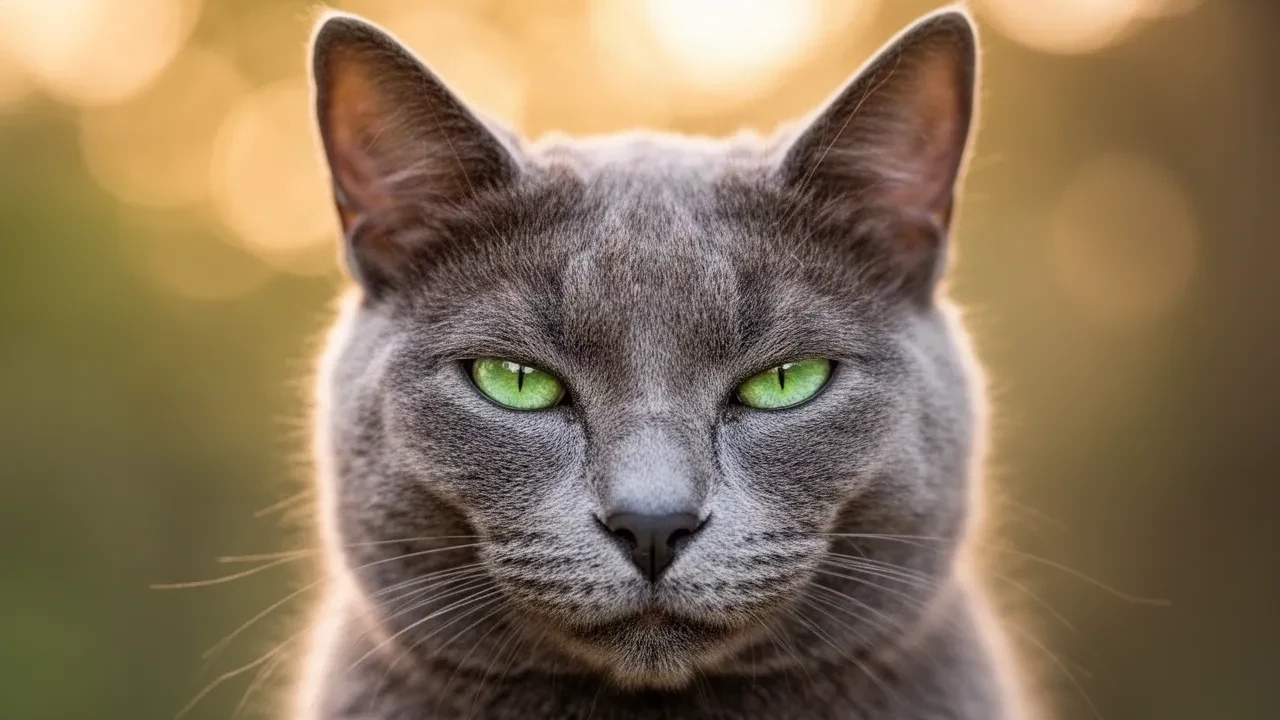
Cat slow blinking—frequently referred to by animal behaviorists as the “cat smile” or “feline eye kiss”—is a scientifically verified visual communication signal where a cat narrows and softly closes their eyes to express emotional relaxation, friendly intent, and mutual trust. In feline psychology, breaking an unblinking gaze demonstrates that a cat perceives zero predatory threat in their immediate environment. Human caregivers can mirror this exact behavior using a simple four-phase technique to build deep rapport with cautious, shelter, or newly adopted cats. Explore how your cat communicates across other body signals in our guide to cat tail language, or follow our step-by-step tutorial below.
The Landmark University of Sussex Study: Scientific Proof
Cat owners have long observed that cats blink slowly when relaxed, but in 2020, animal behavior researchers led by Dr. Tasmin Humphrey and Professor Karen McComb at the University of Sussex published the first rigorous empirical study on feline slow blinking in Scientific Reports (Nature Publishing Group).
The researchers conducted two controlled experiments to determine whether slow blinking operates as a genuine cross-species communication system between cats and humans:
In the first experiment, the research team analyzed twenty-one domestic cats in their home environments. When owners deliberately performed slow-blink sequences toward their cats, the cats were significantly more likely to slow-blink back at their owners compared to control trials where owners sat in the room with neutral, unblinking facial expressions.
In the second experiment, researchers tested twenty-four cats using completely unfamiliar human experimenters. The unfamiliar humans either performed a slow-blink sequence followed by extending an open hand with palm upright, or maintained a neutral face with direct eye contact before offering their hand.
The results were clear: cats were significantly more likely to approach, sniff, and rub against the unfamiliar human who initiated slow blinking than the human who maintained a neutral gaze. This landmark study proved that cats actively decode human eye cues and interpret slow blinking as a positive, welcoming invitation for social interaction.
Why Direct Staring Is a Threat in Feline Psychology
To understand why slow blinking is so powerful, you must first understand how felines perceive unbroken eye contact.
In the wild, felines are obligate carnivores with forward-facing stereoscopic eyes designed for predatory tracking. When a predator stalks prey, it locks its eyes onto the target with an unblinking, hyper-focused stare. Similarly, when two unfamiliar territorial cats confront each other outside, they lock into a rigid, wide-eyed stare. In feline body language, an unblinking direct gaze is a clear declaration of dominance, territorial challenge, or imminent physical attack.
When well-meaning humans gaze wide-eyed directly into a cat’s pupils, the cat does not interpret the expression as admiration. The cat perceives a potential predator locking on or an aggressive rival initiating a standoff.
Slow blinking resolves this tension entirely. When a cat closes their eyes in the presence of another animal, they voluntarily surrender their visual surveillance. By momentarily blinding themselves, the cat sends an unmistakable evolutionary message: “I trust you enough that I do not need to watch your claws.”
The 4-Phase Human Slow Blink Technique
Mastering the slow blink allows you to communicate with your cat in their native visual dialect. Follow these four sequential phases:
Phase 1: Establish Soft, Indirect Proximity
Begin by positioning yourself at or near the cat’s physical eye level. Sit on the floor or couch roughly three to six feet away. Avoid towering over the cat or leaning forward aggressively, as looming triggers defensive flight instincts.
Do not stare directly into the centers of their pupils. Instead, soften your facial muscles and aim your initial gaze slightly toward their cheekbones, whiskers, or ear tips.
Phase 2: The Two-Second Eyelid Lower
Slowly and deliberately lower your upper eyelids until your eyes are roughly half to three-quarters closed. Adopt the relaxed, heavy-lidded expression you naturally make when drifting off to sleep on a warm afternoon.
Hold this drowsy, narrowed-eye expression steadily for two full seconds while maintaining slow, calm nasal breathing.
Phase 3: The Complete One-Second Soft Closure
Gently close your eyelids all the way for one full second. Do not squeeze your facial muscles or scrunch your forehead tightly; keep your brow, jaw, and mouth completely soft and relaxed.
This one-second pause is the heart of the signal. It demonstrates total vulnerability and a complete absence of predatory intention.
Phase 4: Slow Reopen & Soft Aversion
Slowly reopen your eyes halfway over the course of one second, holding the soft gaze for a brief moment.
Immediately afterward, gently turn your head slightly to the side or drift your gaze toward the floor. Looking away breaks direct eye tension and provides your cat with the physical and psychological space to process your greeting.
| Step Phase | Physical Action | Duration | Key Communication Goal |
|---|---|---|---|
| 1. Soft Gaze | Sit at eye level, soften facial muscles, look at cheeks | 3–5 Seconds | Eliminate predatory looming and establish safe presence |
| 2. Half-Close | Slowly lower eyelids to half-closed drowsy state | 2 Seconds | Signal calm relaxation and peace |
| 3. Full Close | Gently close eyelids completely without facial tension | 1 Second | Demonstrate trust and voluntary visual vulnerability |
| 4. Soft Aversion | Reopen eyes halfway and slowly drift gaze slightly aside | 2–3 Seconds | Break tension and invite the cat to respond safely |
Decoding Your Cat’s Response: What Happens Next?
After you perform a four-phase slow blink, pause quietly and observe your cat’s behavioral reaction over the next thirty seconds:
The Return Slow Blink
Your cat narrows their eyes, blinks softly back at you, and turns their head slightly. This is the gold standard response confirming mutual social comfort and friendly acknowledgment.
The Approach & Headbutt (Allorubbing)
Your cat stands up, raises their tail in an upright question-mark posture, walks toward you, and rubs their cheek scent glands against your hand or ankles. This behavior indicates that your slow blink successfully invited physical affection.
The Relaxed Loaf & Nap
Your cat remains where they are, tucks their paws softly under their chest into a relaxed loaf, and allows their eyelids to droop closed for a nap. Your signal communicated that their environment is safe from danger.
The Unblinking Freeze
If your cat continues to stare with wide pupils, twitching ears, or a stiff posture, they are still feeling uncertain or overstimulated. Avoid pushing for contact; look away completely and allow them quiet time to decompress.
To understand how facial cues combine with whole-body postures, review our visual guide to cat body language poses.
The Single-Eye “Wink”: Communication vs. Ocular Health
Cat owners frequently ask whether a cat winking with only one eye is delivering a specialized version of the slow blink.
While healthy cats occasionally blink their eyes slightly out of sync during casual grooming or when waking up, frequent or persistent one-eyed squinting (blepharospasm) is almost always a physical medical symptom rather than an intentional behavioral greeting.
A cat who repeatedly winks or holds one eye partially shut is experiencing localized ocular discomfort. Corneal scratches and ulcers are a common culprit, arising from rough play or foreign particles trapped under the eyelid. Conjunctivitis is another frequent cause, often triggered by Feline Herpesvirus Type 1 (FHV-1) flare-ups or the bacterium Chlamydia felis.
The discomfort can also come from deeper inside the eye. Uveitis is an internal inflammation that causes light sensitivity, iris color changes, and severe pain, while entropion develops when the eyelid margins roll inward and let abrasive lashes rub against the cornea. If your cat winks continuously with the same eye, schedule a veterinary checkup for a fluorescein stain test to look for corneal scratches.
Shelter & Fearful Cat Bonding Protocol
The slow-blink technique is one of the most effective tools for shelter staff, rescue volunteers, and new adopters working with terrified or unsocialized felines.
When a cat arrives in an unfamiliar shelter kennel or quiet adjustment room, reaching your hands inside immediately can trigger defensive fear-biting or hissing. Instead, implement this hands-free bonding protocol:
Sit sideways outside the kennel or across the room so your torso presents a narrow, non-confrontational profile.
Avoid speaking in loud, high-pitched voices; maintain quiet silence or whisper in low, steady tones.
Execute three slow-blink sequences separated by thirty seconds of looking at the floor.
Toss a small, high-value treat (such as freeze-dried chicken) gently near their front paws without reaching your hand into their personal space.
Over several days, this consistent routine teaches anxious cats that humans bring safety and food rather than physical threats, significantly accelerating adoption readiness. Learn more about feline bonding in our guide to how cats show affection.
When to See a Vet
While slow blinking is a wonderful social behavior, pathological eye changes require prompt veterinary attention to prevent permanent vision loss.
Contact your veterinarian promptly if you notice thick yellow or green discharge crusting around the eyelids, cloudiness or a blueish tint over the surface of the eye, or the third eyelid (nictitating membrane) protruding over more than one-third of the eyeball. Excessive tearing, squinting, and obsessive pawing at the face are further reasons to call. A significant difference in pupil size (anisocoria) is the most urgent sign of the group, since it can point to head trauma or neurological disease.
If you notice any of these signs, consult your veterinarian. This article is for informational purposes and does not replace professional veterinary advice.
How to Respond to Your Cat’s Slow Blink
When your cat slow-blinks at you, the simplest response is to blink slowly back. Soften your face, let your eyelids drop for a full second, then look slightly away. This mirrors their greeting and tells them you registered the message without turning the moment into a staring contest.
If your cat follows the blink with an approach or a headbutt, accept it quietly rather than lunging in with both hands. Offer a relaxed hand at their level and let them close the distance. A calm voice is fine, but skip loud praise or sudden movement, which can cancel out the calm you just built.
Let your cat set the pace. Keep your touch light around the chin and cheeks, and end the session with another slow blink before you stand up to leave.
Frequently Asked Questions
Do cats understand when humans slow-blink at them?
Yes, scientific research published in Scientific Reports proved that domestic cats perceive and respond positively to human slow blinks. Cats are significantly more likely to blink back and approach humans who initiate slow blinking compared to humans who maintain a neutral, unblinking expression.
Can slow blinking help introduce two unfamiliar cats?
Yes, human caregivers can use slow blinking to calm anxious cats during territory introductions. If two cats are observing each other from across a room through a baby gate, sitting between them and offering alternating slow blinks to each cat helps lower household tension and signal that no conflict is imminent.
What should I do if my cat stares at me without blinking?
If your cat stares at you with wide, unblinking eyes, avoid staring back directly into their pupils. Soften your facial muscles, perform a slow-blink sequence, and slowly turn your head to look away. This defuses potential tension and reassures your cat that you are not issuing a challenge.
At what age do kittens start slow blinking?
Kittens begin using facial micro-expressions and slow blinking between eight and twelve weeks of age as their vision sharpens and they develop social communication skills through interactions with their mother and littermates.