
How to Stop Cat Meowing at Night: Quiet Solutions
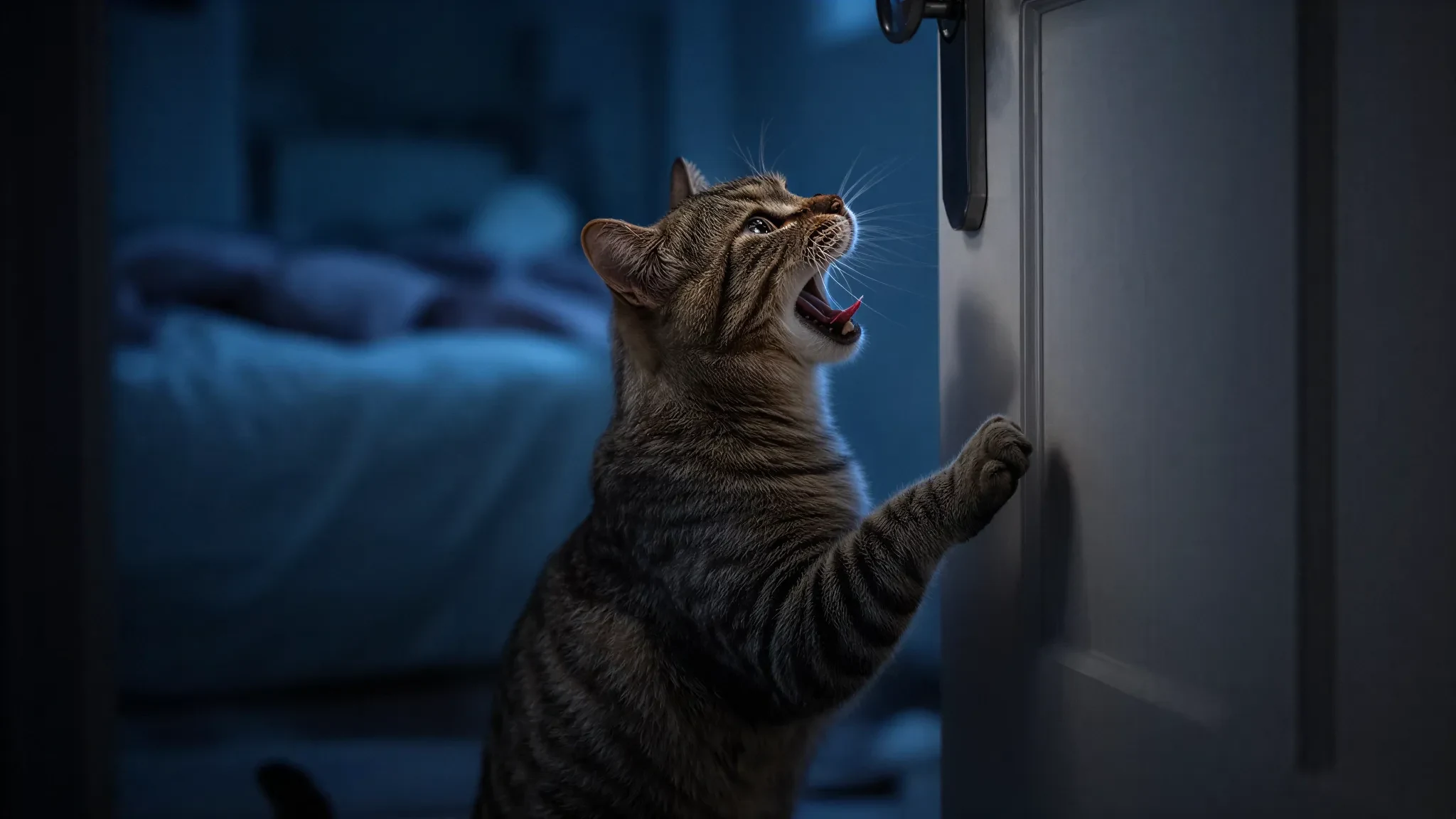
Night-time cat meowing is one of the most common complaints from cat owners. Whether it’s a young cat demanding attention or a senior cat with cognitive decline, night vocalization disrupts sleep and affects quality of life. The solution depends on the underlying cause — boredom, hunger, medical issues, or cognitive dysfunction. This guide provides vet-approved solutions for stopping night meowing, from establishing routines to medical evaluation and environmental modifications.
Understanding Night Meowing
Why Cats Meow at Night
Cats are crepuscular, meaning most active at dawn and dusk. This is when their natural prey is most active. Your cat’s 5 AM zoomies and vocalization reflect natural hunting instincts. This is normal behavior, even if inconvenient for humans.
Night meowing serves different purposes for different cats. Young cats meow from boredom or hunger. Adult cats may meow from habit or attention-seeking. Senior cats often meow from cognitive decline or medical issues. Understanding the cause guides the solution.
Indoor cats may meow more at night from lack of daytime stimulation. They sleep all day while you’re gone, then have energy at night. Adequate daytime enrichment reduces night activity.
Some cats meow at night from loneliness. Cats left alone all day may maximize interaction time at night. They want attention when you’re finally available.
Normal vs. Problematic Night Vocalization
Occasional night meowing is normal. Cats may vocalize when they hear outdoor cats, want food, or are simply active. This becomes problematic when it’s frequent and disruptive.
Problematic night meowing occurs most nights, lasts for extended periods, or is accompanied by other concerning behaviors. This warrants investigation and intervention.
Senior cats with new night meowing need veterinary evaluation. Cognitive dysfunction, hyperthyroidism, and other medical conditions cause night vocalization. Medical causes should be ruled out before assuming behavioral issues.
Young cats with night meowing typically have behavioral causes. Boredom, hunger, and attention-seeking are common. These respond well to environmental and routine modifications.
Medical Causes of Night Meowing
Cognitive Dysfunction
Feline cognitive dysfunction causes night meowing in senior cats. Cats with cognitive decline become disoriented and confused, especially at night. They may wander and vocalize without apparent reason.
Symptoms include disorientation, changed sleep-wake cycles, house soiling, changed interactions, and activity changes. The acronym DISHA helps owners remember signs. Multiple symptoms together suggest cognitive dysfunction.
Diagnosis is through ruling out other causes. Blood work, urinalysis, and blood pressure check for medical causes. Cognitive dysfunction is diagnosed when medical causes are excluded.
Treatment includes environmental support, routine maintenance, and medication. Selegiline is used off-label for cognitive dysfunction. Antioxidant diets may help. Night lights and consistent routines support affected cats.
Hyperthyroidism
Hyperthyroidism causes increased vocalization including night meowing. Overactive thyroid speeds metabolism affecting behavior. Affected cats may seem restless and vocalize more.
Symptoms include weight loss, increased appetite, increased drinking and urination, vomiting, diarrhea, and hyperactivity. Night vocalization is common. Some cats become aggressive or restless.
Diagnosis is through blood tests measuring thyroid hormone. Additional tests evaluate heart and kidney function. Baseline tests before treatment establish health status.
Treatment resolves vocalization in most cases. Methimazole medication, prescription diet, radioactive iodine therapy, or surgery all effectively treat hyperthyroidism. Vocalization typically improves with treatment.
Pain and Discomfort
Pain causes night vocalization in cats. Arthritis, dental disease, and other painful conditions may be more noticeable at night when cats are less distracted. Cats may meow from discomfort.
Symptoms include decreased activity, difficulty jumping, irritability when touched, and changes in grooming. Cats may meow when moving or changing positions. Night meowing may coincide with position changes.
Diagnosis is through physical examination and diagnostic tests. X-rays evaluate arthritis. Dental examination under anesthesia identifies dental disease. Blood work rules out other causes.
Treatment of underlying pain resolves vocalization. Pain medication, joint supplements, dental extractions, and environmental modifications all help. Comfortable cats vocalize less.
Sensory Decline
Hearing and vision loss can cause night meowing. Cats who can’t see or hear well become disoriented. They may vocalize to locate family members or express confusion.
Symptoms include bumping into objects, startling easily, not responding to sounds, and dilated pupils. Night meowing may increase as lighting decreases. Cats may seem confused in familiar environments.
Diagnosis is through veterinary examination. Eye examination evaluates vision. Hearing tests assess auditory function. Blood work rules out other causes.
Environmental modifications help sensory-impaired cats. Night lights help cats with vision loss. Consistent routines help cats navigate despite sensory decline. Don’t rearrange furniture.
Behavioral Causes of Night Meowing
Boredom and Excess Energy
Cats with inadequate daytime stimulation have energy at night. They sleep all day while you’re gone, then become active when you’re home. Night meowing is part of this activity pattern.
Symptoms include high energy at night, destructive behavior, and attention-seeking. Cats may bring toys, demand play, or meow persistently. Daytime sleeping is excessive.
Solution is adequate daytime enrichment. Puzzle feeders, window perches, and cat TV provide passive stimulation. Scheduled play sessions before you leave and when you return help. Consider cat companions for social cats.
Evening play sessions are critical. Plan for 20-30 minutes of active play before bedtime. This tires your cat and aligns their schedule with yours. End with a meal to complete the hunting sequence.
Hunger
Cats may meow at night from hunger. This is especially common with once-daily feeding or free-feeding that’s been interrupted. Cats learn that meowing produces food.
Symptoms include meowing around food areas, following you to the kitchen, and meowing at specific times. Cats may wake you at consistent times for food.
Solution is adjusted feeding schedule. Feed a meal before bedtime. Use timed feeders for early morning meals. This allows you to sleep while your cat eats.
Don’t respond to hunger meowing by feeding. This reinforces the behavior. Use timed feeders instead. Your cat learns that feeders provide food, not meowing at you.
Attention-Seeking
Cats learn that night meowing gets attention. Even negative attention like yelling reinforces the behavior. Your cat learns that meowing produces a response.
Symptoms include meowing that stops when you respond, meowing that increases over time, and meowing that’s specifically directed at you. Cats may meow directly at your face.
Solution is consistent non-response. Never respond to attention-seeking night meowing. Don’t yell, pet, or feed. Any response reinforces the behavior.
Provide adequate daytime attention. Schedule dedicated play and petting times daily. This reduces attention-seeking at night. Your cat gets attention on your schedule.
Habit
Night meowing can become habitual. Cats who have meowed at night for months or years continue the behavior out of habit. The behavior persists even after the original cause is resolved.
Symptoms include long-standing night meowing, meowing at consistent times, and meowing that continues despite interventions. Habit meowing is resistant to change.
Solution is consistent behavior modification combined with patience. Habits take time to break. Expect 2-4 weeks of consistent intervention before seeing change.
Don’t expect immediate results. Habit meowing developed over months or years. Breaking the habit takes consistent effort. Stay committed to the intervention plan.
Solutions for Night Meowing
Establish Consistent Routines
Feed at consistent times daily. Cats thrive on predictable schedules. Feed breakfast, dinner, and a bedtime meal at the same times daily. This regulates your cat’s internal clock.
Schedule play sessions consistently. Morning and evening play aligns with natural hunting instincts. Plan for 15-20 minutes each session. Consistency helps cats anticipate activity.
Maintain consistent bedtime routines. Cats learn to associate certain activities with sleep time. Calm activities before bed signal that night is for resting.
Don’t vary routines on weekends. Cats don’t understand weekends. Maintain consistent schedules seven days a week. This prevents confusion and night meowing.
Evening Play and Feeding
Schedule active play sessions before bedtime. Plan for 20-30 minutes of interactive play. Use wand toys to simulate hunting. Tire your cat out before you want to sleep.
End play sessions with meals. This completes the hunting sequence. Cats hunt, eat, groom, then sleep. Feeding after play triggers the sleep phase.
Provide puzzle feeders with bedtime meal. This extends feeding time and provides mental stimulation. Cats work for food then settle for sleep.
Consider timed feeders for early morning. Program feeders for 4-5 AM meals. This allows you to sleep while your cat eats. Your cat learns to wait for the feeder instead of waking you.
Ignore Night Meowing
Never respond to night meowing. Don’t yell, pet, feed, or acknowledge meowing. Any response reinforces the behavior. Complete ignoring is essential.
Use earplugs or white noise if needed. Protect your sleep while not reinforcing meowing. This helps you maintain the intervention.
Expect extinction burst. Behavior often worsens before improving. Your cat will meow louder and longer when ignoring starts. Stay consistent through this phase.
Be patient. Behavior change takes 2-4 weeks minimum. Some cats take longer. Consistency is essential for success.
Environmental Modifications
Create comfortable sleeping areas. Provide warm, comfortable beds in quiet locations. Cats who are comfortable sleep more and vocalize less.
Use night lights for senior cats. Cats with cognitive decline or vision loss benefit from night lights. This reduces disorientation and night wandering.
Block outdoor cat views. Cats who see outdoor cats may meow at night. Close blinds or use window film to block views. This reduces territorial vocalization.
Provide white noise or calming music. Background sound masks outdoor noises that trigger meowing. Calming music designed for cats may reduce vocalization.
Medical Treatment
Treat underlying medical conditions. Hyperthyroidism, pain, and cognitive dysfunction all cause night meowing. Treating these conditions often resolves vocalization.
Work with your vet on medication protocols. Some medications can be given at bedtime to reduce night symptoms. Pain medication before bed helps arthritic cats sleep comfortably.
Consider prescription diets for medical conditions. Kidney diets, thyroid diets, and other prescription foods address underlying issues. Improved health reduces vocalization.
Monitor treatment response. Keep a log of night meowing frequency and duration. Share this with your vet. Treatment adjustments may be needed.
When to See a Vet
Urgent Signs
Night meowing with other symptoms needs prompt attention. Changes in eating, drinking, litter box habits, or behavior accompanying night meowing indicate medical issues.
Sudden onset night meowing in adult cats warrants evaluation. Medical causes should be ruled out before assuming behavioral issues. Sudden changes often indicate health problems.
Night meowing with signs of pain needs attention. Cats who seem uncomfortable, can’t get comfortable, or vocalize when moving may be in pain. Veterinary evaluation identifies pain sources.
Senior cats with new night meowing should be evaluated. Cognitive decline, thyroid issues, and other age-related conditions cause vocalization. Blood work identifies underlying causes.
Non-Urgent Signs
Gradual increase in night meowing over weeks warrants a vet visit. Schedule an appointment to rule out medical causes. Blood work identifies underlying conditions.
Night meowing that doesn’t respond to behavioral interventions needs evaluation. If you’ve tried consistent intervention for 4-6 weeks without improvement, consult your vet.
Night meowing with mild behavior changes should be discussed with your vet. They can help determine if medical evaluation is needed. Early detection improves outcomes.
Senior cats should have twice-yearly exams regardless of night meowing. Regular screening catches problems early. Don’t wait for symptoms to seek veterinary care.
Frequently Asked Questions
Why does my cat meow at night all of a sudden?
Sudden night meowing often indicates medical issues. Hyperthyroidism, pain, and cognitive dysfunction cause sudden vocalization changes. See your vet to rule out medical causes.
How do I stop my kitten from meowing at night?
Kittens meow from loneliness and hunger. Provide a warm sleeping area, timed feeders for early meals, and adequate daytime play. Kittens typically outgrow night meowing as they mature.
Will my senior cat ever stop meowing at night?
Cognitive dysfunction night meowing may not completely stop but can be managed. Medication, environmental support, and routine maintenance reduce vocalization. Some vocalization may persist.
Should I give my cat sleeping medication?
Never give human sleeping medication to cats. Some veterinary medications can help with night meowing. Discuss options with your vet. Medication should be part of a comprehensive plan.
How long does it take to stop night meowing?
Behavioral night meowing takes 2-4 weeks of consistent intervention to improve. Medical night meowing improves as underlying conditions are treated. Patience and consistency are essential.
Can I use a cat flap to let my cat out at night?
This isn’t recommended. Outdoor cats face significant risks at night including cars, predators, and other dangers. Indoor cats live longer, safer lives. Address the meowing instead.
Will getting a second cat stop night meowing?
Sometimes. A companion can provide daytime stimulation and night companionship. However, this doesn’t work for all cats. Some cats prefer being solo. Consider your individual cat’s personality.
Want more cat care guidance? Read our Do Cats Get Lonely for social behavior insights or explore Senior Cat Care for aging cat health information.