
Why Do Cats Meow at Humans? The Secret Language
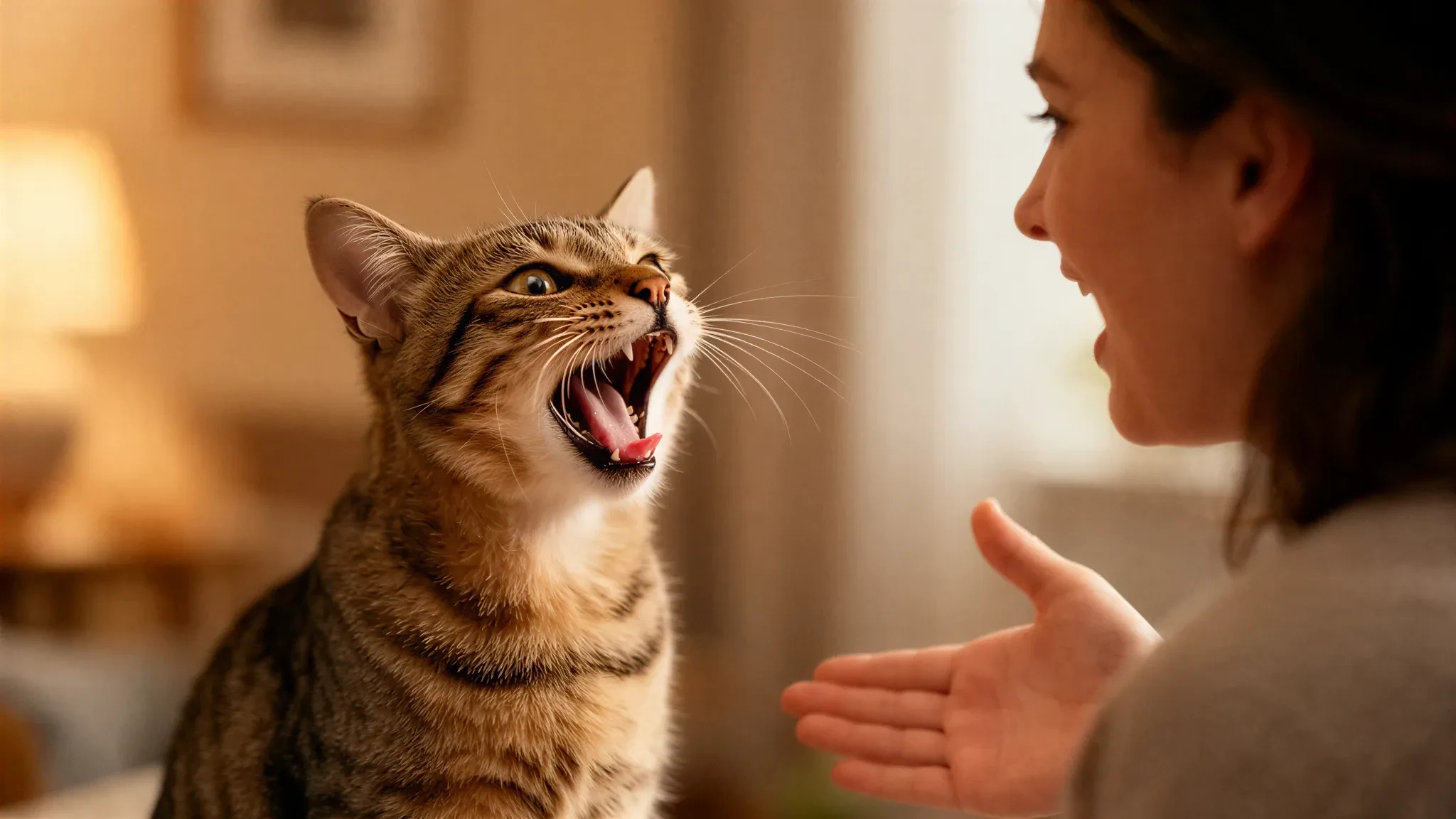
Cats meow at humans for many reasons, and understanding their vocalizations helps you respond appropriately to their needs. Adult cats rarely meow at each other — they’ve learned this communication method specifically for interacting with humans. Cats meow to greet you, request food, demand attention, express discomfort, or signal stress. The type, pitch, and frequency of meowing provides clues about what your cat is trying to communicate. This guide explains why cats meow, what different meows mean, and when excessive meowing warrants a vet visit.
Reason 1: Greeting and Social Interaction
Cats meow to greet their humans and acknowledge their presence. This greeting meow is typically short, soft, and friendly. You’ll hear it when you come home from work, when you enter a room, or when your cat wakes up and finds you nearby.
The greeting meow serves a social function similar to saying hello. Cats who meow when you arrive home are acknowledging you as part of their social group. This behavior reflects the bond between you and your cat. Some cats develop specific greeting vocalizations that they use only for certain family members.
Kittens meow at their mothers frequently, and this behavior carries over into their relationships with humans. Adult cats retain this kitten-like communication because it works — humans respond to meows. Your cat has learned that meowing gets your attention in a positive way.
Cats who live alone may meow more frequently at their humans because they lack feline companionship. The meowing serves as their primary way of maintaining social connection. Multi-cat households may see less human-directed meowing because cats communicate with each other through body language and scent.
Reason 2: Requesting Food or Treats
Food-related meowing is one of the most common reasons cats vocalize. These meows are typically persistent, louder than greeting meows, and often accompanied by food-seeking behaviors like following you to the kitchen or rubbing against your legs.
Cats learn quickly that meowing at meal times produces results. If you’ve ever responded to your cat’s meows by filling their food bowl, you’ve reinforced this behavior. Many cats develop specific food-related vocalizations that they use only around feeding times.
Some cats meow when their food bowl is empty, even if it’s not yet meal time. Cats prefer fresh food and may reject kibble that’s been sitting out. This instinct comes from their wild ancestors who hunted fresh prey.
Treat-seeking meows are often higher pitched and more insistent than regular food meows. Cats associate certain sounds or actions with treats and will meow to request them. If you’ve given treats in response to meowing, your cat has learned this effective strategy.
Reason 3: Demanding Attention
Attention-seeking meows are common in social, people-oriented breeds like Siamese and Ragdolls. These meows are often persistent and may escalate in volume if ignored. Your cat may meow while rubbing against you, jumping on your lap, or pawing at you.
Cats who spend significant time alone may meow more for attention when their humans are home. The meowing serves as a way to reconnect and receive the social interaction they crave. Breeds known for their social nature tend to be more vocal about their attention needs.
Some cats develop specific attention-seeking behaviors paired with meowing. They may bring you toys, lead you to specific locations, or perform tricks they’ve learned get responses. These cats have figured out exactly what works to engage their humans.
Attention-seeking meowing can become problematic if it’s excessive or occurs at inconvenient times. Cats who meow loudly at 5 AM for breakfast have trained their humans well. Establishing consistent routines and not rewarding demanding behavior helps manage attention-related vocalization.
Reason 4: Expressing Discomfort or Pain
Cats may meow when they’re uncomfortable or in pain. These meows often sound different from normal vocalizations — they may be lower pitched, more drawn out, or have a plaintive quality. Pain-related meowing often occurs when your cat moves or is touched in a specific area.
Older cats may meow more frequently due to age-related discomfort. Arthritis, dental disease, and other chronic conditions can cause persistent discomfort that triggers vocalization. Cats are masters at hiding pain, so increased vocalization may be one of the few visible signs.
Cats with urinary issues often meow while using the litter box or shortly after. The discomfort from urinary tract infections, bladder stones, or other urinary problems triggers vocalization. This type of meowing warrants immediate veterinary attention.
Cats experiencing nausea may meow excessively, often accompanied by lip licking, drooling, or hiding. Nausea can result from various conditions including kidney disease, gastrointestinal issues, or medication side effects.
Reason 5: Cognitive Decline in Senior Cats
Senior cats may meow excessively due to cognitive decline, similar to dementia in humans. This condition is called feline cognitive dysfunction. Cats with cognitive decline may meow loudly at night, seem disoriented, or vocalize without apparent reason.
Cats with cognitive decline may meow because they’re confused about their environment or routine. They may forget where their food or litter box is located. The meowing reflects their confusion and anxiety about changes they don’t understand.
Night-time vocalization is particularly common in cats with cognitive decline. They may meow loudly during the night, seeming restless and unable to settle. This disrupts both the cat’s and owner’s sleep.
Cognitive decline cannot be reversed but can be managed. Maintaining consistent routines, providing night lights, and using calming products can help. Veterinary evaluation is important to rule out other medical causes for increased vocalization.
When to See a Vet
Excessive meowing can signal medical problems requiring veterinary attention. See your vet if your cat’s meowing is sudden and unexplained, especially in adult cats who weren’t previously vocal. Sudden changes in vocalization often indicate underlying health issues.
Meowing accompanied by other symptoms warrants veterinary evaluation. Watch for changes in appetite, litter box habits, activity level, or grooming. Multiple symptoms together suggest a medical problem rather than behavioral vocalization.
Senior cats with new excessive meowing should be evaluated for cognitive decline and medical conditions. Blood work, urinalysis, and physical examination help identify underlying causes. Early detection of age-related conditions improves outcomes.
Cats meowing while using the litter box need immediate veterinary attention. This can signal urinary blockage, which is life-threatening especially in male cats. Don’t wait to see if it resolves on its own.
How to Respond to Cat Meowing
For greeting meows, respond with gentle acknowledgment. A soft word, pet, or eye contact lets your cat know you’ve heard them. This positive interaction strengthens your bond without reinforcing demanding behavior.
For food-related meowing, establish consistent feeding routines. Feed at the same times daily so your cat learns when to expect meals. Don’t respond to meowing by filling the food bowl outside scheduled times or you’ll reinforce the behavior.
For attention-seeking meowing, provide regular scheduled attention. Set aside dedicated play and cuddle times daily. Don’t respond to demanding meows or you’ll teach your cat that persistence pays off. Wait for quiet moments to give attention.
For medical meowing, address the underlying cause. Work with your vet to diagnose and treat any health conditions. Pain management, dietary changes, or environmental modifications may reduce vocalization once the medical issue is addressed.
For senior cat meowing, maintain consistent routines. Keep food, water, and litter boxes in the same locations. Use night lights to help disoriented cats navigate. Consider calming products like Feliway or calming treats for anxious seniors.
Frequently Asked Questions
Why does my cat meow at night?
Night meowing can signal boredom, hunger, cognitive decline, or medical issues. Young cats may be bored and want play. Seniors may be confused or experiencing cognitive decline. Rule out medical causes with your vet.
Do cats meow more as they age?
Yes. Senior cats often meow more due to cognitive decline, sensory loss, or medical conditions. Hearing loss can cause louder meowing because cats can’t hear themselves. Veterinary evaluation helps identify the cause.
Why does my cat meow at the door?
Cats meow at doors to request access, express curiosity about what’s outside, or signal they want to come back in. Some cats meow at doors as a greeting when family members arrive home.
Can cats learn to meow on command?
Yes. Cats can learn to meow on command through positive reinforcement training. Clicker training and treats can shape this behavior. Some cats naturally meow when asked “what do you say?”
Why does my cat meow after using the litter box?
Post-litter box meowing can signal discomfort from urinary issues, constipation, or anal gland problems. It can also be a territorial announcement. Persistent meowing after litter box use warrants veterinary evaluation.
Do different cat breeds meow differently?
Yes. Siamese cats are famously vocal with loud, distinctive voices. Some breeds like Russian Blues are typically quiet. Individual personality also affects vocalization regardless of breed.
Can excessive meowing be trained away?
Often yes. Don’t reward demanding meows with attention or food. Provide regular scheduled attention and feeding. Use positive reinforcement for quiet behavior. Consistency is key to changing vocal patterns.
Want to understand more cat behaviors? Read our Cat Body Language Guide or explore how cats show affection and why cats hiss.