
Why Do Cats Purr? Frequencies, Healing & Hidden Meanings
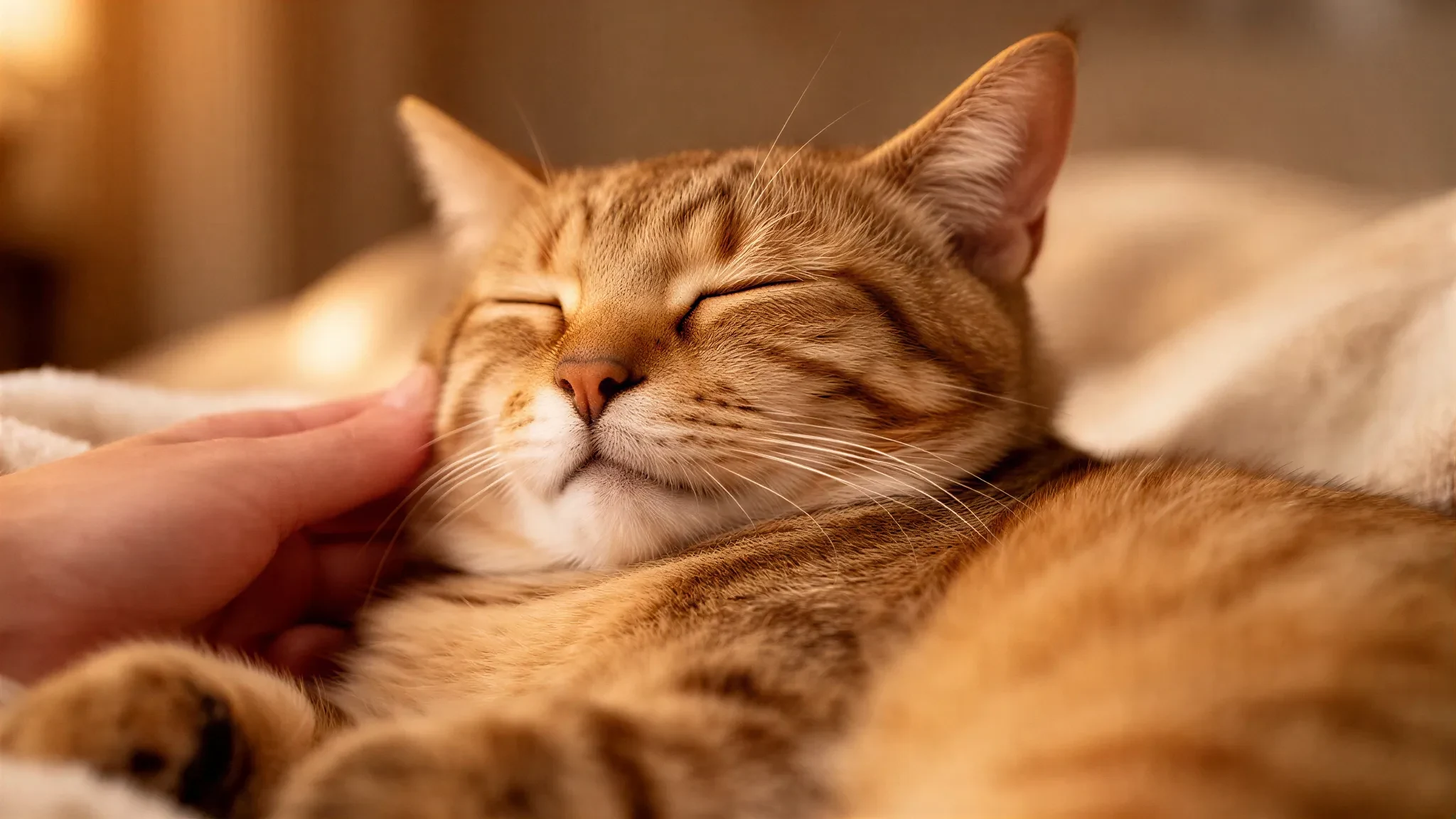
Cats purr primarily as an autonomic communication and self-soothing mechanism, vibrating their laryngeal muscles at low acoustic frequencies between 25 and 150 Hertz. While most purring expresses calm contentment when resting in a lap, cats also purr to demand food through an embedded high-pitched cry, relieve severe physical pain, promote bone density regeneration, and calm themselves during stressful veterinary visits. Decode your cat’s vocal expressions with our companion guide on why cats meow, or explore the anatomical science, acoustic frequencies, and four distinct purr types below.
The Biomechanics of the Purr: How Cats Create the Sound
For over a century, scientists debated whether the feline purr originated from blood pulsing through the vena cava vein or air rushing across false vocal cords. Modern veterinary neurology and bioacoustics have revealed the true mechanism: purring is a neuromuscular event controlled by the central nervous system.
A unique neural oscillator located within the feline brainstem fires rhythmic electrical impulses down the laryngeal nerves at a rate of twenty-five to one hundred fifty cycles per second.
These rapid nerve signals cause the intrinsic laryngeal muscles surrounding the vocal cords to twitch rapidly. As the muscles contract and relax, they alternately open and constrict the glottis—the narrow opening between the vocal folds.
When the cat breathes, passing air hits the vibrating glottal opening, creating sudden pressure changes in the respiratory tract. These rapid air fluctuations resonate through the cat’s chest cavity, skull, and throat, producing the characteristic tactile hum.
Unlike meowing or hissing, which occur solely during exhalation, a domestic cat can purr continuously across both inhalation and exhalation with minimal muscular effort.
Why Small Cats Purr but Lions Roar: The Hyoid Apparatus
The feline family tree is divided into two distinct anatomical groups based on the structure of the hyoid apparatus, the small arrangement of bones supporting the tongue and larynx in the throat:
Domestic cats, cougars, lynx, and cheetahs belong to the subfamily Felinae. These species possess a completely ossified, rigid hyoid bone that vibrates smoothly during both inhale and exhale, allowing continuous low-frequency purring.
In contrast, big cats of the genus Panthera—including African lions, tigers, jaguars, and leopards—possess an elastic cartilage ligament in place of a rigid hyoid bone. This flexible structure allows their massive vocal folds to stretch, producing earth-shaking roars that carry for miles, but it prevents them from sustaining a true, continuous purr.
The 4 Distinct Types of Cat Purrs
Cat owners quickly realize that not all purrs sound or feel identical. Behavioral acoustic studies categorize feline purring into four functional types:
1. The Contentment & Social Bonding Purr
The contentment purr is the classic low-pitched, steady vibration you hear when your cat curls up on your chest, kneads a soft fleece blanket, or settles into a warm patch of sunlight. It is accompanied by slow rhythmic breathing, relaxed facial muscles, and soft half-closed eyes.
In feline social groups, contentment purring functions as an auditory signal of peaceful intentions. It tells mothers, kittens, and human companions that the cat feels safe and welcomes gentle physical contact.
2. The Solicitation / “Breakfast Demand” Purr
Have you ever noticed that your cat’s morning purr sounds noticeably more urgent and piercing when your alarm goes off? In 2009, bioacoustics researcher Dr. Karen McComb at the University of Sussex published a landmark study in Current Biology identifying the “solicitation purr.”
When cats want food or immediate attention, they embed a high-frequency acoustic spike (between 220 and 520 Hz) within the low-frequency 25 Hz purr. This high-pitched cry matches the exact acoustic frequency range of a human infant’s distress call. Human auditory processing systems are biologically wired to respond to baby cries, making this embedded solicitation purr almost impossible for owners to ignore.
3. The Regenerative & Healing Purr
One of the most fascinating discoveries in feline bioacoustics is that cat purrs fall within precise vibrational frequencies known to promote tissue regeneration.
Acoustic frequencies between 25 and 50 Hz stimulate bone density growth and accelerate the repair of micro-fractures in mammals. Frequencies around 100 Hz ease chronic joint pain, reduce tendon strain, and decrease muscular inflammation. This explains why purring is common in cats resting after strenuous athletic activity—the mechanical vibration provides a low-energy therapeutic massage that keeps bones and muscles healthy during long periods of rest.
4. The Stress, Pain & Trauma Purr
Cats also purr during acute physiological distress. Queens frequently purr while giving birth in labor, cats purr when recovering from traumatic injuries, and terrified felines purr on examination tables at the veterinary clinic.
In high-stress scenarios, purring is an involuntary autonomic self-soothing mechanism. The rhythmic vibrations trigger the release of endogenous endorphins in the feline brain, which lower blood pressure, slow racing heart rates, and act as natural pain relievers.
The 25–150 Hz Frequency Spectrum Matrix
Bioacousticians have mapped specific purr frequencies to biological and therapeutic effects:
| Frequency Band | Primary Biological Impact | Clinical Mechanism in Felines | Common Real-World Context |
|---|---|---|---|
| 25–50 Hz | Bone Density & Cellular Repair | Stimulates osteoblast activity and micro-fracture remodeling | Resting after strenuous hunting; healing bone trauma |
| 50–100 Hz | Tendon & Ligament Regeneration | Accelerates collagen synthesis and relieves joint stiffness | Post-play stretching; recovery from muscle strain |
| 100–150 Hz | Pain Relief & Inflammation Reduction | Stimulates natural endorphin release and eases swelling | Labor during birth; self-soothing in stressful clinic visits |
| 220–520 Hz (Spike) | Human Auditory Capture | Mimics infant crying acoustics to compel immediate feeding | The morning “solicitation purr” near food bowls |
Distinguishing Contentment from Pain & Distress
Because purring occurs in both joyful and painful contexts, interpreting your cat’s emotional state requires reading their entire body language:
| Body Language Feature | Contentment Purring | Pain or Distress Purring |
|---|---|---|
| Body Posture | Loose, stretched out, or soft loaf; relaxed muscles | Tightly hunched, guarding abdomen, rigid spine |
| Eye Expression | Soft gaze, slow blinking, normal pupils | Wide dilated pupils, furrowed brow, fixed glassy stare |
| Ear Position | Forward and relaxed | Rotated outward, flattened back, or twitching nervously |
| Tail Movement | Still, relaxed curl, or gentle question-mark curve | Tucked tightly between hind legs or thumping against floor |
| Appetite & Activity | Eager to eat, approaches humans for petting | Refuses food, hides in dark closets, avoids physical contact |
To learn more about reading subtle body cues alongside vocalizations, consult our visual guide to cat tail language.
Why Do Newborn Kittens Purr So Early?
Kittens learn to purr when they are just two days old, long before their eyes open at ten days or their auditory canals open at two weeks.
Purring serves as a critical tactile survival mechanism for neonates. Because newborn kittens are blind and deaf, they locate their mother’s milk by feeling the steady vibrational hum radiating through the queen’s chest and abdomen.
When the kittens nurse, they purr back at their mother. Unlike loud crying or meowing, which could attract predators to the nesting den, low-frequency purring carries minimal airborne sound while transmitting rich tactile vibrations through the bedding. This reassures the mother that her kittens are safely feeding without compromising den security.
The Human Health Benefits of Cat Purrs
The therapeutic benefits of feline purring extend to human companions. Clinical studies in cardiology have documented that petting a purring cat lowers human systolic and diastolic blood pressure, reduces circulating cortisol stress hormones, and decreases the long-term risk of cardiovascular disease and strokes.
The soothing rhythmic sound and physical vibration stimulate oxytocin release in the human brain, explaining why quiet evening cuddling with a purring cat provides such profound emotional comfort. Learn more about how your companion bonds with you in our guide on how cats show affection.
When Purring Accompanies a Medical Emergency
While purring during veterinary visits is often harmless nervous self-soothing, purring combined with visible respiratory distress indicates a life-threatening veterinary emergency.
Cats with severe pulmonary edema, pleural effusion (fluid around the lungs), or asthma can continue to purr even while struggling for oxygen.
Transport your cat to an emergency veterinarian immediately if a purring cat displays:
Open-mouth breathing or rapid panting with an extended tongue.
Noticeable abdominal pumping, where the stomach heaves violently with each breath.
Blue, purple, or pale grey gums, indicating dangerous oxygen deprivation.
Sudden collapse, severe lethargy, or inability to stand.
Frequently Asked Questions
Why do some cats never purr?
Some cats purr so softly that their vibration can only be felt by placing your fingers gently against their throat rather than heard across a room. A small percentage of cats rarely purr due to individual vocal vocalization preferences or minor anatomical variations in laryngeal nerve firing, which is completely normal as long as the cat is healthy and affectionate.
Can a cat purr and growl at the same time?
Yes, cats can produce a hybrid purr-growl when experiencing intense emotional conflict. For example, if a cat is enjoying gentle lap petting but becomes overstimulated or feels threatened by another passing pet, their laryngeal muscles may continue purring while their vocal cords engage in a low defensive growl.
Why does my cat purr when I take them to the vet?
Cats frequently purr during veterinary examinations as a self-soothing coping mechanism. The unfamiliar smells, barking dogs in the waiting room, and physical handling trigger stress, prompting the cat to purr to release calming endorphins and reduce their own autonomic heart rate.
Do big cats like cheetahs and cougars purr?
Yes, cougars, cheetahs, and lynx belong to the Felinae subfamily and possess rigid hyoid bones, allowing them to purr continuously on both inhalation and exhalation just like domestic house cats. Cougars are the largest animals on earth capable of true continuous purring.