
Siamese Cat Breed Guide: Personality & Care
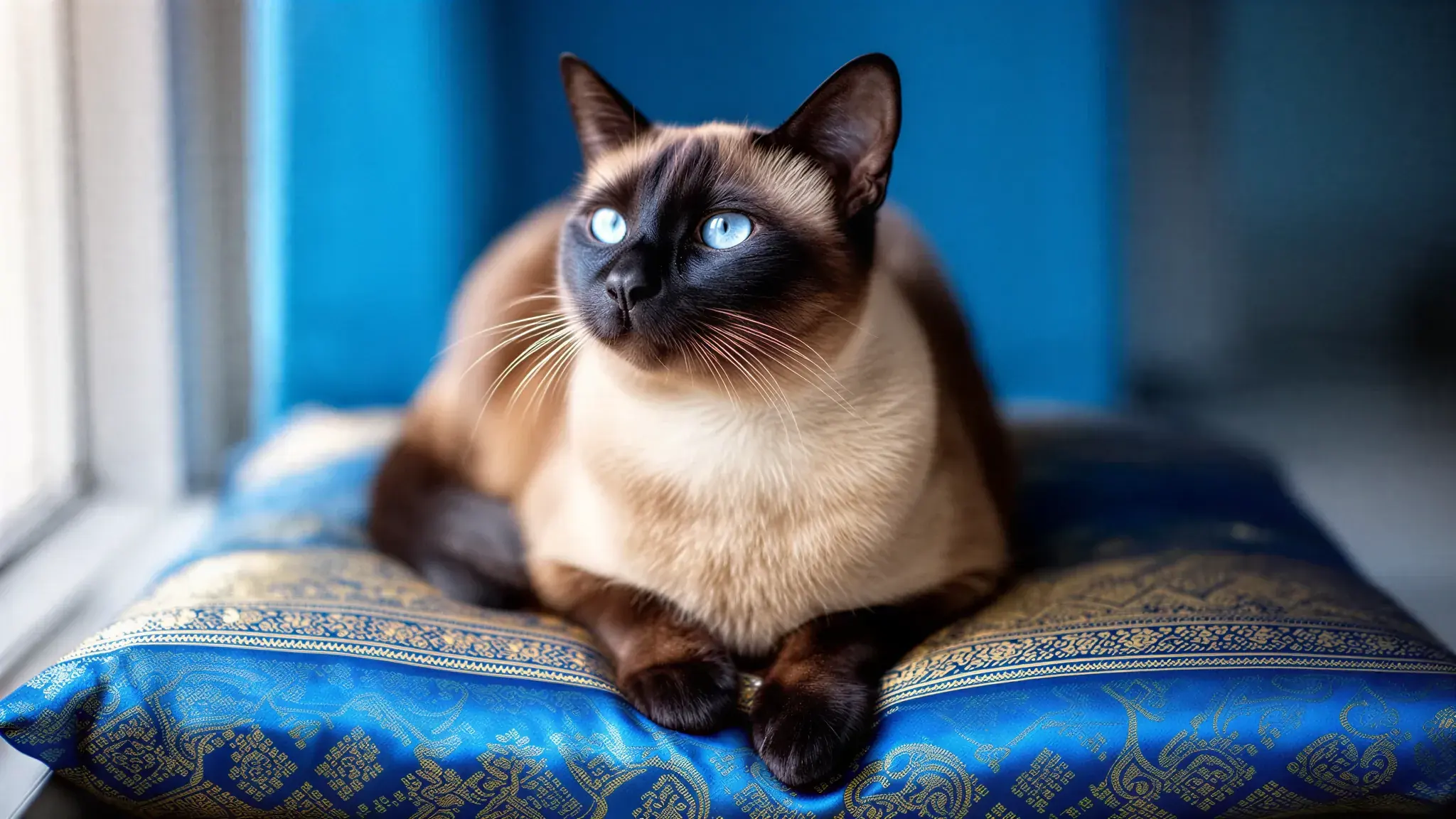
The Siamese is one of the most recognizable cat breeds, known for their striking blue eyes, colorpoint coats, and vocal personalities. These medium-sized cats are perfect for active households and owners who want an interactive, communicative companion. This complete guide covers everything you need to know about Siamese cats: their history, personality traits, care requirements, health concerns, and whether this social breed is the right fit for your lifestyle.
Quick Facts
| Attribute | Detail |
|---|---|
| Origin | Thailand (Siam) |
| Size | Medium (8-12 lbs) |
| Coat | Short, colorpoint |
| Personality | Vocal, social, intelligent, playful |
| Lifespan | 12-15 years |
| Care Level | Low |
| Best For | Active households, experienced owners, multi-pet homes |
| Health Concerns | Amyloidosis, Asthma |
| Common Names | Luna, Bella, Charlie, Leo |
History and Origins
The Siamese is one of the oldest cat breeds, with a history that traces back to ancient Siam (modern-day Thailand). These cats were revered by Thai royalty and kept in temples. They were considered sacred and were not allowed to be sold or given to commoners.
The first Siamese cats arrived in Europe in the late 1800s as gifts from the King of Siam to British diplomats. They caused a sensation at cat shows with their distinctive appearance and vocal personalities. The Cat Fanciers’ Association recognized the Siamese as one of its founding breeds in 1906.
The breed has evolved over time, with modern Siamese having more extreme features than their ancestors. Traditional or “applehead” Siamese have rounder faces and stockier builds, while modern show Siamese have wedge-shaped heads and slender bodies. Understanding this history helps explain why Siamese are so people-oriented.
Personality and Temperament
Siamese are famously vocal and social cats. They’re known for their loud, distinctive voices and constant communication with their humans. These cats don’t just tolerate interaction — they demand it. They’ll follow you from room to room and comment on everything you do.
These cats are highly intelligent and need mental stimulation to stay happy. Puzzle feeders, interactive toys, and regular play sessions are essential. Without adequate enrichment, Siamese may become destructive or develop behavioral problems. They’re not cats who will sleep 18 hours a day — they want to be involved in your life.
Siamese are excellent with children and other pets. Their playful nature makes them ideal companions for active families. They tolerate gentle handling well and rarely become aggressive. They’re best suited for households where someone is home frequently or where there are other pets for companionship.
These cats are very vocal, with loud, distinctive voices. They’ll “talk” to you throughout the day, commenting on your activities and requesting attention. Their vocalizations are unmistakable and not suitable for noise-sensitive households. They’re known for their dog-like devotion to their humans.
Physical Characteristics
Siamese are medium-sized cats with slender, athletic builds. Males typically weigh 9-12 pounds, while females range from 8-10 pounds. Despite their slender appearance, they’re muscular and agile. Their bodies are designed for agility and climbing, with long legs and a long, tapering tail.
The Siamese’s coat is short and fine with minimal shedding. They come in four traditional colorpoint patterns: seal point, chocolate point, blue point, and lilac point. The colorpoint pattern means their bodies are lighter while their ears, face, legs, and tail are darker. The coat requires minimal grooming.
Their striking blue eyes are their most distinctive feature. All Siamese have blue eyes, which develop as kittens mature. Their wedge-shaped heads with large ears give them an alert, intelligent expression. The overall appearance is one of elegance and refinement, which perfectly matches their social personality.
Care Requirements
Grooming
The Siamese’s short coat is one of their easiest care features. Brush once weekly with a soft bristle brush or grooming mitt to remove loose hair and distribute skin oils. During seasonal shedding periods in spring and fall, increase brushing to twice weekly to manage the increased hair loss.
Their short coats don’t mat easily, making them ideal for owners who want a low-maintenance cat. Occasional baths may be needed if your cat gets into something messy, but most Siamese stay remarkably clean on their own. Trim nails every 2-3 weeks and check ears monthly for wax buildup.
Feeding
Adult Siamese typically need about half to three-quarters of a cup of high-quality dry food daily, divided into two meals. Their moderate activity levels mean they need standard calories for their size. Monitor weight regularly and adjust portions accordingly.
Kittens need kitten-formulated food until 12 months of age. Feed 3-4 small meals daily until 6 months, then gradually reduce to twice daily. Siamese are generally good eaters but monitor for any changes in appetite that could signal health issues.
Fresh water should always be available. Many Siamese prefer running water, so consider a fountain to encourage hydration. Proper hydration supports kidney health, which is important for all cats.
Exercise and Enrichment
Siamese need significant daily exercise and mental stimulation. Plan for 30-45 minutes of interactive play daily using wand toys, laser pointers, or fetch toys. These cats often enjoy learning tricks and can be trained to walk on leashes.
Provide tall cat trees with multiple levels for climbing and perching. Siamese love heights and will appreciate vertical territory. Window perches provide entertainment for bird watching. Puzzle feeders and interactive toys keep them mentally engaged when you’re not available to play.
Consider adopting two Siamese or pairing them with another active breed. These cats thrive with feline companionship and will play together when you’re not home. Without adequate stimulation, they may become bored and destructive.
Health Concerns
Siamese are generally healthy cats with good longevity, but they’re predisposed to certain genetic conditions. Amyloidosis is a condition where abnormal proteins deposit in organs, particularly the liver. Symptoms include weight loss, lethargy, and decreased appetite. There is no cure, but supportive care manages the condition. Reputable breeders screen breeding cats for this condition.
Asthma is more common in Siamese than many breeds. Feline asthma causes airway inflammation and breathing difficulties. Symptoms include coughing, wheezing, and difficulty breathing. Treatment includes corticosteroids and bronchodilators. Environmental management helps manage the condition.
Progressive retinal atrophy (PRA) is a genetic eye condition that can lead to blindness. Responsible breeders screen through DNA testing. There is no treatment, but affected cats live quality lives as indoor pets with environmental accommodations.
Dental disease is common in Siamese. Regular dental cleanings and home dental care are important. Watch for bad breath, difficulty eating, and drooling as signs of dental problems. Siamese may need more frequent dental care than other breeds.
Work with reputable breeders who health test their breeding stock. Ask about health guarantees and screening for these conditions. Regular veterinary checkups help catch issues early when treatment is most effective.
Is a Siamese Right for You?
A Siamese is perfect for you if you want an interactive, communicative companion who will be involved in your daily life. They’re ideal for active households where someone is home frequently or where there are other pets for companionship. If you enjoy training cats and providing mental enrichment, a Siamese will thrive in your home.
Consider a different breed if you want a calm, quiet cat who sleeps most of the day. Siamese are not ideal for owners who work long hours away from home or who prefer quiet environments. Without adequate stimulation and companionship, they may become stressed or destructive. If you prefer a low-energy cat, consider breeds like Persian or British Shorthair instead.
First-time cat owners can succeed with Siamese if they’re prepared for the commitment. These cats need more time and attention than average cats. Research the breed thoroughly and ensure you can meet their needs before bringing one home.
Finding a Siamese
Work with reputable breeders who health test their breeding stock and raise kittens in home environments. Ask about health guarantees, screening for amyloidosis and asthma, and socialization practices. Reputable breeders will ask you questions too — they want to ensure their kittens go to appropriate homes.
Siamese rescues exist and occasionally have cats available for adoption. Breed-specific rescues provide breed knowledge and support. Adult Siamese from rescues often have established personalities, reducing uncertainty about temperament.
Avoid pet stores and online marketplaces that may source from kitten mills. These operations prioritize profit over health and welfare. Reputable breeders don’t sell through third parties. Expect to pay $800-$2,000 for a pet-quality Siamese kitten from a reputable breeder.
Popular Siamese Names
Siamese deserve names that match their elegant appearance and vocal personalities. Popular choices include Luna (Latin for “moon”), Bella (Italian for “beautiful”), Charlie (English for “free man”), and Leo (Latin for “lion”). These names suit their social, affectionate nature.
For more breed-specific name ideas, explore our Siamese cat names guide or use our Cat Name Generator to filter by personality traits like “vocal” and “social.”
Frequently Asked Questions
Are Siamese cats good with children?
Yes, Siamese are generally good with children who respect their boundaries. Their playful nature makes them excellent companions for active families. However, their high energy may overwhelm very young children. Always supervise interactions between cats and young children.
Do Siamese cats shed?
Yes, but minimally. Their short coats shed less than long-haired breeds. Weekly brushing manages shedding effectively. They’re not hypoallergenic, but their low-shedding coats may be better tolerated by some allergy sufferers.
How much exercise does a Siamese need?
Plan for 30-45 minutes of interactive play daily. Siamese also need mental stimulation through puzzle feeders and climbing structures. Without adequate exercise, they may become destructive or develop behavioral problems.
Are Siamese cats vocal?
Yes, very. They have loud, distinctive voices and will “talk” throughout the day. Their vocalizations are unmistakable. They communicate their needs and comment on your activities constantly. They’re not suitable for noise-sensitive households.
What health problems do Siamese have?
The breed is predisposed to amyloidosis, asthma, progressive retinal atrophy, and dental disease. Work with reputable breeders who health test their breeding stock. Regular veterinary checkups help catch issues early when treatment is most effective.
How long do Siamese cats live?
Siamese typically live 12-15 years. With excellent care, regular vet visits, and good genetics, some live into their late teens. Their lifespan is comparable to other medium-sized breeds.
Why are Siamese cats so vocal?
Vocalization is a breed trait. Siamese were bred to communicate with their humans. They use their voices to express needs, opinions, and affection. This is normal behavior for the breed, not a problem to be fixed.
Want to learn more about cat breeds? Explore our breed identification guide to find out what breed your cat might be, or read our Ragdoll cat guide for another social, affectionate breed.