
What Breed Is My Cat? 7 Clues and Checks
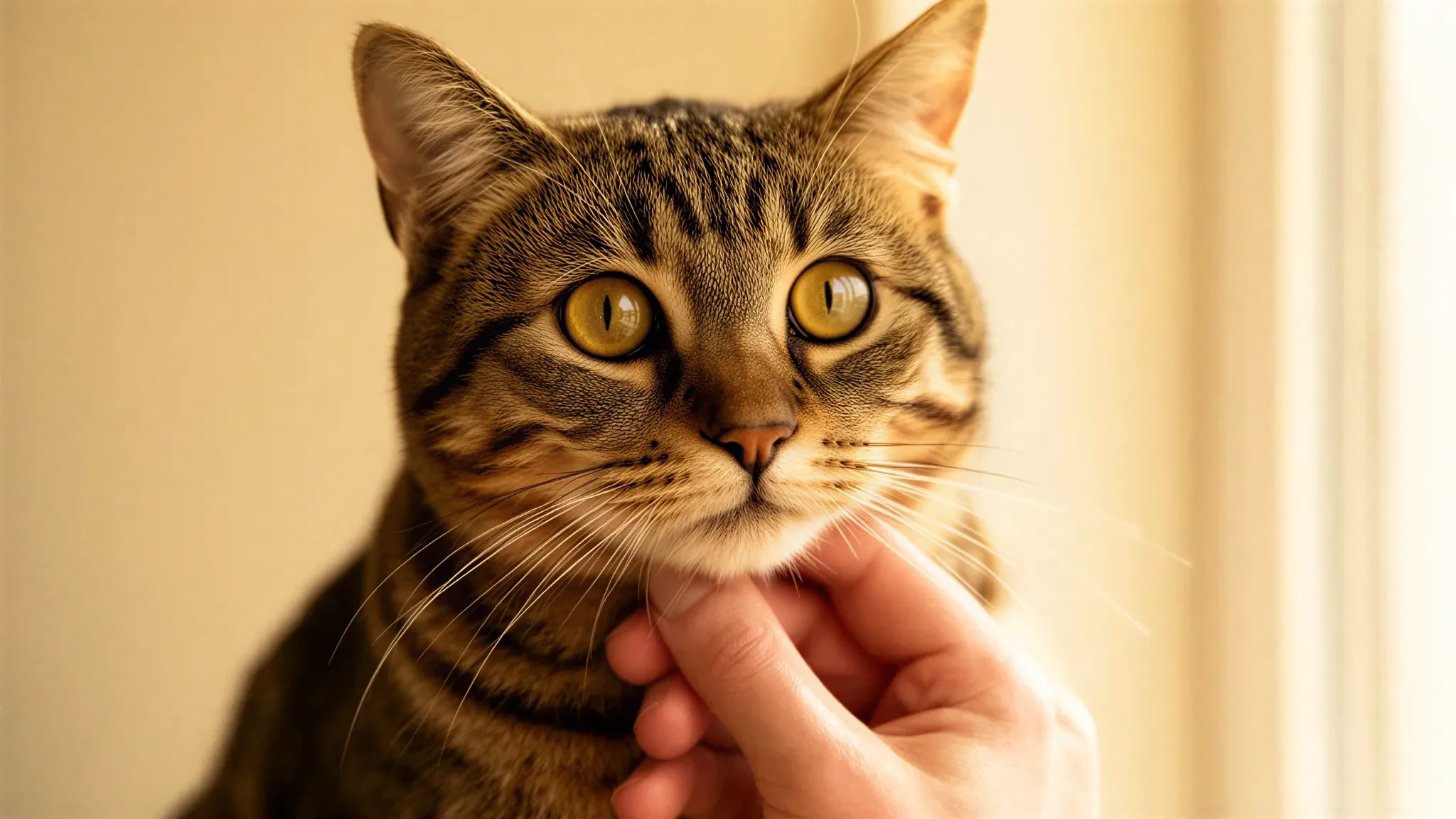
Pedigree or registration records are the strongest evidence that a cat belongs to a recognized breed. Body shape, coat, ears, eyes, tail, and facial structure can suggest breeds your cat resembles, but they cannot prove ancestry: unrelated cats can share the same visible traits, and most pet cats do not have a documented pedigree. Commercial DNA reports add genetic information, but they compare similarity with reference populations rather than reconstructing a definitive family tree.
Method 1: Body Shape Analysis
Breed standards often describe overall build with terms such as cobby, foreign, or moderate. Treat those categories as comparison clues, not an identification test.
Cobby bodies are stocky and muscular with short legs. Breeds like Persian, British Shorthair, and Exotic Shorthair have cobby bodies. These cats appear round and solid.
Foreign bodies are slender and elegant with long legs. Breeds like Siamese, Oriental Shorthair, and Balinese have foreign bodies. These cats appear sleek and refined.
Moderate bodies fall between cobby and foreign. Breeds like American Shorthair, Maine Coon, and Ragdoll have moderate bodies. These cats appear balanced and proportional.
Examine your cat’s body from above and the side, then note overall shape, leg length, and muscle definition. A registry’s written breed standard is more useful than a single photo because it describes a combination of traits.
Method 2: Coat Texture and Length
Coat length, density, texture, and undercoat all matter. Two cats described as shorthaired can have very different coats.
Short coats range from sleek to plush. Siamese and Burmese coats lie close to the body, while British Shorthairs, Russian Blues, and Chartreux cats are shorthaired breeds with notably dense coats.
Semilong and long coats include several different textures and undercoat patterns. Persians, Maine Coons, and Ragdolls all have longer coats, but coat length by itself does not distinguish them.
Examine your cat’s coat length, texture, and shedding pattern. Compare to breed standards to identify potential matches.
Method 3: Ear Size and Placement
Ear size and placement are distinctive breed characteristics. Cats have three main ear types: large, medium, and small.
Large ears are prominent and alert. Breeds like Siamese, Oriental Shorthair, and Devon Rex have large ears. These cats appear exotic and elegant.
Medium ears are proportional to the head. Breeds like American Shorthair, Maine Coon, and British Shorthair have medium ears. These cats appear balanced and classic.
Small ears are rounded and set wide. Breeds like Persian, Exotic Shorthair, and Scottish Fold have small ears. These cats appear sweet and rounded.
Folded ears can result from the mutation associated with Scottish Fold cats, while ear furnishings and tufts appear in several pedigreed and random-bred cats. Neither feature proves ancestry on its own.
Examine your cat’s ear size, shape, and placement. Compare to breed standards to identify potential matches.
Method 4: Eye Color Patterns
Eye color and shape contribute to a breed standard, but color is also connected to coat-color genetics. Blue eyes occur in pointed cats and many white cats, copper or gold appears across numerous breeds, and odd eyes can occur without indicating a particular breed. Compare eye shape, set, and accepted colors with a written standard only after considering the rest of the cat.
Method 5: Tail Length and Shape
Tail length and shape are distinctive breed characteristics. Cats have various tail types including long, short, bobbed, and tailless.
Long tails may be full and flowing, as in Maine Coons, Norwegian Forest Cats, and Turkish Angoras.
Medium tails are roughly proportional to the body and occur in many breeds and random-bred cats.
Short tails may be bobbed or stumpy. Japanese Bobtails, American Bobtails, and Pixie-Bobs have breed-specific tail descriptions.
Tailless or partly tailed cats may have no visible tail, a small rise, or a longer partial tail. Manx and Cymric standards allow several tail-length categories.
Examine your cat’s tail length, shape, and carriage. Compare to breed standards to identify potential matches.
Method 6: Facial Features
Facial features are distinctive breed characteristics. Cats have various face shapes including round, wedge, and square.
Round faces occur in breeds such as Persian, Exotic Shorthair, and British Shorthair.
Wedge-shaped faces occur in breeds such as Siamese, Oriental Shorthair, and Balinese.
Broad or squared muzzles feature in some standards, including the Maine Coon standard, but should be assessed alongside head shape and profile.
Flat faces are distinctive to Persian and Exotic Shorthair. Prominent noses are distinctive to Siamese and Oriental Shorthair.
Examine your cat’s face shape, nose length, and muzzle structure. Compare to breed standards to identify potential matches.
Method 7: DNA Testing
A commercial feline DNA test can provide genetic-trait and health-marker results and compare your cat’s genome with the company’s reference populations. It is not a pedigree certificate or a definitive breed-ancestry test.
For example, Basepaws says its breed report measures which pedigreed reference cats your cat is most genetically similar to and explicitly says it does not verify pedigree. Its percentage breakdown represents genomic similarity, not a genealogical family tree. The breeds included and the report methodology can also change as a company’s reference database develops.
Check the provider’s current documentation before buying. Product availability, included markers, processing times, and report formats change. Also verify that the company actually supports cats: Embark’s own help center says it currently cannot test cat DNA.
What About Photo-Based Breed Apps?
Photo apps and AI tools estimate a breed from appearance alone, and appearance is exactly what breed-guessing gets wrong. Most pet cats are domestic shorthairs, longhairs, or mediumhairs — mixed-ancestry cats with no pedigree at all. A photo tool will still return a breed name for them, because returning a breed name is what it was built to do.
If you want a name for your cat’s look, compare the full set of physical characteristics with written breed standards. If you want genetic information, read a feline DNA provider’s methodology and limitations before treating similarity scores as ancestry. Neither route replaces pedigree records.
Frequently Asked Questions
Can I determine my cat’s breed without DNA testing?
You can describe which breeds your cat resembles by comparing several physical traits, but appearance alone cannot confirm a breed. Without pedigree records, “domestic shorthair,” “domestic mediumhair,” or “domestic longhair” is often the most accurate description.
Are mixed-breed cats healthier than purebreds?
You cannot predict an individual cat’s health from the label “mixed-breed” or “purebred” alone. Genetics, breeding practices, preventive care, environment, and chance all matter; discuss specific risks with your veterinarian.
Do shelter cats have breed information?
Some shelters provide breed information based on physical characteristics. However, this is often an educated guess rather than confirmed breed.
How accurate are cat DNA tests?
They can accurately detect the particular genetic variants a laboratory validates, but a breed-similarity report is not the same as proof of pedigree or a reconstructed family tree. Results also depend on the provider’s reference database and method.
Can a cat be two breeds?
A cat can have parents from different breeds, but that conclusion requires reliable pedigree or parentage evidence. A commercial report’s breed percentages may describe genomic similarity rather than literal ancestors.
What if my cat doesn’t match any breed?
Most cats are mixed-breed or domestic shorthair/longhair. These cats don’t have specific breed characteristics but are still wonderful companions.
Should I care about my cat’s breed?
Documented breed can flag health conditions worth discussing with a veterinarian, but it does not determine an individual cat’s personality. Care decisions should be based on the cat in front of you, its history, and veterinary guidance.
Want to go deeper? Explore our Cat Breed Guides for physical-trait comparisons, or review the limits of DNA testing before buying a kit.