
Russian Blue Cat Names: 50 Best Ideas & Meanings
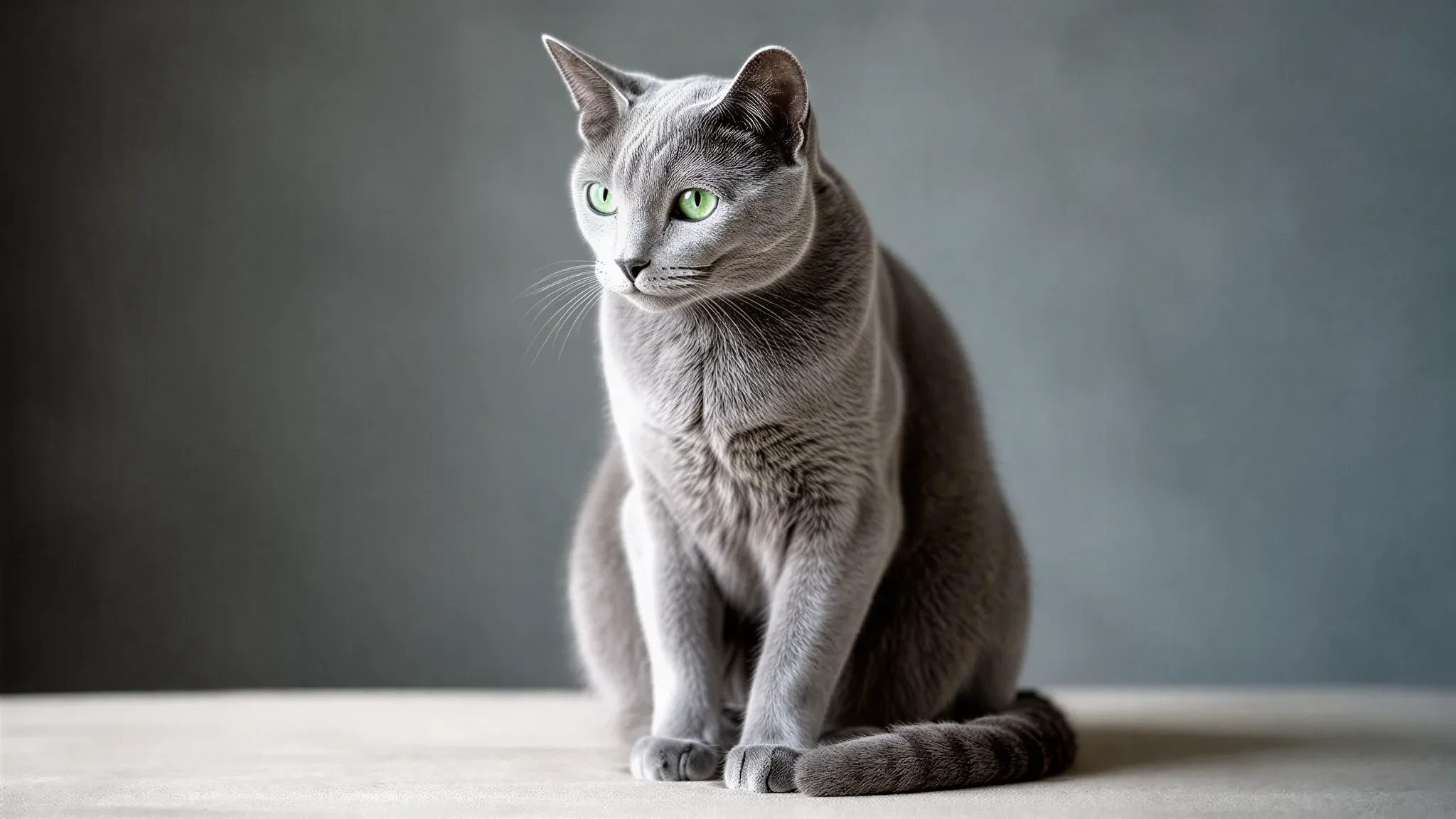
The Russian Blue comes from Arkhangelsk, a northern Russian port on the White Sea, and the breed’s look is built for that climate: a short, dense double coat with silver-tipped blue hair and a lean, elegant body. Sailors are said to have carried the cats to England in the 1860s, where they were first shown. Two pieces of vocabulary are worth untangling before you name one. In cat breeding, “blue” means gray, not the color of a blueberry. And the breed is Russian, but a name is not required to be. You can honor the origin, describe the coat, lean on the green eyes, or ignore all three and name the individual cat.
Russian Blues tend to be quiet and reserved with strangers, gentle with their own people, and surprisingly playful once they relax. That is a tendency, not a guarantee. A loud, gregarious Russian Blue exists, and so does a shy one. The Russian Blue breed guide covers the coat and the health questions. Use this page for the name and let the cat in front of you decide how soft or how cool that name should be.
Quick Picks: Russian Blue Cat Names
Shadow — a dark silhouette; fits the deeper blue-gray coat Sterling — a silver standard; the silver-tipped coat is the whole look Smokey — gray; plain, warm, and easy Ash — the gray of ash; quiet and short Ivan — God is gracious; a classic Russian name and a clean call Natasha — from the Natalia line; warm and unmistakably Russian Jade — green gemstone; a direct nod to the breed’s green eyes Luna — moon; cool and silver-adjacent without being a color word
Names for the Silver-Blue Coat
The Russian Blue’s coat is what people notice first: short, dense, and tipped with silver so that it seems to shimmer. These names describe the color and texture. They are associations, not requirements, so a lighter or darker cat can carry any of them.
Shadow — a dark silhouette; for the deeper end of the coat. Smokey — gray; the most approachable of the color names. Ash — the gray left after a fire; soft and plain. Cinder — a burnt remnant; darker and a little smoky. Onyx — black gemstone; for a very dark Russian Blue. Misty — foggy; a paler, softer silver. Silver — the metal the coat is compared to; a classic and still uncommon. Sterling — a silver standard; a touch more formal than Silver. Slate — gray stone; cool and strong. Steel — gray metal; hard and modern. Graphite — the gray mineral; a distinctive, uncommon pick. Blue — the cat-fancy word for gray, and the most literal option of all.
Names from Northern Russia and the Port of Arkhangelsk
The breed’s real home is the far north of Russia, so a Russian or northern name points at genuine history rather than a generic theme. As always, the name is a nod, not an ancestry test, and one name from this group is enough.
Ivan — God is gracious; the best-known Russian boy’s name in English. Boris — warrior; strong and a little dramatic. Dmitri — earth lover; dmee-TREE, shortening to Dima. Nikolai — victory of the people; nee-koh-LY, formal and handsome. Pavel — small; PAH-vel, modest and clean. Igor — warrior of peace; two hard beats. Yuri — farmer; YOO-ree, simple and uncommon here. Misha and Sasha — unisex nicknames, “who is like God?” and “defender of mankind”; both fit any cat. Natasha — the most recognizable Russian girl’s name on the list. Olga — holy; OL-gah, plain and sturdy. Katya — pure; a warm diminutive of Yekaterina. Anastasia — resurrection; four syllables, so decide about Ana early. Sonya — wisdom; SON-yah, short and friendly.
A few northern words work as names too, without belonging to any person: Archangel, the English rendering of Arkhangelsk; Neva, the river; and Winter, for the season the coat was made for. One of these places the cat instantly.
Names for the Green Eyes
A Russian Blue’s eyes turn green as the cat matures, and that green is one of the breed’s signatures. These names lean on it. They suit a cat whose eyes are the first thing a visitor notices.
Jade — a green gemstone; the closest match. Emerald — a deeper, richer green; a little more formal. Ivy — a climbing plant; green, short, and understated. Olive — the olive tree; muted green and food-adjacent. Sage — a gray-green herb; quiet and textured. Forest — wooded green; a bigger, outdoorsy name. Basil — a green herb; sharp and unusual on a cat.
These are eye-color names, not eye-color rules. A Russian Blue with eyes that read more yellow than green still wears Jade perfectly well.
Quiet Names for a Reserved Cat
Russian Blues often prefer a calm household and a small circle of trusted people. Owners tend to choose unfussy names to match, and these stay soft without disappearing.
Luna — moon; two open syllables. Cleo — glory; short and a little regal. Zoe — life; bright and brief. Misty — foggy; soft on the ear. Willow — willow tree; graceful and calm. Sora — sky; quiet and open. Nala — beloved; gentle and easy. Sonya — wisdom; warm and familiar.
How to Choose the Right Russian Blue Cat Name
Decide which part of the breed you want the name to point at. If it is the coat, stay with Shadow, Sterling, or Silver. If it is the northern origin, a Russian name or a word like Archangel does the work cleanly. If it is the green eyes, Jade or Ivy says it in one syllable. Mixing all three — a Russian color word plus an eye gem plus a winter theme — usually produces a name that sounds like a description rather than a cat.
Then say it the way you will actually use it. A reserved cat will hear the name in a calm room, so softness matters more than volume. Two syllables with a clear vowel, like Luna, Shadow, or Sonya, are easy for the cat to separate from ordinary speech. Test each one while you are sitting still rather than shouting from a doorway.
Finally, match the cat, not the breed write-up. The quiet, reserved Russian Blue is a tendency, and plenty of them are playful and social once they trust you. If your cat is the outgoing kind, a livelier name costs nothing. The Chartreux cat names and British Shorthair cat names pages cover the two gray-blue breeds most often confused with the Russian Blue.
Frequently Asked Questions
What is a good Russian Blue cat name?
Shadow, Sterling, and Smokey fit the silver-tipped coat, while Jade, Ivy, and Olive lean on the breed’s green eyes. Ivan, Natasha, and Misha nod at the cat’s Russian home. Each one is short enough to call, and none of them requires the cat to be an extrovert.
Why is a Russian Blue called blue?
In cat breeding, blue simply means gray. A Russian Blue’s coat is a cool blue-gray with silver tips, not the color of a blueberry. The breed picked up the label in England, where the cats were first shown, and the name stuck even though it is a description of the coat rather than the animal’s homeland alone.
Should I give my Russian Blue a Russian name?
Only if you like one. The breed comes from the port of Arkhangelsk in northern Russia, so Ivan, Natasha, or Misha is a genuine nod to that origin. But the breed’s origin and a name’s origin are separate things, and an English or Japanese name suits a Russian Blue just as well.
What names suit a Russian Blue’s coat?
Shadow, Smokey, Ash, Cinder, Silver, and Sterling all describe the blue-gray coat, and Misty or Onyx work on the darker end. The coat is an association rather than a rule, so a paler Russian Blue can carry a dark-sounding name without a problem.
Do Russian Blues like quiet names?
No breed has a rule about name length, but a reserved cat is easy to overwhelm with a mouthful. Soft one- and two-syllable names such as Luna, Cleo, and Zoe are simple to say and simple for the cat to recognize. That is a convenience, not a requirement.