
How to Stop Cat Scratching Furniture: Methods That Work
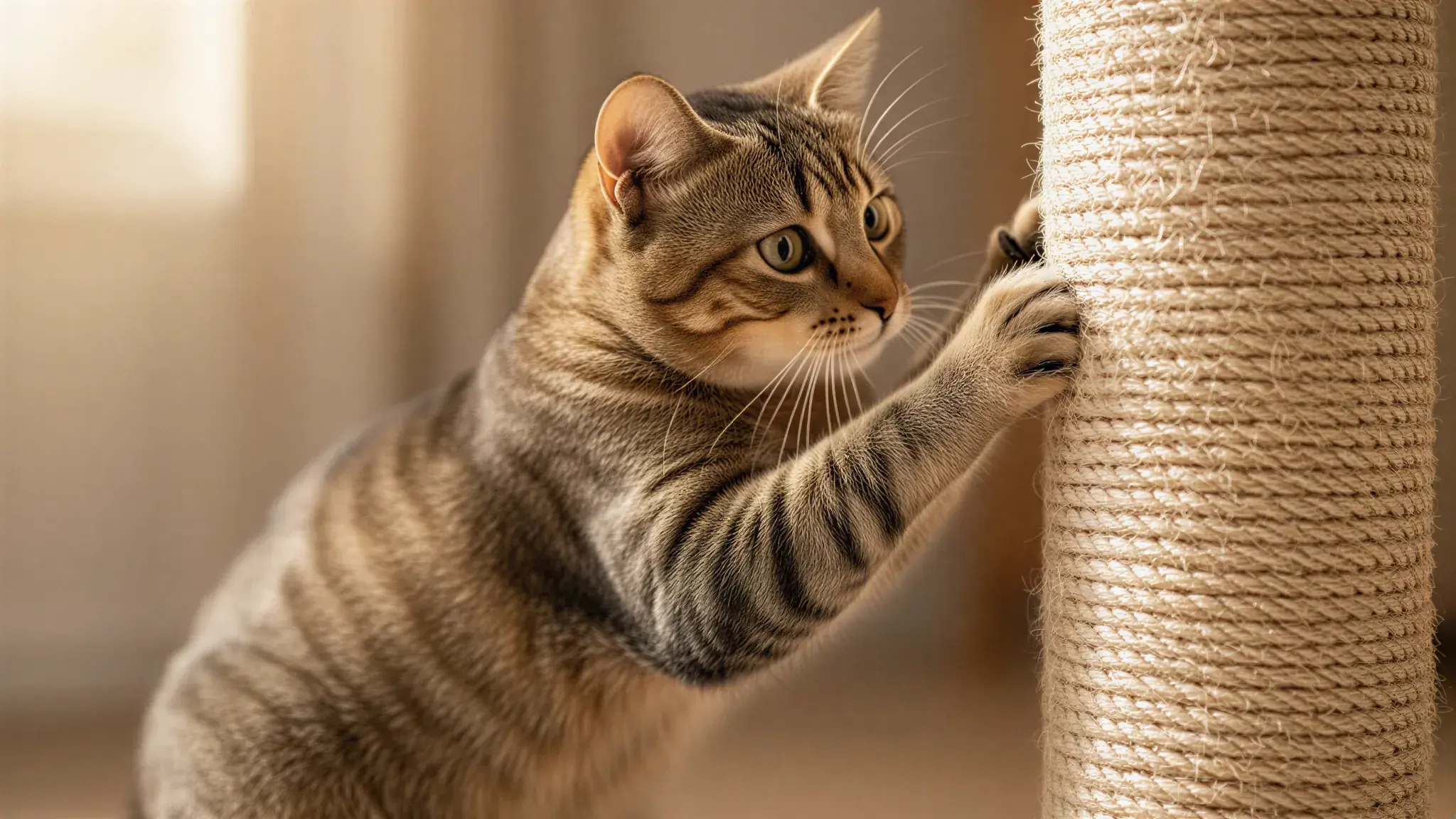
Cat scratching furniture is a common complaint, and one of the most solvable. Scratching is natural, necessary behavior that can’t and shouldn’t be eliminated. The fix is redirecting it to appropriate surfaces while making furniture less appealing. This guide covers choosing the right scratching posts and using deterrents effectively, so you can protect your furniture while respecting your cat’s instincts.
This article contains affiliate links. If you purchase through our links, we may earn a small commission at no extra cost to you. We only recommend products we’ve researched or personally found valuable for cat owners. Ratings shown are from Amazon customer reviews.
Understanding Why Cats Scratch
Cats scratch for several essential reasons. Scratching maintains claw health by removing dead outer layers. It stretches muscles and exercises the body. It marks territory through both scent glands in the paws and visual marks. It expresses emotions including excitement, frustration, and stress.
Scratching is not spiteful or destructive behavior. Your cat isn’t trying to ruin your furniture. They’re following deeply ingrained instincts that serve important functions. Understanding this helps you approach the problem with patience rather than punishment.
Punishment doesn’t work for scratching behavior. Cats don’t connect punishment with the scratching action. Punishment damages your relationship and increases stress, which can actually increase scratching. Positive redirection is far more effective.
Successful scratching management requires multiple approaches. Provide appropriate scratching surfaces, make furniture less appealing, and reward appropriate scratching. Consistency across all approaches leads to success.
Choosing the Right Scratching Posts
Scratching post material matters significantly. Sisal rope is the most effective material: it gives claws real resistance, and cats tend to like the rough texture. Cardboard scratchers appeal to many cats and are inexpensive to replace.
Scratching post orientation affects usage. Some cats prefer vertical posts while others prefer horizontal surfaces. Many cats like both. Provide multiple orientations to match your cat’s preferences. Observe where your cat currently scratches to determine preference.
Stability is crucial for scratching posts. Wobbly or tipping posts frighten cats and discourage use. Choose sturdy posts that don’t move when scratched. Heavy base posts or wall-mounted options provide maximum stability.
Size matters for scratching posts. Posts should be tall enough for full-body stretching. Cats need to stretch completely when scratching. Posts that are too short don’t satisfy the stretching need. Tall posts also provide climbing opportunities.
The most effective way to redirect scratching is to give your cat something better than your couch. A tall, sturdy cat tree with sisal posts satisfies scratching, climbing, and perching all at once — and cats gravitate to it once it’s in the right spot.
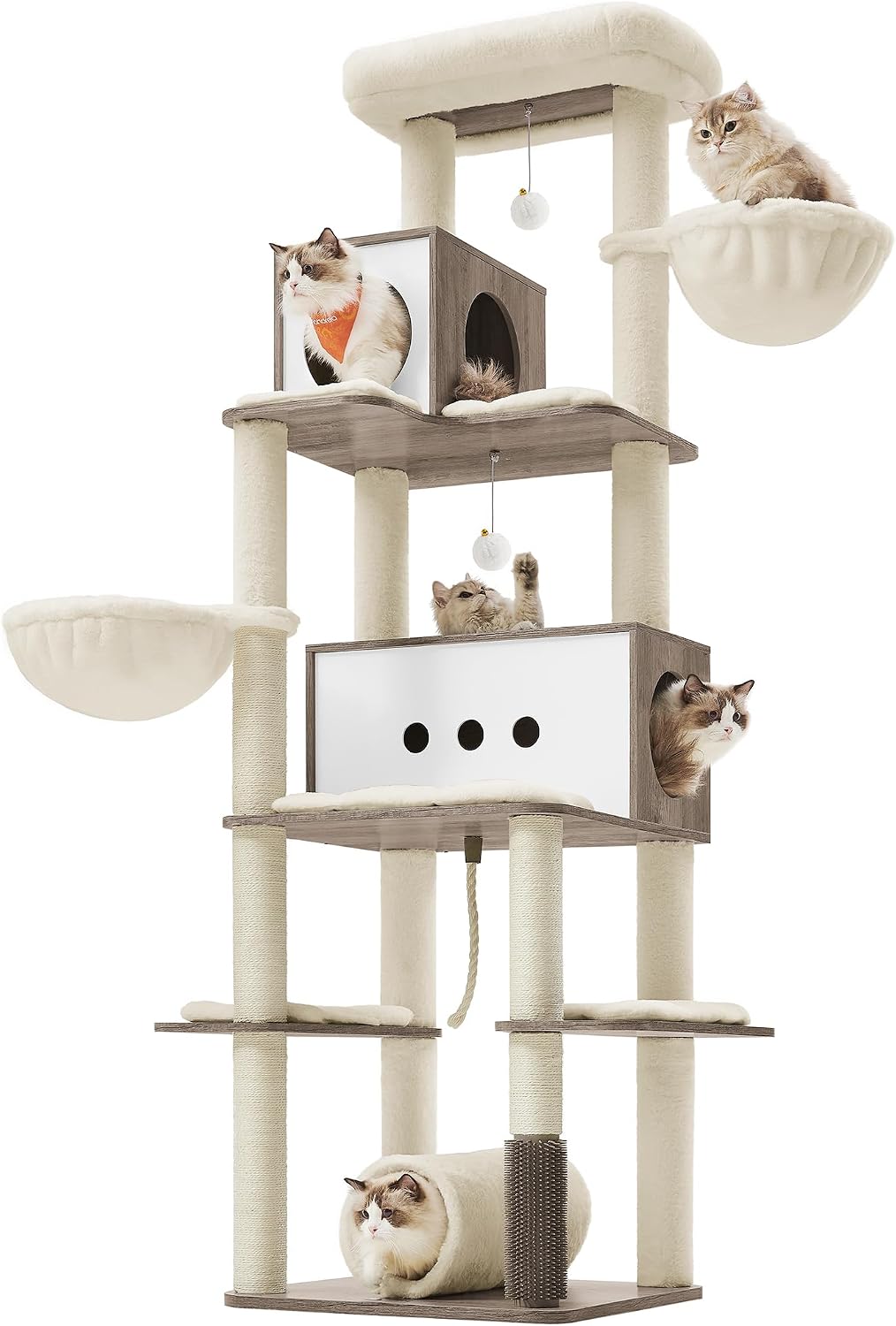
🥇 Best Large Cat Tree
Feandrea 75.6" Cat Tree
A tall multi-level tower with sisal-wrapped posts, caves, hammocks, and perches. Big enough for multi-cat homes and large breeds, and stable enough that cats actually trust it — the key to getting them off the furniture.
- 75.6" tall
- Sisal posts
- Multi-cat
Amazon: 4.5/5 from 217 reviews.
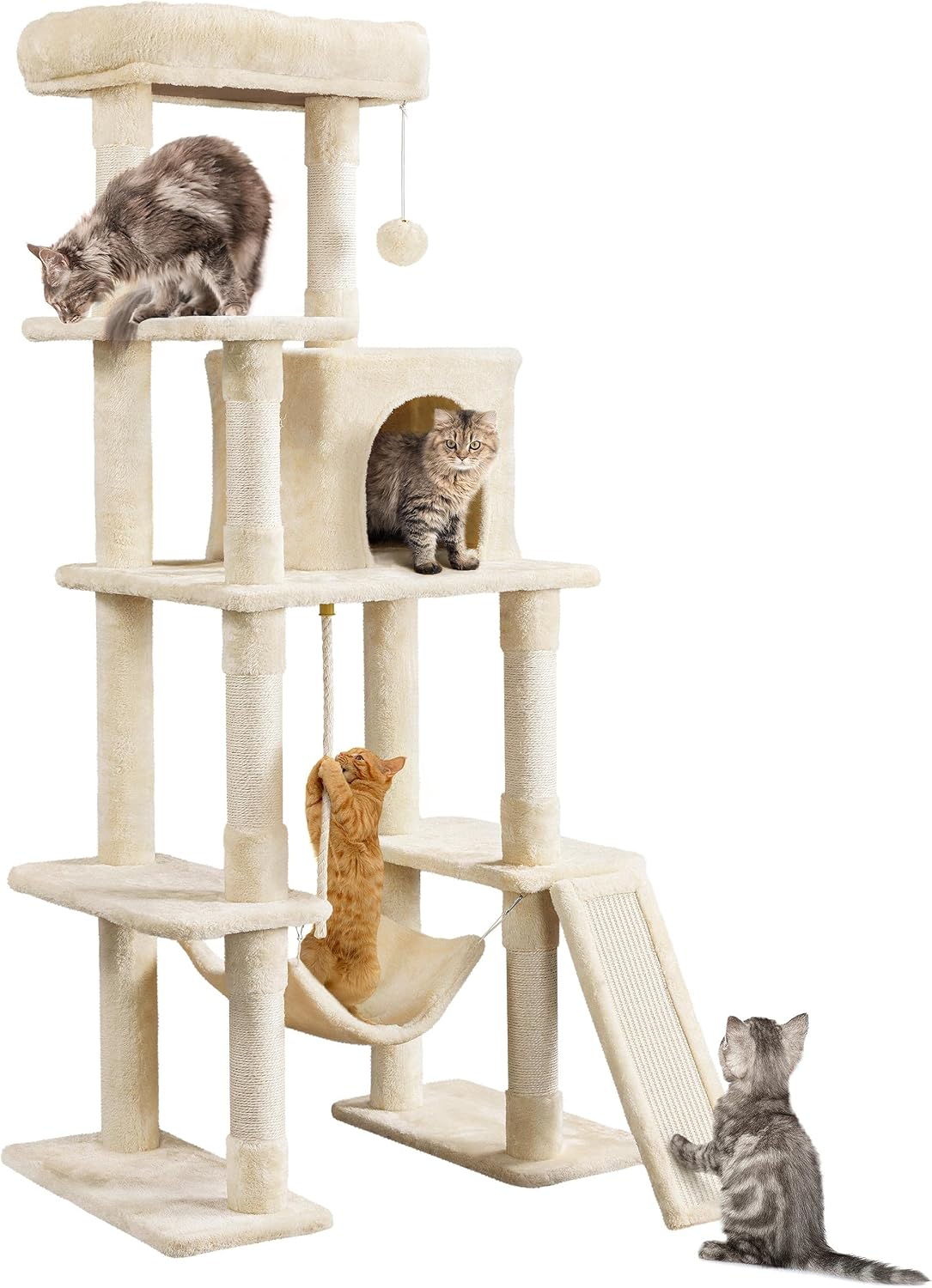
💸 Best Value Cat Tree
Yaheetech 63" Cat Tree
A 63-inch tower with scratching posts, a hammock, and cozy perches at a budget price. An easy, affordable way to give scratching a proper home.
- 63" tall
- Scratching posts
- Hammock
Amazon: 4.7/5 from 7,895 reviews. Place it right next to the furniture your cat targets.
Strategic Placement of Scratching Posts
Place scratching posts near your cat’s favorite resting spots. Cats often scratch after waking from naps. Posts near sleeping areas catch this natural scratching impulse. This is one of the most effective placement strategies.
Place posts near currently scratched furniture. Your cat has already chosen these locations as scratching spots. Posts placed nearby redirect the existing behavior. Gradually move posts to more convenient locations once your cat is using them.
Provide multiple posts in multi-cat households. Each cat should have access to scratching surfaces. Competition for resources increases stress and scratching. Place posts in different locations throughout your home.
Consider placing posts near windows. Cats may scratch when excited by outdoor activity. Posts near windows provide appropriate outlets for this excitement. Window perches combined with scratching posts create enrichment stations.
Making Furniture Less Appealing
Double-sided tape applied to scratched areas deters scratching. Cats dislike the sticky sensation on their paws. Specialized cat deterrent tapes are available. Regular double-sided tape also works. Replace tape as it loses stickiness.
Aluminum foil over scratched areas deters many cats. The sound and texture are unpleasant to cats. Cover scratched furniture sections with foil temporarily. Remove foil once your cat is using appropriate surfaces.
Plastic sheets or vinyl protectors make surfaces less appealing. Smooth plastic doesn’t provide the resistance cats seek. Clear protectors maintain furniture appearance while deterring scratching. These work well for couch arms and corners.
Citrus scents deter many cats from scratching. Cats generally dislike citrus smells. Use citrus-scented sprays or place citrus peels near scratched areas. Reapply regularly as scents fade. Test for furniture damage first.
Rewarding Appropriate Scratching
Praise and treats when your cat uses scratching posts reinforces the behavior. Catch your cat in the act of appropriate scratching and reward immediately. Timing matters for effective reinforcement.
Catnip on scratching posts attracts cats to appropriate surfaces. Sprinkle dried catnip or use catnip spray on posts. This makes posts more appealing than furniture. Reapply catnip regularly to maintain appeal.
Play sessions near scratching posts create positive associations. Your cat begins to associate posts with enjoyable activities. This builds long-term preference for posts over furniture. Make scratching posts part of play routines.
Clicker training can shape scratching behavior precisely. Click and treat when your cat approaches the post. Click and treat for touching the post. Click and treat for scratching the post. This builds strong post preferences.
When Scratching Becomes a Problem
Excessive scratching that causes self-injury warrants veterinary attention. Cats who scratch until their paws bleed may have underlying medical or behavioral issues. Allergies, pain, or anxiety can trigger compulsive scratching.
Sudden increases in scratching may signal stress or environmental changes. New pets, moves, or routine changes can trigger stress-related scratching. Addressing the underlying stressor often resolves the behavior.
Scratching combined with other behavioral changes may indicate medical problems. Watch for changes in appetite, litter box habits, or activity level. Multiple symptoms together suggest a veterinary visit is needed.
Cats who only scratch inappropriate surfaces despite appropriate options may need behavior consultation. A veterinary behaviorist can help identify underlying causes and develop a modification plan. Don’t wait months hoping the behavior will resolve.
Frequently Asked Questions
How do I get my cat to use the scratching post?
Place the post near the furniture your cat currently scratches, then use catnip or a toy to attract them and reward any contact with the post. Be patient and consistent. It can take days to weeks for a cat to fully adopt a new scratching surface.
Should I declaw my cat to stop scratching?
No. Declawing removes the last bone of each toe and can cause lifelong pain, altered gait, and behavioral problems. It is banned in many countries and opposed by major veterinary organizations, including the AVMA.
How many scratching posts do I need?
Provide at least one scratching surface per cat, plus one extra, and spread them through the rooms your cat uses. Cats prefer to scratch where they already spend time, so placement matters as much as the number.
Why does my cat only scratch the couch?
Fabric texture often gives a cat the resistance and feedback a claw needs. Put a sisal or cardboard scratcher right beside the couch, reward use, and gradually move the new post toward where you would rather have it.
Do scratching deterrents work?
Yes, when used consistently and paired with an acceptable alternative. Double-sided tape, aluminum foil, and citrus scents discourage many cats, but a deterrent alone just moves the behavior unless a proper post is nearby.
Can older cats learn to use scratching posts?
Yes. Kittens learn fastest, but cats of any age can pick up a new habit. Keep the post stable, place it near a favorite spot, and reinforce contact with praise or treats rather than punishing mistakes.
My cat scratches when I leave. What should I do?
Scratching on departure can be stress-related. Add enrichment and play before you go, keep a stable routine, and make sure multi-cat homes have enough resources so no one is competing. If it continues, talk to your vet about separation-related anxiety.
Want more cat care guidance? Read our Indoor Cat Enrichment guide for more behavior solutions or explore Best Cat Toys for play recommendations.