
Indoor Cat Enrichment: 15 Ways to Keep Your Cat Stimulated
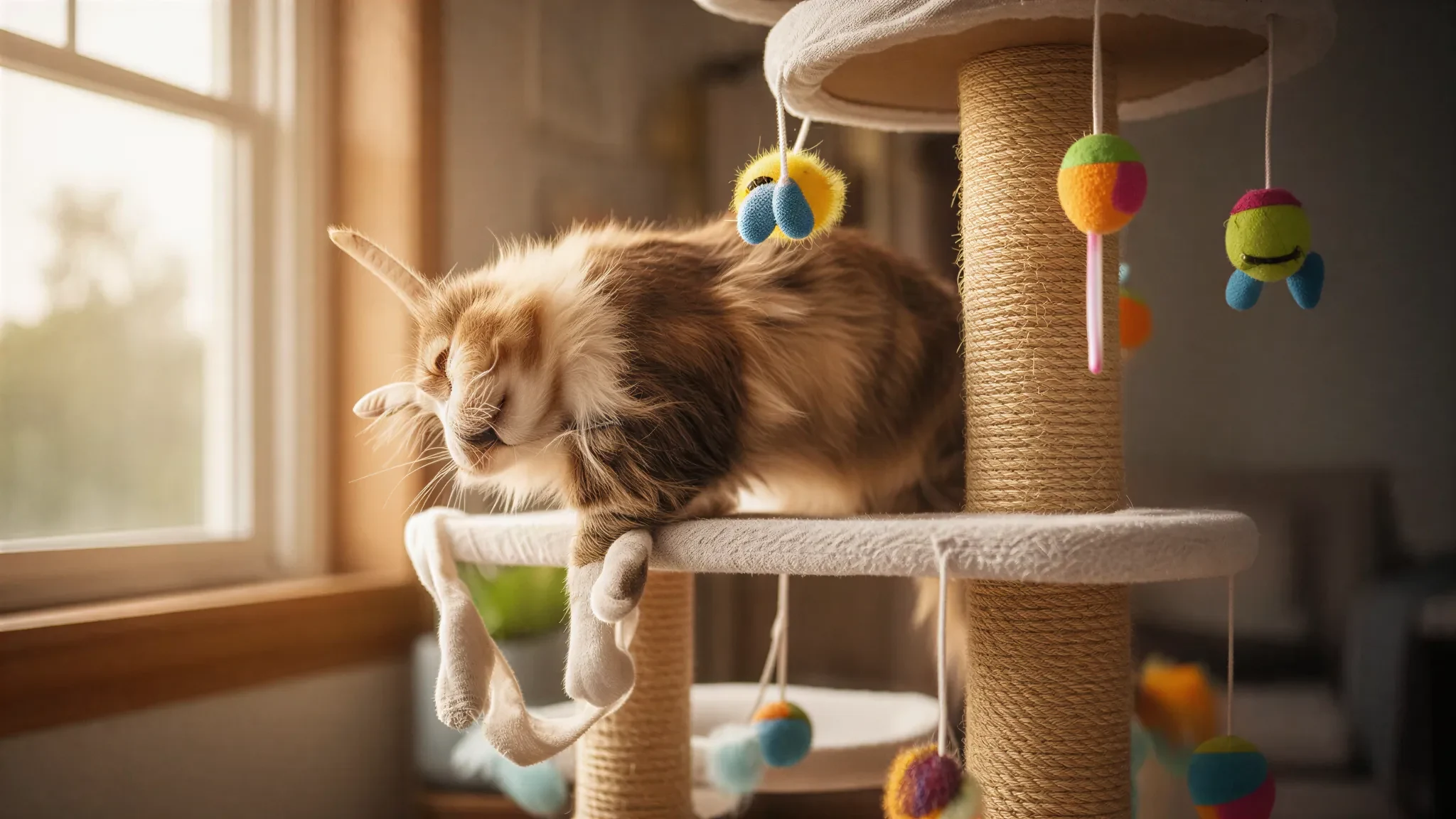
Indoor cats live longer, safer lives than outdoor cats, but they need mental and physical stimulation to stay happy and healthy. Bored indoor cats may develop behavioral problems like excessive grooming, aggression, or litter box avoidance. Enrichment provides the mental stimulation and physical exercise cats need to thrive indoors. This guide provides 15 vet-approved enrichment ideas from puzzle feeders to cat TV, helping you create an engaging environment for your indoor cat.
Why Enrichment Matters for Indoor Cats
Indoor cats face unique challenges that outdoor cats don’t. They have limited space to explore, no hunting opportunities, and less environmental variety. Without adequate stimulation, indoor cats can become bored, stressed, or depressed.
Enrichment prevents behavioral problems. Bored cats may over-groom creating bald spots, become aggressive toward other pets, or avoid the litter box. Providing appropriate outlets for natural behaviors prevents these problems.
Enrichment supports physical health. Active cats maintain healthy weight, muscle tone, and joint flexibility. Exercise prevents obesity-related diseases like diabetes and arthritis.
Enrichment supports mental health. Cats need mental challenges to stay sharp. Puzzle feeders, training, and novel experiences keep cats mentally engaged. This is especially important for senior cats to maintain cognitive function.
Food-Based Enrichment
1. Puzzle Feeders
Puzzle feeders make cats work for their food, simulating natural hunting behavior. This provides mental stimulation and slows down fast eaters. Cats must figure out how to access food through sliding, lifting, or manipulating parts.
Start with simple puzzle feeders for beginners. Clear plastic puzzles where cats can see the food work well for first-timers. Gradually increase difficulty as your cat learns.
DIY puzzle feeders work well too. Muffin tins with treats in some cups, cardboard boxes with holes, or plastic bottles with cut openings all make effective puzzles. These are inexpensive and easily replaced.
Use puzzle feeders for daily meals, not just treats. This ensures regular mental stimulation. Rotate different puzzles to maintain interest.
2. Food Scavenging
Hide food or treats around your home for your cat to find. This simulates hunting and foraging behavior. Start with easy hiding spots and gradually increase difficulty.
Use different rooms for scavenging hunts. Hide treats on cat trees, under furniture, on shelves, and in boxes. This encourages exploration of their entire environment.
Make scavenging part of your daily routine. Hide treats before leaving for work. Your cat will enjoy the hunt while you’re gone.
Combine scavenging with other enrichment. Hide treats in puzzle feeders or on cat trees. This creates multi-layered enrichment experiences.
3. Timed Feeders
Timed feeders dispense food at preset times. This provides mental stimulation and breaks up the day. Cats learn to anticipate feeding times.
Timed feeders work well for cats who wake owners early for food. Program feeders for early morning meals. This allows you to sleep while your cat eats.
Use timed feeders for portion control. Program appropriate portions for each feeding. This helps manage weight in cats prone to overeating.
Combine timed feeders with puzzle feeders for maximum enrichment. Timed puzzle feeders provide both mental stimulation and scheduled feeding.
Physical Enrichment
4. Cat Trees and Climbing Structures
Cat trees provide vertical territory for climbing and perching. Cats feel secure when they can observe from above. Vertical space effectively increases your home’s square footage for cats.
Choose sturdy cat trees that won’t tip over. Cats need to feel secure on climbing structures. Wobbly trees discourage use.
Place cat trees near windows for entertainment. Cats enjoy watching birds and outdoor activity. Window perches on cat trees provide the best of both worlds.
Provide multiple climbing options throughout your home. Different heights and locations give cats choices. This prevents competition in multi-cat households.
5. Interactive Toys
Wand toys provide interactive play that simulates hunting. Move the toy like prey — darting, hiding, and jumping. This triggers your cat’s hunting instincts.
Schedule daily interactive play sessions. Plan for 15-20 minutes of active play. This provides exercise and strengthens your bond.
Vary toy movement to maintain interest. Different prey types move differently. Mice scurry, birds fly, and insects dart. Mimic these movements with your wand toy.
End play sessions with treats to simulate successful hunts. This completes the hunting sequence. Cats feel satisfied after “catching” and “eating.”
6. Laser Pointers
Laser pointers provide active exercise as cats chase the elusive dot. This triggers hunting instincts and provides significant exercise. Cats can run and jump extensively chasing lasers.
Always end laser play with a physical toy or treat. Cats need to “catch” something to complete the hunting sequence. Without closure, cats can become frustrated.
Don’t shine lasers in your cat’s eyes. This can damage vision. Keep the dot on floors and walls where cats can safely chase.
Use laser pointers in moderation. Some cats become obsessed with finding the dot. Balance laser play with other toy types.
7. Cat Exercise Wheels
Cat exercise wheels provide controlled exercise for active cats. These work well for high-energy breeds like Bengals and Abyssinians. Cats run on the wheel at their own pace.
Train cats to use wheels gradually. Start with treats on the stationary wheel. Progress to gently rotating the wheel. Finally, let your cat run independently.
Exercise wheels are expensive but provide significant benefits. They’re ideal for cats who need more exercise than typical play provides. They’re also good for owners with limited mobility.
Not all cats accept exercise wheels. Some never take to them. Don’t force wheel use if your cat isn’t interested.
Environmental Enrichment
8. Window Perches
Window perches provide entertainment through bird watching and outdoor observation. This is “cat TV” that provides hours of entertainment. Cats enjoy monitoring their territory from high vantage points.
Install sturdy window perches that support your cat’s weight. Suction cup perches work well on clean windows. Mounted perches provide more stability.
Place perches at different windows for variety. Different views provide different entertainment. Birds at one window, people-watching at another.
Combine window perches with bird feeders outside. This creates dedicated entertainment stations. Birds come to feed, cats watch.
9. Cat TV Videos
Videos designed for cats show birds, fish, and other animals. These provide passive entertainment when you’re not available to play. Many cats watch cat TV attentively.
Play cat TV on tablets, phones, or TVs. Tablets work well because cats can’t damage them easily. Place devices where cats can view comfortably.
Choose videos with realistic prey movements. Birds flying, fish swimming, and mice scurrying trigger hunting instincts. Avoid videos with loud sounds that may frighten cats.
Limit cat TV sessions to 30-60 minutes. Extended screen time isn’t ideal. Use cat TV as one enrichment option among many.
10. Catios and Enclosed Outdoor Spaces
Catios provide safe outdoor access for indoor cats. These enclosed spaces let cats experience fresh air, sunshine, and outdoor sounds safely. Cats enjoy the sensory stimulation.
Build catios attached to windows or doors. This provides easy access for both you and your cat. Window catios work well for apartments.
Portable catios work for renters or temporary use. These pop-up enclosures can be moved around your yard. They’re less permanent but still provide outdoor access.
Supervise outdoor time initially. Ensure your cat is comfortable and safe. Some cats are frightened by outdoor sounds initially.
11. Novel Objects and Rotation
Introduce new objects regularly for exploration. Boxes, bags, and novel items provide entertainment. Cats enjoy investigating new things in their environment.
Rotate toys regularly to maintain interest. Store some toys and rotate them weekly. Novel toys are more interesting than constantly available ones.
Create novelty through rearrangement. Move cat trees, perches, and beds to new locations. This makes familiar environments feel new.
Use everyday objects as toys. Cardboard boxes, paper bags, and bottle caps often become favorite toys. These are inexpensive and easily replaced.
Sensory Enrichment
12. Cat-Safe Plants
Cat-safe plants provide sensory enrichment through sniffing, touching, and sometimes eating. Plants add natural elements to indoor environments. Many cats enjoy interacting with plants.
Choose cat-safe plants like cat grass, catnip, spider plants, and Boston ferns. Avoid toxic plants like lilies, poinsettias, and pothos. Check the ASPCA’s toxic plant list.
Grow cat grass for your cat to nibble. This provides fiber and satisfies the urge to chew plants. Replace grass regularly as cats eat it down.
Place plants at different heights for exploration. Some cats prefer ground-level plants while others prefer elevated ones. Provide options.
13. Catnip and Silver Vine
Catnip provides sensory stimulation for cats who respond to it. About 50-70% of cats react to catnip with rolling, rubbing, and playful behavior. Effects last 10-15 minutes.
Offer catnip in toys, sprays, or dried form. Different forms provide different experiences. Some cats prefer fresh catnip while others like dried.
Silver vine is an alternative for cats who don’t respond to catnip. About 80% of cats respond to silver vine. It provides similar stimulation to catnip.
Use catnip and silver vine in moderation. Daily use can reduce effectiveness. Offer these treats 2-3 times weekly for best results.
14. Different Textures
Provide surfaces with different textures for exploration. Cats enjoy walking on and investigating varied textures. This provides tactile stimulation.
Offer rugs, mats, and blankets with different textures. Sisal, fleece, wool, and cotton all feel different. Place these in different locations for exploration.
Create texture paths for cats to walk on. Arrange different textured materials in sequences. Cats enjoy the sensory experience of walking across different surfaces.
Include scratching surfaces with different textures. Sisal, cardboard, and wood all provide different scratching experiences. Cats have preferences for scratching textures.
15. Pheromone Enrichment
Pheromone products provide calming environmental enrichment. Feliway and similar products release synthetic cat facial pheromones. These signal safety and security.
Use pheromone diffusers in rooms where cats spend time. Plug-in diffusers provide continuous pheromone release. Replace refills monthly.
Pheromone sprays work for targeted application. Spray on cat trees, beds, and carriers. This creates calming associations with specific locations.
Pheromones work best combined with other enrichment. They reduce stress, making cats more receptive to other enrichment. Use pheromones during introductions, moves, or other stressful times.
Creating an Enrichment Plan
Daily Enrichment
Schedule interactive play sessions daily. Plan for 15-20 minutes of active play. This provides exercise and strengthens your bond.
Provide puzzle feeders for at least one meal daily. This ensures regular mental stimulation. Rotate different puzzles to maintain interest.
Offer window perches and cat TV for passive entertainment. These provide entertainment when you’re not available to play.
Weekly Enrichment
Rotate toys weekly to maintain novelty. Store some toys and bring them out weekly. Novel toys are more interesting than constantly available ones.
Introduce new scavenger hunts weekly. Hide treats in new locations. This encourages exploration and provides mental challenges.
Rearrange furniture and enrichment items monthly. This makes familiar environments feel new. Cats enjoy investigating changes.
Assessing Enrichment Effectiveness
Watch for signs your cat is adequately enriched. Relaxed body language, normal eating and sleeping, and playful behavior indicate good enrichment. Cats who are well-enriched don’t develop behavioral problems.
Watch for signs enrichment isn’t working. Destructive behavior, over-grooming, or lethargy indicate insufficient enrichment. Increase enrichment activities if you see these signs.
Adjust enrichment based on your cat’s preferences. Some cats prefer physical activities while others prefer mental challenges. Tailor enrichment to your individual cat.
Frequently Asked Questions
How much enrichment does my indoor cat need?
Plan for 30-60 minutes of active enrichment daily plus environmental enrichment available throughout the day. This includes play, puzzle feeders, and exploration opportunities.
My cat isn’t interested in toys. What should I do?
Try different toy types. Some cats prefer wand toys while others like small toys. Try catnip toys, laser pointers, or puzzle feeders. Find what motivates your individual cat.
Can I over-enrich my cat?
No. Cats self-regulate their enrichment use. They’ll engage when interested and rest when tired. Provide options and let your cat choose.
How do I know if my cat is bored?
Signs of boredom include excessive sleeping, destructive behavior, over-grooming, and vocalization. Well-enriched cats show normal activity levels and don’t develop behavioral problems.
Is cat TV really enrichment?
Yes, for many cats. Cat TV provides visual stimulation that triggers hunting instincts. It’s passive enrichment that works well when combined with active enrichment.
Do senior cats need enrichment?
Yes. Senior cats benefit from mental stimulation to maintain cognitive function. Adjust activities for mobility limitations but don’t eliminate enrichment.
How much should I spend on enrichment?
Enrichment doesn’t need to be expensive. DIY puzzle feeders, cardboard boxes, and rotated toys provide effective enrichment. Spend based on your budget and cat’s needs.
Want more cat care guidance? Read our Best Cat Toys for product recommendations or explore Do Cats Get Lonely for social behavior insights.