
Best Digital Scales for Cats: Accurate Weight Guide
On this page (8 sections)
- Top Digital Cat Scales at a Glance
- Why the “Human Scale Subtraction Method” Fails
- How Dynamic Motion-Hold Algorithms Work
- Detailed Reviews of the Best Digital Scales for Cats
- Clinical Life Stages: What Your Cat’s Weight Numbers Mean
- When to See a Vet
- How to Weigh a Stubborn or Skittish Cat
- Frequently Asked Questions
This article contains affiliate links. If you purchase through our links, we may earn a small commission at no extra cost to you. We only recommend products we’ve researched or personally found valuable for cat owners.
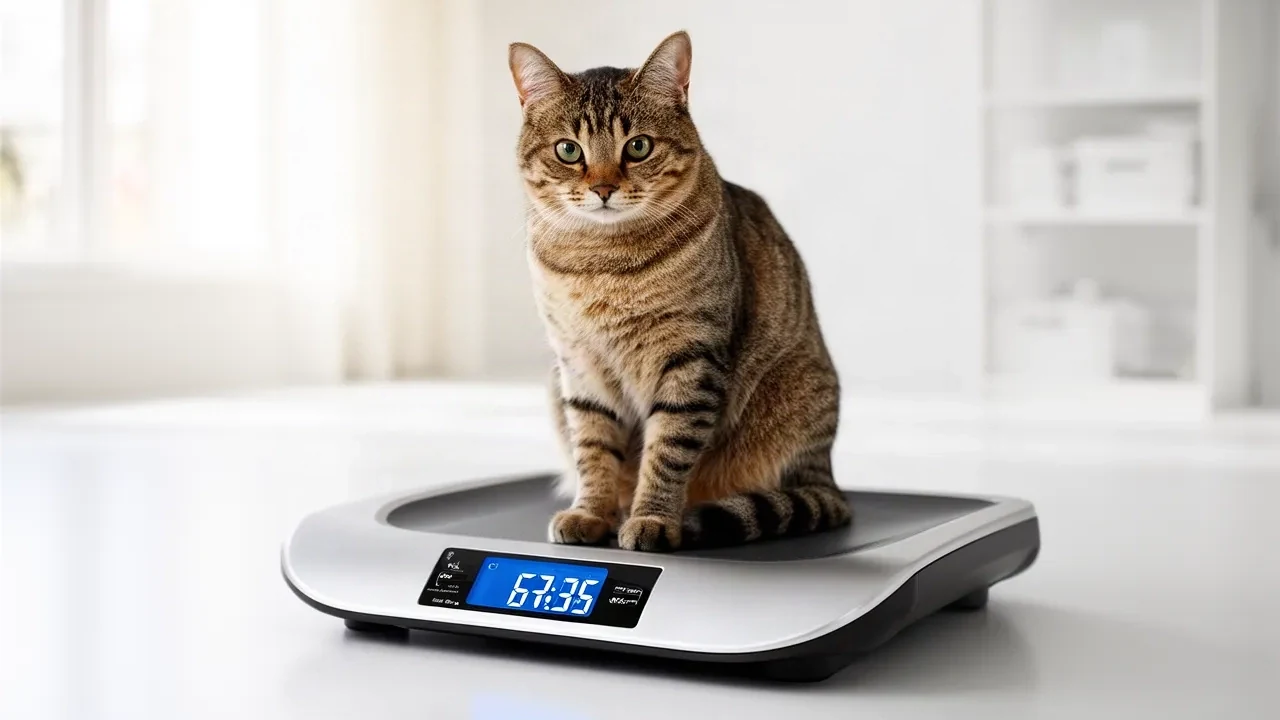
The best digital scales for cats feature curved cradle platforms, high-precision strain-gauge sensors accurate to 0.1 ounces (5 grams), and dynamic motion-averaging algorithms that lock an exact weight even when your cat shifts position. After evaluating pet and pediatric scales across thirty years of monitoring growing litters and managing senior felines, the top overall pick is the Greater Goods Digital Pet & Baby Scale for its fast motion-hold feature, spacious curved tray, and exceptional gram-level precision.
Weighing your cat regularly at home is one of the single most effective proactive health habits you can develop. Cats are master survivalists who instinctively mask pain, illness, and physical weakness until disease has progressed significantly. Subtle changes in body mass often serve as the earliest clinical indicator of life-threatening conditions, including chronic kidney disease (CKD), feline hyperthyroidism, diabetes mellitus, and cancer cachexia.
However, standard human bathroom scales are fundamentally useless for monitoring feline health. A scale calibrated to weigh a 180-pound adult with a half-pound error margin cannot detect a critical four-ounce weight drop in an eight-pound cat. This guide explains why dedicated pet scales are mandatory, details the mathematics of feline metabolic loss, breaks down dynamic motion-hold algorithms, and reviews the most accurate digital scales for kittens, adult cats, and senior felines.
Top Digital Cat Scales at a Glance
| Model | Weight Capacity | Measurement Precision | Platform Style | Hold Function | Best For | Price Range |
|---|---|---|---|---|---|---|
| Greater Goods Digital Scale | 66 lbs (30 kg) | 0.1 oz / 5 g | Curved Ergonomic Cradle | Dynamic Auto-Hold | Best Overall Top Pick | ~$45–60 |
| Beurer BY85 Digital Scale | 44 lbs (20 kg) | 0.18 oz / 5 g | Concave Pediatric Tray | Auto & Manual Hold | Best for Precision Tracking | ~$50–65 |
| Redmon Precision Pet Scale | 44 lbs (20 kg) | 0.2 oz / 10 g | Wide Low-Profile Base | Instant Electronic Hold | Best for Large Breeds | ~$60–75 |
| Salter Compact Digital Scale | 44 lbs (20 kg) | 0.5 oz / 10 g | Flat Platform with Pad | Basic Digital Hold | Best Budget Compact Pick | ~$35–45 |
Why the “Human Scale Subtraction Method” Fails
Many cat owners attempt to track their cat’s weight using the common bathroom scale subtraction method: weighing themselves alone, picking up their cat, weighing both together, and calculating the mathematical difference.
While this approach seems convenient, it introduces massive measurement error that defeats the purpose of medical monitoring. Standard adult bathroom scales use heavy-capacity load cells engineered to measure loads between 50 and 350 pounds, with graduation steps of 0.2 to 0.5 pounds (or more). In practice, minor shifts in human foot placement, stance, and scale surface introduce variance of 0.5 to 1.0 pounds between consecutive readings.
| Metric | Cat | Human equivalent |
|---|---|---|
| Starting weight | 8.0 lb | 160 lb |
| Unnoticed loss | 1.0 lb | 20 lbs in 2–4 weeks |
| % of body mass lost | 12.5% | 12.5% |
A loss that looks like a rounding error on a human scale is a major medical emergency in a cat.
According to the American Association of Feline Practitioners (AAFP) Feline Nutrition Guidelines, a one-pound weight drop in an eight-pound cat represents 12.5% of their entire body mass. In a 160-pound human, that is equivalent to losing twenty pounds of muscle and fat within a few weeks without dieting.
By the time an owner notices a one-pound drop on a human scale or feels prominent spinal bones through their cat’s fur, the cat has already suffered significant metabolic stress. A dedicated digital pet scale measuring in 5-gram increments detects a two-ounce (1.5%) drop within days, allowing you to seek veterinary bloodwork (such as SDMA, creatinine, and T4 levels) weeks before physical symptoms become obvious.
How Dynamic Motion-Hold Algorithms Work
The primary engineering challenge of weighing a cat is that felines rarely stand perfectly still on command. A cat will shift weight from front paws to back paws, turn around, or flick their tail, causing the mechanical force exerted on the scale’s internal strain-gauge load cells to fluctuate wildly.
On a cheap kitchen scale, these physical shifts cause the digital readout to bounce constantly between random numbers, making an accurate reading impossible.
| Step | What happens |
|---|---|
| Step-on | Cat steps into the cradle and the load cells register raw force |
| Sampling | The microprocessor samples strain-gauge voltage 50 times per second |
| Filtering | The algorithm discards high-frequency spikes from tail flicks |
| Averaging | It calculates the median across a rolling 1.5-second window |
| Beep & lock | The stabilized weight locks on the backlit LCD screen |
High-end digital pet and pediatric scales incorporate a specialized dynamic motion-hold algorithm. When the microprocessor detects fluctuating movement signals, it samples the voltage output of four independent load cells at fifty times per second.
The algorithm applies digital low-pass filtering to strip away movement spikes caused by breathing and tail motion, calculates the mathematical median of the stable load within 1.5 to 2.0 seconds, and locks the exact stabilized weight on the backlit screen with an audible confirmation beep.
Detailed Reviews of the Best Digital Scales for Cats
1. Greater Goods Digital Pet & Baby Scale — Best Overall Top Pick
🥇 Best Overall Digital Cat Scale
Greater Goods Digital Pet & Baby Scale
A precision digital scale featuring an ergonomic curved platform, dual-mode dynamic motion averaging, and 0.1 oz / 5 g graduation accuracy for effortless home health tracking.
- 66 lb (30 kg) max capacity
- 0.1 oz / 5 g precision
- Proprietary dynamic motion hold
- Tare subtraction function
Exceptional build quality and reliable motion stabilization.
The Greater Goods Digital Pet & Baby Scale is the gold standard for home feline weight monitoring. Built around four high-sensitivity strain-gauge sensors, this scale delivers reliable precision down to 0.1 ounces or 5 grams across a wide capacity range up to 66 pounds.
The scale features a broad, smooth, curved cradle tray that measures nearly twenty-four inches in length. The gently raised side rims create a subtle nesting shape that prevents cats from sliding off, while providing physical reassurance that reduces feline anxiety during weighing.
The intelligent hold algorithm operates in both automatic and manual modes. In automatic mode, the scale senses when your cat steps onto the tray, filters out movement fluctuations within two seconds, and locks the stabilized weight on a large high-contrast backlit LCD screen. The tare function lets you place a soft towel or blanket on the tray, press zero, and weigh your cat without the blanket distorting the measurement.
The rapid dynamic hold algorithm locks an accurate weight on a moving cat within two seconds, and the 0.1 oz graduations catch subtle metabolic changes. The curved ergonomic tray gives nervous cats a reassuring boundary, and the one-touch tare function zeroes out blankets and towels. The wide 24-inch platform needs dedicated storage, and the snap-fit tray tabs call for careful handling when disassembling for travel.
2. Beurer BY85 Digital Baby & Pet Scale — Best for Clinical Precision Tracking
🔬 Best Clinical Precision Scale
Beurer BY85 Digital Pet & Baby Scale
German-engineered medical-grade scale featuring an ultra-smooth concave weighing surface, high-contrast digital display, and dual automatic/manual motion dampening.
- 44 lb (20 kg) capacity
- 0.18 oz / 5 g graduation
- Dual auto & manual hold
- Integrated memory recall
Renowned German sensor engineering with instant tare calibration.
If you are tracking neonatal kitten litters where daily gains of 5 to 10 grams determine survival, the Beurer BY85 provides exceptional sensor consistency. Engineered by Beurer, a historic German medical device manufacturer, this unit meets rigorous pediatric accuracy standards.
The BY85 features a single-piece molded concave platform with no exposed seams or screw heads, preventing dirt accumulation and making sanitization simple. The non-slip rubber feet anchor the unit firmly to hard floors, preventing rocking when a cat steps onto the outer lip.
A unique feature is the dual hold system. If your cat is especially restless, you can press the manual Hold button at any moment to capture an instant snapshot of the load cell state. An internal memory recall function displays the previous weight on startup, letting you immediately compare today’s reading against yesterday’s record without checking a notebook.
The German strain-gauge load cells deliver dependable, repeatable readings, and the smooth single-piece tray wipes clean in seconds. A built-in memory recall shows the previous session automatically, and the low-profile center of gravity keeps it from tipping when cats step on the edge. The 44-pound limit is fine for cats but less useful for homes with large dogs, and the screen can be hidden if a long-haired cat sits facing forward.
3. Redmon Precision Digital Pet Scale — Best Heavy-Duty Scale for Large Breeds
🦁 Best for Large Breeds & Maine Coons
Redmon Precision Digital Pet Scale
A heavy-duty pet scale with an expansive low-profile platform designed specifically for giant cat breeds like Maine Coons, featuring high-traction footing and instant weight lock.
- 44 lb (20 kg) max capacity
- 0.2 oz / 10 g graduation
- Heavy-duty low-profile base
- High-traction molded surface
Rugged stability for large, heavy-bodied felines.
For owners of large cat breeds like the Maine Coon, Norwegian Forest Cat, or Siberian, standard baby scales can feel cramped. A twenty-pound Maine Coon with a thirty-inch body length will overhang the edges of small trays, skewing the center of mass.
The Redmon Precision Scale is built with an extra-wide, low-profile base that sits just two inches off the floor. This ultra-low step-up height eliminates the fear factor for older arthritic cats who dislike jumping onto elevated surfaces.
The heavy-duty polymer platform is molded with a subtle non-slip texture that gives feline paws solid traction. The scale delivers dependable 10-gram accuracy, easily handling energetic big cats while resisting lateral tipping.
The extra-wide platform comfortably fits large cats up to twenty-five pounds, and the two-inch step-up height is easy for senior arthritic cats to reach. The commercial-grade chassis resists scratches, and the fast hold circuit locks weight instantly. Its 10-gram graduation is a touch less granular than 5-gram pediatric scales, and the display has no backlight, so it needs good lighting.
4. Salter Multi-Use Flat Digital Pet Scale — Best Budget Compact Pick
💰 Best Budget Compact Scale
Salter Multi-Use Flat Digital Pet Scale
A slim, space-saving digital flat scale with a removable washable mat, offering reliable gram-accurate measurements at an affordable price point.
- 44 lb (20 kg) capacity
- 0.5 oz / 10 g precision
- Removable silicone grip mat
- Slim 1-inch storage profile
Compact, reliable flat-top scale for apartment living.
If you have limited cabinet space or want a straightforward, budget-friendly scale for occasional check-ins, the Salter Flat Digital Scale offers a slim, functional design. Standing just over one inch tall, this scale slides effortlessly into a bookshelf or bathroom vanity drawer.
The flat tempered surface includes a removable, washable silicone mat that prevents cold glass from startling your cat’s paws. The single-button interface cycles smoothly between pounds/ounces and kilograms/grams.
While the flat surface lacks the comforting raised boundaries of curved cradle models, placing a small cardboard box or carrier tray on the platform and hitting the Tare button provides an easy way to weigh skittish cats.
It’s an affordable pick for budget-conscious owners, and the ultra-slim profile slips into narrow drawers or storage slots. The removable textured silicone mat gives paws secure grip and washes clean, with a clear digital readout. Because the surface is flat, wiggly kittens need a box or carrier to stay put, and it skips the predictive motion-filtering found in pricier pediatric units.
Clinical Life Stages: What Your Cat’s Weight Numbers Mean
Feline weight monitoring goals change significantly depending on your cat’s age and clinical health status:
| Life stage | Weighing schedule | Target |
|---|---|---|
| Neonatal kittens (0–8 weeks) | Daily, in grams | +7 to +15 grams per day |
| Growing juniors (2–12 months) | Weekly | Steady upward (~1 lb/month) |
| Adult diet management | Weekly | Loss of 0.5%–1.5% body weight per week |
| Senior monitoring (10+ years) | Bi-weekly | Any 3+ oz loss warrants an exam |
1. Neonatal Kitten Growth Tracking (Grams)
Kittens are born weighing roughly 85 to 120 grams (3.0 to 4.2 ounces). A healthy kitten must gain 7 to 15 grams daily, doubling their birth weight by day ten.
In neonates, failing to gain weight for twenty-four hours (or losing even 5 grams) is a red-flag emergency indicating fading kitten syndrome, dehydration, or maternal milk failure requiring immediate supplemental tube or syringe feeding.
2. Adult Feline Weight Loss: Preventing Hepatic Lipidosis
Over 50% of domestic cats are overweight or obese, placing immense stress on their joints and driving feline diabetes. However, putting a cat on an aggressive crash diet is life-threatening.
When an overweight cat loses weight too quickly, their body mobilizes massive fat stores to the liver, overwhelming hepatic processing and triggering feline hepatic lipidosis (fatty liver disease), a fatal condition if untreated.
Safe feline weight loss must proceed at a measured pace of 0.5% to 1.5% of total body weight per week. For a 14-pound cat on a reducing diet, safe weekly loss is between 1.1 and 3.3 ounces (30 to 95 grams). A precision digital scale allows you to fine-tune daily kibble and wet food portions to maintain this safe metabolic curve. Calculate precise daily calorie limits using our how much to feed a cat guide.
3. Senior Cat Health: The Early-Warning Renal & Thyroid Shield
In cats aged ten and older, progressive weight loss often begins six to eighteen months before clinical symptoms like vomiting, excessive thirst, or lethargy appear.
Unintentional weight loss in seniors points directly to four common geriatric diseases:
- Chronic Kidney Disease (CKD): Muscle wasting from protein-losing nephropathy.
- Hyperthyroidism: Skyrocketing metabolic rate causing ravenous eating with rapid weight loss.
- Diabetes Mellitus: Inability to process glucose leading to breakdown of muscle tissue.
- Gastrointestinal Lymphoma / IBD: Malabsorption of nutrients along the intestinal wall.
By keeping a bi-weekly weight log, you can present hard data to your veterinarian the moment a downward trend begins, allowing for early diagnostic intervention when treatments are most effective. Review our complete checklist for aging felines in the senior cat care guide.
When to See a Vet
A digital scale catches weight changes early, but the numbers still need a professional eye. Contact your veterinarian if your cat drops more than a few ounces without a change in diet, especially when the loss comes with increased thirst, vomiting, a dull coat, or a shifting appetite. For seniors, any sustained downward trend over two or three weigh-ins warrants bloodwork sooner rather than later.
If you notice any of these signs, consult your veterinarian. This article is for informational purposes and does not replace professional veterinary advice.
How to Weigh a Stubborn or Skittish Cat
If your cat runs away the moment you bring out the scale, use these three stress-free techniques:
- The “Box Trap” Method: Cats cannot resist climbing into open boxes. Place a shallow cardboard box or shoebox on the scale platform, press the Tare button to zero out the box weight, and let your cat hop in naturally.
- The “Towel Swaddle” Method: Place a soft plush fleece blanket on the tray and tare the scale. Gently swaddle your cat in the blanket, lay them on the curved cradle for three seconds, and let the dynamic motion-hold lock the reading.
- The High-Value Treat Lure: Place two drops of a lickable puree treat (like Churu) directly in the center of the tray. As your cat steps on and licks the treat, the motion-hold algorithm locks their weight without any physical restraint required.
Calculate your cat’s developmental milestones and life stages using our interactive cat age calculator.
Frequently Asked Questions
Can I use a digital kitchen food scale to weigh my cat?
Only for neonatal kittens weighing under five pounds. Kitchen scales lack the wide platform dimensions, low-profile stability, and dynamic motion-averaging algorithms needed to weigh moving adult cats. An adult cat will overhang the tiny kitchen platform, resulting in inaccurate readings.
How often should I weigh my cat at home?
Neonatal kittens should be weighed once daily at the same time. Adult cats on active weight loss programs should be weighed once weekly. Healthy adult cats and senior cats over ten years old should be weighed every two to four weeks to catch subtle medical trends early.
What is the “Tare” function on a pet scale?
The Tare function allows you to zero out the weight of an empty container, basket, or blanket placed on the scale. For example, if you place a two-pound carrier or blanket on the platform and press Tare, the display resets to 0.00, measuring only your cat’s exact weight when they step inside.
What should I do if my senior cat loses 4 ounces in a month?
In an adult or senior cat, an unintentional loss of four ounces represents a significant percentage of total body mass. If you have not reduced their food intake, schedule a veterinary wellness exam with complete blood chemistry, urinalysis, and thyroid (T4) panels to check for early kidney decline or hyperthyroidism.
Looking for additional feline health resources? Explore our guides on How Much to Feed a Cat, proactive Senior Cat Care, and breed-specific size benchmarks in our Maine Coon Breed Guide.
Written by Max
Max is a lifelong cat owner and runs CuteCatsHQ. Health and care guides are checked against the veterinary sources listed with each article.
Keep reading

Best Cat Litter for Kittens: Safe & Non-Clumping
Protect your kitten from ingestion blockages. Find the safest non-clumping paper, wood, and natural litters, plus when clumping clay is safe and how to switch.
Best Microchip Cat Doors: Smart Flap Guide
Keep strays and raccoons out with the best microchip cat doors. Compare door, wall, and glass installs, RFID range, curfew timers, plus training tips.
Best Smart Cat Cameras & Treat Dispensers
Monitor, talk, and play with your cat from anywhere. Compare smart pet cameras with treat tossing, lasers, 360 views, and the cloud vs local storage costs.