
Japanese Bobtail Cat Names: Lucky, Sakura & More
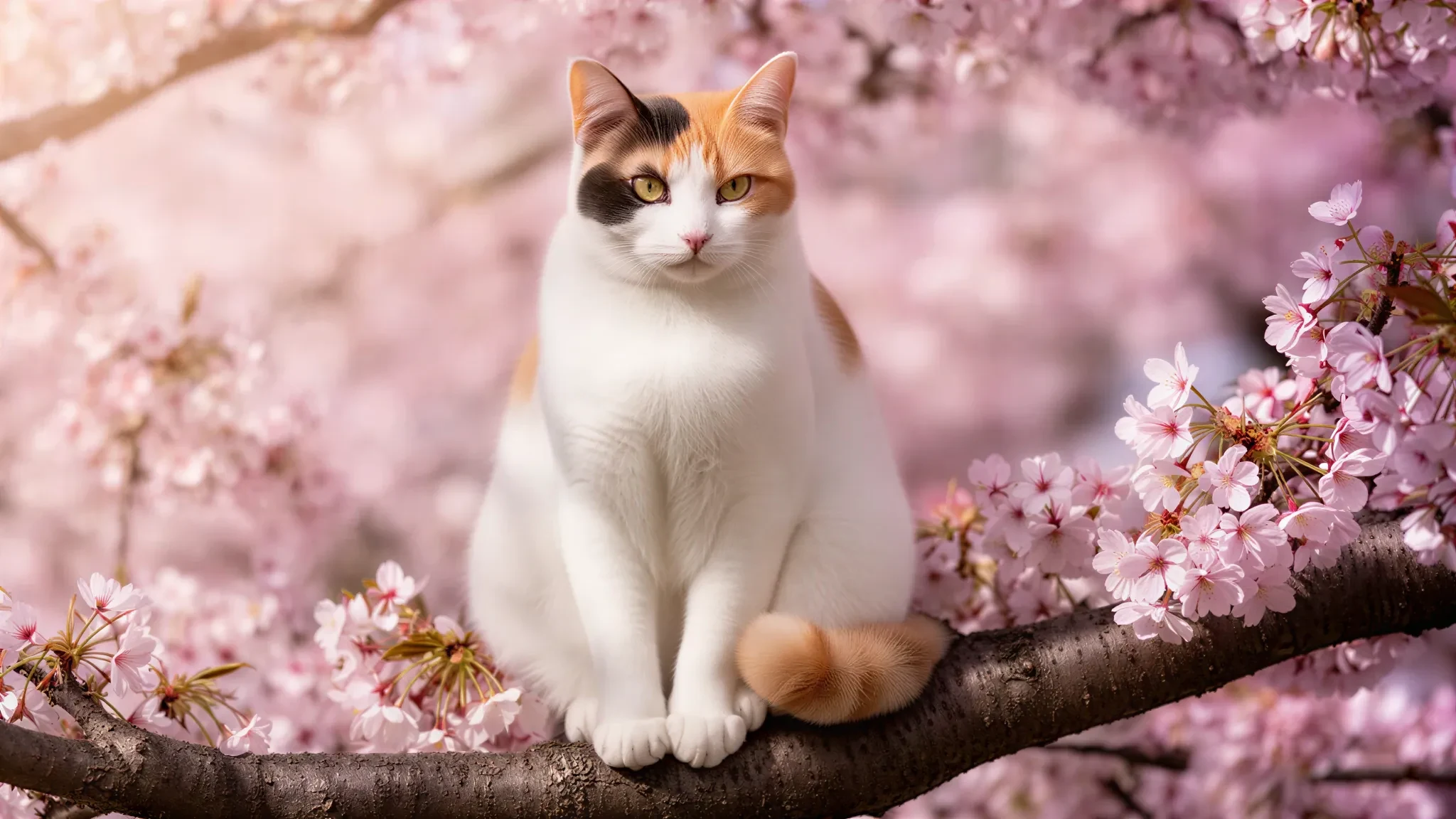
The Japanese Bobtail is a Japanese breed, but its name does not have to be. Sakura and Kenji announce where the cat came from, while Lucky and Pom describe the cat in front of you. Both approaches work, and this page keeps them separate so you can tell which is which. The Japanese Bobtail is a medium, short-coated cat with a pom-pom tail and a reputation for being vocal, friendly, and intelligent. Those are breed tendencies, not a promise about an individual cat, and the names below work whether yours turns out loud or reserved.
Two breed details are worth knowing before you pick. The calico pattern is called mi-ke in Japanese, literally three-fur, and a tri-color cat is traditionally linked with good fortune. That is the same luck behind the waving maneki-neko, which is often shown as a Japanese Bobtail. The short tail is the other signature: not a stub, but a pom that sits close to the body with fur fanning out in every direction. Both details give you honest naming material without pretending to know your cat’s personality.
Quick Picks: Japanese Bobtail Cat Names
Sakura — cherry blossom; two syllables, sah-KOO-rah, and the first name most people picture for a Japanese cat Yuki — snow; two syllables, YOO-kee, clean and bright, and listed as unisex Hiro — generous; two syllables, HEE-roh, a warm boy name that suits a friendly bobtail Lucky — fortunate; a natural fit for a mi-ke calico, where the tri-color already carries a good-luck tradition Mi-Ke — the Japanese word for calico, from the three coat colors; the most breed-specific name on the page Kenji — second son; two syllables, KEN-jee, steady and traditional without sounding severe Mochi — rice cake; two syllables, MOH-chee, soft and round, and easy to call across a room Tama — jewel or ball; the classic Japanese cat name and a neat nod to a round pom tail
Japanese Names for Female Cats
Japanese girl names tend to end in a vowel, which keeps them light in the mouth and easy for a cat to recognize. Several of these carry a season or a natural image, so they do double duty as a name and a small picture.
Sakura — cherry blossom; the name brings the whole spring festival season with it, and a cat called Sakura gets a little of that association every time you say it. Yuki — snow; crisp and short, and it reads well on a dark cat or a pale one. Hana — flower; two soft syllables that never turn into a mouthful. Haru — spring; seasonal, but usable all year and pleasant to repeat. Aiko — child of love; affectionate without tipping into syrup. Emi — blessing; bright and brief, with a clean two-beat sound. Kira — shining or glittering; a good match for a cat with striking eyes. Mika — beautiful fragrance; soft on the ear and uncommon in English-speaking homes. Rin — dignified, or cold; one syllable and a little reserved, which suits a cat who keeps her own counsel. Fuji — wisteria; the flower rather than the mountain here, and a gentle two-syllable option. Hikari — light; three syllables, so decide early whether you will shorten it. Izumi — spring or fountain; calm and flowing, with a soft finish.
Japanese Names for Male Cats
The boy names lean on the same language, with a few that point at character. They shorten naturally, and most sit at two beats, which is where a name stays useful on a tag and in a hallway.
Hiro — generous; broad and friendly, and it fits the social side many owners notice in this breed. Kenji — second son; traditional and steady, with a hard first syllable that carries. Akira — bright or clear; three syllables but easy to say, and it sounds confident. Kai — sea; one clean beat, and one of the easiest names on this page to shout. Sora — sky; calm and wide, a good counterpart to a bold coat pattern. Ren — lotus; short, soft, and calm. Taro — great son; a classic that reads strong without being hard to spell. Jiro — second son; the companion name to Taro, and just as simple. Daichi — great land; grounded and sturdy, three syllables but steady. Yuto — gentle warrior; a nice fit if the cat is brave and soft at once. Minato — harbor; calm and safe, with a social warmth to the sound. Neko — cat; the literal Japanese word, playful and self-aware on a Japanese Bobtail.
Names for a Calico Japanese Bobtail
The calico coat is the breed’s luckiest look in Japanese tradition, and it gives you a small set of names that actually mean something on a mi-ke cat. Use these when the coat is the reason you chose the breed.
Mi-Ke — the pattern’s own name, three-fur, and the most breed-specific choice available. Lucky — fortunate; a plain English name that picks up the mi-ke good-luck story without dressing it up. Maneki — beckoning, from the maneki-neko waving cat that is so often a Japanese Bobtail; a name with a clear gesture behind it. Tama — jewel or ball; a long-standing cat name in Japan, and a small joke on a round tail. Maru — circle or round; good for a compact body or a tidy pom tail. Momo — peach; it echoes the warm cream and pink that a calico often carries. Sumi — ink; a neat fit if your calico has a bold dark patch against white. Koneko — kitten; affectionate and uncomplicated, and sweet on a younger cat.
Names for the Bobbed Tail
The tail is the first thing people notice about the breed, so a nickname built on it is honest rather than gimmicky. Keep one of these as a nickname if you want the formal name to carry a different meaning.
Pom — a pom-pom tail; short, soft, and obvious to anyone who sees the cat. Bob — the plain English nickname for a short tail, and easy for a child to say. Cottontail — for the rounded puff of fur; a farmyard image that fits the breed’s busy, friendly streak. Nub — a small rounded tail; a nickname rather than a formal name, and affectionate when used lightly. Button — a compact, round tail; small and tidy, and it works as a real name too.
More Unusual Japanese Names
These are less common in English-speaking homes, which is part of the appeal. Every one is a real Japanese word or name rather than an invented sound.
Mochi — rice cake; soft, round, and already popular on cats with a plush look. Neko — cat; the honest word, and funnier the more Japanese the cat looks. Jiji — a faithful black cat companion; a warm pick for a dark-coated Bobtail. Pochi — little or spotty; a traditional pet name in Japan, especially good on a spotted coat. Miso — fermented soybean paste; a food name with a salty, familiar ring. Sushi — Japanese cuisine; playful, and easy to call at two syllables. Wasabi — Japanese horseradish; for a cat with some heat in its personality. Kiki — double happiness; cheerful and quick, with two identical beats. Kuma — bear; a sturdy name for a solid cat, and not as common as it sounds. Tora — tiger; a natural fit for a tabby Bobtail with strong striping. Hoshi — star; short, bright, and it suits a cat with a white flash or bright eyes. Chibi — little or tiny; affectionate, and useful while a kitten is still small.
How to Choose the Right Japanese Bobtail Cat Name
Start by deciding how much Japanese you want the name to carry. Sakura, Kenji, and Mi-Ke make the heritage the point, and on a breed this visually distinctive that is a reasonable choice. Lucky, Pom, and Charlie are equally valid and often easier to call, because they do not require a stranger to guess at pronunciation. Neither direction is more correct; they just send different signals at the vet’s desk.
Then test the sound where you will actually use it. Japanese names ending in a vowel, like Hiro, Sora, and Yuki, carry well and are easy for a cat to learn. Longer picks such as Hikari and Daichi are lovely on paper but tend to collapse to a nickname in a noisy house, so decide now whether you like the short form. The pom tail and the mi-ke coat are associations, not requirements, so a black Japanese Bobtail can wear Sumi and a quiet one can wear a bold name without any contradiction. If you want to sort further by origin or personality, the Name Generator can filter the full list.
Frequently Asked Questions
What is a good Japanese Bobtail cat name?
Sakura, Yuki, Hiro, and Mochi are short, genuinely Japanese, and easy to call. Lucky and Mi-Ke lean on the breed’s calico good-luck tradition instead. Any of them survives a closed kitchen door, which matters more than the meaning on the tag.
Do Japanese Bobtail cats need Japanese names?
No. The breed came from Japan, but the cat in your house did not. Sakura and Kenji make the heritage explicit, while Pom, Lucky, or Charlie describe the individual cat. Pick the amount of Japanese signal you actually want, then say the name out loud.
What is a good name for a calico Japanese Bobtail?
Mi-Ke is the Japanese word for the calico pattern, so it is the most on-the-nose choice. Lucky and Maneki both nod to the waving-cat luck tradition, and Momo or Sumi pick up the peach or dark patches in the coat.
Should I name my cat after its bobbed tail?
You can, and a few owners do. Pom, Bob, and Cottontail are affectionate nicknames for the rounded tail. Keep them as a nickname if you want the cat’s formal name to mean something else, because the tail is one feature, not the whole animal.
Are Japanese Bobtail cats talkative?
They have a reputation for being vocal and interactive, and many owners describe a running commentary. That is a breed tendency rather than a guarantee. Some Japanese Bobtails are quiet, so meet the individual cat before you count on a chatty housemate.
If you want the language rather than the breed, the Japanese cat names page covers the wider vocabulary. The food-flavored picks above live with the rest of the food cat names. And if you are still deciding whether a Japanese Bobtail fits your home, the breed guide covers coat care, health, and daily life.