
What Is a Calico Cat? Why They're Almost Always Female
On this page (6 sections)
Calico cats are impossible to miss — bold, three-color patchworks of white, black, and orange, no two ever quite alike. They’re so distinctive that people often assume “calico” is a breed. It isn’t. And behind that gorgeous coat is one of the most fascinating bits of genetics in the cat world — the reason almost every calico is female.
Calico Is a Color Pattern, Not a Breed
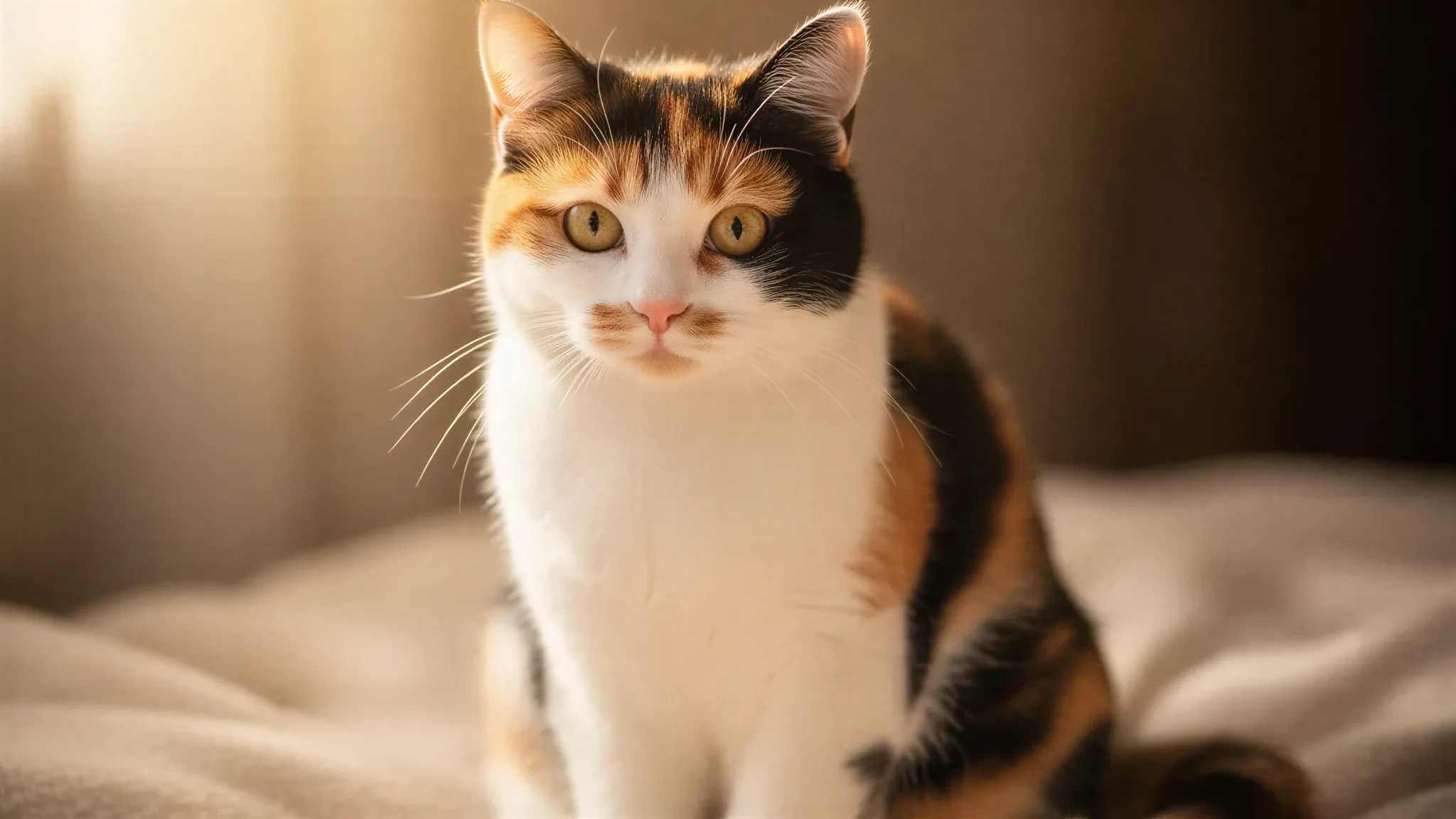
A calico is any cat with a coat of three colors — white, black, and orange (or their diluted versions: white, grey, and cream). Many breeds can be calico — American Shorthairs, Maine Coons, Japanese Bobtails — and so can mixed-breed cats. It’s defined entirely by the tri-color coat with distinct patches, usually on a white background.
Why Calico Cats Are Almost Always Female
Here’s the genetics, kept simple. The genes for orange and black fur both sit on the X chromosome. Female cats have two X chromosomes (XX), so they can carry the orange gene on one and the black gene on the other — and through a process called X-inactivation, different patches of skin express one or the other, producing the orange-and-black patchwork. Add the separate white-spotting gene and you get a calico.
Male cats have only one X (XY), so they can be orange or black, but not both — meaning a male usually can’t be calico.
The Rare Male Calico
Male calicos do exist, but they’re extremely rare — roughly 1 in 3,000. They occur when a male is born with an extra X chromosome (XXY, a condition called Klinefelter syndrome), giving him the two X’s needed for both colors. Almost all of these males are sterile and can have some associated health considerations, so they’re a genuine genetic curiosity rather than a breeding line.
Calico vs Tortoiseshell — What’s the Difference?
People mix these up constantly. The simplest rule:
- Calico = white plus distinct patches of black and orange. Lots of white, clearly separated color blocks.
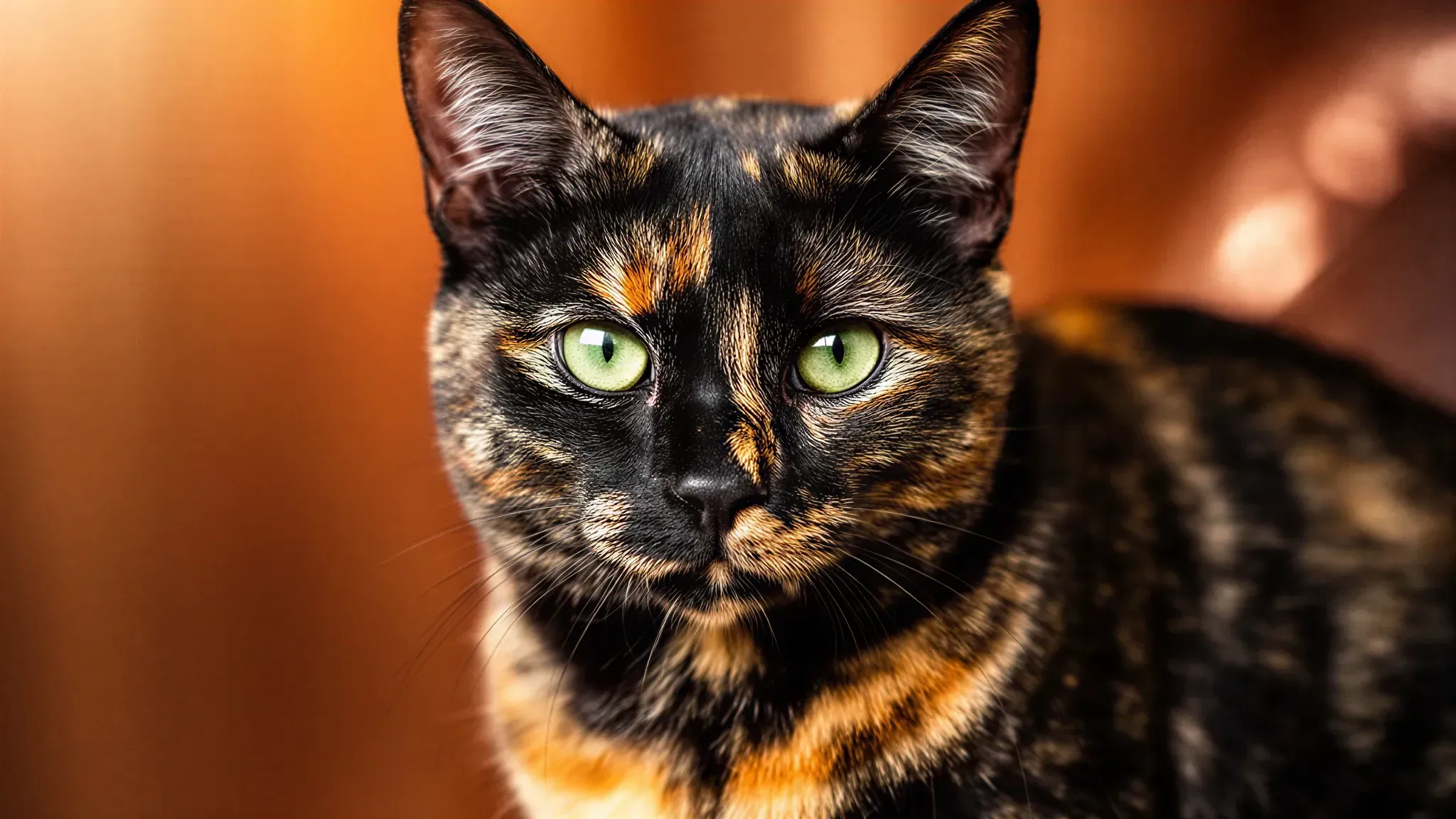
- Tortoiseshell (tortie) = black and orange mottled/brindled together with little or no white — a marbled “molten” look rather than patches.
So calicos are patchy and often mostly white; torties are swirled and mostly dark. Both are almost always female for the same X-chromosome reason.
Do Calico Cats Have a Distinct Personality?
Calico and tortie owners swear by “calico attitude” — feisty, independent, a bit sassy. It’s a beloved reputation, but as with tuxedo and tabby cats, there’s no strong scientific evidence that coat pattern drives personality. Genetics and upbringing shape temperament far more than color.
Frequently Asked Questions
Is a calico cat a breed?
No. Calico is a tri-color coat pattern (white, black, and orange) that appears across many breeds and in mixed-breed cats.
Why are calico cats always female?
The orange and black genes both sit on the X chromosome. Females (XX) can carry both and express the patchwork; males (XY) usually can’t — so nearly all calicos are female.
Can a calico cat be male?
Very rarely — about 1 in 3,000 — when a male has an extra X chromosome (XXY). These males are almost always sterile.
What’s the difference between a calico and a tortoiseshell?
Calicos have white plus distinct black and orange patches; tortoiseshells have black and orange mottled together with little or no white.
Curious about other coats? Read what is a tortoiseshell cat and what is a tabby cat, or find a name in the cat name generator.
Written by Max
Max is a lifelong cat owner and runs CuteCatsHQ. Health and care guides are checked against the veterinary sources listed with each article.
Keep reading
What Is a Tortoiseshell Cat? Tortitude & Genetics
A tortoiseshell cat is a black-and-orange coat pattern, not a breed. Learn the genetics, why torties are almost always female, and the truth about tortitude.
What Is a Tuxedo Cat? The Black-and-White Cat Explained
A tuxedo cat is a black-and-white coat pattern, not a breed. Learn what makes a cat a tuxedo, the genetics, personality myths, and famous tuxedo cats.
What Is a Tabby Cat? Patterns, the M & Facts
A tabby cat isn't a breed — it's a coat pattern. Learn the four tabby patterns, the meaning of the M on the forehead, why orange cats are tabby, and more.