
Why Do Cats Scratch Furniture? Causes & How to Stop It
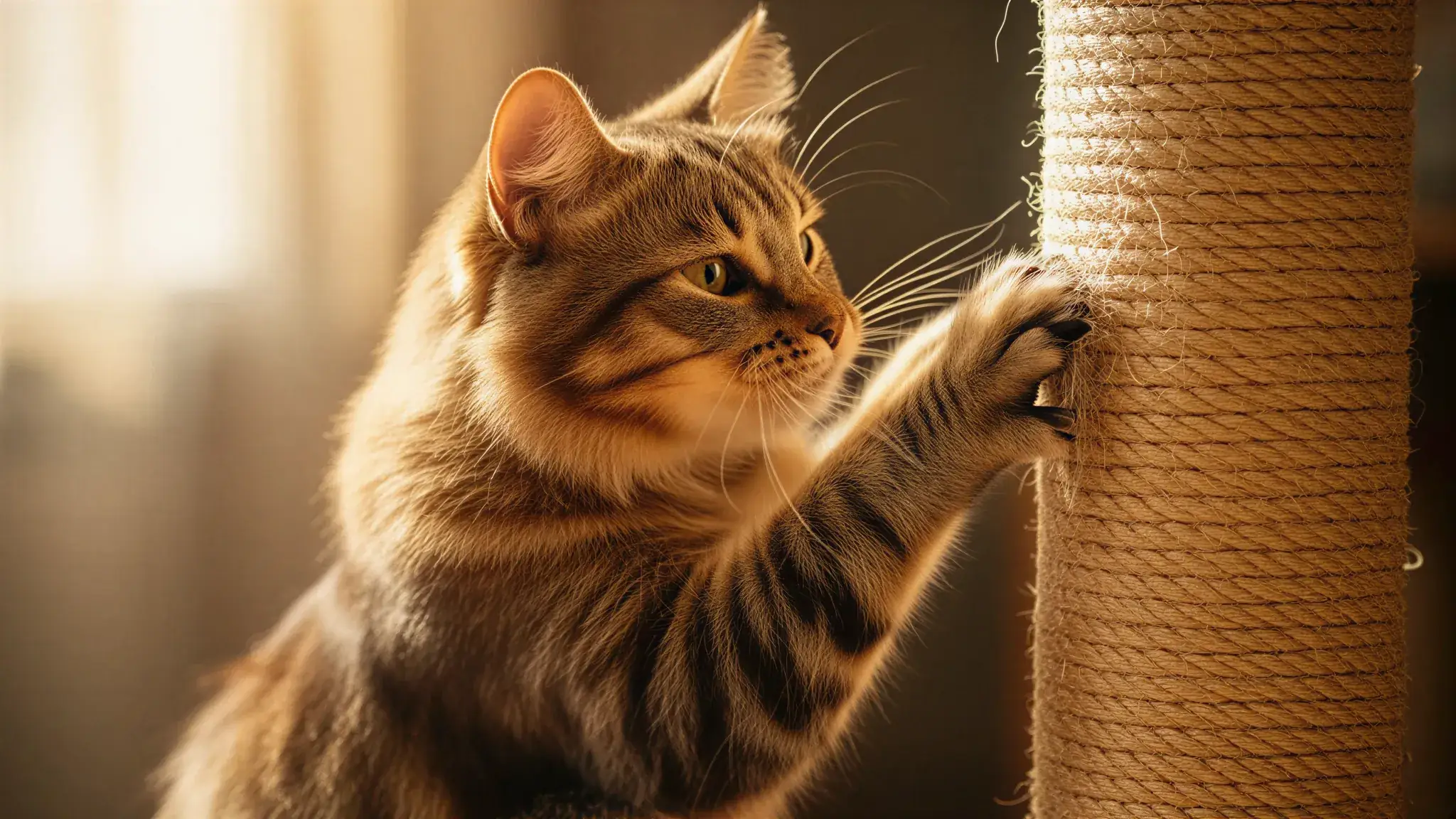
Cats scratch furniture for natural, instinctive reasons — not out of spite. Scratching maintains claw health, stretches muscles, marks territory, and expresses emotions. Understanding why cats scratch helps you redirect the behavior appropriately rather than punishing it. This guide explains the science behind scratching behavior and provides vet-approved solutions to save your furniture while respecting your cat’s natural instincts.
Why Cats Scratch
Claw Maintenance
Scratching removes dead outer layers of claws. Cats’ claws grow continuously and need regular maintenance. The scratching motion sheds old claw sheaths, revealing sharp new claws underneath.
You’ll often find claw sheaths near scratching spots. These translucent casings are the shed outer layers. Finding these confirms your cat is maintaining healthy claws.
Indoor cats need scratching outlets more than outdoor cats. Outdoor cats naturally wear down claws through climbing and hunting. Indoor cats rely on scratching surfaces for claw maintenance.
Regular claw trimming complements scratching but doesn’t replace it. Even cats with trimmed claws need to scratch for other benefits. Scratching is essential behavior, not optional.
Muscle Stretching
Scratching provides a full-body stretch. Cats extend their front legs, arch their backs, and engage core muscles. This stretching maintains muscle flexibility and joint health.
You’ll notice cats scratch after waking from naps. Stretching wakes up muscles after rest. This is natural behavior similar to humans stretching after sleep.
Cats often scratch in specific sequences. They may scratch vertically then horizontally, engaging different muscle groups. This comprehensive stretching keeps cats limber.
Senior cats especially benefit from scratching stretches. Arthritis and stiffness make stretching important. Scratching helps maintain mobility in aging cats.
Territory Marking
Scratching deposits scent from paw glands. Cats have scent glands in their paw pads. Scratching leaves both visual marks and scent signals for other cats.
Visual marks communicate territory to other cats. Scratched surfaces show other cats that this space is occupied. This is natural territorial behavior.
Scent marking is invisible to humans but clear to cats. Other cats can smell who has been in the territory. This communication prevents conflicts between cats.
Indoor cats mark territory even without other cats present. The instinct persists regardless of actual competition. Your cat is following ancient instincts.
Emotional Expression
Scratching expresses excitement and happiness. Cats often scratch when their owners come home or during play. This is positive emotional expression.
Scratching can express frustration or stress. Cats may scratch more during changes or conflicts. Increased scratching can signal emotional upset.
Some cats scratch during greeting sequences. Scratching combined with vocalization and rubbing is a happy greeting. This is your cat saying hello.
Play scratching is common in kittens and young cats. Play scratching is usually directed at toys or appropriate surfaces. Redirect play scratching from furniture.
Common Scratching Mistakes
Punishment Doesn’t Work
Punishing scratching doesn’t stop the behavior. Cats don’t connect punishment with the scratching action. Punishment only creates fear and stress.
Spray bottles, yelling, and physical punishment damage your relationship. Cats learn to fear you, not to stop scratching. This makes behavior problems worse.
Punished cats may scratch when you’re not around. They learn to avoid punishment, not to stop scratching. This leads to secretive scratching.
Positive redirection is far more effective. Reward appropriate scratching instead of punishing inappropriate scratching. This builds good habits.
Declawing Is Not the Answer
Declawing is amputation of the last bone of each toe. This is not a simple nail trim. It’s major surgery with lifelong consequences.
Declawed cats often develop behavioral problems. Pain from declawing can cause litter box avoidance and aggression. Many declawed cats bite more because they can’t scratch.
Declawing is banned in many countries. It’s considered inhumane by veterinary organizations worldwide. Many vets refuse to perform declawing.
There are many humane alternatives to declawing. Scratching posts, nail caps, and training all work without amputation. Choose humane solutions.
Inadequate Scratching Surfaces
Providing only one scratching post isn’t enough. Cats need multiple scratching options in different locations. One post can’t meet all scratching needs.
Wrong scratching post types don’t appeal to cats. Some cats prefer vertical posts while others prefer horizontal. Some prefer sisal while others prefer cardboard.
Poorly placed scratching posts go unused. Posts should be near sleeping areas and currently scratched furniture. Placement affects usage significantly.
Worn out scratching posts lose appeal. Cats prefer fresh, sturdy scratching surfaces. Replace worn posts to maintain interest.
Effective Solutions
Provide Appropriate Scratching Surfaces
Offer multiple scratching post types. Vertical posts, horizontal scratchers, and angled surfaces all appeal to different cats. Variety ensures something appeals to your cat.
Choose sturdy, stable scratching posts. Wobbly posts frighten cats and discourage use. Heavy base posts or wall-mounted options provide maximum stability.
Place posts near currently scratched furniture. Your cat has already chosen these locations as scratching spots. Posts placed nearby redirect the existing behavior.
Replace posts when worn. Fresh scratching surfaces are more appealing. Worn posts lose their texture and appeal.
Make Furniture Less Appealing
Apply double-sided tape to scratched areas. Cats dislike the sticky sensation on their paws. Specialized cat deterrent tapes are available.
Use aluminum foil over scratched areas. The sound and texture are unpleasant to cats. Cover scratched furniture sections temporarily.
Apply plastic sheets or vinyl protectors. Smooth plastic doesn’t provide the resistance cats seek. Clear protectors maintain furniture appearance.
Try citrus scents near scratched areas. Cats generally dislike citrus smells. Use citrus-scented sprays or place citrus peels near scratched areas.
Reward Appropriate Scratching
Praise and treat your cat when using scratching posts. Catch your cat in the act of appropriate scratching and reward immediately. Timing matters for effective reinforcement.
Use catnip on scratching posts. Sprinkle dried catnip or use catnip spray on posts. This makes posts more appealing than furniture.
Play with your cat near scratching posts. Create positive associations with posts. Your cat begins to associate posts with enjoyable activities.
Clicker training can shape scratching behavior precisely. Click and treat when your cat approaches the post. Click and treat for touching. Click and treat for scratching.
Trim Nails Regularly
Regular nail trimming reduces furniture damage. Trimmed claws cause less damage when cats scratch. This doesn’t stop scratching but minimizes damage.
Trim nails every 2-3 weeks. This keeps claws at appropriate length. Start nail trimming early for easiest acceptance.
Use cat-specific nail clippers. Human clippers can split cat nails. Cat clippers are designed for the curved shape of cat nails.
Reward nail trimming sessions. Make trimming positive with treats and praise. This builds tolerance for future sessions.
When Scratching Becomes a Problem
Excessive Scratching
Scratching that causes self-injury warrants veterinary attention. Cats who scratch until their paws bleed may have underlying medical or behavioral issues.
Sudden increases in scratching may signal stress or environmental changes. New pets, moves, or routine changes can trigger stress-related scratching.
Scratching combined with other behavioral changes may indicate medical problems. Watch for changes in appetite, litter box habits, or activity level.
Cats who only scratch inappropriate surfaces despite appropriate options may need behavior consultation. A veterinary behaviorist can help identify underlying causes.
Medical Causes
Skin conditions can cause excessive scratching. Allergies, parasites, and infections all cause itchy skin. Veterinary evaluation identifies skin problems.
Pain can manifest as increased scratching. Arthritis and other painful conditions may cause cats to scratch more. Pain management reduces scratching.
Neurological conditions can affect scratching behavior. Rare neurological issues may cause compulsive scratching. Veterinary evaluation rules out medical causes.
Stress-related scratching may need medication. Anti-anxiety medications can help severely stressed cats. Medication works best combined with behavior modification.
Frequently Asked Questions
How do I get my cat to use the scratching post?
Place the post near currently scratched furniture. Use catnip to attract your cat. Reward any interaction with the post. Be patient and consistent.
Should I declaw my cat to stop scratching?
No. Declawing is amputation and causes lifelong problems. It’s banned in many countries. Use humane alternatives like scratching posts and nail caps.
How many scratching posts do I need?
Provide at least one scratching surface per cat, plus one extra. Place them in multiple locations throughout your home. Cats prefer scratching in areas where they spend time.
Why does my cat only scratch the couch?
Cats prefer textures that feel satisfying. Your couch fabric may provide the perfect resistance for your cat’s claws. Provide sisal or cardboard scratchers near the couch.
Do scratching deterrents work?
Yes, when used consistently. Double-sided tape, foil, and citrus scents deter many cats. Combine deterrents with appropriate scratching surfaces for best results.
Can older cats learn to use scratching posts?
Yes. While kittens learn fastest, cats of any age can learn new behaviors. Patience and positive reinforcement help older cats accept new scratching surfaces.
My cat scratches when I leave. What should I do?
This may be stress-related. Provide enrichment before leaving. Consider calming products like Feliway. Ensure multiple resources in multi-cat households.
Want more cat care guidance? Read our How to Stop Cat Scratching Furniture for detailed solutions or explore Best Cat Toys for enrichment recommendations.