
Best Cat Recovery Suits & Cones: Post-Op Guide
On this page (8 sections)
- Top Recovery Suits and Soft Cones at a Glance
- Why Plastic Cones Are Hard on Cats
- Incision Location Compatibility Matrix
- Detailed Reviews of the Best Recovery Suits and Soft Cones
- Sizing Guide: The Litter Box Dry Flap
- Daily Post-Surgical Incision Inspection Checklist
- When to See a Vet
- Frequently Asked Questions
This article contains affiliate links. If you purchase through our links, we may earn a small commission at no extra cost to you. We only recommend products we’ve researched or personally found valuable for cat owners.
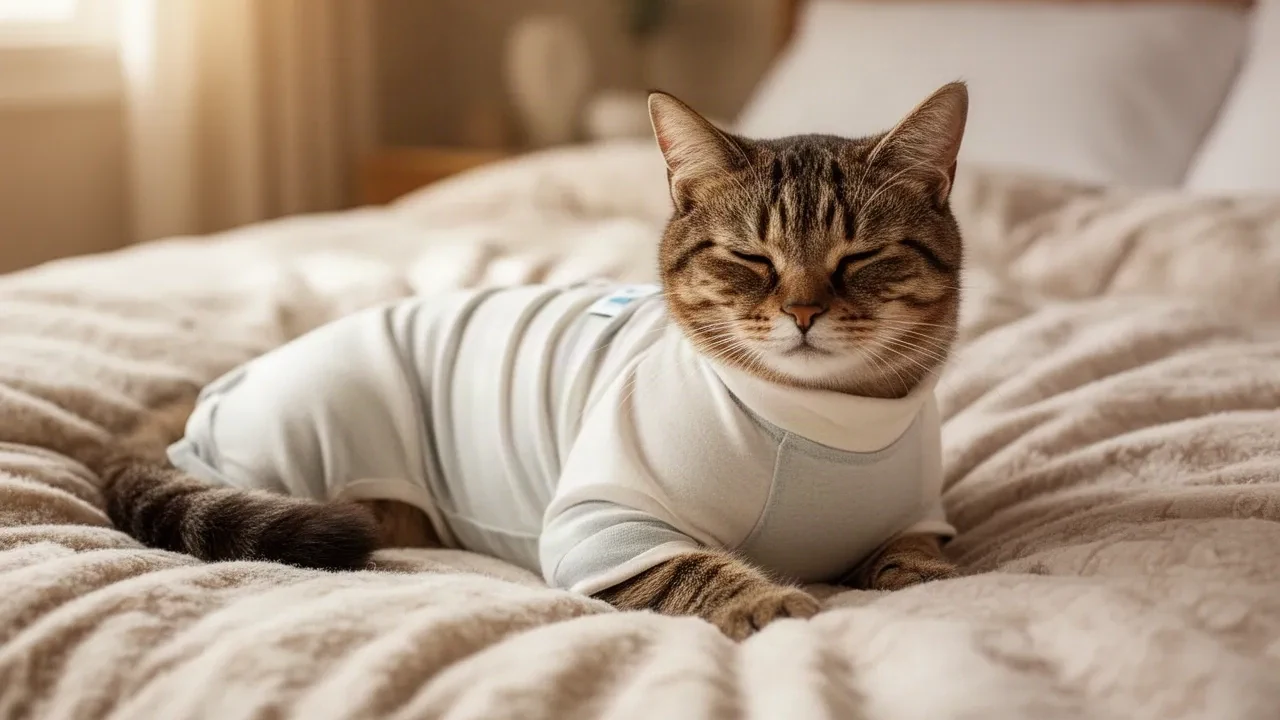
The best cat recovery suits and soft cone alternatives replace rigid plastic Elizabethan collars with breathable cotton onesies, plush inflatable donuts, and flexible fabric cones that protect a surgical incision without adding stress. The pick I would start with for most abdominal surgery is the Suitical Recovery Suit for Cats, for its breathable four-way stretch cotton, rear snap roll-up system, and full abdominal coverage.
Bringing a cat home after a spay, neuter, or soft-tissue surgery is stressful for both of you. For decades the default discharge equipment has been the hard plastic cone, or Elizabethan collar. A plastic cone does stop a cat from licking stitches, but it also gets in the way of eating, sleeping, and moving around the house.
Cats read the world through sensitive whiskers and wide peripheral vision. A rigid cone blocks that side vision, catches on doorways and litter box rims, and can make a cat refuse to eat. Modern veterinary practice offers gentler options, and this guide explains how to choose between a recovery onesie, an inflatable donut, and a soft cone based on where the incision is and how your cat is built. Your veterinarian’s discharge instructions always come first, so use this as a way to understand the options and ask better questions.
Top Recovery Suits and Soft Cones at a Glance
| Model | Style | Primary Material | Closure Type | Best For | Price Range |
|---|---|---|---|---|---|
| Suitical Recovery Suit | Full-Body Medical Onesie | 95% Cotton / 5% Elastane | Rear Press-Stud Snaps | Best Overall for Spays | ~$32–42 |
| Dotoner Recovery Onesie | Breathable Cotton Suit | 100% Breathable Cotton | Rear Magic Tape & Ties | Best Budget Suit Pick | ~$14–19 |
| KONG Cloud Inflatable Collar | Plush Inflatable Donut | Puncture-Resistant Vinyl | Adjustable Velcro Strap | Best Donut for Body Wounds | ~$18–26 |
| SunGrow Soft Fabric Cone | Flexible Soft E-Collar | Quilted Waterproof Nylon | Adjustable Hook-and-Loop | Best for Ear/Face Protection | ~$15–22 |
Why Plastic Cones Are Hard on Cats
A cat’s facial whiskers are packed with nerve endings that detect air currents, measure clearance, and help balance movement. When a plastic cone presses or bangs those whiskers against furniture, it can overwhelm the senses and disorient the cat.
Veterinary guidance generally favors soft, flexible recovery wear over rigid plastic collars when it suits the wound, because it interferes less with the cat’s vision, whiskers, and normal movement.
| Metric | Hard Plastic E-Collar | Cotton Recovery Suit |
|---|---|---|
| Whisker clearance | Compressed or knocked against surfaces | Free and unhindered |
| Peripheral vision | Blocks side vision | Keeps natural vision |
| Food and water access | Hits the bowl rim and spills | Normal feeding |
| Litter box mobility | Catches on high walls | Steps in and out naturally |
| Sleep quality | Stiff neck, hard to rest | Can stretch and sleep |
| Wound protection | Blocks the mouth only | Covers the incision directly |
By keeping the face clear, a soft onesie or a low-profile donut lets your cat walk, use the litter box, and sleep in normal positions. A calmer cat is an easier patient, which makes daily checks and medication simpler for you.
Incision Location Compatibility Matrix
No single product fits every surgical site. A recovery suit is excellent for an abdominal spay and useless for an eye injury. Use this as a starting point, then confirm the choice with your veterinarian.
| Wound / Surgery Location | Recovery Suit | Inflatable Donut | Soft Fabric Cone |
|---|---|---|---|
| Female spay (abdomen) | Best | Good | Good |
| Flank or side incision | Best | Risky | Good |
| Male neuter (scrotum) | With gap | Best | Best |
| Ear, head, or face wound | No | No | Best |
| Eye or corneal ulcer | No | No | Best |
| Front paw or carpal joint | No | No | Best |
| Back spine or shoulder | Best | Good | Good |
1. Female Abdominal Spay and Midline Laparotomy
The incision sits along the lower midline of the abdomen. A snug, breathable recovery suit covers it with fabric, which keeps the tongue away and shields the site from floor surfaces.
2. Male Scrotal Neuter Incisions
Neuter incisions in male cats are small and heal quickly, but the cat still must be stopped from licking the scrotum. An inflatable donut usually works well here, blocking the muzzle from reaching between the hind legs while leaving the head free.
3. Ear, Eye, and Facial Trauma
For an aural hematoma, eye surgery, or a facial laceration, neither a recovery suit nor a donut collar will do the job. A flexible cat can bend a hind leg around an inflatable donut to scratch the face. This is where a structured soft cone that extends past the nose is the right tool.
Detailed Reviews of the Best Recovery Suits and Soft Cones
1. Suitical Recovery Suit for Cats — Best Overall for Spays and Abdominal Surgery
🥇 Best Overall Recovery Suit
Suitical Recovery Suit for Cats
A veterinary-oriented recovery suit made from breathable four-way stretch cotton with a rear snap roll-up flap for litter box use.
- 95% cotton / 5% elastane
- Rear press-stud fastening
- Light interior lining for wound checks
- Machine washable at 194°F (90°C)
A common choice among veterinary practices for abdominal recovery.
The Suitical Recovery Suit is shaped around feline anatomy rather than scaled down from a dog onesie. The tailored contours hug the torso without restricting shoulder movement or pinching the groin.
The fabric is a blend of 95% breathable cotton and 5% Lycra elastane. The tight weave keeps a rough tongue from pulling at stitches while letting air reach the incision. The interior belly panel is lined with light blue cotton, which makes it easier to spot fluid, bleeding, or discharge during daily checks.
The rear closure uses press-stud snaps instead of noisy Velcro that can startle a sound-sensitive cat or snag fur. For litter box trips, you unsnap the rear flap, roll the fabric forward along the belly, and secure it with the interior snap tab.
The anatomical fit keeps the suit from slipping off the shoulders, and the cotton helps keep the incision dry. The tradeoffs are price and sizing: it costs more than a generic onesie, and a suit that runs long will drag in the litter box.
2. Dotoner Breathable Cotton Recovery Onesie — Best Budget Suit Pick
💰 Best Budget Recovery Onesie
Dotoner Breathable Cotton Recovery Onesie
A soft, lightweight cotton post-surgery onesie with an adjustable neck drawstring and open rear leg design for litter box clearance.
- 100% soft elastic cotton
- Adjustable neck cord
- Pre-cut open rear bathroom portal
- Elastic leg binding
Affordable, comfortable protection for a routine spay recovery.
For a routine kitten spay, the Dotoner Onesie offers a lot of comfort for the money. It is made from 100% soft cotton knit and feels like a baby onesie.
Dotoner cuts an open rear that leaves the anus and urinary tract unobstructed. You do not have to unsnap or roll anything up when your cat uses the litter box, because waste passes through the opening without soiling the fabric.
The neck opening has a soft elastic drawstring with a plastic toggle, so you can fine-tune the fit and keep a clever cat from backing out overnight. The armholes have soft ribbed piping to reduce chafing under the armpits.
The open rear does leave lower inguinal incisions more exposed than the Suitical, and the thin cotton can wear through if an aggressive groomer works the same spot. As always, check with your vet that the coverage is enough for the specific incision.
3. KONG Cloud Inflatable Collar for Cats — Best Plush Donut Alternative
☁️ Best Inflatable Donut Collar
KONG Cloud Inflatable Collar
A plush inflatable neck ring that keeps a cat from turning to lick body wounds while preserving peripheral vision and normal bowl feeding.
- Puncture-resistant PVC bladder
- Removable plush outer cover
- Secure collar loop anchors
- Fully adjustable Velcro strap
A well-known soft donut collar for body wound protection.
The KONG Cloud Collar is a familiar name in inflatable post-surgical collars. It is built around a puncture-resistant PVC air bladder that inflates in seconds with a pinch valve.
The exterior is a soft plush fleece jacket that feels like a travel pillow against your cat’s neck. Because the ring does not project forward past the snout, your cat can eat dry kibble and drink from a bowl without catching the rim. Interior fabric loops let you thread a breakaway collar through the ring, which helps keep the donut from being pulled off over the head.
The donut preserves peripheral vision, so there is less wall bumping, and the open face lets the cat eat and drink normally. The fleece cover zips off for machine washing. It will not stop a cat from scratching their ears or eyes with a hind leg, and very flexible or long-bodied cats can sometimes reach their lower rear paws.
4. SunGrow Soft Fabric Adjustable Cone — Best Soft Cone for Ear and Face Care
🛡️ Best Soft Cone for Facial Wounds
SunGrow Soft Fabric Adjustable Cone
A cushioned, flexible fabric Elizabethan cone that protects ear, eye, and head wounds from scratching while flexing around doorways and food dishes.
- Water-resistant quilted nylon
- Cushioned memory foam core
- Dual-position fold-back rim
- Wide Velcro adjustment panel
Useful for ear hematomas, eye ulcers, and facial scratching.
When the wound is on your cat’s head, ears, or eyes, neither a suit nor an inflatable donut can stop a hind leg from reaching it. The SunGrow Soft Fabric Cone provides the physical barrier of a traditional cone without the rigidity of hard plastic.
It is made from quilted, water-resistant nylon around a flexible foam core, so it bends when your cat bumps into walls, doorways, or litter boxes. It absorbs impacts quietly, avoiding the plastic clatter that startles anxious cats.
The cone uses an adjustable fold-back rim. During supervised meals, you can fold the front edge back over your cat’s shoulders for clear access to the bowl, then flip it forward and secure the Velcro strap afterward.
The cone blocks hind paws from reaching the ears, eyes, and facial surgery sites, and the foam yields on impact so it does not jam in doorways. The rim folds back for supervised feeding, and the nylon wipes clean with a damp cloth. It still restricts more peripheral vision than a suit or donut, and an energetic cat can bend the rim back if the length is wrong.
Sizing Guide: The Litter Box Dry Flap
The most important measurement for a recovery suit is back length. A suit that is too tight pulls on the incision, and one that is too long sags in the rear and soaks up urine in the litter box.
- Back length (A to B): Measure with a soft tape along the spine from the base of the neck to the root of the tail.
- Chest girth (C): Measure the widest circumference around the ribcage just behind the front legs.
- Weight: Use weight only as a secondary confirmation.
Sizing Benchmarks
- Small (kittens and petite cats, 4–7 lbs): Back length 9.5 to 11.5 inches.
- Medium (average adult cats, 7–11 lbs): Back length 11.5 to 13.5 inches.
- Large (large breeds and heavy cats, 12–18 lbs): Back length 13.5 to 16.0 inches.
For the first forty-eight hours after surgery, switch to a low-dust, non-clumping paper pellet litter. Fine clay granules stick easily to incisions and damp onesie fabric. Our best cat litter for kittens guide covers safe low-dust options.
Daily Post-Surgical Incision Inspection Checklist
Whichever recovery gear you choose, inspect the incision at least twice a day for ten to fourteen days, or until your veterinarian says the site is closed:
- Redness and swelling. Mild pinkness along the suture line is common in the first 48 hours. Spreading redness or a hard, bulging swelling should be reported to your vet.
- Discharge. A healing incision should stay clean and dry. Active bleeding, yellow or white pus, or foul-smelling fluid needs an immediate call to your veterinarian.
- Suture integrity. Check that staples, external knots, or surgical glue lines are intact. If an incision opens, cover it loosely with a clean gauze pad and contact an emergency clinic right away.
- Pain and appetite. Most cats return to eating small meals and using the litter box within 12 to 24 hours. Persistent hiding, refusal to eat, or growling when touched can signal pain that needs veterinary attention.
When you are planning the procedure, our when to spay or neuter your cat guide covers timing and what to expect. If your cat is stressed at the clinic or at home, our guide to cat stress signs can help.
When to See a Vet
Recovery gear protects the incision, but it does not replace monitoring. If the wound opens, bleeds actively, drains yellow or foul-smelling pus, or the surrounding skin turns angry red and swollen, contact your veterinarian immediately. Persistent hiding, refusal to eat, or crying when touched after surgery can signal pain or infection that needs treatment. If you notice any of these signs, consult your veterinarian. This article is for informational purposes and does not replace professional veterinary advice.
Frequently Asked Questions
Can my cat use the litter box while wearing a recovery suit?
Yes. Quality recovery suits are designed for bathroom use. Some have an open rear cutout that keeps the anus and urethra clear, while others use a roll-up rear flap that folds forward along the belly to keep fabric clean and dry.
Is an inflatable donut collar safe for a spayed cat?
For many cats, yes. An inflatable donut stops the cat from bending their neck back to reach a midline abdominal incision. Extremely flexible or long-bodied cats can sometimes reach around it, so ask your veterinarian which option suits your cat’s incision and body type.
How many days should a cat wear a recovery suit after surgery?
Follow your veterinarian’s instructions, which are usually around 10 to 14 days or until the incision is confirmed closed at a follow-up. Do not remove the suit early just because the cat seems fine by day five, since deeper tissue layers take longer to regain strength.
Can my cat sleep comfortably in a recovery suit?
Yes. Soft cotton recovery suits let cats stretch out, curl up, and sleep in natural positions. Unlike rigid plastic cones that force the neck into awkward angles and clatter against the floor, a onesie is quiet and allows normal movement.
Written by Max
Max is a lifelong cat owner and runs CuteCatsHQ. Health and care guides are checked against the veterinary sources listed with each article.
Keep reading
Best Microchip Cat Doors: Smart Flap Guide
Keep strays and raccoons out with the best microchip cat doors. Compare door, wall, and glass installs, RFID range, curfew timers, plus training tips.
Best Smart Cat Cameras & Treat Dispensers
Monitor, talk, and play with your cat from anywhere. Compare smart pet cameras with treat tossing, lasers, 360 views, and the cloud vs local storage costs.
Best Stainless Steel Cat Water Fountains
Stop feline chin acne and boost hydration with the best stainless steel and ceramic cat water fountains. Compare pump noise, materials, and filter costs.