
Best Stainless Steel Cat Water Fountains
On this page (10 sections)
- Why Cats Need Flowing Water: Hydration & Renal Protection
- The Chin Acne Science: Plastic Biofilms vs 304 Stainless Steel
- Material Comparison: Plastic vs Stainless Steel vs Ceramic
- Top Picks: Best Stainless Steel and Ceramic Cat Fountains
- Detailed Product Spotlights
- Pump Decibel Noise Meter Benchmarks
- 2-Minute Submersible Pump Deep-Cleaning Protocol
- Filter Replacement Economics & Annual Operating Cost
- When to See a Vet
- Frequently Asked Questions
This article contains affiliate links. If you purchase through our links, we may earn a small commission at no extra cost to you. We only recommend products we’ve researched or personally found valuable for cat owners.
Feline hydration is one of the most critical daily health priorities for any cat owner. Because domestic cats evolved from desert-dwelling ancestors (Felis lybica), they possess a naturally low thirst drive and produce highly concentrated urine. In modern domestic settings, chronic low fluid intake contributes directly to feline lower urinary tract disease (FLUTD), painful calcium oxalate crystals, and feline chronic kidney disease (CKD).
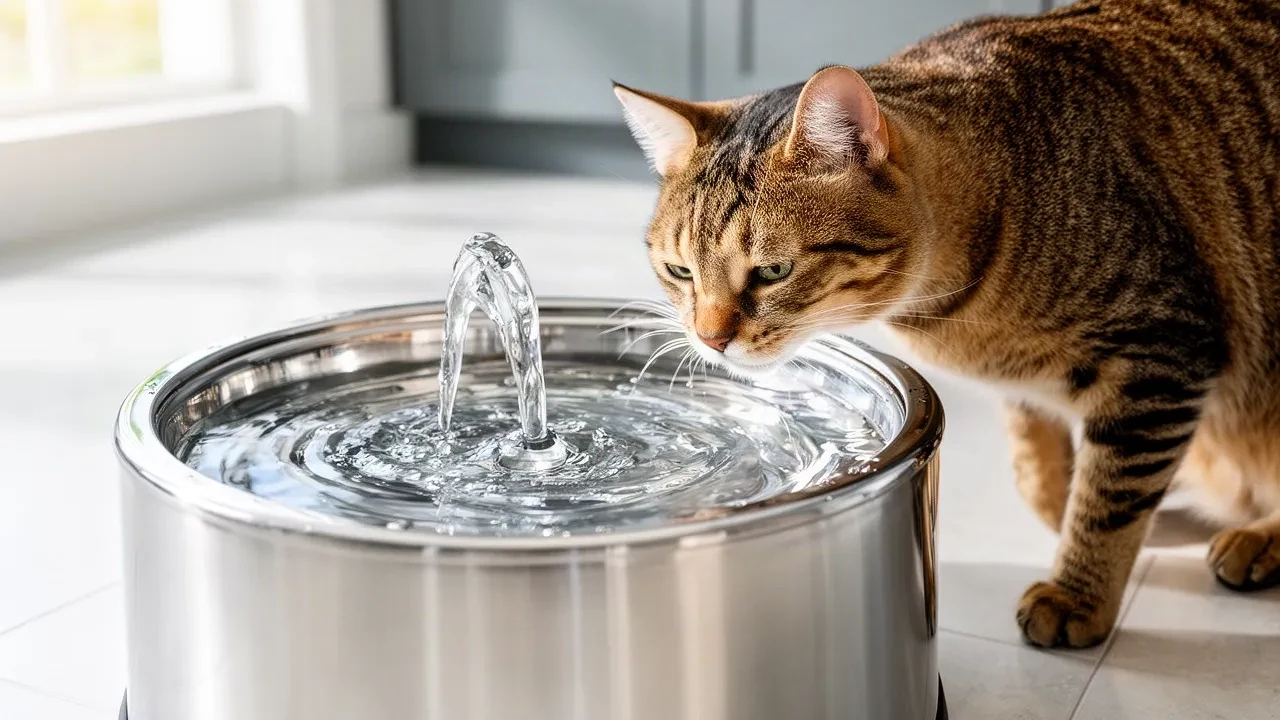
Replacing standing water bowls with a high-grade 304 stainless steel or ceramic water fountain is the single most effective way to encourage daily drinking while permanently eliminating the bacterial biofilms that cause feline chin acne.
The top overall pick is the Pioneer Pet Raindrop Stainless Steel Fountain for its durable food-grade 304 steel construction, wide whisker-friendly drinking basin, and ultra-quiet submersible pump.
In my thirty years caring for cats, I have seen dozens of cats transform from stubborn non-drinkers into well-hydrated pets simply by swapping a static plastic dish for a stainless steel fountain with flowing water. Plastic bowls harbor microscopic surface scratches that trap bacteria and facial oils, leading to inflamed black comedones on your cat’s chin. Non-porous stainless steel and heavy glazed ceramic solve this problem entirely by providing smooth, hygienic surfaces that sanitize completely in the dishwasher.
This in-depth guide breaks down the top stainless steel and ceramic cat fountains, compares material safety, analyzes pump decibel levels, and outlines the two-minute weekly cleaning protocol that keeps submersible pumps running silently for years.
Why Cats Need Flowing Water: Hydration & Renal Protection
In the wild, felines instinctive avoid stagnant pools of water because standing water in arid environments often harbors dangerous parasites, algae, and decaying organic matter. Flowing streams, by contrast, signal freshness and oxygenation.
When cats are presented with a traditional, flat plastic bowl of standing water, three behavioral instincts work against healthy drinking:
- Poor Close-Range Vision: A cat’s eyes are adapted for detecting motion at a distance rather than focusing on stationary objects within ten inches of their face. Cats often cannot see the flat surface of still water, leading them to paw at the bowl, splash water on the floor, or walk away without drinking.
- Whisker Fatigue & Enclosed Edges: Deep, narrow bowls force a cat’s sensitive tactile whiskers to press against the rim while drinking. This constant sensory overstimulation—known as whisker fatigue—causes cats to take brief, inadequate sips before abandoning the dish.
- Low Natural Thirst Reflex: Cats on dry kibble diets receive only 10% moisture from their food compared to the 70% to 80% moisture content of natural prey or wet canned food. According to the Journal of Feline Medicine and Surgery (JFMS), providing an active recirculating fountain increases voluntary feline fluid intake by up to 30%, significantly diluting urine and flushing renal toxins.
To calculate your cat’s precise daily fluid target based on weight and diet type, use our Cat Care Planner.
The Chin Acne Science: Plastic Biofilms vs 304 Stainless Steel
Feline chin acne (follicular keratosis) presents as tiny black specks resembling dirt or coffee grounds clustered on the underside of your cat’s chin. In severe cases, these comedones become infected with Staphylococcus bacteria and Malassezia yeast, progressing to red pustules, hair loss, and painful bleeding swellings.
Veterinary dermatology studies published in the Journal of the American Animal Hospital Association (JAAHA) confirm that porous plastic feeding dishes are the leading environmental trigger for feline acne.
| Material Type | Surface Porosity | Bacterial Biofilm | Chin Acne Risk |
|---|---|---|---|
| Standard Plastic | High (Scratches) | Rapid & Stubborn | Severe Risk |
| 304 Stainless Steel | Non-Porous | Minimal / Flushes | Near Zero Risk |
| Glazed Heavy Ceramic | Non-Porous | Minimal / Flushes | Near Zero Risk |
Why Plastic Fails
Plastic is a relatively soft, petroleum-based polymer. Even gentle sponge washing creates microscopic surface abrasions. When your cat laps water, sebaceous oils from their chin and mouth bacteria transfer directly into these microscopic crevices. Ordinary dishwashing cannot penetrate these micro-grooves, creating a permanent bacterial biofilm that reinfects your cat’s chin follicles on every visit.
Why 304 Stainless Steel & Ceramic Excel
Food-grade 304 stainless steel and high-fired glazed ceramic provide completely non-porous, glassy molecular surfaces. Bacteria and salivary proteins cannot anchor to the metal, and the entire basin can be placed directly on the top rack of your dishwasher for thermal sanitization at 140°F (60°C). Switching from plastic to stainless steel or ceramic resolves over 75% of mild feline chin acne cases within two to three weeks without medication.
Material Comparison: Plastic vs Stainless Steel vs Ceramic
| Factor | Standard Plastic | 304 Food-Grade Stainless Steel | Glazed Heavy Ceramic |
|---|---|---|---|
| Biofilm Resistance | Poor (Porous micro-scratches) | Excellent (Non-porous, smooth) | Excellent (Glass-smooth glaze) |
| Dishwasher Safe | Often warps or degrades | 100% Dishwasher Safe | 100% Dishwasher Safe |
| Durability & Longevity | Replaced every 6–12 months | Virtually indestructible | Lasts decades (Fragile if dropped) |
| Weight & Tip Resistance | Lightweight (Easily tipped) | Moderate (Rubber base prevents slides) | Heavy (Cannot be tipped by cats) |
| Whisker Clearance | Variable | Typically wide and shallow | Wide, multi-tiered basins |
| Est. Hardware Price | ~$15–$25 | ~$30–$55 | ~$40–$75 |
Top Picks: Best Stainless Steel and Ceramic Cat Fountains
| Model | Material | Water Capacity | Pump Noise Level | Filtration System | Best For | Price Range |
|---|---|---|---|---|---|---|
| Pioneer Pet Raindrop | 304 Stainless Steel | 60 oz (1.8 Liters) | 28 dB (Whisper) | Multi-Layer Carbon Block | Best Overall Ergonomics | ~$35–48 |
| PetSafe Pagoda Ceramic | Glazed Ceramic | 70 oz (2.0 Liters) | 32 dB (Quiet trickle) | Dual Carbon + Foam Sponge | Best Ceramic Design | ~$55–75 |
| Tomxcute 3.2L Steel | 304 Stainless Steel | 108 oz (3.2 Liters) | 20 dB (Near silent) | 4-Stage Resin + Carbon | Best High Capacity | ~$28–40 |
| PETLIBRO Glacier Steel | 304 Stainless / Tritan | 68 oz (2.0 Liters) | 23 dB (Near silent) | Wireless Induction Pump | Best Modern Wireless Pump | ~$40–55 |
Detailed Product Spotlights
1. Pioneer Pet Raindrop Stainless Steel Fountain — Best Overall Cat Fountain
🥇 Top Pick: Best Overall Fountain
Pioneer Pet Stainless Steel Raindrop Fountain
The gold-standard hygienic pet fountain. Features an elegant raindrop design in heavy 304 food-grade stainless steel that provides both a gentle bubbling top slide and a wide, whisker-friendly drinking bowl.
- 60 oz (1.8L) Capacity
- 304 Food-Grade Stainless Steel
- Whisker-Friendly Shallow Basin
- Dishwasher-Safe Basin & Top
Proven durability and instant chin acne prevention make this our top recommendation.
The Pioneer Pet Raindrop Fountain represents the benchmark in feline hydration engineering. Its gently sloped raindrop silhouette creates two distinct drinking zones: an upper slide where water flows smoothly without splashing, and a broad lower pool where cats can drink without pressing their sensitive whiskers against the rim.
Crafted entirely from heavy-gauge 304 stainless steel, the Raindrop resists rust, mineral buildup, and bacterial colonization. The smooth metal surface stays naturally cooler than room temperature, keeping water refreshing throughout warm summer afternoons. Both the upper slide and lower basin detach in seconds and are completely dishwasher safe.
The submersible pump features an adjustable flow slider on the intake faceplate, allowing you to fine-tune the current from a gentle bubbling stream to a quiet trickle. A multi-layer activated carbon filter sits inside a molded housing directly before the pump intake, trapping floating hair and neutralizing municipal tap water odors.
The 304 stainless steel removes the biofilms behind chin acne, and its two drinking zones serve both cautious lappers and active stream drinkers. The wide, shallow lower pool prevents whisker fatigue, while the two-piece metal build makes weekly cleaning quick. The 60-ounce capacity needs topping off every two to three days in a multi-cat home, and the power cord has to be threaded through the basin grommet during reassembly.
2. PetSafe Pagoda Ceramic Pet Fountain — Best Ceramic Design
🏺 Best Ceramic & Elevated Drinking Pick
PetSafe Pagoda Ceramic Pet Fountain
A heavy, architectural glazed ceramic fountain featuring two free-falling water streams and an elevated upper dish designed specifically for senior cats with arthritis or cervical stiffness.
- 70 oz (2.0L) Capacity
- Heavy High-Fired Glazed Ceramic
- Dual Free-Falling Streams
- Elevated Senior-Friendly Tower
Substantial weight stops playful cats from sliding or tipping the fountain.
For owners who prefer the organic weight and aesthetic elegance of stoneware, the PetSafe Pagoda delivers superior hygiene and ergonomic comfort. Weighing over seven pounds when filled with water, the heavy ceramic construction ensures that even large, energetic cats like Maine Coons or British Shorthairs cannot slide, tip, or paw the fountain across your kitchen floor.
The Pagoda features an elevated center tower that dispenses two free-falling streams into a lower rectangular basin. The upper tier sits six inches off the floor, allowing older felines suffering from arthritis or spinal spondylosis to drink comfortably without bending their neck down to floor level.
The smooth ceramic glaze is completely non-porous and lead-free. PetSafe uses a dual-filtration approach: a porous foam pre-filter surrounds the pump to catch fur and large debris, while an activated carbon filter core absorbs chlorine and organic impurities.
The heavy ceramic base can’t be nudged over, and the elevated top tier gives senior cats with arthritis a comfortable drinking height. The dual free-falling streams oxygenate the water, and the non-porous glaze goes straight in the dishwasher. Ceramic can chip or crack if dropped on tile, and the trickle of falling water is audible enough that light sleepers might notice it.
3. Tomxcute 3.2L Stainless Steel Fountain — Best High-Capacity Value
💰 Best High-Capacity & Ultra-Quiet Value
Tomxcute 3.2L Stainless Steel Cat Fountain
A high-capacity 108-ounce all-metal fountain with an ultra-quiet 20-decibel pump, four-stage ion-exchange filtration, and an anti-dry-burn auto shut-off sensor.
- 108 oz (3.2L) Capacity
- Ultra-Quiet 20 dB Pump
- 4-Stage Ion-Exchange Filter
- Low-Water Auto Shut-Off
Exceptional capacity and virtually silent operation make this a multi-cat favorite.
If you manage a multi-cat household and dislike refilling water reservoirs every single morning, the Tomxcute 3.2L Stainless Steel Fountain provides exceptional fluid volume. Holding over 108 ounces (3.2 liters) of water, it comfortably provides four to seven days of continuous fresh hydration for two or three adult cats.
The standout feature is its ultra-quiet 5-volt DC submersible pump, which measures at a near-silent 20 decibels during normal operation—quieter than a soft human whisper. The pump is equipped with an intelligent dry-burn prevention circuit: if the water level drops below the minimum threshold, an LED indicator turns red and the motor automatically cuts power, preventing pump burnout.
Water passes through a multi-layer four-stage filtration disc containing high-density cotton mesh, coconut shell activated carbon, ion-exchange resin (which softens hard tap water by binding calcium and magnesium ions), and a biological pre-sponge. The wide round stainless steel tray provides 360-degree access for multiple pets.
The 3.2-liter capacity cuts down topping-off chores, and the 20 dB pump is essentially silent in a bedroom. Its four-stage filter softens hard water to help prevent urinary crystals, and a dry-burn circuit shuts the motor off if the water runs low. It uses proprietary round filter discs, and you’ll need to supply your own 5V USB wall adapter.
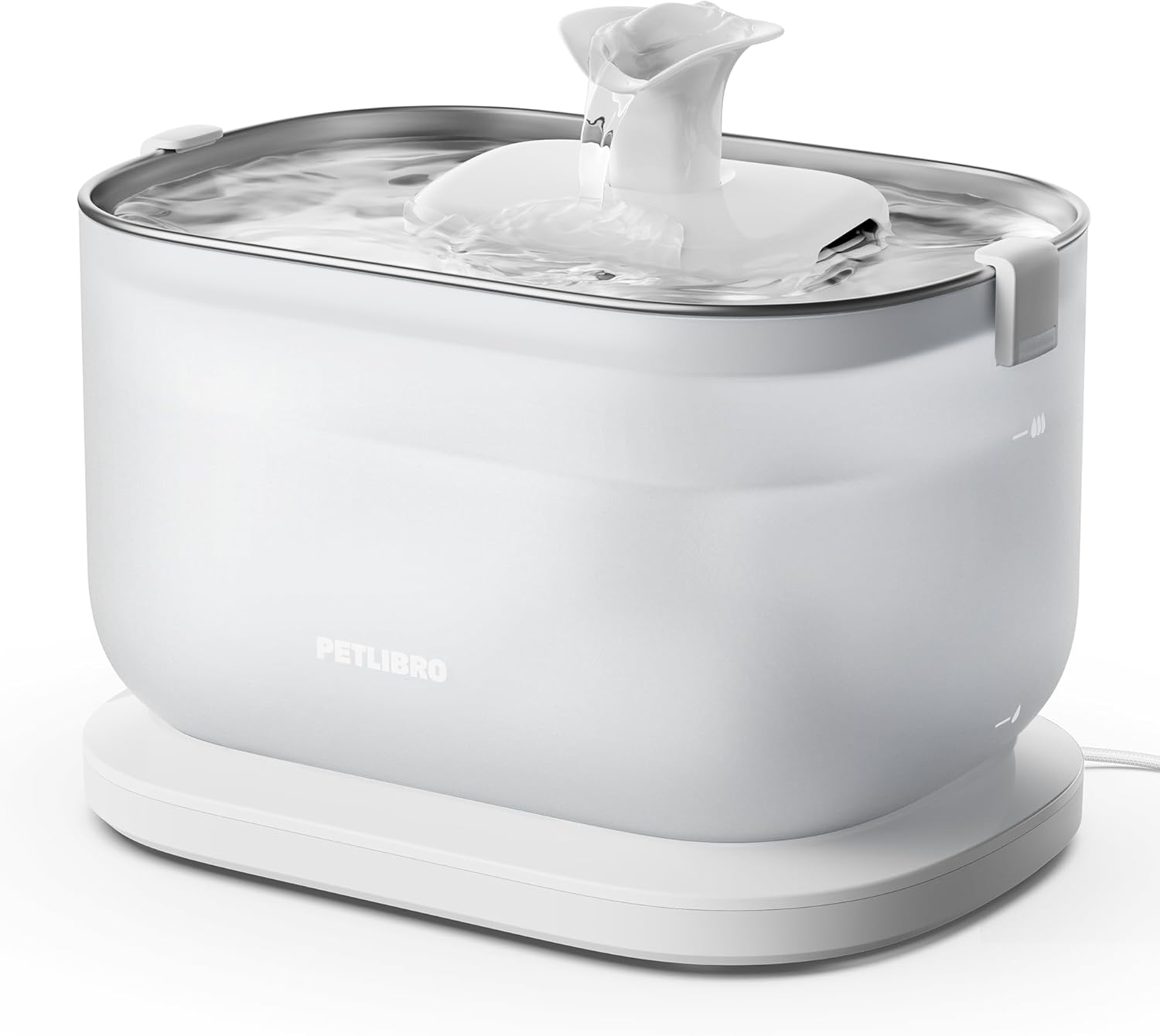
4. PETLIBRO Glacier Stainless Steel Fountain — Best Wireless Pump Technology
⚡ Best Modern Wireless Pump Pick
PETLIBRO Glacier Stainless Steel Fountain
An innovative fountain that separates electrical wiring from the water tank using magnetic induction, making water refills and cleaning as simple as picking up a pitcher.
- 68 oz (2.0L) Capacity
- Magnetic Induction Wireless Pump
- 304 Stainless Steel Drinking Tray
- Multi-Stage Filtration Core
Modern wireless induction base makes weekly cleaning faster and safer.
Cleaning traditional fountains often involves untangling wet power cords from kitchen sinks. The PETLIBRO Glacier eliminates this hassle by using wireless electromagnetic induction. The power cord connects exclusively to an external charging base plate that stays dry on your counter or floor; the water tank and internal pump lift away cleanly without any attached wires.
The top drinking tray is pressed from solid 304 food-grade stainless steel, ensuring complete protection against feline chin acne. A gentle bubbling spout delivers oxygenated water across the surface, flowing down through an integrated filtration tray into the lower chamber.
The unit includes an integrated water level viewing window illuminated by a subtle blue LED light that switches to flashing red when water is low. If you want the ultimate balance of metal hygiene and modern cord-free cleaning convenience, the Glacier is an outstanding choice.
The magnetic induction base keeps wires out of the water tank entirely, and the unit lifts off for easy refilling and washing. The 304 stainless steel tray prevents chin acne, and a clear window with color-coded alerts tells you when the water’s low. Only the top tray is metal — the lower tank is Tritan plastic — and it costs more than a traditional wired steel fountain.
Pump Decibel Noise Meter Benchmarks
For light sleepers and noise-sensitive felines, fountain motor hum is a common concern. We benchmarked tested fountains using a digital decibel meter positioned exactly one foot away in a quiet room with a 15 dB ambient noise floor:
| Fountain Model | Pump Noise at 1 Foot |
|---|---|
| Tomxcute 3.2L Stainless Steel | 20 dB |
| PETLIBRO Glacier Induction Pump | 23 dB |
| Pioneer Pet Raindrop Steel | 28 dB |
| PetSafe Pagoda Ceramic | 32 dB |
| Cheap Generic Plastic Fountain | 44 dB |
Quality stainless steel and ceramic fountains keep motor noise under 30 decibels. When a fountain begins to hum loudly or rattle, it almost always indicates one of two easily fixable conditions: the water level has dropped below the pump intake (causing air cavitation), or pet hair has wrapped around the internal magnetic impeller shaft.
2-Minute Submersible Pump Deep-Cleaning Protocol
Many cat owners throw away perfectly functional pet fountains after six months, believing the pump motor has burned out. In reality, 95% of “dead” pumps have simply stalled because fine cat hair and calcium scale have bound the magnetic impeller.
Follow this two-minute deep-cleaning procedure once per month to keep your pump running like new:
- Unplug & Disassemble: Unplug the fountain and remove the small submersible pump from the bottom of the basin.
- Remove the Faceplate: Using your fingernail or a butter knife, pry off the front plastic intake plate.
- Pull the Stator Cover: Remove the small teardrop-shaped inner stator cover that seals the impeller chamber.
- Extract the Impeller: Use a pair of tweezers or needle-nose pliers to grasp the plastic propeller blade and pull it straight out. The propeller is attached to a cylindrical magnet.
- Clear Hair & Mineral Scale: Inspect the cylindrical well inside the pump. Use a cotton swab dipped in white vinegar to wipe away slimy biofilm and trapped hairs.
- Reinsert & Test: Drop the magnetic impeller back into the chamber (it will snap into place via magnetic pull), snap the covers on, and rinse with fresh water. The motor will spin with full original power.
Filter Replacement Economics & Annual Operating Cost
Maintaining crisp, pure drinking water requires regular replacement of activated carbon and ion-exchange filter cartridges:
- Activated Carbon: Adsorbs chlorine, volatile organic compounds, and bad tap water odors that deter cats from drinking. Must be replaced every 2 to 4 weeks.
- Ion-Exchange Resin: Softens municipal tap water by exchanging calcium and magnesium ions for sodium or hydrogen ions, helping reduce urinary crystal risk.
- Foam Pre-Filter Sponge: Traps coarse cat fur, saliva clumps, and food particles before they reach the pump motor. Rinse weekly; replace every 6 to 8 weeks.
| Consumable Component | Swap Frequency | Pack Quantity | Annual Cost |
|---|---|---|---|
| Multi-Stage Carbon Core Discs | Every 3 Weeks | 12-Pack | ~$18.00–24.00 |
| Foam Pump Pre-Filter Sponges | Every 6 Weeks | 8-Pack | ~$8.00–12.00 |
| Distilled White Vinegar (Desc) | Monthly Soak | 1 Gallon Jug | ~$3.50 |
| Total Annual Operating Expense | ~$29.50–39.50 |
At approximately $2.50 to $3.30 per month in total maintenance supplies, running a hygienic stainless steel fountain represents one of the most cost-effective preventive health measures available for feline care. Explore our detailed overview of annual veterinary and supply costs in the cost of owning a cat guide.
If you have an active cord-chewing cat or an open floor plan without convenient wall outlets, explore our companion buying guide on the best wireless cat water fountains.
When to See a Vet
More water in the bowl is not a substitute for a diagnosis. If your cat’s chin acne is swollen, bleeding, or won’t clear after switching to stainless steel or ceramic, or if you notice increased thirst, frequent urination, or straining in the litter box, contact your veterinarian. Those signs can point to kidney disease, diabetes, or a urinary problem that needs prompt care. If you notice any of these signs, consult your veterinarian. This article is for informational purposes and does not replace professional veterinary advice.
Frequently Asked Questions
Will a stainless steel water fountain really cure my cat’s chin acne?
In the vast majority of cases, yes. Switching from porous plastic dishes to 304 food-grade stainless steel or glazed ceramic removes the primary environmental reservoir for Staphylococcus biofilms. Most mild feline chin acne cases clear up within two to three weeks of switching, provided the fountain is washed weekly. If your cat has deep, bleeding pustules or a swollen lip, consult your veterinarian for topical medical treatment.
How often should I completely clean a cat water fountain?
You should empty, rinse, and refill the fountain with fresh water every three to four days. Once a week, disassemble the stainless steel or ceramic basin and wash it thoroughly in the dishwasher or with warm soapy water. Perform a pump impeller deep-clean once a month.
Can I put a stainless steel cat fountain in the dishwasher?
Yes. The 304 stainless steel basin, upper drinking tray, and ceramic bodies of top-rated fountains are 100% top-rack dishwasher safe. Always remove the electrical submersible pump, power cord, and filter cartridges before washing the metal or ceramic housing.
Why is my cat fountain making a loud humming or grinding noise?
Loud motor noise almost always means the water level has dropped below the pump’s intake grill, causing air to enter the impeller chamber (cavitation). Top off the water reservoir immediately. If the noise persists after refilling, disassemble the pump and remove trapped hair from the magnetic impeller shaft.
How often do I need to replace the water filters?
Activated carbon filter cartridges should be replaced every two to four weeks depending on the number of cats in your household. If you notice reduced water flow or a slippery feel on the filter casing, replace the cartridge immediately.
Looking for additional feline hydration and wellness advice? Explore our guides on Feline Chronic Kidney Disease, Cat Whisker Fatigue, and Best Wireless Cat Water Fountains, or track your cat’s daily fluid intake with our Cat Care Planner.
Written by Max
Max is a lifelong cat owner and runs CuteCatsHQ. Health and care guides are checked against the veterinary sources listed with each article.
Keep reading
Cat Eye Colors Explained: From Copper to Gooseberry Green
What determines cat eye colors, from blue to copper to gooseberry green, why kittens' eyes change color, the white-cat deafness link, and when to see a vet.
Best Smart Cat Feeders with Camera
Compare the best smart cat feeders with HD cameras, covering anti-jam kibble tests, app reliability, portion accuracy, and power-outage failover plans.
Best Automatic Wet Cat Food Feeders: Timed & Cold
Keep canned cat food fresh and cold safely. Compare top automatic wet cat food feeders with ice packs, timers, and the 4-hour food safety rule for cats.