
Cat Eye Colors Explained: From Copper to Gooseberry Green
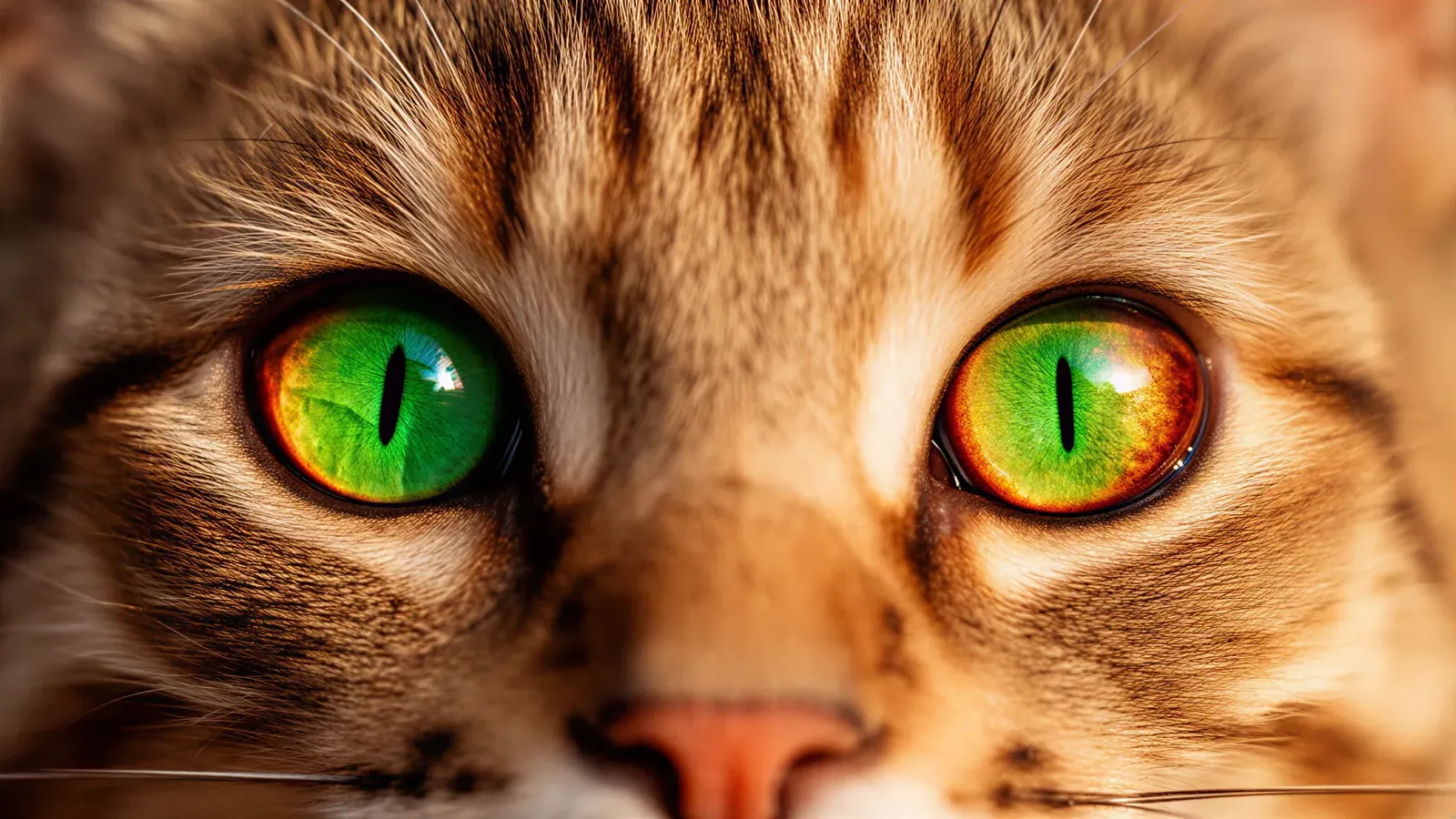
Cats have some of the most striking eyes in the animal world — molten copper, deep green, glacier blue, and everything in between. If you’ve ever wondered why your cat’s eyes are the color they are, whether they’ll change, or what “gooseberry green” even means, here’s the full picture, including the one eye-color change that’s worth a vet visit.
What Determines a Cat’s Eye Color?
A cat’s eye color comes down to melanin — the same pigment that colors skin and fur — and specifically the number of pigment-producing cells, called melanocytes, in the iris. More melanin means a warmer, deeper color (copper, orange, gold); less melanin means a cooler, lighter one (green, yellow, blue). It’s largely genetic, and — apart from a few special cases below — a cat’s eye color is not directly tied to its coat color. A black cat can have copper eyes; an orange cat can have green ones.
The Main Cat Eye Colors
- Blue. Not true pigment at all — blue eyes have very little melanin, and the color comes from the way light scatters in the iris, the same reason the sky looks blue. All kittens start here.
- Green. Low melanin. Ranges from a pale, sharp green to deep emerald. Many British Shorthairs, Russian Blues, and Havana Browns are prized for their green eyes.
- Yellow to gold. A step up in melanin — bright lemon-yellow through rich gold. One of the most common cat eye colors.
- Amber. Warm and orange-tinged, common in breeds like the Bengal and Maine Coon.
- Copper / orange. The deepest, warmest shade, with the most melanin. Persians and Bombays are famous for it.
- Hazel. A blend — usually a green center ringed with gold or copper toward the edge.
- Odd-eyed (heterochromia). Two different colored eyes, most often one blue and one green, gold, or copper. It’s caused by the white-spotting or dominant-white gene limiting pigment in one eye, and it’s purely cosmetic — those cats see perfectly well.
What Is “Gooseberry Green”?
If you’ve read a breed standard, you may have hit the term gooseberry green — a specific pale, slightly greenish-yellow shade named after the fruit. It’s the prized eye color of the Cornish Rex and shows up in a few other breeds’ standards. It sits right on the line between green and yellow, which is exactly what makes it distinctive. So if someone describes a cat’s eyes as gooseberry green, they mean a clear, light, greenish-gold — not a deep emerald.
Why Kittens’ Eyes Change Color
Every kitten is born with blue eyes, because the melanocytes in the iris haven’t started producing pigment yet. At around six to seven weeks, those cells kick in, and the eyes gradually shift toward their adult color over the next few months. By about three to four months, most cats have their final eye color. So the grey-blue-eyed kitten you brought home may end up gold, green, or copper — it just takes a little patience to find out.
Two exceptions keep their blue for life: colorpoint cats (Siamese, Ragdoll, Himalayan) are always blue-eyed because the same gene that creates their pale bodies and dark points also suppresses iris pigment, and some white cats stay blue-eyed.
Eye Color, White Cats, and Deafness
One eye-color link is worth knowing for health reasons. In white cats, blue eyes are associated with a higher chance of congenital deafness — the gene behind the all-white coat can also affect the inner ear. Odd-eyed white cats are sometimes deaf only on the blue-eyed side. It doesn’t affect quality of life much — deaf cats do very well as indoor pets — but it’s useful to know so you can keep a white, blue-eyed cat safely indoors and get its hearing checked.
When an Eye-Color Change Means See a Vet
Gradual color change in a growing kitten is completely normal. What is not normal is a sudden change in an adult cat, or a change in just one eye. See your veterinarian promptly if you notice:
- A cloudy, hazy, or bluish film over the eye
- One eye suddenly a different color or with a changed pupil size
- Yellowing of the eye (or the gums/skin), which can signal a liver issue
- Redness, discharge, squinting, or pawing at the eye
These can point to inflammation, glaucoma, high blood pressure, or other conditions where early treatment matters. When in doubt, get it looked at — eyes are one area where waiting rarely helps.
Frequently Asked Questions
What is the rarest cat eye color?
True odd-eyed cats (one blue, one non-blue eye) are the rarest and most eye-catching. Among matched pairs, a deep, even orange/copper and a clear pale green are the most prized in show cats.
Do all kittens start with blue eyes?
Yes. Every kitten is born blue-eyed because the iris hasn’t produced pigment yet. The adult color develops between about six weeks and four months of age.
What does “gooseberry green” mean for cat eyes?
It’s a pale, greenish-yellow eye color named after the gooseberry fruit — the signature eye color of the Cornish Rex. It sits between green and yellow.
Can a cat’s eye color change in adulthood?
It shouldn’t. A sudden eye-color change, cloudiness, or a change in just one eye in an adult cat is a reason to see a vet, as it can signal an underlying health problem.
Curious about the cats behind these eyes? Explore our breed guides, or find a fitting name in the cat name generator.