
Best Smart Cat Feeders with Camera
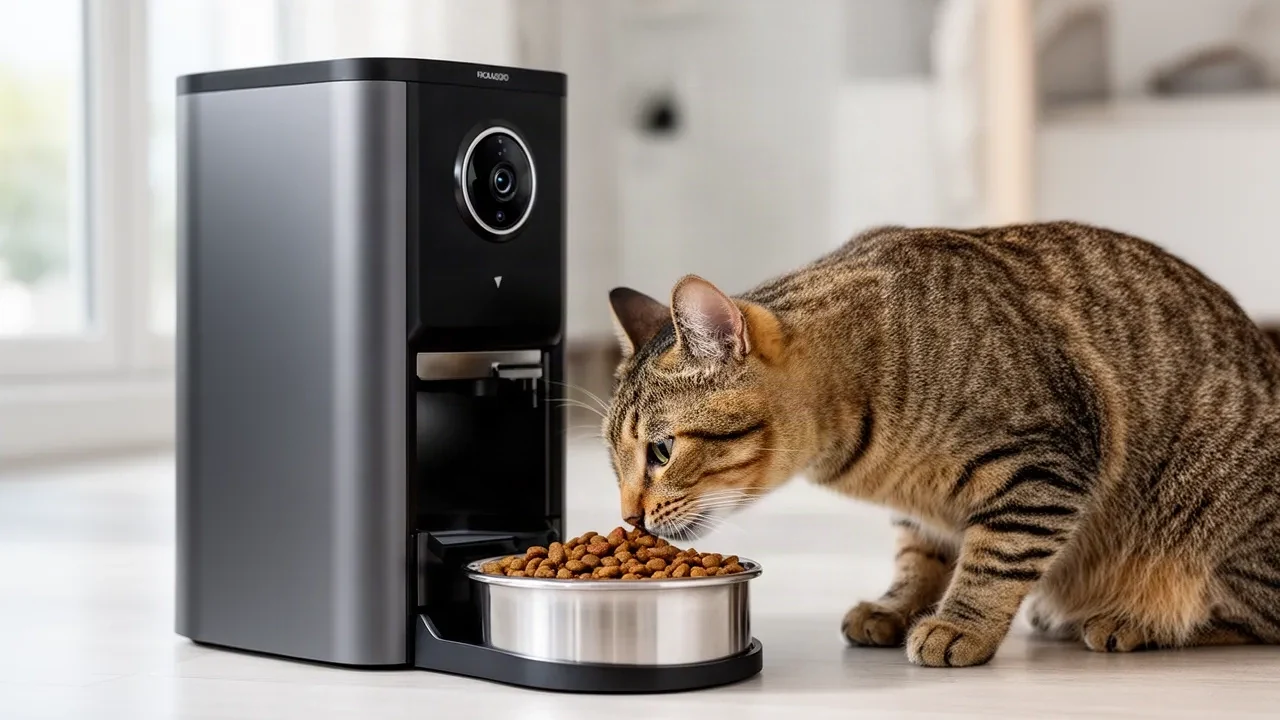
On this page (10 sections)
- Why Smart Feeders with Cameras Outperform Traditional Timers
- Quick Comparison: Best Smart Camera Feeders
- Detailed Product Spotlights
- Kibble Anti-Jam Stress Test Matrix
- Power and Wi-Fi Outage Failover Reliability
- Food Freshness: Desiccant Seals and Moisture Control
- IoT Security and Pet Camera Privacy
- Portion Calibration and Daily Maintenance
- When to See a Vet
- Frequently Asked Questions
This article contains affiliate links. If you purchase through our links, we may earn a small commission at no extra cost to you. We only recommend products we’ve researched or personally found valuable for cat owners.
Smart automatic cat feeders equipped with integrated HD cameras have transformed feline nutrition management from a guessing game into a precise, verifiable routine. These devices combine timed micro-portioning with wide-angle video monitoring, two-way audio, and dual-power failover systems. For cat owners working long office shifts or managing strict weight-loss programs, they offer visual confirmation that every meal dispenses and gets eaten on schedule.
The top overall pick is the Petlibro Granary Smart Camera Feeder for its reliable silicone anti-jam rotor, 1080p wide-angle optics with night vision, and offline memory failover that dispenses meals even during household Wi-Fi outages.
In my thirty years living with and caring for cats, the single biggest challenge in feline health has always been portion discipline. Free-feeding dry kibble leads directly to obesity, hepatic lipidosis, and diabetes, while frantic morning wake-up yowling strains the human-animal bond. An automated feeder paired with a live camera stream solves both problems: your cat receives measured meals throughout the day, and you can visually verify their appetite and eating behavior from your smartphone.
Before investing in a connected pet appliance, look closely at the mechanical torque and how the mechanism handles real kibble shapes. You also want a battery failover you can trust and an app that respects your data privacy. This guide covers the top smart camera feeders on the market, detailed anti-jam test results, and veterinary feeding protocols.
Why Smart Feeders with Cameras Outperform Traditional Timers
Traditional mechanical pet feeders rely on basic rotating carousels or rudimentary push-button LCD clocks. While functional, they share a critical vulnerability: you have zero visibility into whether the food actually dispensed or whether a clever cat jammed the mechanism.
Smart Wi-Fi feeders with integrated cameras provide four distinct advantages:
- Visual Appetite Monitoring: Cats are masters at hiding illness. A sudden reduction in food intake is often the earliest clinical indicator of feline dental disease, kidney dysfunction, or gastrointestinal obstruction. Being able to watch a live video feed or review short motion-triggered video clips lets you confirm your cat finished their portion.
- Fractional Micro-Portioning: In the wild, felines hunt and consume eight to twelve small prey items across a 24-hour cycle. Feeding cats two large meals per day contradicts their natural digestive biology, frequently causing the rapid eating and regurgitation pattern known as “scarf and barf.” Smart feeders allow you to divide daily caloric allotments into four to eight precise micro-meals.
- Behavioral Separation of Food and Owner: When cats associate their human with breakfast, they develop persistent attention-seeking behaviors like pawing at your face, knocking items off nightstands, or yowling at 5:00 AM. Transferring meal delivery to an automated device resets this association, helping your cat view the feeder as the food source.
- Instant Jam and Tamper Alerts: If a large kibble piece blocks the dispensing chute or your cat knocks the unit over, the feeder immediately pushes a notification to your phone so you can intervene.
To plan your cat’s daily feeding schedule before programming the feeder, use our Cat Care Planner.
Quick Comparison: Best Smart Camera Feeders
| Model | Camera Resolution | Hopper Capacity | Kibble Compatibility | Power Failover | Best For | Price Range |
|---|---|---|---|---|---|---|
| Petlibro Granary Camera | 1080p HD (145° FOV) | 5 Liters (~21 cups) | 2–15 mm dry kibble | 3 × D-Cell Batteries | Best Overall Balance | ~$90–130 |
| PetKit YumShare Dual-Hopper | 1080p HD (140° FOV) | 5 Liters (Dual 3L/2L) | 2–12 mm dry & freeze-dried | 5 × AAA Batteries | Best Dual-Diet System | ~$140–180 |
| WOPET SmartFeeder HD | 1080p HD (120° FOV) | 6 Liters (~25 cups) | 2–15 mm dry kibble | 3 × D-Cell Batteries | Best High Capacity | ~$80–110 |
| Catit PIXI Smart Feeder Cam | 1080p HD (120° FOV) | 2.5 Liters (~10.5 cups) | 2–9 mm dry kibble | 4 × C-Cell Batteries | Best Compact Aesthetic | ~$110–140 |
Detailed Product Spotlights
1. Petlibro Granary Smart Camera Feeder — Best Overall Smart Feeder
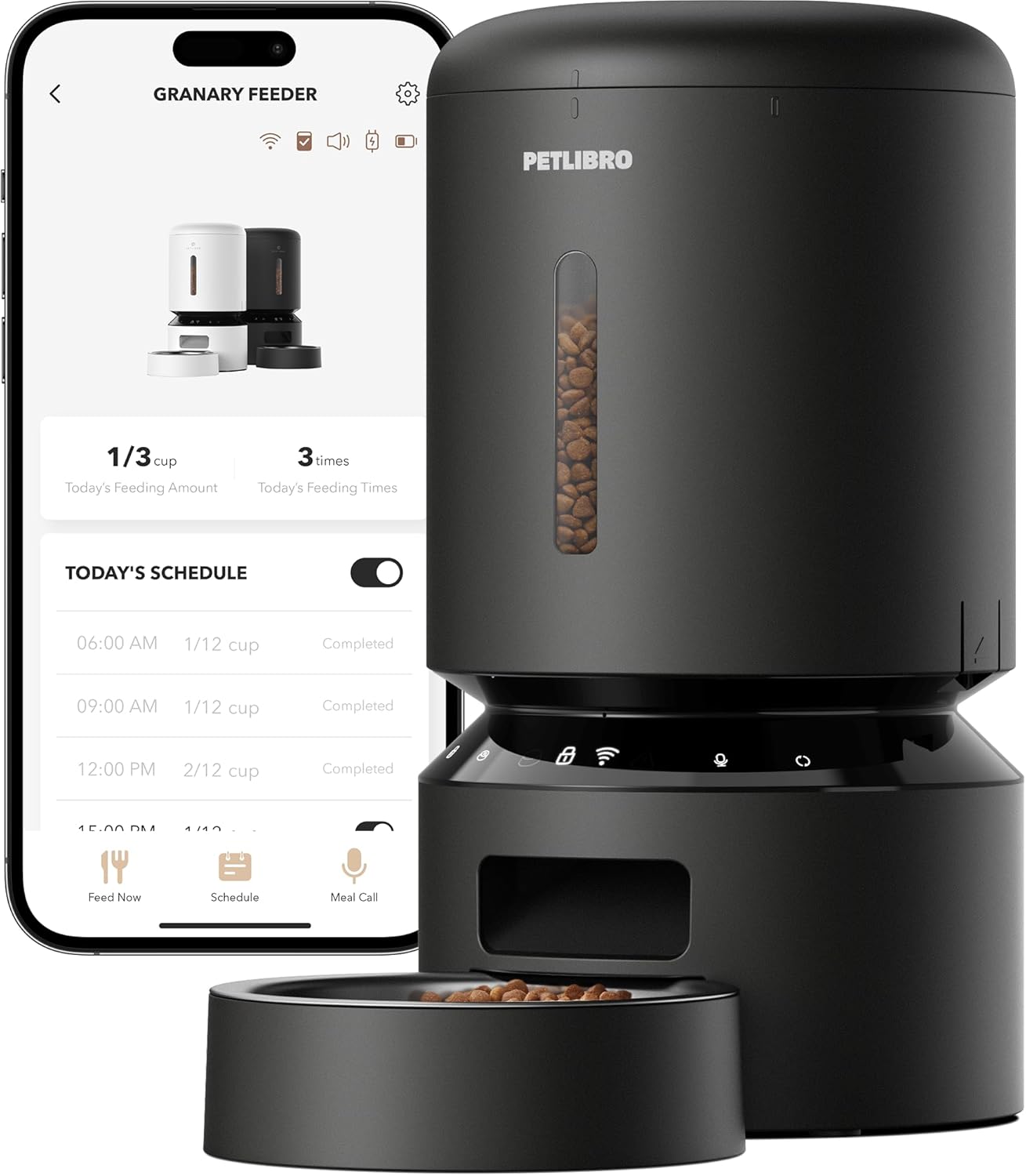
🥇 Top Pick: Best Overall Feeder
Petlibro Granary Smart Camera Feeder
A dependable 5-liter smart feeder featuring a 1080p wide-angle camera with infrared night vision, two-way audio, a patented silicone anti-jam rotor, and local flash memory scheduling.
- 1080p HD (145° Wide-Angle)
- Patented Silicone Rotor
- Dual 2.4GHz & 5GHz Wi-Fi
- 3 × D-Cell Battery Backup
Exceptional mechanical reliability and clear video streaming make this the gold standard for daily portion control.
The Petlibro Granary Smart Camera Feeder earns our top recommendation through thoughtful mechanical engineering and stable software connectivity. The unit features a downward-tilted 1080p camera with a 145-degree field of view, giving you a crystal-clear look at both your cat and the stainless steel feeding bowl below. Automatic infrared night vision ensures clear monitoring in pitch-black rooms.
Inside the hopper, Petlibro uses a flexible silicone paddle wheel driven by a high-torque motor. If a large or oddly shaped kibble piece gets wedged in the chute, the motor senses the resistance, reverses rotation for two seconds to dislodge the piece, and then drives forward again to complete the dispense. The companion app connects across both 2.4GHz and 5GHz Wi-Fi networks, allowing you to schedule up to 10 meals per day with 1 to 50 portion units (approximately 1/12 cup or 10 grams per unit).
A top-mounted desiccant bag holder and a tight silicone sealing gasket around the lid keep dry food crunchy and prevent fat oxidation. The bowl base is crafted from 304 food-grade stainless steel, which lifts out easily for daily washing to protect against feline chin acne.
The Granary connects on both 2.4GHz and 5GHz bands, and its downward-angled camera lets you see exactly how much food is left in the bowl. The reverse-torque rotor clears jams on its own, and programmed schedules keep dispensing even if the Wi-Fi drops. Motion-triggered recording does need a cloud subscription or a local microSD card, and the power cord should be routed away from cord chewers.
2. PetKit YumShare Dual-Hopper Smart Feeder — Best for Mixed Diets
🥈 Best for Mixed & Freeze-Dried Diets
PetKit YumShare Dual-Hopper Smart Feeder
A dual-compartment feeder with an AI-powered 1080p camera that allows you to store, blend, and dispense two distinct food types—such as veterinary dry kibble and freeze-dried raw chunks—simultaneously.
- Dual 3L + 2L Hoppers
- AI Cat Face Detection
- Wide Dispense Chute
- Two-Way Intercom
Ideal for complex diets requiring precise proportions of dry kibble and raw toppers.
For households feeding a combination of standard kibble and freeze-dried raw nuggets, single-hopper feeders fall short because different piece sizes separate inside the tank. The PetKit YumShare solves this with two physically isolated hoppers (a 3-liter main compartment and a 2-liter secondary compartment) powering independent dispensing chutes.
Through the PetKit app, you can program custom meal mixtures—for example, dispensing 80% dental kibble from Hopper A and 20% freeze-dried chicken bits from Hopper B. The wide dispensing chute measures nearly 20 millimeters across, easily handling bulky irregular shapes without clogging.
The built-in 1080p camera uses on-device computer vision algorithms to detect when your cat approaches the bowl, automatically recording a short video highlight clip of the meal. The companion app logs eating duration and visit frequency, generating historical charts that help identify subtle declines in appetite.
The dual hoppers let you blend two formulas in exact proportions, and the extra-wide chute handles freeze-dried raw chunks up to 12mm. Its AI tracking logs meal start times, eating speed, and visit duration so you can spot appetite dips early. It costs more than a single-hopper design, and the app’s customization options take some getting used to.
3. WOPET SmartFeeder HD 6L — Best High-Capacity Feeder
📦 Best Large Capacity
WOPET 6L SmartFeeder with HD Camera
A generous 6-liter automatic feeder holding up to 25 cups of dry kibble, equipped with a 1080p wide-angle camera, custom voice recording, and heavy-duty tamper-resistant locking latches.
- 6-Liter Bulk Tank (~25 cups)
- 1080p Night Vision Camera
- 10-Second Voice Recorder
- Dual Power Supply
Large capacity means fewer hopper refills, making it ideal for busy multi-cat homes.
If you care for multiple cats or travel regularly for full weekends, smaller 2-liter hoppers require frequent refilling. The WOPET SmartFeeder features a generous 6-liter food reservoir holding roughly 25 cups of dry kibble—enough to sustain an adult cat for three to four weeks without refilling.
The camera provides a crisp 1080p live stream with a 120-degree viewing angle. You can record a custom 10-second voice prompt that plays through the feeder’s speaker immediately before dispensing each meal, calling your cats to the kitchen. The top lid features a dual-button squeeze latch that prevents clever cats from prying the lid open if the feeder is nudged or tipped.
The mechanical dispensing wheel uses rigid composite fins with a soft rubber tip that sweeps the food chute cleanly on every rotation, maintaining portion accuracy across standard round and disc-shaped kibble.
The 6-liter reservoir means far fewer refills, and the tamper-proof lid latch shrugs off pawing and tipping. Two-way audio lets you call your cat to the bowl, and the mechanical drive handles standard kibbles up to 15mm. It only works on 2.4GHz Wi-Fi, and the fixed camera angle can’t be panned or tilted.
4. Catit PIXI Smart Feeder with Camera — Best Compact Design
✨ Best Compact Aesthetic
Catit PIXI Smart Feeder with Camera
An elegant, whisper-quiet 2.5-liter feeder featuring Catit's signature feline aesthetic, a 1080p camera with night vision, anti-jam oscillating motor, and smooth PIXI app ecosystem integration.
- 2.5-Liter Reservoir (~10.5 cups)
- 1080p HD Cam with Mic
- Anti-Jam Oscillating Drive
- Dishwasher-Safe Steel Dish
Charming design paired with reliable mechanical engineering for single-cat apartments.
For apartment dwellers who want smart functionality without an industrial-looking appliance dominating their kitchen, the Catit PIXI Smart Feeder offers a clean, modern aesthetic. The unit features subtle cat-ear accents and an illuminated status nose that changes color to signal low food levels or a Wi-Fi disconnect.
Despite its compact footprint, the PIXI houses a 1080p camera positioned just above the bowl to give an unobstructed view of your cat eating. The dispensing mechanism uses an oscillating motor that gently vibrates the food chute while turning, preventing kibble pieces from bridging and forming air pockets over the exit hole.
The high-grade 304 stainless steel food dish sits on an elevated, whisker-friendly tray that reduces neck strain during meals. The feeder integrates directly into the Catit PIXI app ecosystem, allowing you to manage your feeder, water fountain, and environmental sensors from a single dashboard.
The PIXI’s compact design blends into a modern kitchen, and its oscillating rotor keeps kibble from bridging over the chute. The elevated stainless steel dish encourages a comfortable eating posture, and the app ties together all your Catit devices. The 2.5-liter tank needs refilling every 10 to 14 days, and it’s limited to kibble up to 9mm.
Kibble Anti-Jam Stress Test Matrix
The most frequent mechanical failure in automatic pet feeders is a jammed rotor. When hard dry kibble lodges between the rotating paddle and the plastic housing, the motor stalls, leaving your cat without food.
Different kibble shapes present varying levels of jam risk:
| Kibble Shape / Size | Jam Risk | Rotor Requirement | Top Compatible Feeder |
|---|---|---|---|
| Round Pellet (4–8mm) | Very Low | Standard Rigid Rotor | All Models |
| Flat Disc (8–10mm) | Low | Flexible Silicone Fin | Petlibro Granary |
| Triangle / Star (10–12mm) | Moderate | High-Torque Auto-Rev | Petlibro Granary |
| Large Dental (12–15mm) | High | Wide Funnel (>18mm) | WOPET 6L |
| Freeze-Dried Raw Chunks | High | Dual-Chute Sifter | PetKit YumShare |
When selecting dry food for an automatic feeder, avoid soft-moist kibbles, oily dental bites larger than 15mm, and long pellet-shaped foods, as these can deform and bind the rotor.
Power and Wi-Fi Outage Failover Reliability
A reliable smart feeder must never leave your cat hungry during a storm or network failure. High-quality smart feeders use a dual-layer failover architecture:
A reliable smart feeder routes power and instructions through several redundant layers:
- The app and cloud server send the schedule to an on-board microcontroller.
- The microcontroller stores the meal schedule in local flash memory.
- If AC power drops, the feeder auto-switches to D-cell or AAA battery backup.
- The motor keeps dispensing on schedule even when Wi-Fi and power are both down.
Local Flash Memory Scheduling
When you program meal times in the smartphone app, the schedule is transmitted to the feeder’s onboard microcontroller and stored in non-volatile flash memory. If your home Wi-Fi drops completely, the feeder’s internal real-time clock continues to trigger dispensing cycles exactly on schedule. The only feature temporarily disabled during a network outage is live video streaming.
Battery Backup Failover
Top-tier units use 3 to 4 alkaline D-cell batteries in the base. Under normal conditions, the feeder draws electricity from the wall outlet. If grid power cuts out, an internal relay switches instantaneously to battery power without restarting the processor. A set of fresh alkaline D-cells powers the dispensing motor and internal clock for 30 to 60 days of offline operation.
Food Freshness: Desiccant Seals and Moisture Control
Dry cat food contains roughly 10% moisture and significant levels of animal fats that oxidize when exposed to ambient air. Once fats oxidize, kibble becomes rancid, unpalatable to cats, and prone to mold.
To preserve food quality in bulk hoppers:
- Silicone Gaskets: Ensure the hopper lid features a continuous silicone compression ring that seals airtight when latched.
- Desiccant Packets: Replace the silica gel moisture-absorbing packet located in the underside of the lid every 30 days.
- Dispensing Chute Flaps: Top models feature a spring-loaded door on the exit chute that snaps shut immediately after food drops, preventing ants and humid air from traveling up into the hopper.
IoT Security and Pet Camera Privacy
Placing a connected camera inside your home requires basic IoT security precautions. Pet camera streams should be protected by modern encryption standards.
Follow these privacy best practices:
- Verify WPA2/WPA3 Encryption: Ensure the feeder’s mobile app supports modern Wi-Fi security standards.
- Enable Two-Factor Authentication (2FA): Activate 2FA within the manufacturer’s mobile app to prevent unauthorized access to your video feed.
- Opt for Local Micro-SD Storage: If you want to record video clips without uploading footage to third-party cloud servers, select models that record directly to an encrypted onboard micro-SD card.
- Positioning: Aim the camera downward toward the feeding dish and floor, keeping private living areas out of the camera’s field of view.
Portion Calibration and Daily Maintenance
Even the most accurate smart feeder requires initial calibration to ensure your cat receives their intended daily caloric intake. Because kibble density varies significantly between brands, you should never rely solely on generic cup estimates.
Follow this simple calibration protocol:
- Set the feeder to dispense a single portion unit (often labeled 1 “portion” or “serving” in the app).
- Place a digital kitchen scale under the bowl and measure the dispensed weight in grams.
- Repeat three times and calculate the average weight per portion unit.
- Divide your cat’s target daily dry food allotment (in grams) by the average portion weight to determine the exact number of daily serving units to program.
To adjust your cat’s feeding schedule across different life stages, review our detailed guide on how much to feed a cat and check out our cat age calculator. If your cat also receives wet food, consider pairing your dry feeder with our top recommendations in best automatic wet cat food feeders.
When to See a Vet
An abrupt loss of appetite is often the first sign of illness in cats. If your cat stops eating for more than 24 hours, vomits repeatedly, or shows sudden weight loss or increased thirst and urination, contact your veterinarian. A feeder that logs skipped meals gives you the early warning, but the exam and diagnosis still belong to your vet. If you notice any of these signs, consult your veterinarian. This article is for informational purposes and does not replace professional veterinary advice.
Frequently Asked Questions
What happens if the Wi-Fi disconnects? Will my cat still be fed?
Yes. Quality smart feeders store your programmed meal schedules directly in onboard flash memory. If your home Wi-Fi drops, the internal timer continues to dispense meals at the exact scheduled times. However, you will not be able to view the live camera feed or make real-time schedule adjustments until the network reconnects.
Can clever cats reach up the chute to steal food?
Well-engineered smart feeders feature narrow, angled dispensing chutes with spring-loaded anti-theft trapdoors. The rotating paddle inside sits several inches above the opening, preventing cats from reaching the kibble reservoir with their paws.
How often do I need to replace the desiccant bag?
The silica gel desiccant packet in the hopper lid should be replaced every 30 days. In humid climates, replacing it every three weeks ensures that bulk kibble remains crisp, fresh, and free from mold or fat oxidation.
Are smart feeders suitable for wet cat food?
No. Hopper-style smart feeders with cameras are engineered exclusively for dry kibble and freeze-dried raw chunks. Dispensing wet or canned food requires refrigerated or ice-pack carousel feeders with sealed rotating lids.
How do I clean an automatic camera feeder?
Unplug the unit and remove the batteries. Detach the food hopper and stainless steel bowl; wash both thoroughly in warm soapy water and let them dry completely before reassembling. Never submerge the main motor base or camera housing in water; wipe exterior surfaces with a damp microfiber cloth.
Looking for additional feeding and nutrition guidance? Explore our guides on How Much to Feed a Cat and Best Automatic Wet Cat Food Feeders, or track feeding schedules and weight in our Cat Care Planner.
Written by Max
Max is a lifelong cat owner and runs CuteCatsHQ. Health and care guides are checked against the veterinary sources listed with each article.
Keep reading
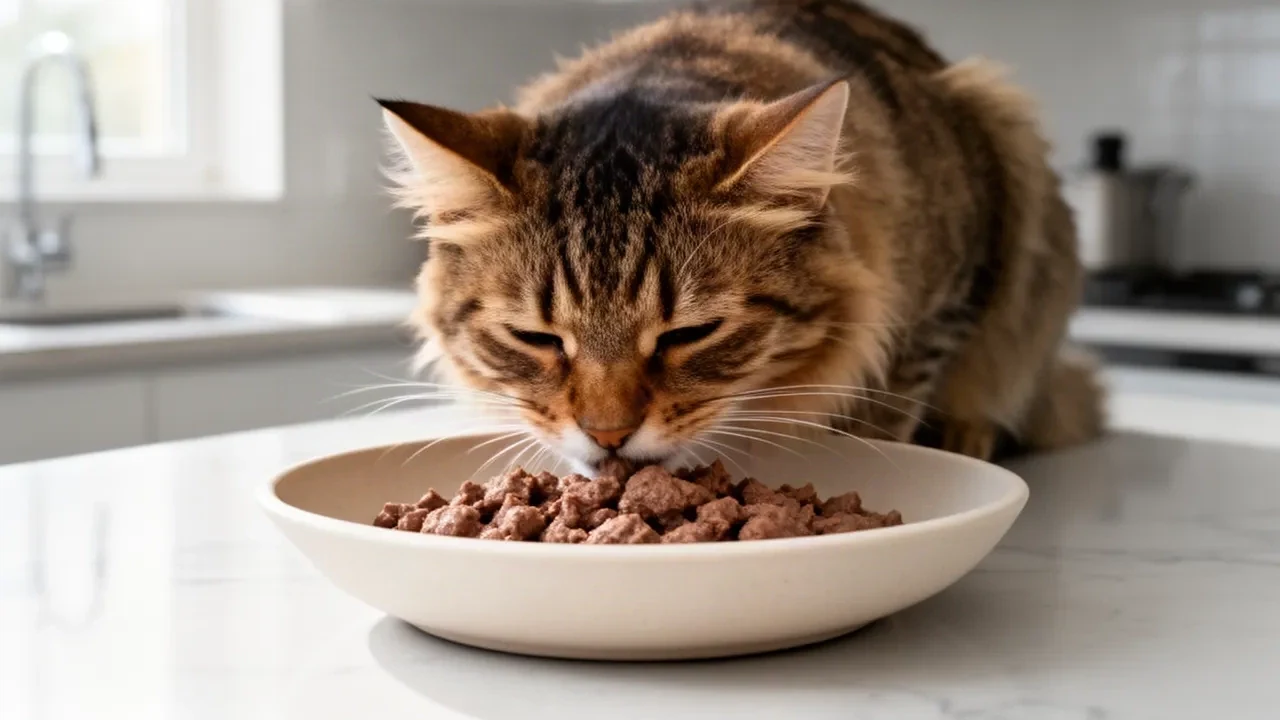
Cat Whisker Fatigue: Signs, Science & Best Bowls
Understand cat whisker fatigue: signs, vibrissae anatomy, clinical research, and how wide, shallow food bowls improve mealtime comfort for sensitive felines.
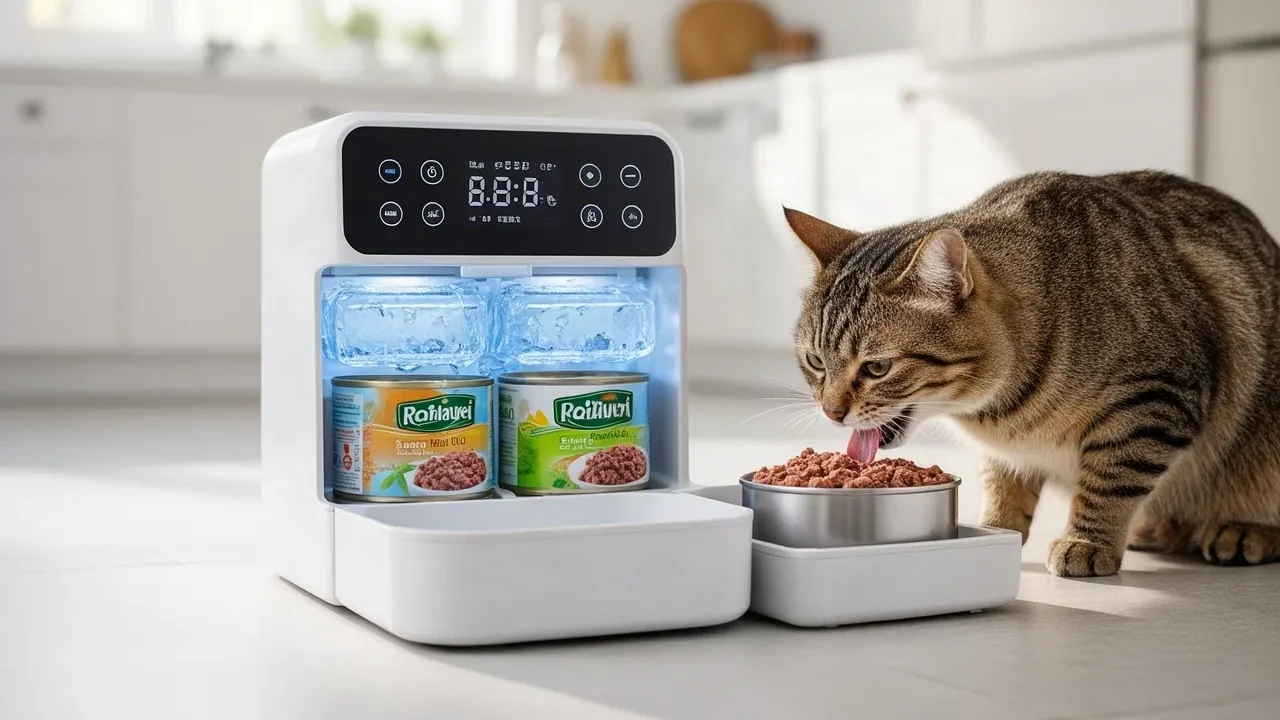
Best Automatic Wet Cat Food Feeders: Timed & Cold
Keep canned cat food fresh and cold safely. Compare top automatic wet cat food feeders with ice packs, timers, and the 4-hour food safety rule for cats.

Best Cat Trees for Senior Cats: Low Ramps & Steps
Help an arthritic cat keep its height. Compare low-step, gentle-ramp senior cat trees with roomy platforms and cushioned beds, and when to call the vet.