
Best Cat Trees for Senior Cats: Low Ramps & Steps
On this page (10 sections)
This article contains affiliate links. If you purchase through our links, we may earn a small commission at no extra cost to you. We only recommend products we’ve researched or personally found valuable for cat owners.
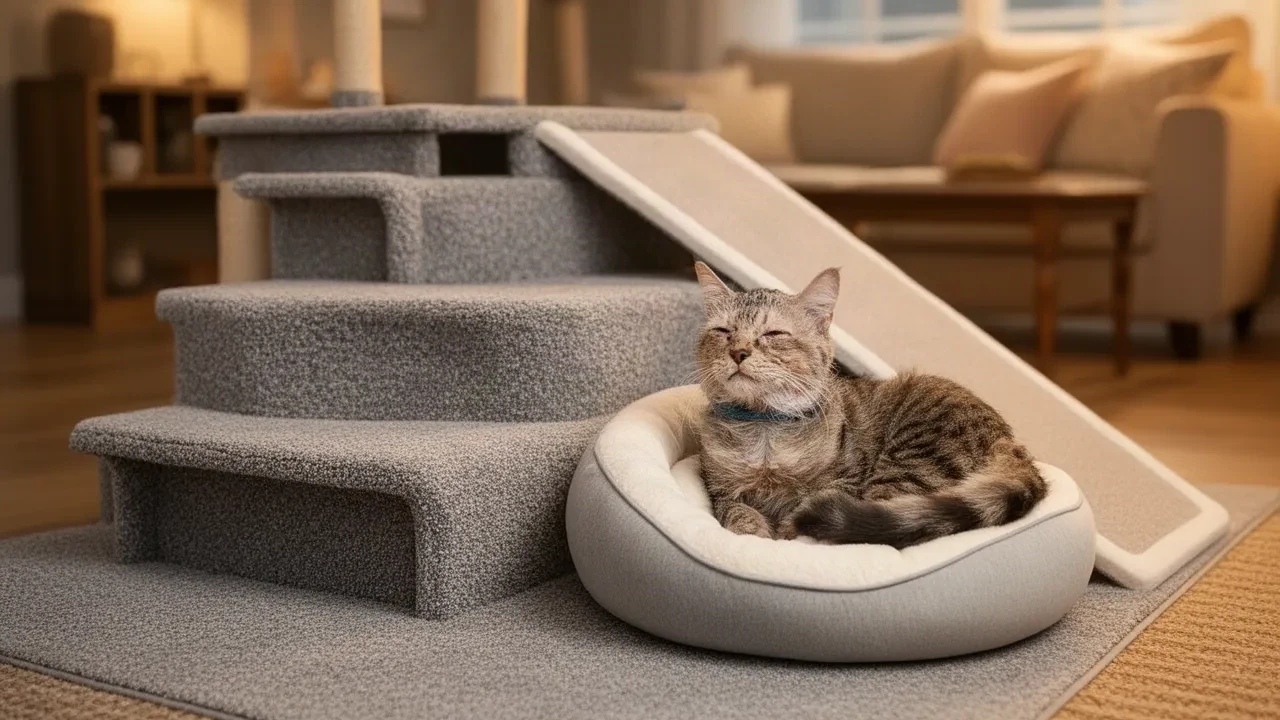
The best cat trees for senior cats replace the jump with a walk. Look for ramps under 25 degrees, steps no more than 6 to 8 inches apart, platforms wide enough to turn around on, and a cushioned bed with a raised rim. The Armarkat Senior Cat Tree with Ramps puts those pieces together in one compact unit, and it is the pick I would start with for most aging cats.
Cats hide pain well, so the first sign is often behavioral: a cat who used to own the top perch suddenly stops climbing, or stands at the base and cries. It is rarely that they have outgrown height. It is usually that the jump up is hard and the landing down is worse, so they quietly give up the view. Senior-friendly furniture gives the height back without the impact.
Why Climbing Hurts More as Cats Age
Arthritis is one of the most common conditions in older cats. Vets routinely find degenerative joint disease in cats over 12, often before the owner has noticed a limp, and it tends to settle in the spine, hips, knees, and wrists.
Climbing up and climbing down are not equally hard. Going up, a cat pushes with the hind legs. Coming down, the front legs take the load, and that is where the sore joints often are. A cat who can still reach a perch may refuse to leave it, or cry for help, because the descent is the painful part.
That is the whole argument for ramps and short steps. If your cat can walk up and walk down instead of launching and landing, the daily pain drops sharply and climbing comes back. Shallow carpeted ramps and 6-inch rises do most of that work.
What to Look For: A Senior Spec Sheet
Standard trees are built for young cats who can leap three feet. Senior furniture is built around a shorter, flatter path. Use these targets when you compare:
| Spec | Standard tree | Senior-friendly tree |
|---|---|---|
| Step rise | 12 to 18 inches | 6 to 8 inches |
| Ramp incline | 35 to 45 degrees | Under 25 degrees |
| Platform width | 10 × 12 inches | 16 × 18 inches or more |
| Cushion | Thin batting | Dense foam, 1.5 inches or more |
| Perch edge | Flat, open ledge | 3 to 4-inch raised rim |
| Surface | Smooth plush | Ribbed carpet or jute for grip |
Step rise under 8 inches
A cat with stiff hips cannot crouch deeply to spring upward. When the next level is only 6 to 8 inches away, the cat steps up with a normal walking gait instead of jumping, which keeps the spine and hips in a neutral line.
Ramp incline under 25 degrees
A ramp only helps if it is shallow. Past about 30 degrees it becomes a slide that strains the shoulders, and a cat will avoid it. A gentler ramp covered in ribbed carpet or grip strips gives aging claws something to hold.
Platforms 16 inches and wider
Senior cats turn more slowly and misjudge edges more often. A platform at least 16 by 18 inches lets a stiff cat reposition all four paws before settling, rather than balancing on a perch that is too narrow to lie on.
Cushioned beds with a raised rim
Thin batting compresses to nothing and leaves sore hips against hard board. Dense foam spreads the weight instead. A rim 3 to 4 inches high cradles the cat and stops a deep sleeper from rolling off.
Ramp Length Versus Height
The length of a ramp decides how steep it feels. If you are choosing a ramp tree, match the platform height to a ramp long enough to keep the angle gentle:
| Platform height | Ramp length for a safe angle | Notes |
|---|---|---|
| 12 inches | 28 to 32 inches | Easy fit in most rooms |
| 18 inches | 42 to 48 inches | Good traction needed |
| 24 inches | 56 to 60 inches | Needs a long, clear run |
| Over 24 inches | Under 36 inches — avoid | Becomes a slide |
If your room cannot fit a long ramp, a stepped staircase with short, deep treads is the better answer. It takes less floor space and lets the cat pause on each step.
Build an Accessible Window Perch
One of the kindest upgrades for an indoor senior is easy access to a sunny window. It keeps the cat mentally engaged, and it does not require a tall tower.
Set a low stepped tree directly against the sill and line the top platform up with the window ledge, or just below it. From there the cat can walk from the floor, up the steps, and straight onto the sill without a jump. A 6 to 8-inch first step, a 14 to 16-inch middle platform, and a 24 to 28-inch top perch make a continuous path. Once the alignment is right, the cat can move between nap and birdwatching on its own.
Safety Checks Before You Buy
A few small details prevent the falls that set a senior cat back:
- A stable base. Older cats lean heavily to one side as they shift weight. The base needs enough mass and width that it does not rock.
- No dangling toys. Loose strings and pom-poms catch stiff paws. Remove them for a senior.
- Brush the ramps. Fur builds up on carpet treads and makes them slick, so vacuum them regularly.
Managing Arthritis Alongside the Furniture
Better furniture eases the day, but it does not treat joint disease. If your cat hesitates at a step, wakes up stiff, or stops grooming its lower back, that is a vet conversation, not just a furniture problem. Modern management can include prescription pain control, joint supplements, and omega-3s, all decided with your veterinarian.
Pair the furniture upgrade with the rest of the senior setup. A low-entry litter box cut down to under 3 inches makes a real difference, and the best cat litter for senior cats guide covers box and litter choices for arthritic cats. For the full picture, see our senior cat care guide, and use the cat age calculator if you are unsure which stage your cat is in.
Top Picks Compared
| Model | Height | Step rise | Ramp | Cushioned bed | Best for |
|---|---|---|---|---|---|
| Armarkat Senior Tree | 28 inches | 7 inches | Yes, dual carpeted | Yes, rimmed crown | Most senior cats |
| Trixie Baza Lounger | 19.5 inches | 8-inch entry | Low entry | Yes, hammock | Cats who want no climbing |
| FEANDREA Stepped Tower | 33 inches | 6.5 inches | Stepped ladder | Yes, foam | Cats who still want height |
| PetPals 3-Level Step Tree | 25 inches | 6 inches | Offset stairs | Yes, rimmed top | Small rooms and pet stairs |
Detailed Picks
1. Armarkat Senior Cat Tree with Ramps — Best Overall Senior Pick
🥇 Best overall senior pick
Armarkat Senior Cat Tree with Ramps
A 28-inch tree built around two gentle carpeted ramps and short 7-inch rises, with a deep rimmed top bed.
- Two gentle carpeted ramps
- 7-inch step rises
- Rimmed top sleeping bed
- Pressed-wood base
A sensible first senior tree for cats with arthritis, hip dysplasia, or a missing limb.
The Armarkat is arranged so the cat never has to jump. Two carpeted ramps lean at a walkable angle from the floor to the condo and from the condo to the top bed. The rise between levels stays at 7 inches, and the unit tops out at 28 inches, low enough to sit under most windowsills.
The base is broad and pressed from CARB-compliant board, so it stays put when an older cat leans on it. The top perch has a deep cushion and four-inch rims that support sore hips and stop a sleeping cat from rolling off. Natural sisal on the posts lets a cat scratch from a seated position. The fleece is spot-clean only, so keep a lint roller or brush handy.
2. Trixie Baza Senior Cat Lounger — Best Low-Profile Pick
🥈 Best low-profile pick
Trixie Baza Senior Cat Lounger
A 19.5-inch hammock lounger with a low entry, for cats who want to be off the floor but not up a tower.
- 19.5-inch height
- Suspended plush hammock
- Two sisal scratching posts
- Low entry base
A cozy middle ground for a cat who has stopped climbing but still dislikes a cold floor.
Some older cats retire from climbing entirely but still want to be off the draft. The Baza is a suspended fabric hammock on a steel rim, standing just 19.5 inches off the floor. The fabric gives under the cat and spreads its weight, which takes pressure off the spine and hips.
Entry is barely a step, so even a badly arthritic cat can get in without strain. The two side posts are wrapped in natural sisal for seated scratching. The tradeoffs are single-level elevation and a plush surface that collects fur and wants regular brushing.
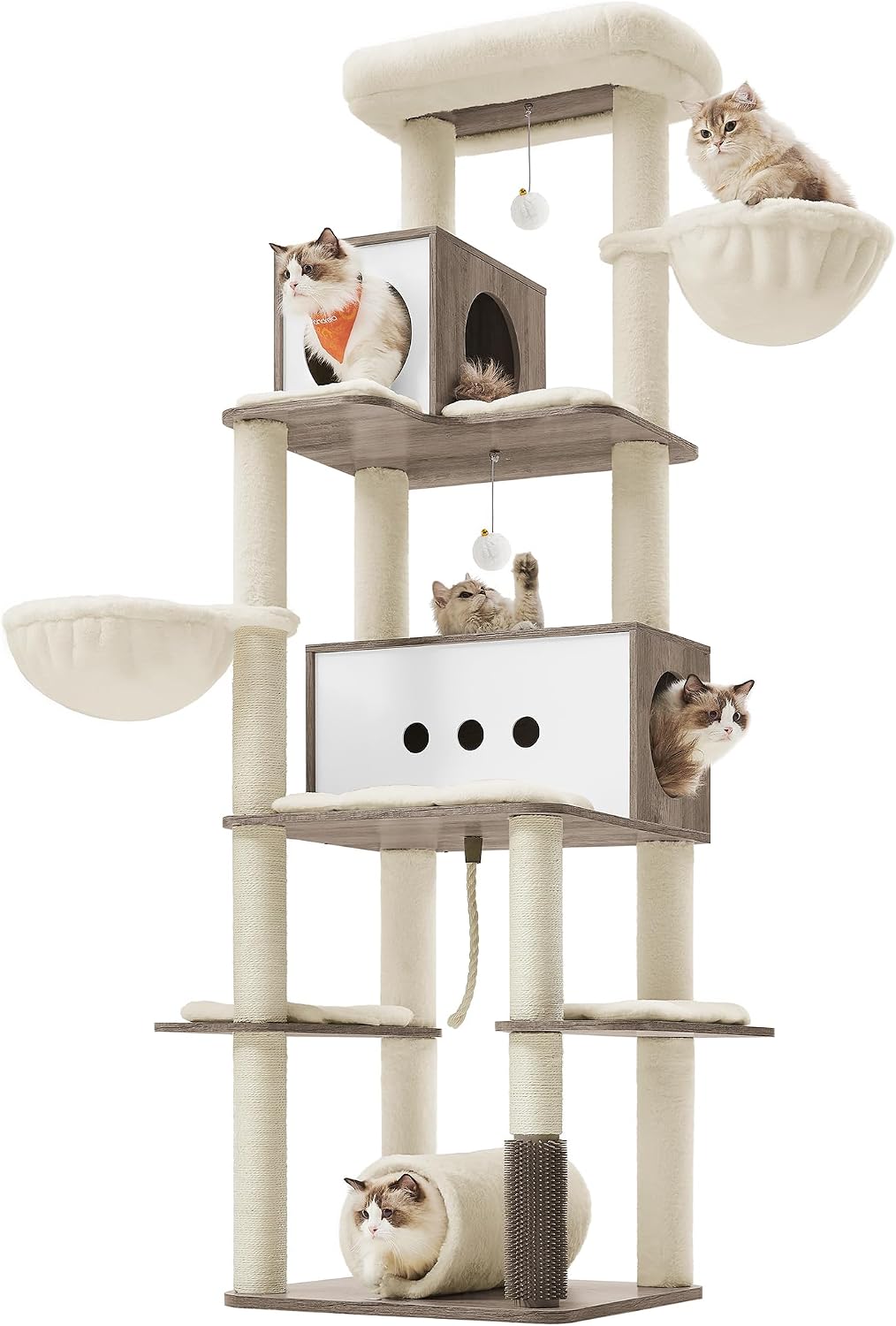
3. FEANDREA Stepped Senior Cat Tower — Best for Cats Who Still Want Height
🥉 Best for cats who still want height
FEANDREA Stepped Senior Cat Tower
An offset staircase layout with 6.5-inch rises and a ground-level condo, reaching 33 inches.
- 33-inch height
- 6.5-inch step rises
- Ground-level condo
- Foam-filled crown perch
A good middle height for a cat who still watches the room from a window.
This tower offsets each platform instead of stacking them, so the vertical gap between levels is only 6.5 inches and the cat climbs by walking forward. The base tier holds an enclosed condo right on the floor, which gives a cat an easy den on a bad joint day, while the 33-inch top perch is still high enough for a birdwatching view.
Feandrea builds it from CARB Phase 2 board with soft plush and natural sisal, and rates it for about 22 pounds per level. The offset layout removes the jump, and the weighted base resists wobble. Two caveats: the carpet pads are fixed and cannot go in a washer, and the step treads run narrow for an extra-large cat like a Maine Coon.
4. PetPals 3-Level Step Tree — Best Compact Staircase
⭐ Best compact staircase
PetPals 3-Level Step Tree
A 25-inch three-tier staircase in woven paper rope and plush, with short 6-inch steps, that doubles as pet stairs.
- 25-inch height
- 6-inch steps
- Woven paper-rope posts
- Cushioned top perch
Works as a scratching tree and as a set of steps up to a low bed or sofa.
The PetPals does two jobs. It is a small scratching and lounging tree, and it is a set of wide stairs that lets an older cat reach a sofa or a low bed without a leap. The three tiers are deep and separated by 6-inch rises, so a cat can place all four paws on each level before moving up.
The posts are wrapped in tight recycled paper rope rather than coarse sisal, which is smoother on sensitive paw pads while still giving a satisfying scratch. A soft bolster cushion sits on top. Paper rope wears faster than sisal in a busy multi-cat home, and the unit is meant for cats under about 20 pounds.
When to See a Vet
If your cat hesitates before a step, wakes up stiff, stops grooming its lower back, or cries when lifted, act now rather than waiting for it to get worse. Those signs can point to osteoarthritis or another treatable condition. If you notice any of these signs, consult your veterinarian. This article is for informational purposes and does not replace professional veterinary advice.
Frequently Asked Questions
What height cat tree is best for a senior cat?
For a senior or arthritic cat, a tree between 20 and 35 inches tall gives a useful vantage point without a long drop. Keep the vertical rise between platforms to 6 to 8 inches so your cat can step up instead of jumping.
Are ramps or stairs better for arthritic cats?
Both work. A gentle ramp under 25 degrees suits a cat with stiff hind legs or spinal arthritis, while a stepped staircase with 6-inch rises is easier to fit in a small room. Match the option to your floor space and how well your cat balances.
Why does my senior cat hesitate before climbing down?
Climbing down is harder than climbing up because the front legs absorb the landing. If those joints are arthritic, the impact hurts, so a cat may stall at the top rather than risk the drop. Gentle ramps or short steps remove most of that impact.
Can an older cat still use a scratching post?
Yes. Scratching stretches the spine and helps maintain claws. Senior cats often cannot balance for a full standing stretch, so look for low scratching zones: a ramp, a horizontal pad, or a post wrapped near the ground that they can use while seated.
Written by Max
Max is a lifelong cat owner and runs CuteCatsHQ. Health and care guides are checked against the veterinary sources listed with each article.
Keep reading
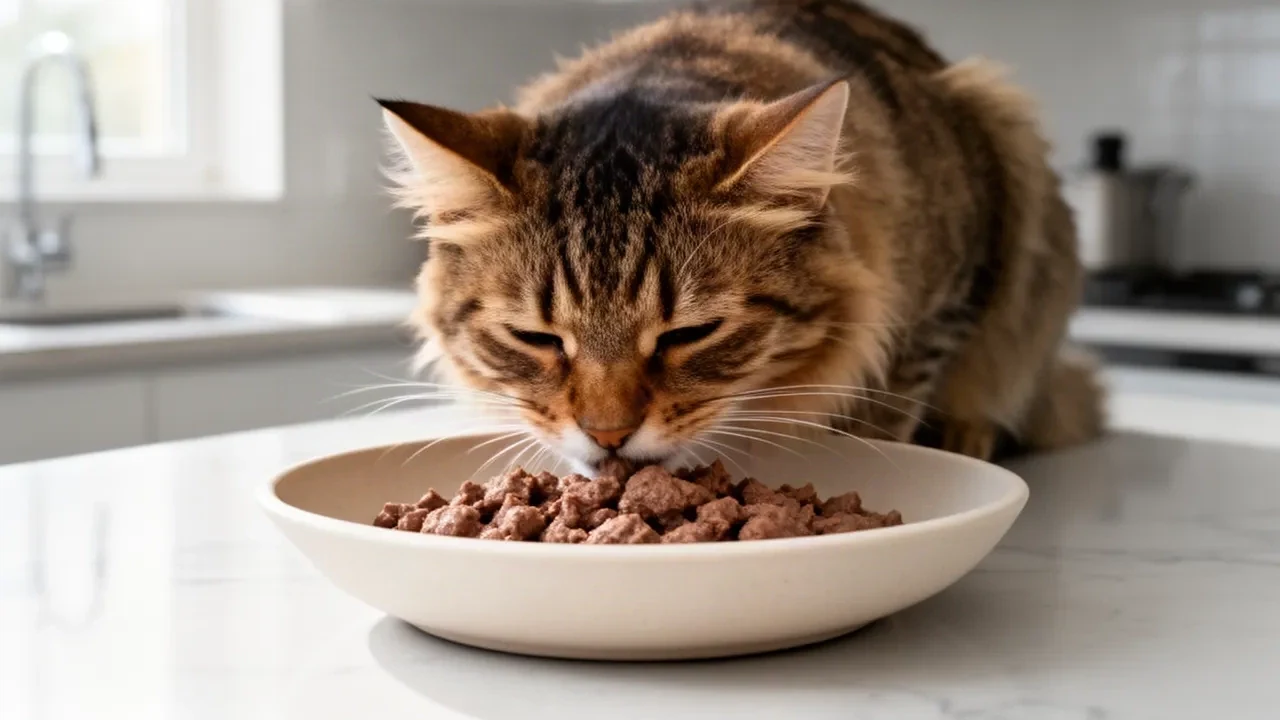
Cat Whisker Fatigue: Signs, Science & Best Bowls
Understand cat whisker fatigue: signs, vibrissae anatomy, clinical research, and how wide, shallow food bowls improve mealtime comfort for sensitive felines.
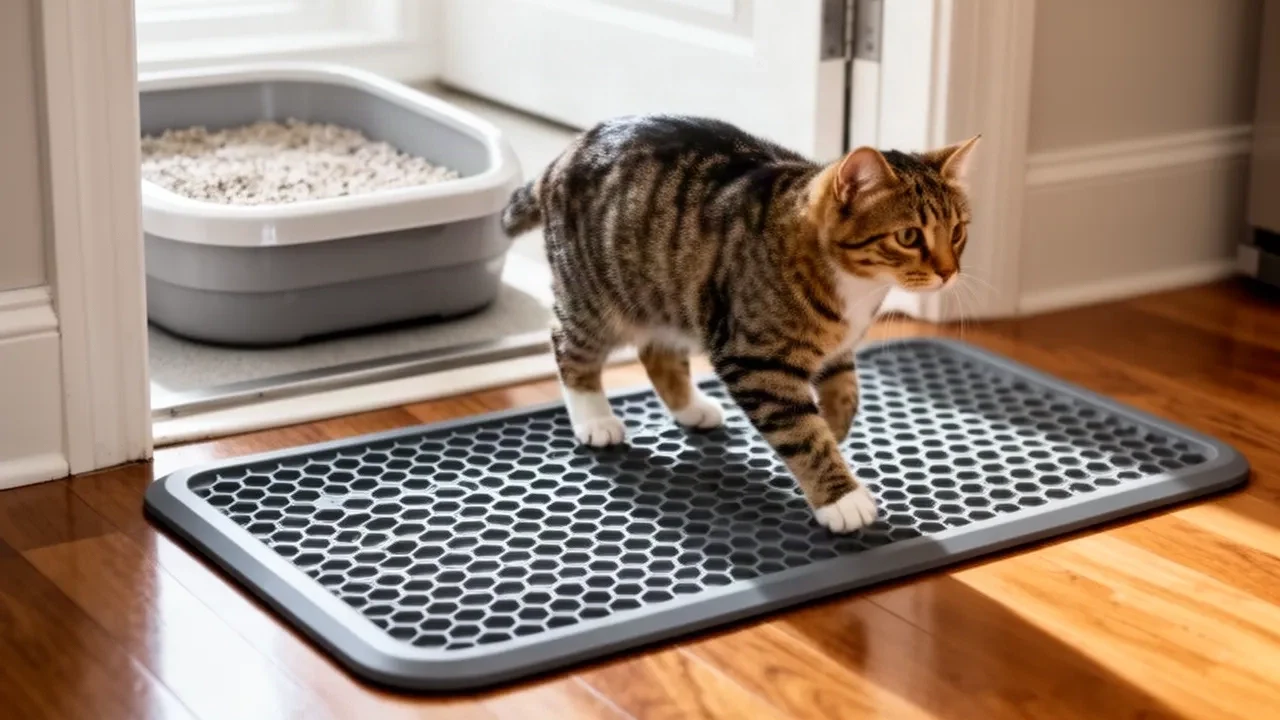
Best Cat Litter Mats for Tracking: Buying Guide
Stop litter scatter on hardwood and carpet with the best cat litter mats. Compare honeycomb, looped mesh, and silicone designs, sizing, and placement.
Best Cat Litter Boxes: Top High-Sided & XL Pans
Find the best cat litter boxes for messy cats, high sprayers, and large breeds. Compare stainless steel, top-entry, and open pans, plus sizing and placement.