
Feline Chronic Kidney Disease: IRIS Stages & Care Guide
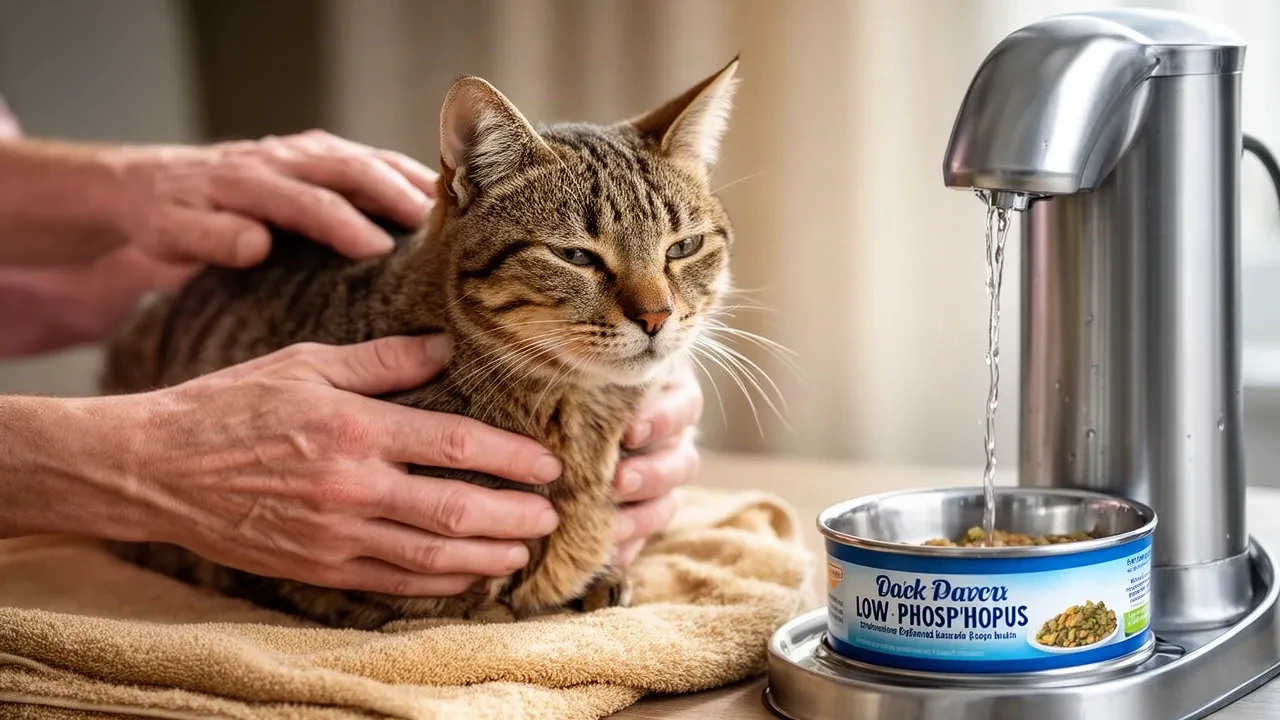
On this page (9 sections)
- How Kidneys Function and Why They Fail
- The IRIS Staging & Treatment Matrix
- Plain-English Lab Decoder
- Dietary Phosphorus Restriction: The #1 Life-Extender
- Stress-Free 5-Step Subcutaneous Fluid Protocol
- Managing Secondary Symptoms: Nausea and Inappetence
- Breeds at Elevated Genetic Risk
- When to See a Veterinarian
- Frequently Asked Questions
Feline Chronic Kidney Disease (CKD), historically termed chronic renal failure (CRF), is the progressive and irreversible loss of functional kidney nephrons over months or years. It affects over thirty percent of cats aged ten and older, and more than fifty percent of cats past age fifteen. While nephron loss cannot be reversed, proactive clinical management across IRIS Stages 1 through 4—centered on dietary phosphorus restriction, subcutaneous hydration, and blood pressure control—frequently doubles survival time.
Receiving a kidney disease diagnosis can feel overwhelming. Many owners assume that failing kidneys mean an immediate death sentence. In reality, feline nephrons possess remarkable compensatory capacity, and cats diagnosed in early or moderate stages routinely live comfortable, happy lives for two to five years or more with appropriate home supportive therapy.
In my thirty years of caring for senior cats, supporting a renal feline is one of the most rewarding responsibilities an owner can undertake. By learning to decode your cat’s blood panels, selecting low-phosphorus wet foods, and mastering stress-free subcutaneous fluids, you can slow disease progression and give your companion years of high-quality life.
How Kidneys Function and Why They Fail
A healthy cat possesses two kidneys containing hundreds of thousands of microscopic filtration units called nephrons. Nephrons perform five critical physiological functions:
- Waste Product Filtration: Clearing toxic metabolic byproducts—primarily blood urea nitrogen (BUN) and creatinine generated from dietary protein breakdown.
- Water and Electrolyte Conservation: Concentrating urine to prevent dehydration while maintaining precise balances of potassium, sodium, and calcium.
- Blood Pressure Regulation: Producing the enzyme renin to manage systemic vascular resistance and glomerular filtration pressure.
- Red Blood Cell Production: Secreting erythropoietin (EPO), the essential hormone that signals bone marrow to manufacture new red blood cells.
- Mineral and Bone Metabolism: Balancing phosphorus and activating vitamin D (calcitriol) to maintain skeletal integrity.
In feline CKD, chronic interstitial nephritis causes nephrons to slowly scar and die. Because remaining nephrons hypertrophy to take over the workload, clinical signs remain invisible until approximately sixty-six to seventy-five percent of overall kidney function has been permanently destroyed.
As concentrating capacity fails, cats produce massive volumes of dilute urine (polyuria). To compensate, they drink constantly (polydipsia). When fluid intake can no longer keep pace with urinary water loss, toxic uremic waste products accumulate in the bloodstream, causing nausea, inappetence, and weight loss.
The IRIS Staging & Treatment Matrix
The International Renal Interest Society (IRIS) established the gold-standard staging system used by veterinary nephrologists worldwide. Staging is performed only after a cat is fully hydrated and in a stable, non-crisis state, based on fasting blood creatinine and symmetric dimethylarginine (SDMA) concentrations:
| IRIS Stage | Blood Creatinine (mg/dL) | Blood SDMA (µg/dL) | Clinical Signs & Symptoms | Primary Medical Interventions |
|---|---|---|---|---|
| Stage 1: Non-Azotemic | < 1.6 | 15–17 | Usually asymptomatic; subtle loss of urine concentrating ability (USG < 1.035); normal energy. | Screen for proteinuria and systemic hypertension; eliminate nephrotoxic medications; optimize fresh water intake. |
| Stage 2: Mild Azotemia | 1.6–2.8 | 18–25 | Increased drinking and urination; slight muscle wasting along spine; occasional hairballs or morning bile. | Transition to therapeutic low-phosphorus renal diet (< 0.5% dry matter); target serum phosphorus < 4.6 mg/dL; monitor potassium. |
| Stage 3: Moderate Azotemia | 2.9–5.0 | 26–38 | Intermittent nausea, lip-smacking, decreased appetite, weight loss, dull coat, mild non-regenerative anemia. | Initiate subcutaneous fluid therapy; target phosphorus < 5.0 mg/dL using intestinal phosphate binders; prescribe antinausea medications and appetite stimulants. |
| Stage 4: Severe Azotemia | > 5.0 | > 38 | Severe uremic toxicity, persistent vomiting, profound lethargy, oral ulcers, uremic halitosis, severe anemia. | Daily subcutaneous fluids; intensive phosphate binding (target < 6.0 mg/dL); erythropoiesis-stimulating agents (Darbepoetin); palliative comfort care. |
Essential Sub-Staging Criteria
In addition to base stages, the IRIS guidelines require sub-staging for two secondary complications that accelerate kidney destruction.
Systemic hypertension is graded from normotensive (below 140 mmHg) through pre-hypertensive (140 to 159 mmHg) and hypertensive (160 to 179 mmHg) to severely hypertensive (at or above 180 mmHg). Because high blood pressure damages delicate glomerular capillaries, it must be treated with an oral calcium channel blocker such as amlodipine besylate.
Proteinuria, measured by the urine protein-to-creatinine ratio (UPC), is classified as non-proteinuric (below 0.2), borderline proteinuric (0.2 to 0.4), or proteinuric (above 0.4). Protein leaking through the kidneys drives progressive tubular inflammation and is managed with an angiotensin receptor blocker like telmisartan (Semintra) or an ACE inhibitor such as benazepril.
Plain-English Lab Decoder
When reviewing your cat’s diagnostic blood and urine panels, focus on these five core biomarkers:
1. SDMA (Symmetric Dimethylarginine)
SDMA is an amino acid excreted exclusively by the kidneys. Unlike creatinine, SDMA is not influenced by muscle mass and rises when as little as twenty-five to forty percent of kidney function is lost, allowing detection months or years earlier than traditional blood tests.
2. Blood Creatinine
Creatinine is a natural waste byproduct of muscle metabolism. Because emaciated senior cats with muscle wasting produce less creatinine, a “normal” creatinine level in a thin cat can mask advanced kidney disease. Always interpret creatinine alongside the cat’s muscle condition score.
3. BUN (Blood Urea Nitrogen)
BUN measures urea nitrogen derived from dietary protein breakdown. Elevated BUN correlates directly with uremic nausea, stomach irritation, and foul breath. However, BUN also fluctuates with dehydration and dietary protein levels.
4. USG (Urine Specific Gravity)
USG measures the kidney’s ability to concentrate urine. A healthy cat produces concentrated urine with a USG above 1.035. As renal tubules lose concentrating ability, USG drops into the dilute “isosthenuric” range (1.008 to 1.012), meaning urine has the same concentration as blood plasma.
5. Serum Phosphorus and Potassium
High blood phosphorus (hyperphosphatemia) drives renal secondary hyperparathyroidism, pulling calcium from bones and depositing mineral crystals inside kidney tubules, which accelerates organ destruction. Low blood potassium (hypokalemia) causes severe muscle weakness, leading to a dropped neck posture known as “cervical ventroflexion.” Potassium gluconate powder can be added to meals to maintain normal serum levels.
Dietary Phosphorus Restriction: The #1 Life-Extender
Landmark clinical trials published in the Journal of Feline Medicine and Surgery by Dr. David Polzin and Dr. Jonathan Elliott conclusively proved that dietary phosphorus restriction is the single most effective medical intervention for extending the lifespan of a cat with CKD. Cats fed restricted-phosphorus renal diets lived more than twice as long as cats fed standard adult maintenance foods.
Dry Matter Phosphorus Calculation
When evaluating cat foods, you cannot use the “as-fed” percentage on the can label because moisture dilutes the number. You must calculate the Dry Matter (DM) percentage:
$$\text{Dry Matter %} = \frac{\text{Guaranteed Analysis %}}{(100 - \text{Moisture %})} \times 100$$
For cats in IRIS Stages 2 to 4, veterinary nephrologists recommend diets with less than 0.5% dry matter phosphorus (or under 200 mg of phosphorus per 100 kilocalories).
Therapeutic Prescription Renal Foods vs. Commercial Low-Phosphorus Options
Prescription renal diets (such as Royal Canin Renal Support, Hill’s Prescription Diet k/d, and Purina Pro Plan Veterinary Diets NF) provide restricted phosphorus, high-quality moderate protein, added potassium citrate (to combat metabolic acidosis), and elevated B-vitamins.
However, if your cat refuses prescription food, eating is always better than starving. Prolonged inappetence in a kidney cat leads to hepatic lipidosis (fatty liver disease) and severe muscle catabolism, which spikes blood creatinine and toxins. Non-prescription commercial wet foods with ultra-low phosphorus formulations—such as Weruva Wx Phos Focused formulas—provide excellent low-phosphorus nutrition for finicky eaters.
If your cat insists on eating a higher-phosphorus food, your veterinarian can prescribe an aluminum hydroxide or calcium-based intestinal phosphate binder powder to mix into their meals. Aluminum hydroxide binds phosphorus in the gut, forming insoluble aluminum phosphate that passes harmlessly through the stool.
Stress-Free 5-Step Subcutaneous Fluid Protocol
When a cat reaches IRIS Stage 3 or 4, oral water intake can no longer compensate for urinary losses. Administering subcutaneous (SubQ) fluids at home—typically 75 to 150 ml of balanced electrolyte solution (Lactated Ringer’s Solution / LRS or Normosol-R) two to three times per week—instantly flushes uremic toxins and restores hydration.
Follow this five-step protocol to make fluid sessions calm and painless:
Step 1: Warm the Fluid Bag
Cold fluids straight from the IV bag feel shocking under feline skin. Place the fluid bag in a clean basin of warm water for fifteen minutes prior to administration. Test the fluid against your inner wrist; it should feel comfortably lukewarm, never hot. Never microwave IV fluid bags.
Step 2: Maximize Gravity Flow
Hang the IV fluid bag at least five to six feet above the floor using a coat hanger hooked over the top of a door frame or curtain rod. Higher gravitational pressure dramatically increases flow rate, reducing administration time to under three minutes.
Step 3: Use Ultra-Sharp Thin-Wall Needles
Standard veterinary IV needles can feel dull. Ask your veterinarian for ultra-thin, silicone-coated thin-wall needles (such as Terumo 20-gauge or 21-gauge needles). Terumo needles have razor-sharp bevels that slide effortlessly through feline skin with zero resistance.
Step 4: Form a Gentle Skin Tent
Place your cat on a non-slip towel on a comfortable table or couch. Gently lift the loose skin between their shoulder blades to form a triangular “tent.” Insert the needle smoothly, bevel facing upward, at a 45-degree angle into the base of the tent. Open the roller clamp fully.
Step 5: Distract with High-Value Treats
While the fluid flows, feed your cat a lickable puree treat (such as Churu or low-phosphorus baby food). Associating the fluid session with their favorite high-value treat transforms a clinical medical procedure into a positive bonding routine.
Once the prescribed volume is delivered, close the roller clamp, smoothly withdraw the needle, and pinch the insertion site for ten seconds. A temporary, squishy fluid pocket will form under the skin and be absorbed by the body over the next four to six hours.
Managing Secondary Symptoms: Nausea and Inappetence
Uremic toxins irritate the gastric lining, causing chronic nausea and stomach hyperacidity. Recognizing and treating nausea is essential to keeping your cat eating.
Uremic nausea often shows up as a cat who walks eagerly to the bowl, sniffs the food, licks their lips, and then walks away, or who drools and crouches over the water bowl. Maropitant citrate (Cerenia) and ondansetron (Zofran) block the vomiting and nausea receptors in the brain. When appetite needs a boost, transdermal mirtazapine (Mirataz) ointment applied to the inner ear pinna stimulates ghrelin receptors and can revive appetite within hours.
Breeds at Elevated Genetic Risk
While CKD is primarily an acquired condition of aging, certain breeds carry genetic mutations that cause early-onset kidney failure.
Persians have high carrier rates for Polycystic Kidney Disease (a PKD1 gene mutation), in which fluid-filled cysts destroy functional renal tissue by middle age. The Exotic Shorthair inherits those same Persian genetics and benefits from early ultrasound screening for cysts, while the British Shorthair carries an elevated incidence of PKD and familial nephropathies.
Abyssinians are prone to a different problem: renal amyloidosis, where abnormal protein fibrils deposit in the renal medulla.
When to See a Veterinarian
Schedule an urgent veterinary appointment if your cat with kidney disease shows any of the following acute warning signs:
- Complete refusal to eat or drink for more than twenty-four hours
- Repeated vomiting of white foam or bile
- Sudden weakness, stumbling, or inability to lift their head (severe hypokalemia)
- Dilated pupils, sudden bumping into furniture, or blood in the anterior chamber of the eye (hypertensive retinal detachment)
- Vocal crying in the litter box or complete absence of urination (indicating a life-threatening acute ureteral obstruction or stone)
Your veterinary team will run serial blood chemistries, perform urinalysis with culture, and evaluate blood pressure to adjust medical protocols. For general geriatric care context, review our senior cat care guide and our review of the best cat litter for senior cats.
If you notice any of these signs, consult your veterinarian. This article is for informational purposes and does not replace professional veterinary advice.
Frequently Asked Questions
What is the life expectancy of a cat with stage 2 kidney disease?
Cats diagnosed with IRIS Stage 2 CKD who are transitioned to a low-phosphorus therapeutic diet and monitored for blood pressure routinely live between two and five years or longer. Early detection and proactive phosphorus management are the key drivers of long-term survival.
Can wet food replace subcutaneous fluids for a kidney cat?
Feeding exclusively wet, moisture-rich food with added warm water is essential for daily hydration, but it cannot fully replace subcutaneous fluids once a cat enters IRIS Stage 3 or 4. SubQ fluids provide large volumes of balanced electrolytes that bypass the gastrointestinal tract to directly flush accumulated uremic toxins.
What are the final stages of kidney failure in cats?
In end-stage (IRIS Stage 4) CKD, functional nephrons can no longer clear waste. Signs include profound lethargy, persistent nausea, complete anorexia, severe anemia causing pale gums, painful oral ulcers from uremic toxins, hypothermia, and metabolic acidosis. Palliative comfort care or compassionate euthanasia is discussed when quality of life can no longer be maintained.
Why do cats with kidney disease pee so much?
Kidneys are responsible for concentrating urine by reabsorbing water back into the bloodstream. When nephrons die, the remaining filtration units lose their concentrating ability, allowing large volumes of dilute water to flow directly into the bladder. The cat pees massive amounts and must drink constantly to avoid fatal dehydration. You can track your companion’s senior life stages with our cat age calculator.
Written by Max
Max is a lifelong cat owner and runs CuteCatsHQ. Health and care guides are checked against the veterinary sources listed with each article.
Keep reading
Cat Dementia Symptoms: Feline Cognitive Dysfunction Guide
Spot feline cognitive dysfunction symptoms like night howling and pacing. Learn the DISHA screening checklist, medical rule-outs, and dementia care routines.
Cat Arthritis Symptoms: Subtle Signs of Joint Pain
Recognize subtle cat arthritis symptoms like hesitated jumping and litter box misses. Explore FMPI pain screening, home hacks, and Solensia anti-NGF therapy.

Senior Cat Care: Complete Guide for Cats 11+
Senior cat care for cats 11 and older: how aging affects health, common issues like arthritis and kidney disease, and vet-reviewed home and daily care tips.