
Cat Arthritis Symptoms: Subtle Signs of Joint Pain
Updated
On this page (9 sections)
- Why Cats Mask Arthritis: Debunking the Limping Myth
- Daily Mobility Comparison Matrix
- The Feline Musculoskeletal Pain Index (FMPI) Screener
- Medical Treatments for Feline Osteoarthritis
- Strict Toxicity Warning: Human Pain Medications
- Practical Home Accessibility Modifications
- High-Risk Breeds for Joint Disease
- When to See a Veterinarian
- Frequently Asked Questions
The most common cat arthritis symptoms are subtle behavioral changes rather than overt limping: hesitating before jumping onto furniture, choosing lower resting spots, missing the litter box, developing an unkempt coat along the lower spine, and sleeping in flat rather than curled positions. Because feline osteoarthritis typically develops symmetrically across multiple joints, cats rarely limp. Instead, they adapt by reducing overall mobility.
According to landmark orthopedic research published in the Journal of the American Veterinary Medical Association (JAVMA), over ninety percent of cats older than twelve years show clear radiographic evidence of degenerative joint disease. Despite this overwhelming prevalence, fewer than four percent of owners report joint discomfort to their veterinarians. Cats inherit powerful evolutionary instincts as both solitary predators and prey animals, driving them to mask physical vulnerability. When jumping becomes agonizing, a cat will not cry out or limp; they simply stop attempting the jump.
In my thirty years of living with senior felines, watching an older cat slow down is frequently misattributed to normal aging. Slowing down is almost always manageable physical discomfort. Recognizing these micro-changes early allows you to modify your home environment, implement targeted joint therapy, and restore your cat’s mobility before chronic pain degrades their quality of life.
Why Cats Mask Arthritis: Debunking the Limping Myth
When dogs develop arthritis in a single hip or elbow, they display an obvious head-bobbing limp. In cats, degenerative joint disease is overwhelmingly bilateral, affecting both hips, both stifles (knees), both tarsi (hocks), or multiple segments of the lumbar and thoracic spine simultaneously. Because both sides of the body ache with equal intensity, there is no “good leg” to favor, which eliminates the classic asymmetric limp owners expect to see.
Instead of limping, arthritic cats modify their daily routines to avoid engaging inflamed cartilage and subchondral bone. They abandon their favorite six-foot cat tree in favor of the sofa arm. They pace back and forth on a table before attempting a jump, measuring the distance with visible apprehension. Over months, these behavioral compensations become their new baseline, leading owners to assume their companion has simply turned into a mellow senior.
Degenerative joint disease is an active, inflammatory condition involving the progressive erosion of articular cartilage, thickening of the joint capsule, and the formation of painful periarticular osteophytes (bone spurs). Left unmanaged, continuous low-grade joint inflammation causes central sensitization—a neurological state known as “wind-up pain,” where the spinal cord becomes hypersensitive and even light touch across the lower back triggers distress.
Daily Mobility Comparison Matrix
To identify joint stiffness before cartilage loss becomes severe, compare your cat’s current daily mechanics against their youthful baseline. The following behavioral markers represent the primary functional indicators of feline osteoarthritis:
| Daily Activity | Healthy Young Adult Baseline | Subtle Arthritic Changes | Advanced Joint Disease |
|---|---|---|---|
| Vertical Jumping | Leaps smoothly onto counters in a single fluid motion | Hesitates, crouches repeatedly, or uses intermediate chairs as stepping stones | Refuses all vertical jumps; remains exclusively on floor or low furniture |
| Descending Jumps | Springs down silently and absorbs impact through front paws | Lowers front body down first, stretches paw to floor, or hesitates before dropping | Stiff-legged landing accompanied by vocal grunting or refusing to jump down |
| Stair Navigation | Gallops up and down stairs taking steps two at a time | Walks up and down slowly, placing both front paws on each tread (“bunny hopping”) | Avoids stairs entirely; confines living territory to a single floor of the home |
| Litter Box Habits | Hops over high rims cleanly, digs vigorously, and postures in a deep squat | Steps over low rim gingerly; eliminates right beside the box on flat bath mats | Avoids entering the box; defecates or urinates while standing stiffly, causing rim spills |
| Self-Grooming | Coats appear sleek and uniform from daily contortions and licking | Matted, unkempt fur or dandruff along lower back, hips, and perineal area | Complete cessation of hindquarter grooming; overgrown, thick, curved claws |
| Sleep & Resting | Curls into tight “doughnut” circles or sleeps in elevated perches | Sleeps stretched out flat on floor; abandons enclosed or elevated cat beds | Stiff upon waking; stretches limbs repeatedly before taking first slow steps |
The Feline Musculoskeletal Pain Index (FMPI) Screener
To help owners and veterinarians evaluate joint discomfort objectively, Dr. Duncan Lascelles and the Comparative Pain Research Laboratory at North Carolina State University developed the Feline Musculoskeletal Pain Index (FMPI). This validated clinical tool assesses functional mobility across six core daily activities.
Ask yourself the following six screening questions regarding your cat’s behavior over the past two to four weeks:
1. Ability to Jump Up
Does your cat leap effortlessly onto elevated resting spots like beds, chairs, and windowsills, or do they pull themselves up using their front claws, hesitate for several seconds before jumping, or require step stools?
2. Ability to Jump Down
When descending from furniture, does your cat land softly and immediately walk away, or do they pause at the edge, stretch their front legs downward to minimize the drop, land heavily with a thud, or seek an alternative route down?
3. Climbing Up and Down Stairs
Does your cat walk or run up and down household staircases with fluid, alternating leg movements, or do they move slowly, hesitate at the top landing, or hop with both hind legs moving in unison?
4. Chasing Moving Objects and Playing
Does your cat still pursue interactive wand toys, toss lightweight toys, or run across rooms during spontaneous play bouts, or have they stopped chasing toys and simply watch moving objects from a stationary lying position?
5. Running and Agility
When startled or running to their food dish at mealtime, does your cat demonstrate smooth, rapid acceleration, or do they display a stiff, rigid gait with a swaying lower back and reduced hind-limb extension?
6. Temperament and Tolerance for Handling
Does your cat enjoy being brushed and stroked along their lower spine, hips, and tail base, or do they flinch, growl, hiss, twitch their dorsal skin, or walk away when touched in these areas?
If you answered negatively to two or more of these questions, your cat is likely experiencing clinically significant joint discomfort. You can track your companion’s life stage milestones with our cat age calculator to determine when senior orthopedic screening should become part of their regular bi-annual wellness exam.
Medical Treatments for Feline Osteoarthritis
Treating feline joint disease requires a multimodal veterinary strategy. Because cats metabolize medications uniquely through their liver glucuronidation pathways, their bodies cannot safely process many standard human and canine pain relievers.
Anti-NGF Monoclonal Antibody Therapy (Solensia / Frunevetmab)
The most significant advance in feline arthritis management is the approval of Frunevetmab, marketed globally as Solensia by Zoetis. Unlike traditional pharmaceutical pain relievers that suppress inflammatory prostaglandins throughout the body, Solensia is a species-specific monoclonal antibody engineered to target Nerve Growth Factor (NGF).
Nerve Growth Factor is an essential signaling protein that becomes heavily overexpressed in arthritic joints. When NGF binds to TrkA receptors on sensory nerve terminals, it drives peripheral pain signaling and amplifies inflammatory mediator release. By binding directly to circulating NGF, Frunevetmab prevents it from attaching to pain receptors, effectively silencing the chronic pain signal before it reaches the spinal cord.
Clinical trials reviewed by the Food and Drug Administration (FDA) demonstrate that seventy-six percent of arthritic cats showed noticeable improvement in mobility and play scores after receiving monthly subcutaneous injections. Because Solensia is a biological protein, it is eliminated through natural cellular protein catabolism rather than being metabolized by the liver or kidneys, making it exceptionally safe for senior cats managing concurrent early-stage kidney disease.
The treatment is administered once every twenty-eight to thirty days at your veterinary clinic. Costs typically range between $80 and $120 per monthly dose. The most commonly reported side effects are localized skin irritation, mild dermatitis, scabbing around the neck and face, and transient vomiting. If severe itching develops, your veterinarian may pause treatment.
Prescription Veterinary NSAIDs
Non-Steroidal Anti-Inflammatory Drugs formulated specifically for felines—such as Meloxicam (Metacam) in micro-dosed liquid forms or Robenacoxib (Onsior) tablets—target the cyclooxygenase-2 (COX-2) enzyme pathway to suppress joint inflammation.
While veterinary NSAIDs provide potent relief during acute arthritic flare-ups, long-term administration requires careful veterinary oversight. Cats must have stable baseline kidney and liver bloodwork before starting an NSAID, and doses must be titrated to the lowest effective level with plenty of fresh hydration available to protect renal blood flow.
Neuropathic Pain Modulators (Gabapentin)
Gabapentin is widely prescribed by feline practitioners to treat chronic maladaptive pain. It works by binding to the alpha-2-delta subunit of voltage-gated calcium channels in the central nervous system, reducing the release of excitatory neurotransmitters like glutamate. Gabapentin is particularly valuable for cats suffering from spinal spondylosis or severe wind-up pain. It is commonly administered as an oral liquid or compounded capsule once or twice daily, with mild transient sedation being the primary side effect during the first week of therapy.
Joint Supplements and Nutritional Support
Oral chondroprotective supplements provide the biological building blocks necessary to maintain remaining joint cartilage and reduce oxidative stress within the synovial capsule:
- Glucosamine Hydrochloride and Chondroitin Sulfate: Help maintain synovial fluid viscosity and support cartilage matrix synthesis. High-purity veterinary formulations like Nutramax Cosequin for Cats are palatable capsules that can be sprinkled directly onto wet food daily.
- Omega-3 Marine Fatty Acids (EPA and DHA): High concentrations of Eicosapentaenoic Acid (EPA) from purified fish oils or green-lipped mussel extracts actively compete with arachidonic acid, suppressing the production of inflammatory leukotrienes and prostaglandins inside the joint capsule.
- Eggshell Membrane and Hyaluronic Acid: Provide structural glycosaminoglycans that support joint lubrication and tendon elasticity.
Strict Toxicity Warning: Human Pain Medications
You must never administer over-the-counter human pain medications to a cat. Human analgesics that are safe for humans cause fatal organ failure in felines.
Acetaminophen (Tylenol) is rapidly lethal because cats completely lack the glucuronyl transferase enzyme needed to metabolize it safely. Even a fraction of a human pill causes toxic metabolite accumulation, inducing severe methemoglobinemia, where red blood cells lose the ability to carry oxygen, and acute hepatic necrosis. Without immediate emergency antidote therapy, acetaminophen poisoning kills quickly.
Ibuprofen (Advil, Motrin) and naproxen (Aleve) are equally dangerous. These common human NSAIDs cause severe gastric ulceration, intestinal perforation, and acute renal papillary necrosis within hours of ingestion. Aspirin (acetylsalicylic acid) is no safer, because cats eliminate it very slowly and need over forty hours to clear a single dose. Repeated administration causes fatal metabolic acidosis, gastrointestinal hemorrhage, and bone marrow suppression.
If your cat shows signs of pain, only administer medications prescribed directly by a licensed veterinarian who has calculated the exact dose based on your cat’s current body weight.
Practical Home Accessibility Modifications
Medical treatments work best when paired with thoughtful environmental adaptations. Making your home physically accessible eliminates the daily micro-traumas that aggravate inflamed joints.
1. Ramps and Step Stools
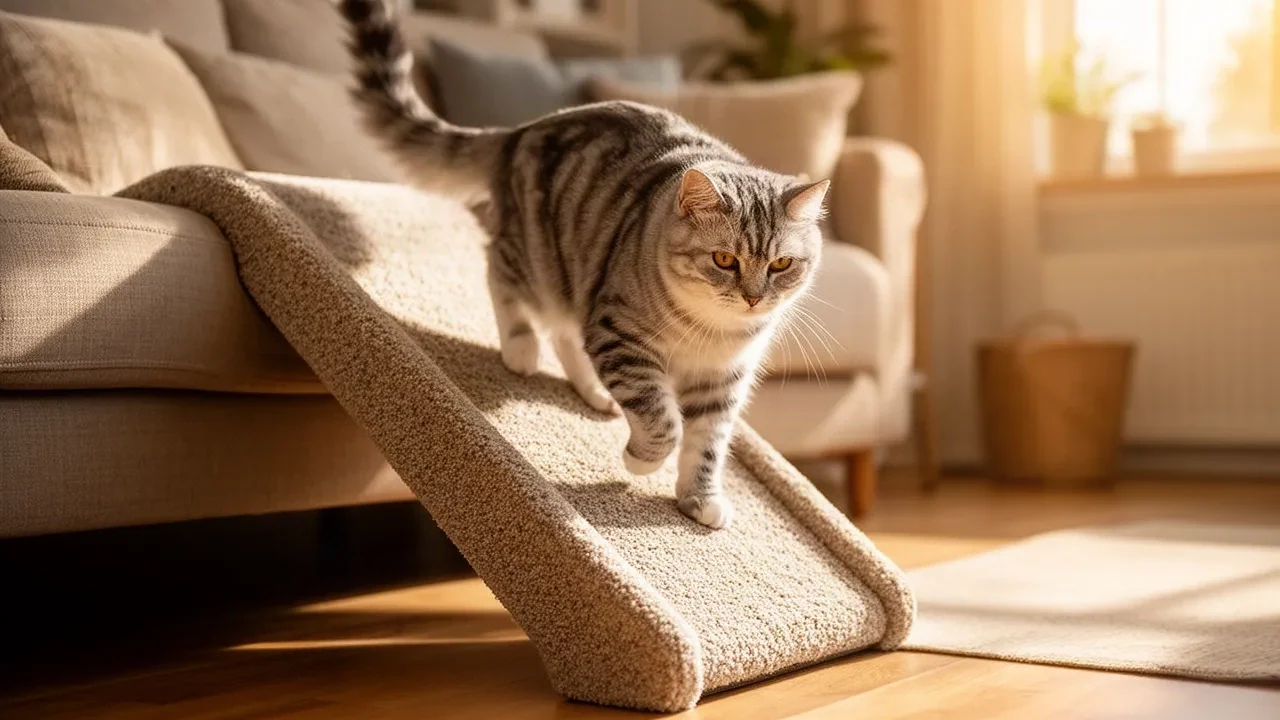
Install carpeted, low-incline pet ramps or sturdy foam steps alongside your bed, favorite couches, and low windowsills. Ensure the ramps have textured, non-slip carpeting so your cat feels secure and does not slide while walking up or down.
2. Senior-Friendly Litter Box Adjustments
Arthritic cats frequently develop litter box avoidance simply because their box has high eight-inch plastic walls that are painful to step over. Replace deep plastic tubs with low-entry litter boxes featuring an entry lip no higher than two to three inches.
Switch to a soft, fine-grained substrate that cushions sensitive paws without shifting underfoot. For detailed product recommendations and setup advice, explore our in-depth guide to the best cat litter for senior cats.
3. Heated Orthopedic Bedding
Place low-profile memory foam orthopedic beds in warm, draft-free corners on the ground floor of your home. Gentle low-voltage pet-safe thermal heating pads keep resting joints warm, increasing local blood flow and reducing morning stiffness. Ensure heated beds are designed specifically for pets and operate at a safe, regulated temperature that will not overheat fragile senior skin.
4. Elevated Food and Water Stations
Bending down to eat from floor-level bowls places substantial mechanical stress on arthritic cervical spines and shoulders. Raise food and water dishes four to six inches off the floor using an elevated feeder stand so your cat can eat in a neutral, comfortable posture.
5. Non-Slip Flooring Runners
Hardwood, tile, and laminate floors are slick surfaces where arthritic paws struggle for traction. Lay down washable non-skid rug runners along high-traffic corridors connecting your cat’s favorite resting spot, feeding station, and litter box.
High-Risk Breeds for Joint Disease
While any aging domestic cat can develop osteoarthritis from natural wear and tear, several breeds have genetic predispositions to orthopedic conditions.
Maine Coons carry a high genetic incidence of congenital hip dysplasia, and their large physical frame puts significant mechanical wear on the coxofemoral joints from an early age. Ragdolls face a similar risk: their large, heavy-boned bodies combined with hip laxity make senior cats prone to bilateral hip and knee stiffness.
The Scottish Fold’s signature folded ears come from a genetic mutation, osteochondrodysplasia, that causes cartilage abnormalities throughout the entire skeleton, often leading to severe, progressive arthritis in the tail, hocks, and paws at a young age. Persians and Exotic Shorthairs develop joint strain differently, as their compact cobby bodies, shortened limbs, and altered joint angles increase mechanical load on the stifle and elbow joints.
When to See a Veterinarian
Schedule a thorough veterinary orthopedic exam if you observe any of the following symptoms:
- Reluctance or complete refusal to jump onto previously accessible surfaces
- Difficulty stepping into the litter box, leading to accidents on bath mats or rugs
- Visible stiffness upon waking that persists for several minutes
- Swollen, warm, or thick joint capsules on the knees or elbows
- Vocal distress, growling, or defensive swatting when the lower back or hips are stroked
- Noticeable muscle atrophy along the thighs, hips, or spine
Your veterinarian will perform a gentle orthopedic palpation to identify joint effusion, crepitus (grating sensations), and restricted range of motion, followed by digital radiographs to visualize bone spurs, joint space narrowing, and subchondral sclerosis.
If you notice any of these signs, consult your veterinarian. This article is for informational purposes and does not replace professional veterinary advice.
Frequently Asked Questions
Can cat arthritis be cured?
No, osteoarthritis is a progressive, chronic condition that cannot be cured once articular cartilage has eroded. However, modern multimodal management—combining anti-NGF monoclonal antibodies like Solensia, weight management, joint supplements, and home environmental modifications—can halt inflammatory damage, eliminate discomfort, and restore your cat’s active quality of life for years.
How do I know if my older cat is in pain if they don’t cry?
Cats rarely vocalize when experiencing chronic joint pain. Instead, watch for subtle behavioral shifts: hesitation before jumping, choosing lower resting spots, resting with limbs extended rather than tucked in, neglecting coat grooming over their lower spine, and withdrawing from household interaction.
Is Solensia safe for cats with kidney disease?
Yes, Solensia (Frunevetmab) is generally considered very safe for cats managing early to moderate Chronic Kidney Disease (CKD). Because it is a biological monoclonal antibody, it is broken down into small peptides and amino acids through normal cellular recycling mechanisms rather than being filtered or metabolized by the renal tubules. Always consult your veterinarian to evaluate blood panels before starting any new therapy.
What home remedies help an arthritic cat?
The most effective home adaptations include placing low-entry litter boxes on every floor of your home, setting up carpeted pet ramps to favorite sofas, providing low-voltage heated orthopedic beds, elevating food dishes four to six inches off the floor, and laying non-slip carpet runners over smooth hardwood or tile flooring. For broader geriatric wellness strategies, consult our guide to senior cat care.
Written by Max
Max is a lifelong cat owner and runs CuteCatsHQ. Health and care guides are checked against the veterinary sources listed with each article.
Keep reading

Senior Cat Care: Complete Guide for Cats 11+
Senior cat care for cats 11 and older: how aging affects health, common issues like arthritis and kidney disease, and vet-reviewed home and daily care tips.

When to Spay or Neuter Your Cat: Timing and Recovery
Timing, health benefits, behavior changes, costs, and recovery: a full guide to spaying or neutering your cat, with practical pre-surgery and aftercare advice.
Cat Dental Care: Complete Guide to Your Cat's Oral Health
Cat dental care: learn to spot tooth problems early, brush your cat teeth, use dental treats, and know when professional cleaning is needed by life stage.