
Cat Dementia Symptoms: Feline Cognitive Dysfunction Guide
On this page (10 sections)
- The Neuropathology Behind Feline Dementia
- The DISHA Diagnostic Framework
- The Critical “Rule-Outs First” Medical Tree
- The Feline Sundowning Phenomenon
- Litter Box Mapping and Accessibility Strategies
- Nutritional & Neuroprotective Support
- Night-Time Soothing & Environmental Protocols
- Breeds with Exceptional Longevity
- When to See a Veterinarian
- Frequently Asked Questions
Feline Cognitive Dysfunction Syndrome (FCDS), commonly called cat dementia, is a progressive neurodegenerative disorder characterized by five core symptoms: aimless night-time howling, spatial disorientation, altered social interactions, disrupted sleep-wake cycles, and forgetting litter box locations. It affects approximately twenty-eight percent of cats aged eleven to fourteen and over fifty percent of cats aged fifteen and older.
Watching a companion who has shared your home for over a decade suddenly wander into corners, stare blankly at walls, or wake up screaming at three in the morning is distressing. When senior cats experience cognitive decline, their brains undergo structural and biochemical changes similar to human Alzheimer’s disease. They lose their internal spatial map of the home, leading to profound nocturnal anxiety and confusion.
In my thirty years of caring for geriatric felines, feline dementia requires patience, environmental adaptations, and careful medical screening. Because metabolic diseases frequently mimic dementia symptoms, understanding the diagnostic rule-out process and implementing environmental soothing protocols can restore calm to your home and dramatically improve your aging cat’s quality of life.
The Neuropathology Behind Feline Dementia
Feline Cognitive Dysfunction is not merely a natural personality shift; it is an organic physical disease of the central nervous system. As cats enter their geriatric years, their brain tissue undergoes progressive cellular degradation driven by three interrelated biological mechanisms:
- Beta-Amyloid Plaque Deposition: Similar to Alzheimer’s pathology in humans, aging felines accumulate neurotoxic beta-amyloid proteins within the cerebral cortex and hippocampus. These insoluble protein aggregates disrupt synaptic communication between neurons, impairing memory retention, learning ability, and spatial navigation.
- Cerebrovascular Compromise: Micro-vascular thickening, perivascular hemorrhage, and reduced cerebral blood flow starve brain tissue of oxygen and glucose. Chronic free-radical production leads to lipid peroxidation, damaging the fatty myelin sheaths that insulate delicate nerve fibers.
- Cerebral Atrophy and Ventriculomegaly: Over time, the progressive loss of functional cortical neurons leads to measurable brain shrinkage and the enlargement of the fluid-filled cerebral ventricles, permanently reducing the cat’s cognitive processing capacity.
Clinical trials conducted by veterinary behaviorist Dr. Gary Landsberg demonstrate that while early signs begin appearing around eleven years of age, symptoms escalate dramatically after age fifteen. You can track your companion’s senior milestones with our cat age calculator to recognize when cognitive monitoring should begin.
The DISHA Diagnostic Framework
Veterinarians use the standardized DISHA clinical framework to screen for cognitive dysfunction in senior and geriatric felines. Each letter corresponds to a distinct behavioral domain that deteriorates as neurological decline progresses:
| DISHA Category | Typical Clinical Signs | What It Looks Like in the Home |
|---|---|---|
| D — Disorientation | Spatial confusion, getting trapped behind doors, staring blankly | Cat walks into the hinge side of an open door and cannot figure out how to back out; stares fixedly at blank walls or empty corners for minutes at a time. |
| I — Interactions | Altered social attachment, sudden aloofness, uncharacteristic clinginess | Previously independent cat becomes an anxious shadow requiring constant physical contact; or affectionate cat withdraws, hides, or hisses when approached. |
| S — Sleep-Wake Cycles | Nocturnal wakefulness, daytime lethargy, loud night-time yowling | Cat sleeps deeply all day but paces restlessly from midnight to dawn, vocalizing with a hollow, unprompted yowl in hallways or empty rooms. |
| H — House Soiling | Eliminating outside the box, forgetting litter location, loss of hygiene | Cat urinates or defecates on smooth bathroom tiles, rugs, or right beside the litter box despite clean substrate and low, easily accessible box sides. |
| A — Activity Changes | Restless aimless wandering, repetitive pacing, apathy toward stimuli | Cat paces repetitive circuits through rooms without purpose; loses interest in favorite foods, interactive play, and grooming routines. |
The Critical “Rule-Outs First” Medical Tree
You must never assume an older cat yowling at night or missing the litter box has dementia without a thorough veterinary workup. Feline Cognitive Dysfunction is a diagnosis of exclusion—it can only be confirmed after ruling out common metabolic, endocrine, and sensory conditions that produce identical symptoms:
1. Systemic Hypertension (High Blood Pressure)
Hypertension is exceptionally common in senior cats, usually occurring secondary to kidney disease or hyperthyroidism. Elevated systolic blood pressure (exceeding 160 to 180 mmHg) causes acute headaches, hypertensive encephalopathy, and sudden retinal detachment resulting in complete blindness. A cat who suddenly loses their sight will yowl in terror at night and bump into furniture, mimicking dementia disorientation.
2. Feline Hyperthyroidism
An overactive thyroid gland floods the bloodstream with excess thyroid hormones (T4), driving a relentless state of metabolic hyper-arousal. Hyperthyroid cats display extreme agitation, nocturnal restlessness, ravenous hunger, and loud pacing yowls. For a complete breakdown of thyroid diagnosis and management, read our guide to feline hyperthyroidism.
3. Chronic Kidney Disease (CKD)
Advanced renal insufficiency causes the accumulation of uremic waste products in the bloodstream. Uremic toxicity causes nausea, severe lethargy, systemic weakness, and metabolic encephalopathy that impairs mental clarity. Senior cats with CKD also produce massive urine volumes, causing litter box misses if they cannot reach the pan in time. Learn how to manage renal stages in our feline chronic kidney disease guide.
4. Chronic Osteoarthritis Pain
A cat who paces stiffly at night and vocalizes may simply be in physical pain, unable to find a comfortable sleeping position on cold floors or hard furniture. Joint pain also prevents cats from stepping over high litter box walls. Explore subtle mobility indicators in our guide to cat arthritis symptoms.
5. Age-Related Sensorineural Deafness
Older cats frequently develop progressive nerve deafness. Because they can no longer hear ambient household sounds or gauge their own vocal volume, they emit loud, un-modulated yowls to confirm their own auditory presence, particularly in quiet, dark hallways at night.
The Feline Sundowning Phenomenon
Human Alzheimer’s patients frequently experience “sundowning”—a clinical phenomenon where confusion, anxiety, and agitation escalate sharply in the late afternoon and early evening. Geriatric cats with cognitive dysfunction exhibit an identical behavioral pattern.
As ambient daylight fades and natural shadow patterns shift across rooms, a cat with failing sensory faculties loses the visual anchors they rely on to find their way. Sensory input decreases, ambient household noises diminish, and the cat is left in sensory isolation. This triggers acute panic, leading to the characteristic pacing, dilated pupils, and deep, hollow vocalizations heard between dusk and dawn.
Understanding sundowning helps owners distinguish between daytime calm and nocturnal distress. A cat who seems peaceful resting in a sunny patch at noon may become completely disoriented by ten at night. Proactively turning on low-level hallway lighting before sunset and establishing an evening calming routine can ease this daily transition.
Litter Box Mapping and Accessibility Strategies
House soiling is often the most frustrating symptom for owners, yet it is rarely an act of defiance. Cats with dementia soil outside the box due to two distinct cognitive breakdowns: losing the spatial memory of where the box is located, or forgetting what the litter substrate is for once they arrive.
To support an aging cat struggling with litter box habits, apply these practical strategies.
Place low-entry litter pans in every room where your cat spends significant time, so a cat with cognitive decline never has to travel more than twenty feet or climb a flight of stairs to find a box. A large, high-contrast rubber mat beneath the box adds a tactile landmark that can help trigger elimination instincts.
Skip covered boxes entirely, since their dark, disorienting tunnels intimidate confused cats. Wide, open-top pans with two-inch entry lips are easier to step into without joint strain. When accidents do happen, clean them immediately with a veterinary-strength enzymatic cleaner, because a spot that keeps its scent will be mistaken for a toilet again.
Nutritional & Neuroprotective Support
While damaged brain tissue cannot be regenerated, targeted nutritional therapies can protect surviving neurons, enhance cellular metabolism, and slow cognitive deterioration:
S-Adenosylmethionine (SAMe)
S-Adenosylmethionine (available in veterinary formulations such as Novifit or Denamarin) is an essential biological methyl donor involved in the synthesis of neurotransmitters (serotonin, dopamine) and glutathione, the brain’s primary intracellular antioxidant. Clinical studies demonstrate that daily oral SAMe supplementation improves mental alertness, reduces house soiling, and decreases night-time vocalization within four to eight weeks of consistent administration.
Omega-3 Fatty Acids (DHA & EPA)
Docosahexaenoic Acid (DHA) is a primary structural component of cerebral cell membranes and synaptic junctions. High-purity marine omega-3 oils derived from wild-caught anchovies or sardines reduce neuro-inflammation and improve membrane fluidity, facilitating electrical signal transmission across synapses.
Medium-Chain Triglycerides (MCT Oils)
Aging feline brain cells exhibit impaired glucose uptake, effectively starving neurons of their primary energy source. Medium-Chain Triglycerides (MCTs) are rapidly metabolized by the liver into ketone bodies, providing an alternative, high-efficiency energy fuel that bypasses defective glucose pathways to nourish aging brain cells.
Veterinary Therapeutic Neurological Diets
Prescription diets formulated for brain health (such as Purina Pro Plan NeuroCare or Hill’s Prescription Diet b/d) combine potent concentrations of vitamins E and C, selenium, beta-carotene, omega-3s, and L-carnitine. These synergistic antioxidant blends neutralize damaging reactive oxygen species before they degrade neural lipids.
Synthetic Calming Pheromones
Synthetic feline facial pheromone diffusers (such as Feliway Optimum) release calming chemical signals that mimic natural maternal scent markers. Placing diffusers in high-traffic hallways and sleeping areas reduces generalized environmental anxiety and helps disoriented cats feel grounded.
Night-Time Soothing & Environmental Protocols
Night-time is when cats with cognitive dysfunction struggle most. When household lights go out and visual landmarks disappear, darkness amplifies sensory confusion. Implementing the following environmental adjustments can dramatically reduce nocturnal howling:
1. Establish an Illuminated Sensory Highway
Place low-voltage, dusk-to-dawn LED nightlights in every hallway, bathroom, and kitchen area. An illuminated path allows a waking, visually impaired senior cat to locate their bed, water fountain, and litter box without panicking in total darkness.
2. Confine to a Cozy Bedroom “Base Camp”
Large, multi-story homes overwhelm disoriented senior cats. At night, invite your cat into your bedroom or a quiet, safe room equipped with a low-entry litter box, fresh water, and a cozy heated bed. Keeping them in close sensory proximity to your scent and breathing sounds reduces separation anxiety. For detailed strategies on managing vocalizations, explore our guide on how to stop a cat from meowing at night.
3. Provide Safe Floor-Level Heated Bedding
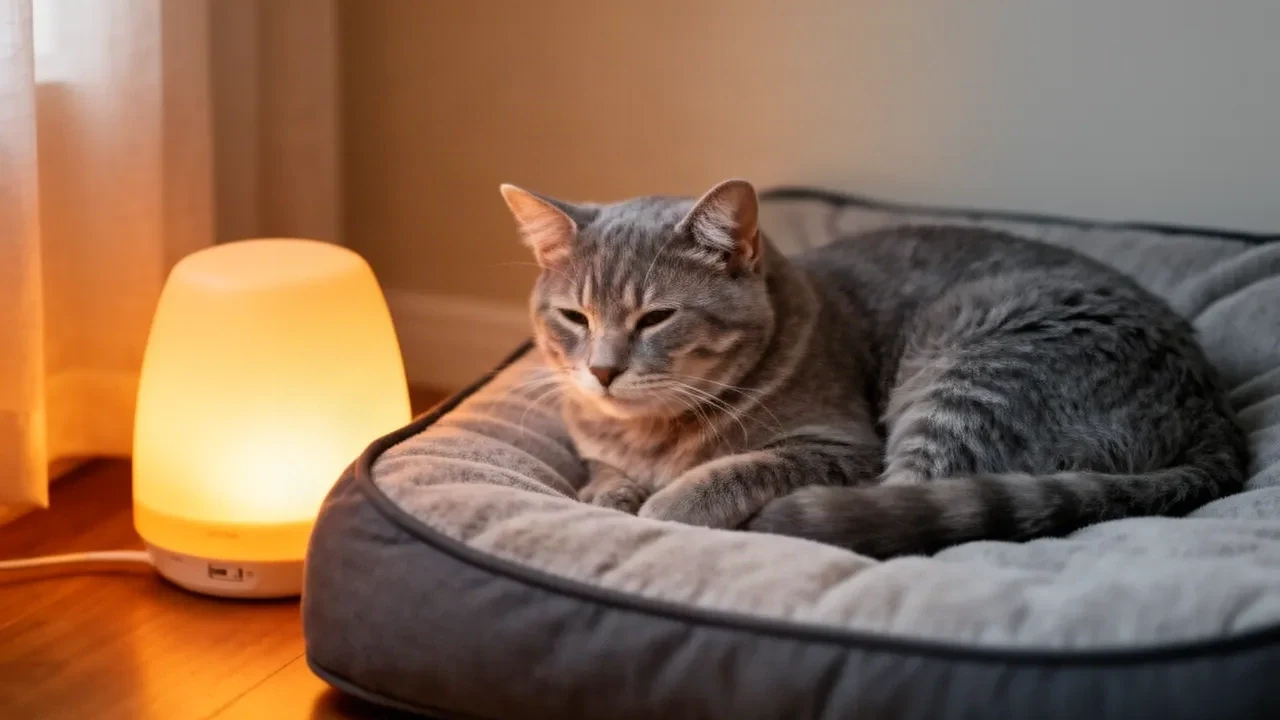
Set up pet-safe, low-wattage orthopedic heated beds at floor level. Warmth soothes aching joints, promotes muscle relaxation, and encourages deep, uninterrupted sleep cycles throughout the night.
4. Maintain Rigid Daily Routines
Cats with dementia thrive on absolute predictability. Feed meals, administer supplements, and engage in gentle brushing sessions at the exact same times every day. Never rearrange living room furniture, change feeding locations, or move litter boxes, as sudden changes to spatial layouts cause intense panic.
5. Engage in Gentle Daytime Stimulation
Prevent your cat from sleeping eighteen straight hours during the day by introducing gentle daytime sensory engagement: short five-minute puzzle sessions, soft brushing, and opening window blinds to let warm sunlight stream onto safe floor perches. Sunlight exposure helps reset disrupted circadian melatonin cycles.
6. Introduce Auditory Comfort & White Noise
Silence can be terrifying for a cat experiencing mild auditory loss and cognitive disorientation. Playing soft, low-volume classical music, feline acoustic melodies (such as David Teie’s Music for Cats), or a gentle mechanical white noise machine masks sudden household creaks and provides a continuous auditory anchor that prevents startle responses.
Breeds with Exceptional Longevity
Because Feline Cognitive Dysfunction is fundamentally a disease of advanced age, it is most frequently diagnosed in breeds known for exceptional lifespans that routinely live into their late teens and twenties.
The Siamese is renowned for longevity, frequently living 18 to 22 years, and its naturally vocal nature can amplify nocturnal confusion. Burmese are another hardy, long-lived breed, often reaching 18 to 20 years, while the calm, resilient Russian Blue averages 15 to 20 years. The Balinese, the longhaired variant of the Siamese, is celebrated for similarly extended geriatric years.
When to See a Veterinarian
Schedule an immediate veterinary evaluation if your aging cat exhibits any of the following symptoms.
A sudden, overnight onset of disorientation, walking in circles, or a head tilt can indicate a stroke, an inner ear infection, or an intracranial tumor. Dilated, unreactive pupils or bumping directly into walls often signal sudden retinal detachment from severe hypertension. A complete refusal to eat for more than twenty-four hours and severe weight loss alongside ravenous hunger or excessive thirst also warrant an urgent visit, as do seizures, tremors, or limb collapse.
Your veterinarian will perform a complete physical and neurological exam, check systemic blood pressure, and run complete blood chemistry panels (including Total T4, BUN, Creatinine, SDMA, and Electrolytes) to rule out underlying medical causes. For general senior wellness guidance, read our detailed overview of senior cat care.
If you notice any of these signs, consult your veterinarian. This article is for informational purposes and does not replace professional veterinary advice.
Frequently Asked Questions
Can feline cognitive dysfunction be cured or reversed?
No, feline cognitive dysfunction is a progressive, irreversible neurodegenerative condition. However, early intervention with antioxidant supplements like SAMe, omega-3 fatty acids, prescription neurological diets, and environmental modifications can slow the progression of brain aging and restore emotional calm.
Why does my old cat howl at night?
Older cats howl at night due to a combination of sensory decline (hearing and vision loss), spatial disorientation in the dark, and disrupted circadian sleep cycles caused by dementia. Nocturnal vocalization can also signal medical conditions like high blood pressure, an overactive thyroid, or chronic arthritis pain, which must be ruled out by a veterinarian.
How do I stop my cat with dementia from having litter box accidents?
Place multiple low-entry litter boxes with shallow two-inch sides in easily accessible locations on every floor of your home. Keep boxes in well-lit areas, use soft, unscented fine litter that cushions aging paws, and avoid moving boxes to new locations.
What medications help cats with dementia sleep?
Veterinarians may prescribe low-dose Melatonin, Gabapentin for concurrent arthritis pain and evening anxiety, or veterinary psychotropics like Selegiline (Anipryl) to support dopamine levels. Never administer human sleep aids or sedatives, as they can cause paradoxical excitement or fatal toxicities in felines.
Written by Max
Max is a lifelong cat owner and runs CuteCatsHQ. Health and care guides are checked against the veterinary sources listed with each article.
Keep reading
Cat Arthritis Symptoms: Subtle Signs of Joint Pain
Recognize subtle cat arthritis symptoms like hesitated jumping and litter box misses. Explore FMPI pain screening, home hacks, and Solensia anti-NGF therapy.

Senior Cat Care: Complete Guide for Cats 11+
Senior cat care for cats 11 and older: how aging affects health, common issues like arthritis and kidney disease, and vet-reviewed home and daily care tips.
Cat Dental Care: Complete Guide to Your Cat's Oral Health
Cat dental care: learn to spot tooth problems early, brush your cat teeth, use dental treats, and know when professional cleaning is needed by life stage.