
British Shorthair Cat Breed Guide: Personality & Care
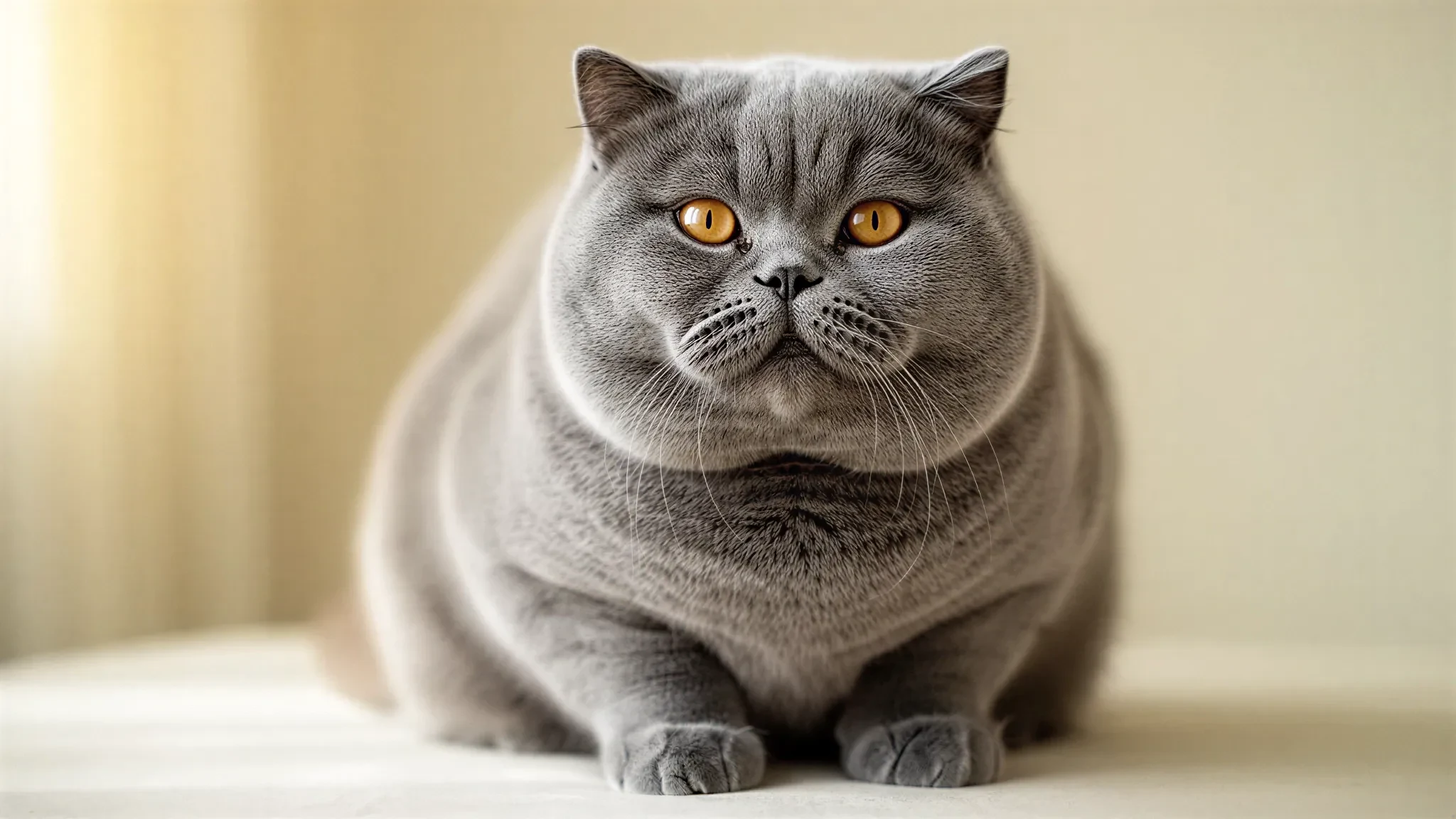
A British Shorthair is a compact, powerful, round-headed cat with a dense coat that springs back when you push it, and a habit of supervising from the next cushion over. The profile on this site lists them as calm, independent, gentle, and loyal, low care, 12–17 years, with hypertrophic cardiomyopathy and polycystic kidney disease on the health line. The Cat Fanciers’ Association’s version is championship in 1980, three to five years to fill in, a blood-type B note for breeders, and a future paragraph that says there are no breed-specific health issues. Those last two sentences can both sit here. If you wanted a Chartreux, that is French wool and a smile. If you wanted a Russian Blue, that is green eyes and a different coat. The comparison page is British Shorthair vs Russian Blue.
Quick Facts
| Attribute | Detail |
|---|---|
| Origin | United Kingdom |
| Size | Medium to large (slow to mature; females less massive) |
| Coat | Short, very dense, crisp |
| Personality | Calm, independent, gentle, loyal |
| Lifespan | 12–17 years |
| Care level | Low (coat) |
| Health to ask about | HCM, PKD (profile); CFA also names blood type B for breeders |
| Common names | Oliver, Bella, Charlie, Luna |
History & Origins
CFA’s 2002 yearbook article: a refinement of the natural British domestic shorthair, believed to have been in Britain since the Roman occupation. “Believed” is the word I will keep. I am not going to certify legionary cats. The first organized show at London’s Crystal Palace in 1871 included longhair Persians, rare Siamese, and domestic shorthairs including the British blue.
The breed nearly vanished in the mid-20th century and was rebuilt. Persian and other outcrosses show up in that recovery story. That is why PKD sits on our profile even when CFA’s future page is cheerful. Ask.
CFA’s 2002 article names the campaign in the 1970s: Denimar, BeMy, and others taking a standard to the board in February 1980. Championship effective May 1. GC Snowmaiden of Denimar, a white female from Scotland, was the first CFA champion and best of breed for the year ending 1981. Blue is still the postcard. White was the first champion. Color is a menu. Registration had started in 1976; provisional in 1978. The class is 1980.
They are not an American Shorthair. Different head, different coat, different working-cat story. They are not a gray Domestic Shorthair with copper eyes. Density and roundness are the tell.
Personality & Temperament
Calm, independent, gentle, loyal. CFA: interest in the household, affection spread across the family rather than one person, supervise from a nearby distance, wait for an invitation to the couch, quiet, sedate, intelligent, learn the routine, protest a change with a paw. Patient with children, may withdraw when it gets loud. Not fond of being carried. Occasional comment, not a speech.
A week in the house: a morning on a chair near you, a window, a quiet afternoon, an evening of play if you start it, a lap only if you invited it. If you wanted a Ragdoll greeter, this is the wrong round face. If you wanted a Siamese narrator, this is the wrong country.
Kids: patient helps. Teach them not to haul the cat like a stuffed bear. Best Cat Breeds for Families with Kids is the family-fit owner. An adult still owns the house.
They spread attention around. CFA: not one key person. That is a gift in a family and a disappointment if you wanted a shadow. Independent on our profile means they will sit near you. It does not mean ignore them for a week. They learn the routine and tap you if you break it. That tap is the conversation.
Loud play may make them withdraw. That is not a defect. Give them a room. A British who hides every evening in a house with three kids and a dog may be telling you the house is the problem.
They take three to five years to look like the photograph. Plan the food for the adult they will be, not the lanky two-year-old they are.
Indoor Cat Enrichment still applies. Bringing Home a New Cat still applies. A quiet cat in a bathroom may not yell. Check on them.
Physical Characteristics
CFA: compact, well-balanced, powerful, deep body, full broad chest, short to medium strong legs, round paws, tail thick at the base with a rounded tip. Head round and massive, round cheeks, medium ears, large round well-opened eyes, medium broad nose, gentle dip, no stop. Coat short, very dense, well bodied, firm, crisp, resilient, not double-coated or woolly. Push against the grain and it returns. Females less massive. Males larger jowls. Three to five years to full maturity.
Blue is the postcard. Copper or gold eyes on blue. Other colors exist — white, black, tabby, bicolor, and more. I am not going to inventory them. Green eyes are not the British blue ideal. If the eyes are green and the coat is silver-tipped, you may be shopping a Russian Blue.
I am not printing a fake pound range. Medium to large. Feel the body. Density hides weight.
Care Requirements
Grooming
Low care. Dense short coat. Rubber brush twice a week, daily in shed. They blow coat. Nails, ears, teeth. A crisp coat that looks open and greasy is a cat who has not been touched, not a Chartreux wool test.
Feeding
They like dinner. CFA’s future page does not name obesity. A powerful body plus a snack house is still a cat who cannot jump. Use How Much Should I Feed My Cat?. Weigh them. No invented cups. Three to five years of “he’s still filling in” is how you get a round cat who was never a kitten.
Exercise & Enrichment
Moderate. Wand. Window. A person in the room. They are not a Cornish launch and they are not a plant. A burst in the evening is the usual picture. If there is never a burst, ask why.
They are strong. A wand they can actually catch is better than a laser. A sturdy tree they can land on is better than a wobbly condo. They are not aerialists. They are power. If the only exercise is walking to the bowl, the coat will hide the result until the jump fails.
Know the blood type once. Weigh them monthly while they fill in. Those two habits are cheaper than a surprise at year four.
Health Concerns
Two lists. Live with both.
CFA: no breed-specific health issues of concern; diverse background; blood type B in many lines — a breeder mentoring issue; owners should know blood type in case of transfusion. I am not going to turn blood type into a pet-owner emergency. Ask the breeder. Ask the vet to record it.
Our profile: HCM and PKD. Cornell’s cardiomyopathy page is the general heart library. Cornell’s PKD page names Persians, Himalayans, and British Shorthairs. Ask for scans and genetic tests. Increased thirst is a veterinarian. A cat who tires on the stairs is a veterinarian.
I will not prescribe heart pills or a kidney protocol.
Obesity is not on CFA’s future list. It is still a cat who likes dinner and a coat that hides a middle. Weigh them. A British who cannot jump into the window they used at two years old is a veterinarian plus a bowl conversation.
Blood type is recorded once. PKD is asked every time you look at a litter. HCM is scanned on a schedule the cardiologist names. Those are different calendars. Do not collapse them into “they health test.”
Is a British Shorthair Right for You?
This breed fits people who want a quiet, dense, round cat who will sit beside them, not on their head, and who will wait three to five years for the adult. Households that like a presence. People who will weigh them.
Who should pick a different cat: you, if you wanted a Chartreux smile. You, if you wanted a Russian Blue. You, if you wanted a clingy greeter. You, if you wanted a talker. You, if children will carry the cat like a toy. You, if you will free-feed a slow-maturing cat.
Apartments work. First cat: a reasonable adult. Allergies: still a cat; visit. Dense coat still sheds.
Finding a British Shorthair
A serious breeder talks hearts and PKD even if CFA’s future page is cheerful, shows you the spring of the coat, and can explain why this is not a Chartreux. Watch them walk. Ask how large the males got and when. Ask whether they like to be carried — CFA already warned you.
Rescue gets gray mixes labeled British. Meet the individual. Round and blue in a shelter is a maybe.
Red flags: green eyes sold as type, kittens at six weeks, no walk in the room, a Persian face on a “British,” a seller who has never heard of 1980 and also cannot say Crystal Palace. A coat that lies flat and never springs is a different blue.
Adopting vs. Buying from a Breeder still applies.
Three to five years. Write it on the calendar. A two-year-old male who still looks lanky is the standard talking. Free-feeding because “he’s growing” is how the dense coat becomes a warning. CFA wants powerful, not fat. Feel the ribs.
They will not usually jump into your lap. That is not aloof broken. CFA says wait for the invitation. If you needed a Velcro cat, the Ragdoll and the Siamese pages are still there. If you needed a cat who spreads affection around the household instead of picking one person, that is this page.
Blood type B is a breeder sentence. For you it is a note in the vet file. PKD is a Cornell-named British Shorthair sentence. HCM is a heart scan. CFA’s “no breed-specific issues” is a future paragraph. Ask all of it. A cheerful brochure and a thirsty cat can exist in the same cattery.
Crystal Palace 1871 is why the British blue has a show history. Championship in 1980 is why there is a CFA class. Roman soldiers are a “believed” in the 2002 article. I will not turn a belief into a legion.
Push the coat against the grain. If it does not spring, you may be shopping a different blue. Chartreux wool breaks like sheepskin. Russian Blue tipping is a different sparkle. This coat is dense and crisp. That is the tell in the living room. Sit one cushion over for a full visit. If they never come closer, believe them. If they tap you when you stand up at the wrong time, that is the British conversation. It is quieter than a Siamese and more honest than a floppy video. Stay long enough to see them walk, sit, and ignore a lap. That is the cat. Then weigh the idea of dinner against the coat that will hide it. A kitchen scale is part of the breed. So is the three-to-five-year wait. Write it down. They are not fond of being carried; CFA wrote that down too. Pick them up once in the visit if you must, then believe the answer. Put them down. Then wait on the next cushion until they decide you exist. That is the visit. Do not rush that hello today.
Popular British Shorthair Names
The four names on the profile are ordinary on purpose. Winston is extra if you like it — English, joy stone, not a statesman assignment. Arthur is not a name I will put on a roster here. Oliver will do.
Oliver — English, olive tree
Bella — Italian, beautiful
Charlie — English, free man
Luna — Latin, moon
Winston — English, joy stone
Daisy — English, day’s eye
Milo — German, merciful
Willow — English willow tree
Ash — English, ash tree or gray color
Felix — Latin, happy, lucky
More on British Shorthair cat names and the Name Generator.
Frequently Asked Questions
Is a British Shorthair the same as a Chartreux or a Russian Blue?
No. Chartreux are French, woolly, gold-eyed, with a smile. Russian Blues are a different coat and green eyes. British Shorthairs are round, dense, and copper-to-gold in blue. FIFe once lumped Chartreux with British Blues; they split in 1977. Different pages. There is also a British Shorthair versus Russian Blue comparison on this site.
Do British Shorthairs like to be carried?
Often no. CFA says instruct children that these cats are not fond of being carried around. They wait for an invitation to the couch rather than jumping into your lap. Calm is not a stuffed animal. If you wanted a Ragdoll greeter, that is a different page.
How much grooming does a British Shorthair need?
Low care on a short, very dense, crisp coat. CFA: if you push it against the grain it springs back. A rubber brush a couple of times a week, daily in shed season. Density sheds. They still need nails, ears, and teeth. Low coat work is not a free-feed license.
What health tests should a British Shorthair breeder show me?
CFA’s breed-future page says there are no breed-specific health issues and flags blood type B for breeders. Our profile lists hypertrophic cardiomyopathy and PKD. Cornell names British Shorthairs on the PKD page. Ask for heart scans and kidney tests anyway. I will not pick a winner between those sentences in a blog.
How long do British Shorthairs take to grow up?
CFA says a full three to five years to reach maturity and development. A lanky two-year-old is not a failed Brit. Do not free-feed him while you wait. The dense coat will hide a middle.
Meet the adult sitting one cushion over. Then put a hand on the coat against the grain. The British Shorthair gallery is here if you want the roundness before you book the visit. A second visit, after they have offered a paw because you changed the routine, is the British version of a temperament test. Pick them up once, gently. If they hate it, CFA already warned you. Do not buy a round cat because a child wanted a teddy they could haul.