
Domestic Shorthair Cat Breed Guide: Personality & Care
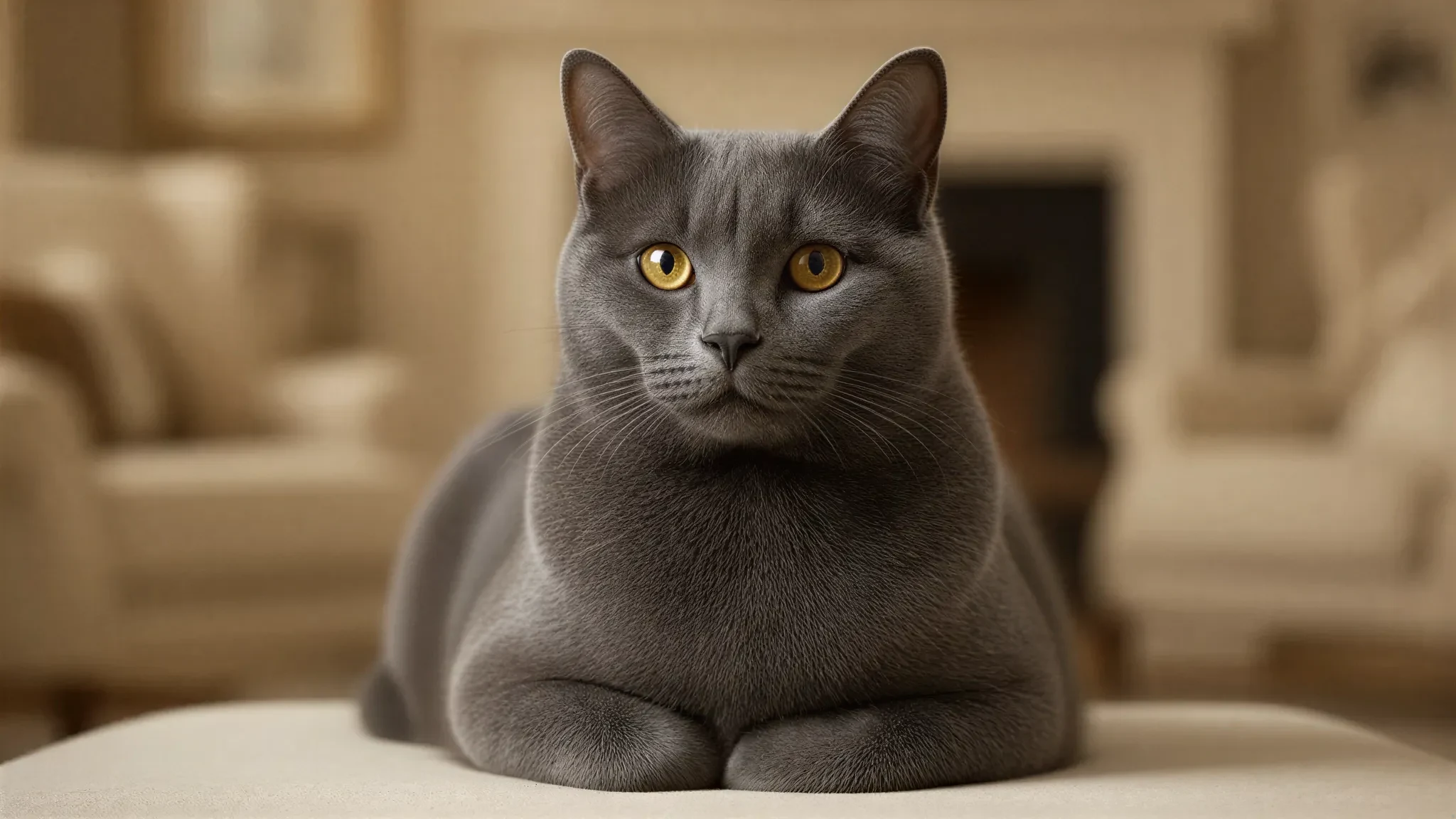
A Domestic Shorthair is a mixed cat with a short coat. That is the whole definition. There is no closed registry, no triangle-head standard, and no DNA panel that makes one official. The profile on this site lists them as variable, affectionate, independent, and playful, medium size, low care, 12–16 years, with health that “depends on mixed heritage.” If you wanted a brochure, this is the wrong page. If you wanted help deciding about the cat already in the shelter cage, keep going.
Most of them were this. Not a show cat. A short-haired cat whose papers, if they had any, said DSH.
Quick Facts
| Attribute | Detail |
|---|---|
| Origin | Worldwide |
| Size | Medium |
| Coat | Short |
| Personality | Variable, affectionate, independent, playful |
| Lifespan | 12–16 years |
| Care level | Low |
| Health | Depends on mixed heritage |
| Common names | Bella, Charlie, Luna, Oliver |
History & Origins
There is no origin story that starts in a cattery. Short-haired mixed cats are what you get when cats live near people for a long time and nobody is keeping a stud book. Ship cats, farm cats, alley cats, barn cats. The ones that survived winter and mice and neglect look like a lot of different cats.
Calling them a “breed” is a shelter and veterinary convenience. It groups short-coated mixed cats so they are not listed as “unknown.” It is not the same job as American Shorthair, which is a recognized working-cat breed with a written standard. A DSH can look like an American Shorthair. Looking like one is not being one.
If the coat is long, that is a Domestic Longhair. Same mixed idea, different comb. If you are trying to reverse-engineer a fancy label from ear tufts and a ruff, start with What Breed Is My Cat?. Most family cats in this country are mixed. That is not a problem.
People say “moggie” in Britain and “alley cat” here. Same animal. TNR programs and shelter medicine are the modern history: millions of short-haired mixed cats, some lucky, some not. This page is for the lucky ones who get a sofa. It is not a TNR manual.
Orange cats are often male because of how the orange gene sits on the X chromosome. That is a color fact, not a personality fact, and it is not unique to DSH. Do not buy the “orange cat brain” meme as husbandry.
Personality & Temperament
Variable is the feature, not a cop-out. One DSH will sit on the laptop. The next will watch from the fridge. The profile also lists affectionate, independent, and playful because those show up often, not because every orange tabby in a shelter is a lap cat.
The American Veterinary Medical Association tells families to pick a cat that seeks affection rather than one you have to corner, to put an adult in charge of daily care, and to take an adult cat if you cannot commit to a kitten. That advice was written for this situation. You can watch a two-year-old DSH take a child’s hand. You cannot watch an eight-week-old brochure.
They showed up on Best Cat Breeds for Families with Kids for that reason. A foster who can tell you what happens when a door slams is worth more than a closed-registry paragraph.
Play ranges. Some want a wand every night. Some want a sunny floor. Independent does not mean ignore them. It means they may not follow you from room to room like a Maine Coon.
A DSH who grew up in a bathroom at the shelter may hide for a week in your house. That is not “aloof breed temperament.” That is a cat who has not had a house. Bringing Home a New Cat is the first-month version of that. Give them a room, a box, and time. Kids who want to introduce the cat to everyone on day one will have to wait.
Voice varies the same way the coat does. Some chirp. Some are silent. A loud mixed cat is not secretly Siamese unless the rest of the cat agrees.
Physical Characteristics
Medium, short coat, highly variable appearance — that is the profile, and it is accurate. Tabby, solid, bicolor, calico, pointed mixes, odd eyes, white spotting. Ears that look a little lynx-tipped because of a cold-climate ancestor, or ears that don’t. Bodies from cobby to long. You will see people online declare a random tabby a Bengal or a Norwegian Forest Cat from one photo. Coat pattern is not a pedigree.
Weight varies with the cat. I am not going to print a pound range as if this were a standard. Look at the cat. Feel the ribs under the coat. A fat DSH is still a fat cat.
They are not hairless, not folded, not tailless by design. If they are, you are looking at a different page.
Tabby is the default look people mean when they say “just a cat”: mackerel stripes, classic blotches, spotted mixes, ticked coats that look agouti in the sun. Calico and tortoiseshell are color patterns on mixed females more often than males, which is genetics, not a breed. A tuxedo is a bicolor pattern, not a registry. Pointed mixed cats exist because Siamese-type cats have been in the general population for a long time. None of those patterns makes a DSH a closed-registry anything. If you need a label for a mixed cat you already love, What Breed Is My Cat? is the identification page. This page is the living-with page.
Care Requirements
Grooming
Low care is the honest selling point. Short coat. A rubber brush when they shed in spring and fall. They still get mats behind the ears if you never touch them, but this is not a Forest Cat undercoat and it is not a Persian ruff. Nails, ears, teeth still happen. Low coat work is the difference between this cat and a longhair, not between this cat and a stuffed animal.
They still shed. Hair on the black trousers in April does not mean you secretly adopted a longhair. It means mixed short-haired cats blow coat twice a year like everyone else. A weekly once-over with a rubber brush during that window keeps the sofa from looking like a second cat. Skip it and you will still have a healthy DSH. You will also have more vacuuming. That is the whole grooming secret. There is no salon schedule hiding in the mixed-cat label.
Feeding
Mixed cats get fat in snack-heavy houses the same way American Shorthairs do. The ASH profile even lists obesity. A DSH will take the cheese a child shares. Use How Much Should I Feed My Cat? and the cat in front of you, not a cup number I invented for a breed that has no standard weight.
Exercise & Enrichment
Playful on the profile means some of them want a job. A wand, a tree, a window. Indoor Cat Enrichment is the setup. A bored DSH will open cabinets too. Variable energy is not an excuse for an empty apartment and a laser they never catch.
Scratching is ordinary cat work. A post they like beats a lecture. Litter is ordinary too: scooped daily, enough boxes, the substrate they will actually use. Mixed cats are not exempt from box math. If they stop using the box, that is medical or stress, not “DSH attitude.”
A week in the house looks like this: morning food, a window, whatever zoomies they brought from the shelter or did not, an evening wand if they want one, and a person who does not take “independent” as a license to leave them alone for three days. Some of them will sit on the laptop. Some will not. That split is the breed. A second cat is not required. If you add one, introduce them the slow way — closed door, scent swap — the same as any other cat. Mixed does not mean they skip the hissing week.
Health Concerns
The profile’s health line is “Depends on mixed heritage.” That sentence is more honest than a fake disease list. They can inherit anything their parents carried. They can also be ordinary indoor cats with ordinary indoor problems.
What I will say without inventing a DSH-specific syndrome: take the cat to a veterinarian. Ask what vaccines and tests the shelter already ran. Feline leukemia virus and FIV are the usual intake tests on mixed cats, not because DSH is a high-risk “breed,” but because unknown outdoor history is common. A negative test is a snapshot. Cornell’s feline health center is the library when a problem actually shows up — teeth, weight, urinary changes, vomiting that does not stop. I am not going to dump every feline disease onto this page to imitate a closed-breed health section.
Indoor versus outdoor is a lifestyle choice that changes the risk pile: cars, fights, parasites, missing-cat posters. The AVMA’s selection advice still starts with matching the animal to the household you actually have. A DSH who has only known a bedroom foster will not automatically become a barn cat because mixed cats are “hardy.”
If you were promised “hybrid vigor” as a medical guarantee, that is marketing. Mixed cats can be healthy. They can also be sick. The individual, the indoor life, and the vet are the plan. A consumer DNA kit that returns 8% Maine Coon on a random tabby is entertainment. It does not change the litter box.
Is a Domestic Shorthair Right for You?
This cat fits people who will meet the animal, not the label. Families, apartments, first cats, last cats. Low coat work. Temperament unknown until you see it — which is why an adult from a foster home is the strongest version of this “breed.”
Who should pick a different cat: you, if you need predictable size, coat, and a test panel before the kitten comes home. That is a breeder conversation on a closed breed. You, if you wanted a specific look that only exists on a standard. You, if you will be disappointed when the DNA test says “mixed” after you already loved the cat. You, if the coat in front of you is actually long.
Cost is usually the shelter fee, not a four-figure cattery invoice. The ongoing bill is the same as any cat: food, litter, vet. Mixed does not mean free veterinary care. It often means fewer genetic tests on paper and more “we will see.” Budget for a first exam even if the shelter already vaccinated.
Allergies are about the cat’s dander and saliva, not the lack of a pedigree. A DSH is not hypoallergenic because they are mixed. If someone in the house is allergic, spend time with this cat before you sign. A weekend visit beats a theory.
Finding a Domestic Shorthair
They are in every shelter. That is the distribution model. Ask the foster a short list, then listen to the answers, not the adjectives on the kennel card.
- What does this cat do when a stranger sits down?
- How do they use the box, and have they ever gone beside it?
- Kids, dogs, other cats — what has already been tried?
- Indoor only, or did they come in from outside?
Those four questions tell you more than a color. Spend time in the visiting room. Bring the kids if the shelter allows it, and watch the cat, not the kids’ excitement. The AVMA’s line still holds: if you cannot commit to a kitten, get an adult. Kittens should stay with mother and littermates until they are weaned and socialized, mixed or not.
A “breeder” selling Domestic Shorthairs is usually selling mixed kittens with a price. There is no standard to violate, which is why you should still ask about the parents’ health and the kitten’s age. Weaned and socialized with mother and littermates still applies. A six-week mixed litter is not “hardier.” It is young.
Adopting vs. Buying from a Breeder is the general comparison. For this cat, adoption is the default path, not a moral lecture.
Red flags: a seller who will not let you see where the kittens live, kittens younger than that seven-week floor, or a DSH priced as a rare breed because the coat is silver.
Popular Domestic Shorthair Names
The four names on the profile are the popular set everyone else uses, because mixed cats get ordinary names:
Bella — Italian for beautiful; the default girl name, use it if it fits
Charlie — English, free man; friendly, easy to shout
Luna — Latin, moon; still works on a black mixed cat
Oliver — English, olive tree; shortens to Ollie
Max — Latin, greatest; one syllable
Milo — German, merciful
Willow — English willow tree
Mittens — English, paws that look like mittens; for actual white paws
Shadow — English, shadow; for a dark coat that is not a breed
Sophie — Greek, wisdom; ordinary on purpose
Pick the cat first. Then use the Name Generator or Domestic Shorthair cat names. A fancy Norse name on a random tabby is fine if you like it. It does not make them a Forest Cat.
Frequently Asked Questions
Is a Domestic Shorthair a real breed?
Not in the registry sense. A Domestic Shorthair is a mixed short-haired cat. There is no closed standard, no championship class, and no required test panel. Appearance and temperament vary. An American Shorthair is the pedigreed cat people confuse them with. Meet the cat in front of you.
What is the difference between a Domestic Shorthair and an American Shorthair?
An American Shorthair is a recognized breed with a written standard and a health list on our profile. A Domestic Shorthair is mixed. They can look similar. Papers, not the coat, are the difference. If someone is selling a DSH as a cheap American Shorthair, they are selling a story.
Are Domestic Shorthairs good family cats?
The individual is. Our profile lists variable, affectionate, independent, and playful because that is the range, not a promise. A shelter adult who already lives with children is a better family cat than a fashionable kitten with no history. An adult still owns daily care. That is AVMA advice, not a temperament slogan.
How long do Domestic Shorthairs live?
The profile lists 12 to 16 years. That is a range for mixed short-haired cats, not a guarantee. Indoor life, weight, dental care, and whatever they inherited all move the number. I am not going to invent a longer lifespan because mixed cats are supposed to be hardier. Ask the vet who sees this cat.
Do Domestic Shorthairs need grooming?
Low care. Short coat. A rubber brush during shed season is usually enough. They still need nails, ears, and teeth. Low coat work is not zero cat work. If the coat is actually medium or long, you may have a Domestic Longhair, which is a different page on this site.
Go meet two cats this week. The second visit is usually the one that decides it. The Domestic Shorthair gallery is here if you want the look before you book the shelter.