
Best Microchip Cat Feeders: Multi-Cat Guide
This article contains affiliate links. If you purchase through our links, we may earn a small commission at no extra cost to you. We only recommend products we’ve researched or personally found valuable for cat owners.
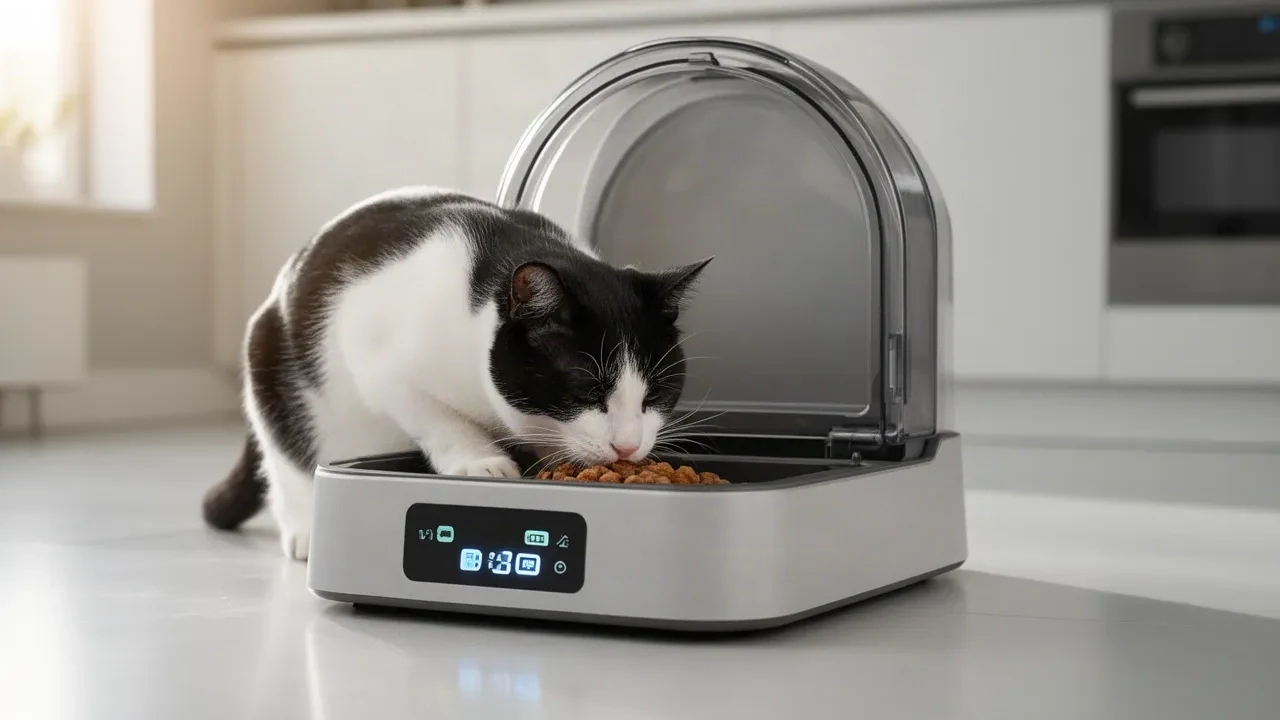
The best microchip cat feeders use selective radio-frequency identification (RFID) scanning to unlock a motorized food bowl only for designated pets, completely isolating specialized prescription diets and preventing food bullies from stealing meals. After evaluating selective feeding systems across multi-cat households for years, the top overall pick is the SureFeed Microchip Pet Feeder by Sure Petcare for its universal microchip compatibility, sealed wet-food preservation, and proven reliability.
Managing feeding routines in a multi-cat household is often an exhausting daily struggle. When one cat requires an expensive renal, urinary, or hypoallergenic veterinary diet while another cat needs standard adult kibble or kitten food, free-feeding becomes impossible. Inevitably, the fastest or most aggressive eater muscles their way into every bowl, leading to severe obesity in one cat and malnutrition or dangerous medical complications in the other.
Microchip-activated feeders solve this structural problem by turning your cat’s existing subcutaneous veterinary microchip into an automated biological key. This detailed buying guide analyzes the engineering, microchip frequency compatibility, financial return on investment, and behavioral training protocols needed to restore harmony to your feeding routine.
Why Multi-Cat Feeding Fails: Diet Isolation & Food Bullying
In natural feline social structures, cats are solitary hunters and solitary eaters. Unlike canine packs that eat together in a group hierarchy, felines experience measurable psychological stress when forced to consume meals in close physical proximity to other cats.
According to the American Association of Feline Practitioners (AAFP) Life Stage Guidelines, resource guarding and feeding competition represent major drivers of feline anxiety, gastrointestinal distress, and behavioral conflict.
In multi-cat homes without selective feeders, owners face three persistent challenges:
- Prescription Diet Cross-Contamination: Therapeutic veterinary diets—such as Royal Canin Renal Support, Hill’s Prescription Diet c/d Multicare, or Purina Pro Plan Veterinary Diets UR—are precisely formulated to alter urinary pH or reduce phosphorus levels. When a healthy cat consumes a renal diet, they miss out on necessary dietary protein. Conversely, when a cat with kidney disease steals standard high-phosphorus food, their renal decline accelerates.
- The “scarf-and-barf” Competition: Timid cats who fear having their meals stolen often eat rapidly without chewing, leading to regurgitation. Meanwhile, dominant “food vacuum” cats consume double their daily caloric requirement, driving feline obesity, hepatic lipidosis, and diabetes.
- Wet Food Desiccation and Waste: Cats with chronic kidney disease (CKD) or lower urinary tract issues depend heavily on wet food for essential hydration. In open bowls, wet canned food dries into an unpalatable crust within two hours, wasting expensive food and leaving cats under-hydrated.
The Financial ROI of Microchip Feeders
While microchip pet feeders represent a significant upfront investment ($180 to $250+ per unit), they frequently pay for themselves in reduced veterinary bills and eliminated food waste within several months.
Consider the real-world financial mathematics of managing a two-cat household where one cat is prescribed a therapeutic veterinary renal diet:
| Scenario | Amount |
|---|---|
| Renal diet (Cat A) | $160/month |
| Standard food (Cat B) | $40/month |
| Wasted & stolen prescription food without a feeder | $96/month ($1,152/year) |
| SureFeed one-time hardware cost | $195 |
| Break-even point | ~2.1 months |
| Net 12-month savings | $957 |
Eliminating food theft does more than balance your monthly grocery budget; it prevents expensive veterinary emergency visits resulting from crystal blockages or diabetes management, making automated selective feeders one of the highest-yield investments in feline care.
RFID Frequency & Microchip Compatibility
Before purchasing an automated feeder, you must ensure the scanner hardware is compatible with your cat’s specific microchip implant.
Pet microchips operate across distinct radio frequency bands using passive RFID technology. When your cat approaches the feeder’s scanning arch, an electromagnetic coil emits a low-power radio signal that energizes the passive chip under your cat’s skin, which transmits its unique identification number back to the feeder.
| Microchip Standard | Operating Frequency | Digit Format | Scanner Compatibility |
|---|---|---|---|
| ISO 11784/11785 (FDX-B) | 134.2 kHz | 15 Digits | 100% Universal Compatibility across all modern feeders (Global standard) |
| FDX-A / FECAVA | 128 kHz or 125 kHz | 10 Digits | Supported by SureFeed; check older PortionPro models |
| Avid Encrypted | 125 kHz | 9 Digits | Supported by SureFeed; requires pairing |
| External RFID Collar Tags | 134.2 kHz / 125 kHz | Lightweight Medallion | Included with feeders for un-chipped cats or chips that have migrated |
If your cat’s implanted microchip has migrated down their shoulder blade or cannot be read reliably by the arch, all top-tier microchip feeders include lightweight RFID collar medallions that pair instantly to the unit.
5-Stage Motor Desensitization Protocol
Cats are neophobic animals who are naturally suspicious of new household objects, especially motorized devices that make mechanical humming noises near their face. Rushing a timid cat to use a microchip feeder on day one can trigger fear-based food refusal.
Follow this proven five-stage training protocol over 7 to 14 days to ensure smooth adoption:
| Stage | Days | What happens |
|---|---|---|
| Stage 1 | 1–3 | Training mode on, lid locked fully open, motor disabled |
| Stage 2 | 4–6 | Lid moves 20% on approach and exit; the cat acclimates to the hum |
| Stage 3 | 7–9 | Lid closes halfway with a delay |
| Stage 4 | 10–12 | Lid closes to the 80% position |
| Stage 5 | 13+ | Training off; full RFID lock and instant close |
During the training phase, place high-value treats (like freeze-dried chicken or lickable cat treats) in the bowl to build positive emotional associations with the feeder’s scanning arch.
Top Picks: Best Microchip and Selective Feeders
| Model | Primary Scanning Tech | Bowl Capacity | Wet Food Seal | Power Source | Best For | Price Range |
|---|---|---|---|---|---|---|
| SureFeed Microchip Feeder | 15-Digit ISO / 125kHz / RFID Tag | 13.5 oz (Single/Split) | Integrated Rubber Gasket | 4 × C-Cell Batteries | Best Overall Gold Standard | ~$180–210 |
| SureFeed Rear Cover Shield | Physical Clear Polycarbonate | Accessory Attachment | N/A | Mechanical Fit | Mandatory Anti-Theft Add-On | ~$16–25 |
| PortionPro Rx Automated Feeder | Active RFID Collar Tag | 32 oz (Dry Kibble) | Dry Food Hopper Only | AC Wall Adapter + Battery | Best for Automated Portions | ~$240–290 |
| Cat Mate C500 Timed Feeder | Mechanical Digital Timer | 5 × 11.5 oz Bowls | Dual Twin Ice Packs | 3 × AA Batteries | Best Budget Timed Split | ~$55–75 |
Detailed Product Reviews
1. SureFeed Microchip Pet Feeder (Sure Petcare) — Best Overall Gold Standard
🥇 Best Overall Microchip Feeder
SureFeed Microchip Pet Feeder
The definitive multi-cat feeding solution. Reads your cat's existing 15-digit implant chip, opens smoothly, and seals airtight with an integrated silicone gasket that keeps wet and dry food fresh all day.
- Universal Microchip RFID Reader
- Airtight Silicone Odor Seal
- Stores up to 32 Pet IDs
- 6+ Months Battery Life (4 C-Cells)
Amazon: 4.5/5 from over 9,800 reviews. The gold standard for multi-cat diet management.
The SureFeed Microchip Pet Feeder is the undisputed benchmark in selective pet feeding. When your authorized cat approaches the scanner arch, the unit reads their subcutaneous microchip in milliseconds and slides the clear motorized lid backward into the housing. As soon as the cat steps away, the lid quietly slides forward and seals shut.
Along the perimeter of the bowl, Sure Petcare engineered a flexible neoprene silicone seal. When the lid closes, it creates an airtight compression barrier that keeps wet canned food moist, fresh, and free from flies for up to 24 hours while keeping food aromas contained.
The feeder accommodates single bowls for generous meals or split dual-bowls to serve wet food and dry kibble simultaneously. A simple single-button programming interface stores up to 32 unique pet identities in permanent internal memory.
It reads every 15-digit ISO, 10-digit, and 9-digit microchip, and the silicone gasket keeps wet food fresh while trapping odors. Four C-cell batteries run it for over six months, and the multi-stage training mode eases nervous cats in gradually. A determined food thief means buying the rear cover separately, and it won’t dispense dry food from a bulk hopper.
2. SureFeed Rear Cover Accessory — Mandatory Anti-Theft Shield
🛡️ Mandatory Anti-Theft Add-On
SureFeed Rear Cover Accessory
A snap-on clear polycarbonate shield that encloses the rear access opening of the SureFeed feeder, preventing clever intruder cats from stealing food from behind while the authorized cat eats.
- Custom Snap-On Fit
- Durable Clear Polycarbonate
- Blocks Rear Food Theft
- Easy Tool-Free Installation
Amazon: 4.7/5 from over 3,400 reviews. Essential accessory for determined multi-cat homes.
While the SureFeed feeder works wonders, determined multi-cat “food thieves” often figure out a backdoor maneuver: while the authorized cat stands in front eating, the thief sneaks around the back of the arch and eats over their shoulder.
The SureFeed Rear Cover clips directly onto the back of the feeder chassis in seconds without tools. Made from tough, clear polycarbonate, it creates a full physical enclosure around the rear and sides of the bowl. The thief cannot reach the food from any angle, forcing all interactions to occur through the front scanning portal. If you own an aggressive food bully, this accessory is practically mandatory.
It blocks rear and side food-stealing completely, and the clear design lets light through so the eating cat doesn’t feel boxed in. The inexpensive add-on completes the feeder’s security perimeter and clips on in seconds without tools. You buy it separately, and it adds about three inches to the vertical profile.
3. PortionPro Rx Automated Selective Feeder — Best Portion-Controlled Feeder
⚙️ Best Automated Portion Control
PortionPro Rx Automated Selective Feeder
A high-capacity automated feeder that combines active RFID collar scanning with a motorized dry-food dispensing hopper, dispensing measured kibble portions throughout the day while locking out unauthorized pets.
- Active RFID Collar Tag System
- 32-Cup Bulk Dry Hopper
- Program up to 6 Meals Daily
- Motorized Heavy-Duty Door
Amazon: 4.2/5 from over 650 reviews. Ideal for managing strict feline weight-loss programs.
For multi-cat homes managing severe feline obesity, the PortionPro Rx combines automated dry food dispensing with active selective access control. Unlike standard microchip feeders that require manual meal loading, the PortionPro holds 32 cups of dry kibble in an internal hopper and dispenses measured portions (from 1/8 cup to several cups) on a programmed schedule up to six times per day.
The device uses an active RFID tag worn on your cat’s collar. You can program the feeder in two distinct modes: “Open for Target Cat” (only opening when the authorized cat approaches) or “Close for Thief Cat” (remaining open for normal grazing, but slamming shut instantly if the overweight cat approaches).
It combines bulk dry-food scheduling with selective access, and the “Close for Thief” mode lets free-feeding cats graze while locking out the cat on a diet. The 32-cup hopper removes daily refilling, and the heavy base resists tipping. It handles dry kibble only, and cats must wear the proprietary active RFID collar tags since it can’t read internal microchips.
4. Cat Mate C500 Automatic 5-Meal Pet Feeder — Best Budget Timed Alternative
💰 Best Budget Timed Multi-Meal
Cat Mate C500 Automatic 5-Meal Pet Feeder
A reliable rotating carousel feeder with twin ice packs that serves up to 5 scheduled wet or dry meals, offering a budget-friendly way to feed cats in separate rooms on strict timers.
- 5 Meal Compartments (11.5 oz each)
- Dual Integrated Ice Packs
- Digital LCD Clock & Timer
- Tamper-Proof Rotating Lid
Amazon: 4.4/5 from over 6,200 reviews. Proven budget solution for scheduled wet-food meals.
If automated microchip scanners exceed your current budget, timed segregation using carousel feeders represents the next best management strategy. The Cat Mate C500 features five rotating food compartments beneath a sturdy, motorized lid.
Underneath the food carousel, twin freeze packs keep wet canned food cool and safe for up to 24 hours. By placing two Cat Mate C500 units in separate closed rooms and programming them to open at the exact same minute, you can feed multiple cats their distinct diets simultaneously without supervision.
It costs far less than full microchip hardware, and the twin ice packs keep wet food fresh through a workday. The LCD timer programs up to four meals, and the carousel and lid go in the dishwasher. It doesn’t scan chips, so you rely on separate rooms to isolate cats, and the ice packs need freezing and swapping daily for wet food.
Defeating the “Side Swiper”: Rear Covers and Physical Barriers
Even with advanced RFID technology, feline behavioral dynamics require thoughtful physical setup. In high-competition homes, assertive cats quickly discover mechanical loopholes.
To ensure total diet security:
- Install in Corners: Position the feeder with its back and one side firmly against a 90-degree wall corner. This physically eliminates two out of three angles of approach, forcing all cats to enter through the front RFID scanner.
- Add the Polycarbonate Rear Shield: Always attach the SureFeed rear cover shield so the authorized cat’s body completely blocks the entry portal while eating.
- Adjust the Lid Closure Speed: Top microchip feeders feature adjustable closure delay settings (Fast, Medium, Slow). Once your timid cat completes the training protocol, switch the delay to “Fast” (one second). As soon as the authorized cat pulls their head back, the door shuts before a nearby rival can lunge forward.
Battery Life and Power Outage Reliability
A frequent concern among owners is whether automated feeders will fail during power outages or leave pets stranded when batteries drain.
The SureFeed system runs entirely on four standard C-cell alkaline batteries, drawing zero power from wall outlets. Because the motor operates only for brief two-second intervals during feedings, a single set of quality alkaline batteries reliably powers the feeder for six to nine months of daily use.
A low-battery LED flashes continuously for several weeks before the batteries lose sufficient voltage to operate the motor. Internal memory retains all registered microchip IDs permanently during battery swaps, ensuring your settings are never lost.
When to See a Vet
Selective feeders keep prescription diets intact, but they can’t replace monitoring. Watch for unexplained weight loss, increased thirst, a poor appetite, or changes in urination—these can signal kidney disease, diabetes, or thyroid problems that need diagnosis. If your cat’s eating or weight shifts noticeably, involve your veterinarian. Use our care dashboard to keep feeding, vet visits, and medication reminders in one place.
If you notice any of these signs, consult your veterinarian. This article is for informational purposes and does not replace professional veterinary advice.
Frequently Asked Questions
How does a microchip feeder know which cat is eating?
The feeder features a scanning antenna arch equipped with RFID sensors. When a cat puts their head through the arch, the sensor emits a low-power radio frequency that activates the microchip under the cat’s skin. The feeder reads the unique 15-digit ID; if it matches an authorized profile in memory, the motorized lid slides open.
Will a microchip feeder work with my cat’s existing chip?
Yes. Modern microchip feeders like the SureFeed are universally compatible with all standard 15-digit ISO 11784/11785 (FDX-B) microchips implanted by veterinarians worldwide. They also support 10-digit FDX-A and 9-digit Avid chips, as well as external RFID collar tags.
Can microchip feeders keep wet cat food fresh?
Yes. The SureFeed feeder features an integrated flexible rubber gasket around the rim of the bowl. When the motorized lid closes, it forms an airtight seal that locks in moisture and prevents wet canned food from drying out or attracting flies for up to 24 hours.
What happens if the bully cat pushes in from behind?
In high-drive multi-cat households, food thieves may attempt to eat over the authorized cat’s shoulder from behind. Installing the optional clear polycarbonate rear cover shield and placing the feeder in a 90-degree room corner completely blocks rear access.
How long does it take to train a cat to use a microchip feeder?
Most cats learn to use a microchip feeder within 3 to 7 days using the built-in multi-stage training mode. Extremely timid or noise-sensitive cats may require 10 to 14 days of gradual desensitization with the motor disabled before turning on the active locking mechanism.
Looking for additional feeding and nutrition guidance? Explore our guides on How Much to Feed a Cat and the Cost of Owning a Cat, or check out our guide on Senior Cat Care for aging felines.