
Best Self-Cleaning Litter Boxes: Buying Guide
Updated

On this page (7 sections)
- Top Automatic Litter Boxes at a Glance
- Detailed Reviews of the Best Self-Cleaning Litter Boxes
- 5-Year Total Cost of Ownership: The True Math
- Sensor Safety and the Essential Kitten Weight Rule
- Transition Protocol: How to Switch Without Scaring Your Cat
- Routine Maintenance and Sanitization Schedule
- Frequently Asked Questions
This article contains affiliate links. If you purchase through our links, we may earn a small commission at no extra cost to you. We only recommend products we’ve researched or personally found valuable for cat owners.
The most reliable self-cleaning litter boxes eliminate daily scooping through automatic sifting drums, smart weight sensors, and sealed waste drawers. The Litter-Robot 4 remains the top overall investment for multi-cat homes due to its whisper-quiet cycle and open globe, while open-top rotating models and crystal-rake systems offer strong alternatives for skittish or budget-conscious cats. Choosing the right machine comes down to entrance height, litter compatibility, and ongoing consumable costs.
Automatic litter boxes have shifted from noisy, jam-prone novelties into dependable household appliances. If you share your home with multiple cats or spend long hours at work, an automated box keeps waste contained and prevents the ammonia buildup that drives cats to eliminate outside the box. However, these machines require a significant upfront investment ranging from $140 to over $700. In my thirty years living with cats, I have seen automated boxes save marriages and busy workweeks, but I have also seen expensive units sit abandoned because an owner picked a design that terrified their skittish cat or locked them into painful monthly refill subscriptions.
Before spending hundreds of dollars, you need an honest assessment of mechanical reliability, sensor safety protocols, and long-term ownership costs. This guide breaks down the top automatic boxes on the market, calculates their true five-year cost of ownership, and outlines the veterinary safety boundaries every cat owner must know.
Top Automatic Litter Boxes at a Glance
| Model | Best For | Mechanism | Waste Bin Life (1 Cat) | Noise Level | Est. Price |
|---|---|---|---|---|---|
| Litter-Robot 4 | Best Overall / Multi-Cat | Rotating Sifting Globe | 10–14 days | 32 dB (Whisper) | ~$749 |
| PetSafe ScoopFree Crystal Pro | Best Budget Crystal Alternative | Motorized Rake & Tray | 20–30 days | 48 dB (Moderate) | ~$142 |
| Neakasa M1 | Best Open-Top for Skittish Cats | Open-Top Sifting Shell | 10–14 days | 40 dB (Quiet) | ~$499 |
| Catlink Luxury Pro | Best Health-Tracking Value | Rotating Drum with App | 10–14 days | 42 dB (Quiet) | ~$399 |
Detailed Reviews of the Best Self-Cleaning Litter Boxes
1. Litter-Robot 4 — Best Overall Self-Cleaning Litter Box
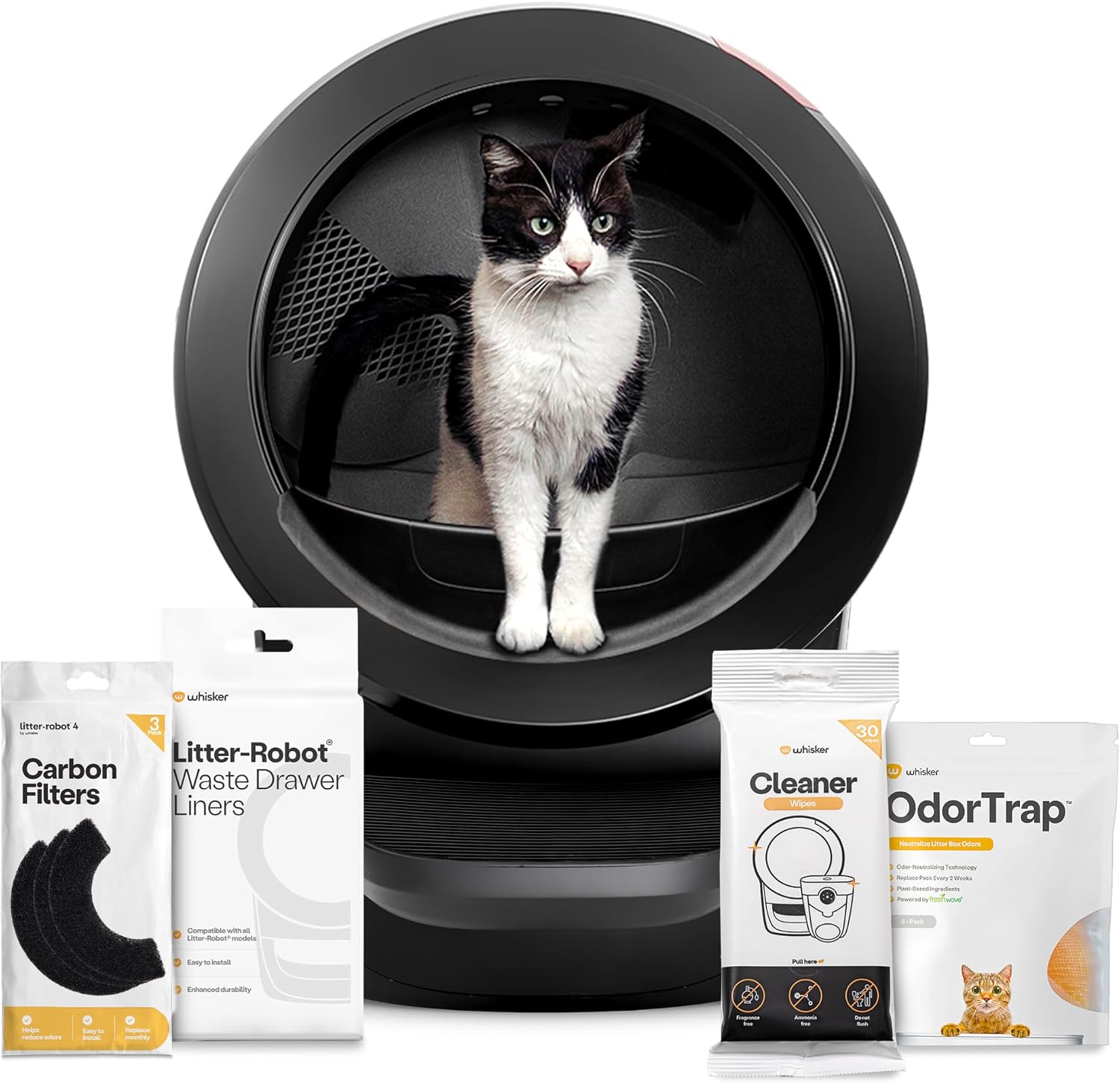
Top Pick for Multi-Cat Homes
Litter-Robot 4 by Whisker
The gold standard in automatic litter management. A patented gravity-sifting globe separates clumps into a tightly sealed, carbon-filtered bottom drawer while tracking individual cat weights and bathroom habits via WiFi.
- Rotating gravity sifter
- Curtain radar + weight sensors
- Any standard clumping clay
Amazon: 4.4/5 from 320 reviews. Substantial initial investment, but exceptional motor longevity and standard bag compatibility keep long-term operating costs low.
The Litter-Robot 4 stands apart from earlier automatic designs because of its quiet operation and spacious entryway. Whisker redesigned the motor housing to run at approximately 32 decibels, which sounds quieter than a modern household refrigerator. When a cat exits the globe, an adjustable timer waits between three and fifteen minutes before slowly rotating the chamber. The litter passes through a heavy-duty mesh screen that traps clean granules while dropping solid waste clumps directly into a sealed bottom drawer.
The multi-sensor safety architecture provides peace of mind. The machine combines overhead laser curtain sensors with four independent weight scales in the base. If a curious cat approaches or places a single paw on the step during a cycle, the rotation stops instantly and will not resume until the cat steps completely away. The accompanying Whisker mobile app records your cat’s weight upon every visit, which serves as an early detection tool for feline kidney disease or diabetes where rapid weight loss or increased urination frequency often goes unnoticed in traditional boxes.
The primary drawback is physical footprint and upfront cost. The unit stands nearly thirty inches tall and twenty-two inches wide, requiring dedicated floor space near a grounded electrical outlet. However, unlike machines that require proprietary cartridges, the Litter-Robot 4 works with virtually any standard clumping clay litter and standard eight-gallon trash bags, saving hundreds of dollars over years of operation.
2. PetSafe ScoopFree Crystal Pro — Best Budget Automatic Alternative

Best Rake-Style Budget Pick
PetSafe ScoopFree Crystal Pro Legacy
An accessible automatic entry point using non-clumping crystal litter. A stainless steel rake sweeps solid waste into a covered compartment twenty minutes after your cat steps out, while silica crystals absorb liquid waste.
- Automatic rake mechanism
- Disposable leak-proof trays
- Silica crystal litter
Amazon: 4.1/5 from 10,710 reviews. Low upfront hardware price, though proprietary cardboard refill trays create higher ongoing monthly expenses.
For cat owners who want automated cleaning without a $700 initial bill, the PetSafe ScoopFree Crystal Pro offers a straightforward motorized rake design. Rather than rotating a large sphere, this box maintains the familiar rectangular shape of a traditional pan. Dual optical sensors detect when your cat enters and exits. Twenty minutes later, a stainless steel rake sweeps down the length of the pan, pushing solid feces under a front trapdoor that locks odors away.
The machine relies on silica crystal litter rather than clumping clay. The silica absorbs liquid urine and dehydrates solid waste on contact. For a single healthy cat, a single disposable cardboard tray lasts between two and three weeks before requiring a full replacement. You simply lift the entire machine, slide the cardboard lid over the used tray, and toss it in the trash without ever touching waste or washing plastic pans.
The compromise comes in long-term consumable costs. The pre-filled disposable trays cost approximately $20 to $25 each. In a multi-cat home, the crystals become saturated with urine within seven to ten days, which can lead to strong ammonia odors and soggy bottoms if trays are not swapped promptly. Budget-conscious owners frequently purchase reusable plastic aftermarket trays to pour bulk crystal litter into, which significantly brings down the monthly operating cost.
3. Neakasa M1 — Best Open-Top Automatic Box for Cautious Cats
Best Open-Top Design
Neakasa M1 Open-Top Automatic Litter Box
An innovative open-air automatic box designed for large or skittish cats who refuse enclosed domes. Features a gradual sifting tilt and a wide 17-inch top opening with intelligent infrared pinch detection.
- Open-air panoramic design
- Gradual sifting dump mechanism
- Large 11-liter waste bin
Amazon: 4.3/5 from 410 reviews. Ideal for cats who experience claustrophobia in globe-style units, with an easy-to-reach low entry step.
Many cats instinctively avoid enclosed litter boxes because they feel trapped without clear sightlines to watch for other pets. The Neakasa M1 solves this behavioral barrier by offering a completely open-top design. It looks and feels like a spacious traditional litter pan from your cat’s perspective, measuring over twenty inches across the main basin, making it an excellent match for larger breeds like the Maine Coon or Ragdoll.
When cleaning, the basin tilts gently backward rather than spinning full circle on a central spindle. Clean litter falls through an internal sifter into a storage pocket while waste drops cleanly into the pull-out bottom receptacle. Five infrared sensor pairs around the rim immediately freeze all movement if a cat pokes its head over the side. The eleven-liter waste drawer holds enough waste for one cat for nearly two weeks, and the machine accepts standard trash bags.
The open design means that vigorous diggers can occasionally kick litter over the front lip during bathroom prep. Neakasa includes a textured entry mat to catch stray granules, but pairing the unit with a high-rim scatter guard or placing it in an easily swept area is recommended for energetic diggers.
4. Catlink Luxury Pro — Best Multi-Cat Smart Box on a Mid-Range Budget
Best Smart Feature Value
Catlink Self-Cleaning Litter Box Luxury Pro
A heavy-duty rotating drum automated box packed with health-monitoring sensors, automated UV deodorization, and multiple cleaning modes tailored for multi-cat homes.
- Pyramid anti-tip base
- Dual-hazard infrared sensors
- Multi-cat app profiles
Amazon: 4.2/5 from 1,280 reviews. Dependable safety systems and thorough multi-cat weight logging at a price well below premium flagship models.
The Catlink Luxury Pro delivers high-end health tracking at a competitive mid-tier price point. Built on a broad pyramid-style base that prevents accidental tipping, the Catlink features a rotating internal chamber that accommodates cats up to twenty pounds. The mobile application allows you to build individual profiles for every cat in your household, distinguishing between pets by logging their weights and tracking daily visit frequencies.
Catlink incorporates dual anti-pinch systems. If the internal weight scales or bottom infrared sensors detect any resistance during rotation, the drum immediately reverses direction for two seconds and powers off. The unit also includes an ambient temperature and humidity sensor inside the waste drawer to alert you when moisture levels rise, prompting a bag swap before bacterial odors escape into your home.
The entry step is somewhat higher than the Litter-Robot 4, sitting roughly twelve inches off the floor. Young, athletic cats hop in without hesitation, but older felines with stiff joints will require the attachable Catlink ramp to climb inside comfortably.
5-Year Total Cost of Ownership: The True Math
When shopping for an automated litter box, the initial sticker price is only the starting point. The true financial impact depends heavily on whether the machine uses bulk clumping clay or proprietary refill cartridges.
The table below breaks down the realistic five-year operating expenses for a single-cat household across hardware, litter, liners, and electricity:
| Expense Category | Litter-Robot 4 | PetSafe ScoopFree (Trays) | Neakasa M1 | Traditional High-Sided Pan |
|---|---|---|---|---|
| Initial Hardware | $749 | $142 | $499 | $25 |
| Replacement Units (5 Yrs) | $0 (Durable build) | $142 (Motor wear replacement) | $0 | $100 (New pans yearly) |
| 5-Year Litter Cost | $480 (Bulk clumping clay) | $1,500 (Proprietary crystal trays) | $480 (Bulk clumping clay) | $600 (Standard clay) |
| Waste Liners (5 Yrs) | $60 (Standard 8-gal bags) | $0 (Built into trays) | $60 (Standard bags) | $40 (Grocery bags) |
| Electricity & Filters | $45 | $15 | $40 | $0 |
| Total 5-Year Cost | $1,334 | $1,799 | $1,079 | $765 |
Notice that the PetSafe ScoopFree, despite costing only $142 on day one, becomes the most expensive option over five years if you rely on disposable cardboard crystal trays. If you opt for a crystal rake system, purchasing a reusable plastic tray insert and buying bulk crystal litter brings that five-year total down closer to $900. When budgeting your setup alongside other feline necessities, explore our full breakdown in the cost of owning a cat guide.
Sensor Safety and the Essential Kitten Weight Rule
Safety is the single most common concern among cat owners considering an automated box. Modern units use redundant safety systems to eliminate mechanical pinch hazards:
- Weight Sensors: High-precision strain gauges in the base measure down to fractions of an ounce. Any sudden weight increase halts the cycle immediately.
- Infrared Curtain Beams: Optical transmitters across the entryway create an invisible light curtain. Breaking the beam pauses motor power.
- Pinch-Detect Anti-Jam Circuits: If any mechanical resistance is felt on the rotating seals, the motor cuts power and reverses direction.
CRITICAL VETERINARY SAFETY THRESHOLD: Kittens weighing under 5 pounds (typically under 4 to 5 months of age) must NEVER use an automatic litter box in automated cycle mode.
Young kittens do not possess enough body mass to reliably trigger standard base weight sensors. If a two-pound kitten climbs into a cycling drum, the machine may not register their presence. If you have a kitten, you must leave the machine unplugged and use it as a standard static box, or operate the cleaning cycle manually via the power button only while directly supervising the kitten. Calculate your kitten’s developmental milestones using our cat age calculator before introducing motorized appliances.
An automatic box can track weight and urination frequency, but the diagnosis belongs to your veterinarian. If you notice sudden weight loss, a jump in urination frequency, or elimination outside the box, consult your veterinarian. This article is for informational purposes and does not replace professional veterinary advice.
Transition Protocol: How to Switch Without Scaring Your Cat
Cats are creatures of habit who rely on scent familiarity. Dropping an unfamiliar, motorized appliance into your living room and immediately throwing away your old litter pan is the fastest way to cause house soiling.
Follow this four-step transition protocol over two to three weeks:
Step 1: Place the New Machine Beside the Old Box (Unplugged)
Set up the automatic box directly next to your existing litter pan. Fill it with the same litter your cat currently uses. Do not plug it in. Let your cat inspect, sniff, and step inside the stationary machine for several days without any unexpected sounds or movement.
Step 2: Transfer a Scoop of Used Litter
Take one clean scoop of clumped litter from the old box and place it into the automatic unit. This deposits familiar territorial scent marks, signaling to your cat that the new machine is a valid bathroom station.
Step 3: Stop Scooping the Old Box
Allow the old manual box to become less appealing by pausing your daily scooping routine for two days while keeping the new automatic box fresh and clean. Cats naturally prefer clean substrate and will voluntarily choose the pristine new box.
Step 4: Run Manual Cycles First
Once your cat is using the new box consistently, begin running cleaning cycles manually using the control button while your cat is in another room eating a meal or treat. After two days of quiet manual cycling, activate the automatic timer mode with a generous ten-to-fifteen-minute cycle delay.
If your cat shows persistent hesitation or begins eliminating on rugs nearby, review our diagnostic steps in why is my cat not using the litter box to resolve territorial or environmental stress.
Routine Maintenance and Sanitization Schedule
While automated boxes eliminate daily scooping, they are not zero-maintenance appliances. Maintaining clean components ensures mechanical longevity and stops bacterial odor buildup:
- Weekly (5 minutes): Pull out the bottom waste drawer, tie off the liner bag, and insert a fresh liner. Wipe down the rubber globe liner and internal sifting grate with a damp microfiber cloth and an enzymatic cleaner.
- Monthly (15 minutes): Inspect the waste drawer carbon filter and replace it if odor absorption has declined. Check the optical sensor lenses around the bezel and wipe away fine clay dust with a dry cotton swab.
- Quarterly (45 minutes): Perform a complete deep clean. Unplug the unit, empty all remaining litter, and detach the globe or basin. Wash the plastic globe thoroughly outdoors or in a utility tub using mild dish soap and warm water. Allow all components to dry completely before reassembling and refilling with fresh litter.
To estimate litter box count, minimum size, and placement across a multi-level home, use our litter box calculator.
Frequently Asked Questions
Are self-cleaning litter boxes worth the high price?
For multi-cat households, frequent travelers, or cat owners with busy work schedules, automated boxes provide immense value. They keep litter continuously fresh, suppress ammonia odors, and eliminate roughly twenty minutes of daily chore time. Over a five-year lifespan, the daily convenience cost works out to less than forty cents per day.
What is the best litter to use in an automatic litter box?
High-density, fast-clumping clay litters with low dust work best in rotating drum units. Brands like Dr. Elsey’s Ultra and Boxiecat Pro form hard, compact clumps within minutes that will not stick to rubber liners or shatter during the sifting rotation. Non-clumping clay, lightweight litters, and long wood pellets are incompatible with rotating sifting screens.
Can automatic litter boxes handle large breeds like Maine Coons?
Yes, but you must select models with spacious interior dimensions and wide entryways. The Litter-Robot 4 and the open-top Neakasa M1 comfortably accommodate large breeds weighing up to twenty-two pounds. Avoid compact enclosed pod boxes that restrict turning space for broad-chested cats.
How often do you actually have to empty the waste drawer?
In a single-cat home, a standard automated waste drawer requires emptying once every seven to ten days. In a two-cat household, you will empty the drawer every four to five days. In homes with three or more cats, plan to replace the liner bag twice weekly to prevent overfilling.
What happens if the power goes out while my cat is inside?
Automated litter boxes operate on low-voltage direct current motors with gravity-balanced mechanics. If power cuts out mid-cycle, the drum simply stops in place; it cannot clamp shut or trap a cat inside. Premium models like the Litter-Robot 4 also support backup battery packs that maintain full operational cycling for up to forty-eight hours during electrical outages.
Written by Max
Max is a lifelong cat owner and runs CuteCatsHQ. Health and care guides are checked against the veterinary sources listed with each article.
Keep reading
Best Cat Litter Mats for Tracking: Buying Guide
Stop litter scatter on hardwood and carpet with the best cat litter mats. Compare honeycomb, looped mesh, and silicone designs, sizing, and placement.
Best Cat Litter Boxes: Top High-Sided & XL Pans
Find the best cat litter boxes for messy cats, high sprayers, and large breeds. Compare stainless steel, top-entry, and open pans, plus sizing and placement.

Best Cat Litter for Multiple Cats (Buying Guide)
Tackle heavy traffic, broken clumps, and ammonia with our top heavy-duty multi-cat litters. Learn the N+1 box formula, monthly bulk costs, and FIC stress.