
How to Wean Kittens: Step-by-Step Slurry Guide
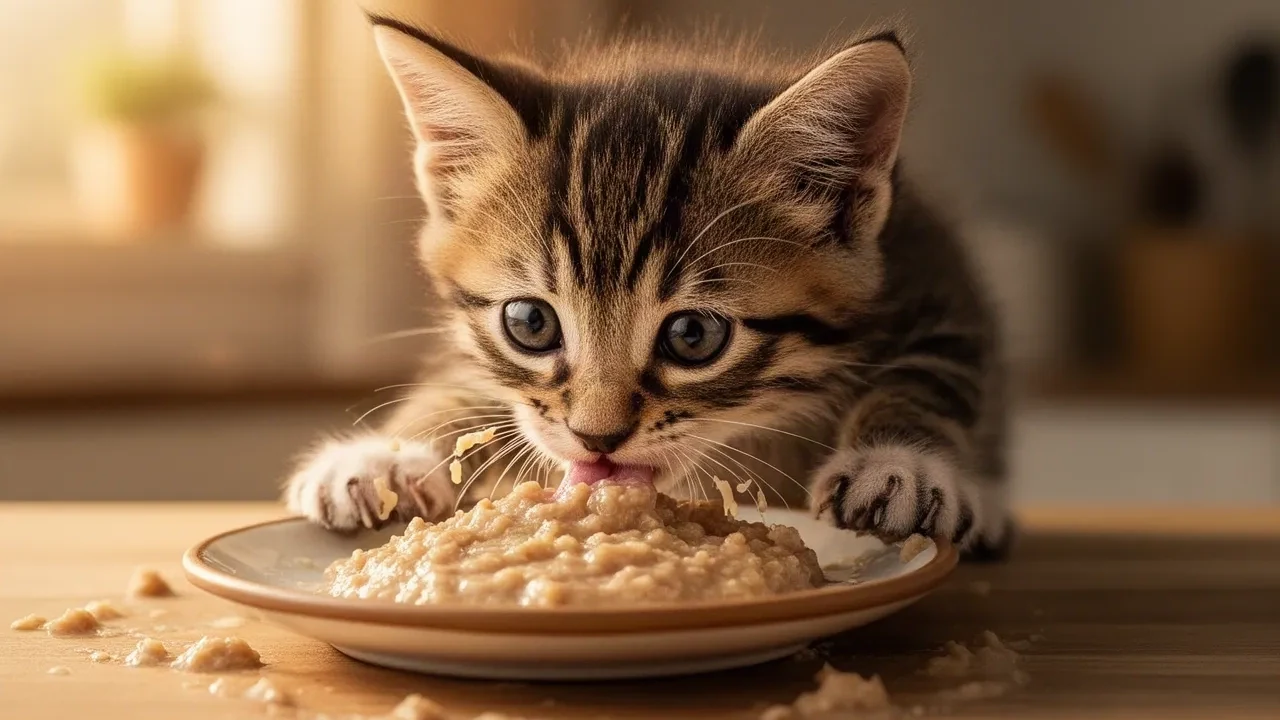
Kittens begin weaning onto solid food at 4 weeks of age through a gradual 4-week transition from warm Kitten Milk Replacer (KMR) to solid kitten pate. The safest process uses flat shallow saucers to prevent food aspiration, introduces a 75% formula to 25% canned food gruel in week 4, thickens the mixture weekly, and achieves full nutritional independence by 8 weeks. If you are caring for a nursing litter or bottle-fed orphans, track their age with our Cat Age Calculator or follow our step-by-step tutorial below to mix weaning slurry and troubleshoot reluctant eaters.
When to Start Weaning: Biological Readiness Signs
Weaning is the physiological and behavioral transition from a liquid milk diet to solid food. Attempting to wean a kitten before their digestive system and teeth are ready causes gastrointestinal distress, aspiration, and severe stress. Conversely, delaying weaning past five weeks can lead to nutritional deficiencies in rapidly growing kittens.
Look for four readiness indicators before introducing solid food. The tiny front incisors and needle-sharp canine teeth should have visibly emerged through the gums, which typically happens around 3.5 to 4 weeks of age. The kitten should be able to stand on all four paws without their belly dragging on the floor and walk forward steadily. Watch for curiosity around food—kittens who sniff at their mother’s bowl or chew on the bottle nipple rather than suckling smoothly are signaling readiness. And the kitten should weigh at least 350 to 400 grams while maintaining steady daily gains.
If a kitten is weak, recovering from an upper respiratory infection, or underweight, continue full bottle or nursing feeds until their health stabilizes.
Essential Supplies Before You Begin
Gather these supplies before preparing your first batch of weaning food:
| Item | Specification / Type | Primary Purpose |
|---|---|---|
| Kitten Milk Replacer (KMR) | Commercial powder or liquid formula | Provides baseline calories, hydration, and familiar scent |
| High-Calorie Kitten Pate | Smooth, grain-inclusive chicken or turkey pate | Delivers dense protein and fat without chunks |
| Flat Ceramic Saucers | Human coffee saucers or jar lids | Keeps food level; prevents nasal submersion |
| Digital Gram Scale | Accurate to 1 gram | Tracks daily weight gain (target 7–10g/day) |
| Warm Damp Washcloths | Soft microfiber or cotton cloths | Cleans sticky faces and paws immediately after eating |
| Syringe or Feeding Bottle | 10ml Miracle Nipple setup | Backup supplementation for slow-transitioning kittens |
Never use cow’s milk, goat’s milk, or plant milks. Feline neonates lack sufficient lactase enzymes to digest bovine lactose, resulting in rapid fluid loss through diarrhea.
The 4-Stage Kitten Weaning Schedule & Slurry Recipe
The transition to solid food requires a gradual progression of texture and moisture. This 4-stage schedule allows the kitten’s gut microbiome to adapt to complex proteins and fats without triggering transitional diarrhea.
| Weaning Stage | Age | Slurry Mixing Ratio | Consistency Target | Feeding Routine |
|---|---|---|---|---|
| Stage 1: Soupy Gruel | Week 4 (Days 22–28) | 75% warm KMR / 25% smooth pate | Warm, creamy soup | 4 saucer sessions daily + supplemental bottles |
| Stage 2: Thick Oatmeal | Week 5 (Days 29–35) | 50% warm KMR / 50% smooth pate | Soft oatmeal mash | 4 saucer meals daily + minimal bottle top-offs |
| Stage 3: Soft Mash | Week 6 (Days 36–42) | 25% warm KMR / 75% smooth pate | Thick textured mousse | 4 wet meals daily + introduce dry kitten kibble |
| Stage 4: Solid Diet | Weeks 7–8 (Days 43–56) | 100% canned food / dry kibble | Full adult wet & dry texture | 3–4 meals daily + fresh water bowl |
Stage 1 (Week 4): The Soupy Gruel
Mix three tablespoons of warm prepared KMR with one tablespoon of smooth chicken or turkey kitten pate in a small glass dish. Whisk with a fork until no lumps remain. The consistency should resemble thin melted ice cream.
At this stage, kittens will not understand how to eat from a dish. They will paddle their front paws into the saucer, sneeze, lick their messy legs, and gradually discover the flavor. Maintain regular bottle feedings or maternal nursing alongside saucer practice so the kitten receives adequate calories.
Stage 2 (Week 5): The Thick Oatmeal
Adjust the ratio to equal parts warm formula and canned pate (two tablespoons of KMR to two tablespoons of pate). The mixture should hold soft peaks like warm porridge or baby oatmeal.
Kittens now lap with their tongues rather than biting the surface of the saucer. As their caloric intake from the dish increases, bottle feedings can be phased down to morning and bedtime supplements.
Stage 3 (Week 6): The Soft Mash
Combine three tablespoons of pate with just one tablespoon of warm water or formula to create a dense, soft mash. Place a separate, shallow saucer of clean drinking water next to the food dish so kittens learn to drink independently.
Introduce a small handful of dry kitten kibble into a separate saucer. Kittens will mouth the crunchy pieces and chew them with their newly emerged premolars.
Stage 4 (Weeks 7–8): Nutritional Independence
Serve 100 percent solid canned kitten food alongside bowls of dry kitten kibble and fresh water. Nursing and bottle supplementation are completely discontinued. By eight weeks of age, kittens derive all necessary calories, hydration, amino acids (including taurine), and minerals from commercial kitten food.
Step-by-Step Feeding Technique: The “Finger-Smear” Method
Teaching a young kitten that a saucer contains food requires patience and gentle tactile guidance. Follow this sequence for every feeding session.
Step 1: Warm the Slurry to Body Temperature
Kittens rely heavily on scent and warmth to recognize food. Warm the mixed slurry to roughly 100°F (37.8°C) by placing the dish into a warm water bath. Never microwave the slurry directly, as microwaves create scalding hot spots that burn delicate mouth tissues. Test the temperature on the inside of your wrist before offering it.
Step 2: The Fingertip Introduction
Dip your clean index finger into the warm slurry. Gently touch your finger to the kitten’s lips or place a tiny dab on the roof of their mouth. As the kitten tastes the savory meat and familiar milk scent, they will begin licking your finger eagerly. Repeat this two or three times until the kitten is actively seeking your hand.
Step 3: Lowering to the Flat Saucer
Hold the shallow saucer in your palm right beneath the kitten’s chin, lowering it slowly toward the floor as they continue licking your finger. Once the saucer rests on the ground, guide the kitten’s nose toward the food surface.
If the kitten hesitates, place a small dab of slurry on the top of their front paw. Kittens have an instinctual grooming drive and will immediately lick the slurry clean, reinforcing the taste and association with food.
Step 4: Immediate Post-Meal Cleanup
Kittens are messy eaters who frequently walk through the dish or smear food across their faces. Immediately after eating, wipe their muzzle, chin, paws, and belly with a warm, damp washcloth.
Allowing slurry to dry on fur causes hard crusts, skin irritation, bacterial dermatitis, and patchy fur loss. Dry the kitten thoroughly with a soft towel so they do not become chilled.
Dish Safety: Why Bowl Depth Matters (Aspiration Risk)
Feeding equipment design is a major safety consideration during early weaning. Never use deep pet bowls, mugs, or high-walled dishes for kittens under six weeks old.
Neonatal kittens do not understand that liquid food cannot be inhaled. When presented with a deep bowl, an eager kitten will plunge their entire muzzle into the mixture. Inhaling milk replacer or food slurry into the nasal passages and trachea can cause fatal aspiration pneumonia within 24 to 48 hours.
Always use flat human coffee saucers, disposable paper plates, or the plastic lids of wide-mouth storage jars. A flat surface keeps the food level under a quarter-inch deep, ensuring the kitten’s nostrils remain entirely clear while their tongue laps the surface.
Troubleshooting Common Weaning Roadblocks
Weaning rarely follows a perfectly linear path. Foster caregivers frequently encounter behavioral and digestive hurdles.
The Reluctant Eater
If a kitten refuses the saucer and cries exclusively for the bottle, do not attempt to starve them into compliance. Hypoglycemia develops quickly in young kittens and can be fatal.
To encourage a hesitant eater, mix human stage-1 pureed meat baby food—chicken, turkey, or beef with zero onion, garlic, or seasonings—with warm KMR as a bridge. Dip the tip of the bottle nipple into the slurry before nursing so the kitten associates the new flavor with comfort, and offer smaller, more frequent meals five to six times a day while the kitten is calm and alert.
The Messy “Swimmer”
Some kittens dive directly into the center of the dish, paddling furiously and treating the slurry like a swimming pool. This behavior is rooted in the instinctual kneading reflex used to stimulate maternal milk flow.
To manage messy eaters, place only a single tablespoon of slurry on the dish at a time and add more as the kitten finishes. Feed kittens individually rather than crowding an entire litter around one plate, and set a non-slip silicone baking mat beneath the dish to catch spills and give them stable footing.
Transitional Diarrhea vs. Dangerous Dehydration
A slight softening of stool consistency is normal during the first week of dietary change as intestinal enzymes adapt to meat proteins. However, watery, yellow, or foul-smelling diarrhea is abnormal and requires immediate attention.
Monitor stool quality and hydration closely. Mild transitional softness—stool that resembles soft toothpaste but still holds shape—is normal, and you can continue the current slurry ratio until it firms up over two to three days. Watery diarrhea, by contrast, points to rapid dehydration, a parasitic infection such as coccidia or giardia, or bacterial overgrowth, and it calls for unflavored pediatric electrolyte solution under veterinary guidance plus a clinical evaluation. You can gauge hydration by gently pinching the skin over the shoulder blades: in a well-hydrated kitten it snaps back instantly, while skin that stays tented or moves slowly means the kitten needs fluid therapy.
Coordinating Weaning with Litter Box Training
Dietary weaning and litter box training go hand in hand. As a kitten transitions from liquid milk to solid protein, their digestive tract produces formed, smelly stool that triggers the instinct to dig and bury.
Prepare for litter box training alongside weaning by setting up a low-entry litter pan with sides no higher than two inches within two feet of the feeding area. Use non-clumping litter only—paper pellets, wood pellets, or herbal non-clumping clay—because kittens explore new textures by tasting them and clumping clay expands in the stomach, causing life-threatening blockages. Place the kitten into the box about 10 to 15 minutes after each slurry meal to catch the natural gastrocolic reflex.
Explore our full guides on how to litter train a kitten and the best cat litter for kittens for complete equipment setups. For broader developmental context across early life, review our week-by-week kitten development guide.
When to Call Your Veterinarian
Contact your veterinarian immediately if a kitten loses weight or fails to gain over a 24-hour window, vomits persistently, or refuses all food for more than 12 hours. Wheezing, sneezing, or bubbling nasal discharge after eating are signs of food aspiration and need same-day care, as do extreme lethargy, a cold body, or an inability to lift the head. Watery, pale, or bloody diarrhea that lasts more than two consecutive bowel movements is another reason to call without delay.
If you notice any of these signs, consult your veterinarian. This article is for informational purposes and does not replace professional veterinary advice.
Frequently Asked Questions
Can you wean a kitten without a mother cat?
Yes. Orphaned kittens can be successfully weaned using commercial Kitten Milk Replacer (KMR) and smooth kitten pate. The human caregiver prepares warm slurry, guides the kitten to a shallow saucer, and provides supplemental bottle feedings until the kitten eats enough solid food independently.
What happens if a kitten won’t eat slurry?
If a 4-week-old kitten refuses slurry, continue bottle feeding to maintain caloric intake and try again in two or three days. Dab a drop of warm slurry on their tongue or paws before each bottle session. Never withhold milk to force a young kitten to eat solids.
Can you use cow’s milk or almond milk to wean kittens?
No. Cow’s milk, goat’s milk, and plant milks lack the essential proteins, fats, amino acids (like taurine), and vitamins required for feline growth. The high lactose levels in cow’s milk also cause severe diarrhea and dehydration in kittens. Always use commercial kitten formula.
At what age do kittens stop drinking formula completely?
Most kittens are fully weaned and stop drinking formula between 7 and 8 weeks of age. By 8 weeks, their digestive tract is adapted to high-protein canned kitten food, dry kitten kibble, and fresh drinking water.