
How Much Do Kittens Sleep? Hours, Stages & Nap Cycles
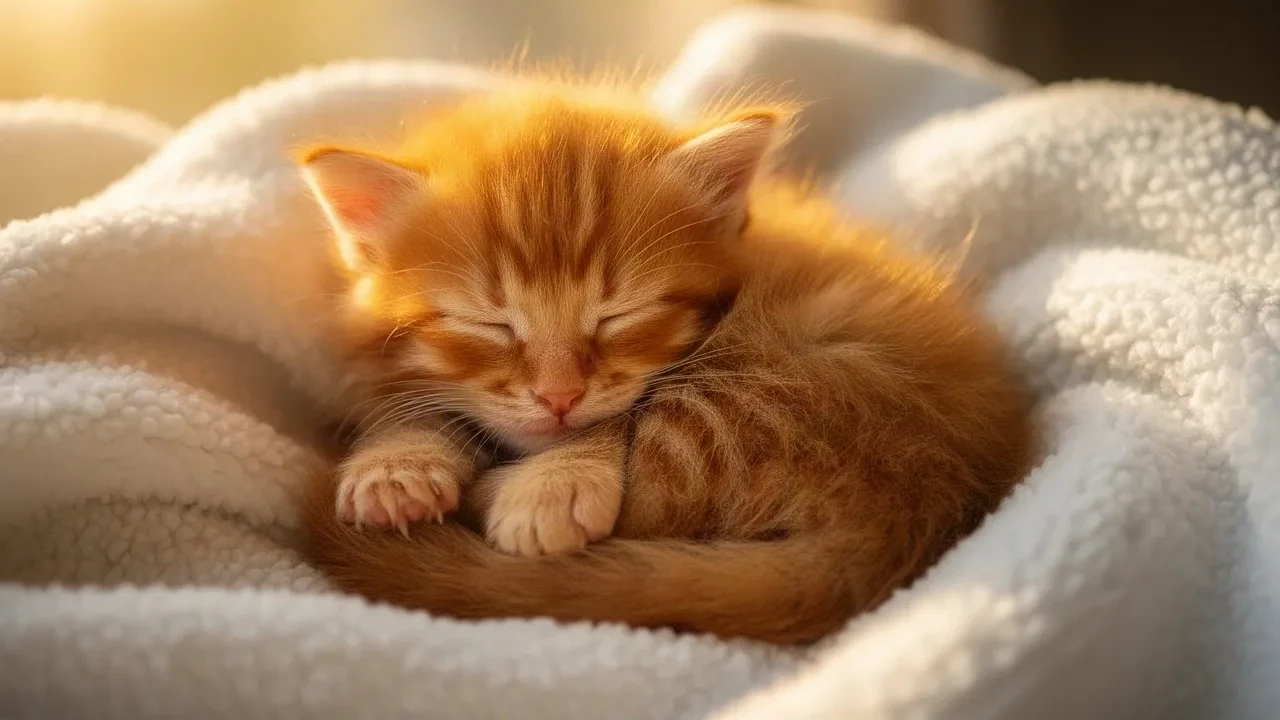
Healthy kittens sleep between 18 and 22 hours per day depending on their developmental age. Newborns spend up to ninety percent of their day asleep (20 to 22 hours), while eight-to-twelve-week-old kittens sleep roughly 18 to 20 hours, alternating between explosive bouts of play and sudden deep naps. Deep sleep is essential for physical growth because feline growth hormone is released almost exclusively while sleeping. Calculate your kitten’s developmental milestones with our Cat Age Calculator, or read our veterinary guide below to understand sleep stages, muscle twitching, and our three-step wakefulness test to rule out illness.
Kitten Sleep Hours Across Developmental Stages
As kittens mature, their total sleep duration gradually decreases as their physical stamina and sensory awareness expand.
Newborn Stage (0–4 Weeks): 20 to 22 Hours Daily
During the first month of life, kittens spend roughly ninety percent of their existence asleep, waking only every two to three hours to nurse from their mother. Newborns lack the neurological ability to regulate their own body temperature or eliminate waste independently. Sleeping huddled together in a communal pile with the queen conserves thermal energy and allows uninterrupted metabolic development.
Weaning & Early Exploration (4–8 Weeks): 18 to 20 Hours Daily
As kittens begin eating solid food and testing their motor coordination, their sleep pattern transitions into short, intense cycles. Kittens at this age play with boundless enthusiasm for twenty to thirty minutes, sprinting and pouncing, before instantly falling asleep wherever they land—whether on the living room rug, inside an open shoe, or halfway across a food bowl.
Adoption Age & Socialization (8–16 Weeks): 16 to 18 Hours Daily
By the time kittens arrive at their permanent homes between eight and twelve weeks of age, their daily sleep averages sixteen to eighteen hours. They establish longer stretches of sustained daytime wakefulness, though they still require multiple three-hour naps to recharge their nervous system after interactive play sessions.
Adolescence to Adulthood (4–12 Months): 14 to 16 Hours Daily
During feline adolescence, sleep stabilizes into typical adult patterns. Young cats sleep roughly fourteen to sixteen hours daily, adapting their sleep cycles to household activity while retaining natural dawn-and-dusk crepuscular energy peaks.
| Age Milestone | Typical Daily Sleep Hours | Percentage of Day Asleep | Dominant Sleep Stage | Daily Activity Pattern |
|---|---|---|---|---|
| 0–4 Weeks (Newborn) | 20–22 Hours | 85%–90% | Rapid Eye Movement (REM) | Nursing, sleeping in maternal nest |
| 4–8 Weeks (Weaning) | 18–20 Hours | 75%–85% | Mixed REM and Light Sleep | Sudden sprints followed by sudden deep collapse |
| 8–16 Weeks (Adoption) | 16–18 Hours | 65%–75% | Balanced REM and Non-REM | Sustained play sessions, exploring, climbing |
| 4–12 Months (Adolescent) | 14–16 Hours | 60%–65% | Adult Crepuscular Architecture | High athletic play, synchronized household routine |
To understand adult cat sleeping habits in greater detail, compare this timeline with our guide on why adult cats sleep so much.
The Neurobiology of Kitten Sleep: Why Kittens Twitch
If you watch a sleeping kitten closely, you will frequently observe their whiskers fluttering, paws paddling the air, ears flicking, and body vibrating with small rhythmic tremors. While these rapid movements can startle first-time owners, they are a sign of healthy neurological development.
Kittens spend up to eighty percent of their sleep time in Rapid Eye Movement (REM) sleep, compared to only fifteen to twenty percent in adult cats. During REM sleep, the feline cerebral cortex processes sensory memories and consolidates motor skills learned during daytime play, such as stalking, balancing on narrow surfaces, and pouncing on toys.
The physical twitching that occurs during REM sleep is known as juvenile myoclonic twitching. These involuntary muscle contractions serve two critical biological functions:
First, twitches build and test the neural circuitry linking the spinal cord to peripheral muscles, a process known as myelinization. As nerves fire during REM sleep, the protective myelin sheath thickens around nerve fibers, improving reflexes and muscle control.
Second, the pituitary gland releases feline growth hormone (somatotropin) during deep slow-wave and REM sleep. Kittens literally do the vast majority of their physical growing while asleep. Waking a sleeping kitten interrupts this important hormonal cascade, which is why the old adage “never wake a sleeping baby” applies equally to felines.
Sleep is also where a kitten’s immune system does much of its work. During slow-wave sleep the body releases cytokines, the signalling proteins that coordinate an immune response, and chronically sleep-deprived kittens are measurably more prone to respiratory and digestive infections. A kitten recovering from vaccinations or a mild bug will often sleep a couple of extra hours a day, and that uptick is the body’s repair response working as intended rather than a sign that something has gone wrong.
Reading Kitten Sleep in Real Homes
New owners often read normal kitten sleep as alarming because it looks so sudden and so deep. A five-week-old who sprints across the kitchen for ten minutes and then collapses mid-pounce on the bathmat is not sick; they are running the play-and-crash cycle that defines early kittenhood. The same kitten may be impossible to rouse for a full twenty minutes and then pop upright the instant a can opener clicks, which is exactly how a healthy nervous system should behave.
A newly adopted eight-week-old who hides in a closet and sleeps eighteen hours a day for the first week is usually processing stress, not illness. Moving to a new home is exhausting, and sleep is how a kitten’s nervous system files away the flood of new smells, sounds, and faces. The useful test is what the kitten does when they are awake rather than how many hours they log. A kitten who wakes for meals with appetite, uses the litter box normally, and shows at least one energetic burst a day is almost always fine, even when the total sleep looks high on paper.
The 3-Step Wakefulness Test: Sound Sleep vs. Medical Lethargy
Because kittens sleep so deeply, new owners often worry that a limp, deeply asleep kitten is sick or lethargic. Clinical lethargy is a serious medical symptom indicating weakness, fever, or dehydration, whereas deep sleep is normal restorative rest.
If you are ever uncertain whether your sleeping kitten is resting or lethargic, conduct this simple three-step progressive wakefulness check:
Step 1: Auditory Stimulus
Begin with a familiar sound without touching the kitten. Speak softly in your normal voice, click your tongue, or lightly shake a favorite treat container or dry food bag a few feet away. A healthy sleeping kitten will usually flick their ear toward the sound, twitch their whiskers, or blink their eyes open within five to ten seconds.
Step 2: Gentle Tactile Stimulus
If sound alone does not wake them from a deep REM cycle, place a warm hand gently along their ribcage and stroke them softly from shoulder to tail. A healthy sleeping kitten should yawn, stretch their front legs out, spread their toes, or roll onto their back to acknowledge your presence.
Step 3: Olfactory & High-Value Food Test
If the kitten remains drowsy, uncap a tube of high-value meat puree (such as a Churu treat) or open a can of fragrant wet kitten food and hold it one inch from their nose. The potent aroma will immediately stimulate the feline olfactory receptors. A healthy kitten will sniff the air, lick their lips, and stand up eagerly to eat.
| Test Step | Sensory Stimulus | Normal Healthy Response | Warning / Lethargy Sign |
|---|---|---|---|
| 1. Auditory | Calling name, clicking tongue, shaking treats | Ear swivel, whisker twitch, soft eye blink | Complete lack of auditory reaction |
| 2. Tactile | Gentle back stroking, light paw touch | Full-body stretch, spreading toes, soft purr | Limp body, head droops when lifted |
| 3. Olfactory | Strong wet food or puree held near nose | Instant lip licking, standing up to eat | Refusal to sniff, eyes remain dull or closed |
If your kitten fails all three steps—remaining completely limp, unable to support their own head, or showing zero interest in high-value food—they are experiencing acute medical lethargy requiring immediate veterinary attention.
Feline Circadian Rhythms: Managing Nighttime Energy
Cats are naturally crepuscular predators, meaning their biological circadian clocks are programmed for peak hunting activity during dawn and dusk, when prey animals like rodents and birds are most active.
In a domestic household, a kitten’s natural crepuscular rhythm can result in loud sprints across the bed at 5 a.m. or wild zoomies down dark hallways at midnight. You can gently shift your kitten’s sleep schedule to align more closely with human sleeping hours by establishing a predictable evening sequence:
Engage your kitten in an energetic thirty-minute interactive wand play session roughly one hour before your bedtime. Encourage vigorous sprinting, leaping, and pouncing until your kitten lies down panting.
Follow this play session immediately with a protein-rich meal of wet kitten food. This completes the natural feline predatory cycle: hunt, catch, kill, eat, groom, sleep. After grooming their paws and face post-meal, your kitten will naturally sink into a long, uninterrupted four-to-six-hour sleep cycle, allowing you to rest peacefully through the night.
Creating the Ideal Sleep Sanctuary
Young kittens have higher surface-area-to-body-mass ratios than adult cats and lose body heat rapidly during sleep. Set up a comfortable, draft-free sleeping environment equipped with plush bolster beds and soft fleece blankets.
For newly adopted kittens missing their mother and littermates, placing a warm heating pad designed specifically for pets (with a chew-proof cord and safe low-voltage heating) or a ticking heartbeat plush toy inside their bed provides comforting tactile reassurance that prevents crying during the first week home. Review essential household preparations in our new kitten checklist.
Beyond warmth and comfort, a kitten’s sleep quality depends on what they do while awake. Interactive play in short sessions, meals at regular times, and access to a vertical perch by a window all help a kitten spend their waking hours productively, which in turn deepens their naps. A kitten who has nothing to do but doze all day tends to sleep fitfully and bounce off the walls at night, because their crepuscular energy has nowhere constructive to land. Rotating toys and scheduling a couple of ten-minute wand sessions in the afternoon does more to improve overnight sleep than any amount of enforced daytime quiet.
When Sleeping Too Much Signals a Medical Emergency
While long sleeping hours are standard for kittens, certain accompanying symptoms indicate dangerous pediatric medical conditions:
Pediatric hypoglycemia (critically low blood sugar) occurs rapidly in young kittens who miss meals or expend excessive energy without eating. Symptoms include extreme weakness, glassy unblinking eyes, hypothermia, and seizures. If a lethargic kitten has low blood sugar, rubbing a few drops of maple syrup or honey directly onto their gums can provide temporary glucose while you transport them to an animal hospital.
Dehydration and severe diarrhea from intestinal parasites or viral infections like panleukopenia cause life-threatening circulatory collapse in young felines.
Contact your emergency veterinarian immediately if a sleepy kitten cannot be roused to stand even with a favorite treat held to their nose. Cold paw pads and ears point to hypothermia, defined as a body temperature below 99°F, which a kitten’s small body cannot correct on its own. Pale, white, or tacky dry gums signal poor circulation or dehydration. Repeated vomiting, watery diarrhea, or refusing to nurse or eat for more than eight hours can crash a kitten’s blood sugar and electrolytes within a matter of hours. Any one of these signs on its own justifies a same-day visit, and two or more together are a genuine emergency. If you notice any of these signs, consult your veterinarian. This article is for informational purposes and does not replace professional veterinary advice.
Frequently Asked Questions
Is it normal for a kitten to fall asleep suddenly while playing?
Yes, sudden “play-and-crash” behavior is completely normal for young kittens between four and ten weeks old. Their developing bodies operate in short bursts of high metabolic activity, and when their cellular energy depletes, their nervous system triggers immediate sleep to begin physical recovery.
Should I wake my kitten up to feed them?
Young kittens over eight weeks who are eating solid food and gaining steady weight do not need to be woken from sleep for feedings; they will wake naturally when hungry. However, young bottle-fed neonates under four weeks of age must be gently woken on a strict schedule every two to four hours for feeding to prevent hypoglycemia.
Why does my kitten sleep on my chest or neck?
Kittens seek out human chests and necks because these areas radiate steady body heat and produce rhythmic sounds—such as your heartbeat and breathing—that mimic the comforting presence of their mother and littermates.
Can kittens have nightmares when they twitch in their sleep?
While human owners often interpret sleep twitches and soft whimpers as nightmares, veterinary neurologists believe these involuntary movements simply reflect sensory processing and motor nerve calibration during REM sleep. There is no clinical evidence that kittens experience distress during normal sleep twitches.
Why does my kitten sleep so much more than my adult cat?
Kittens need more sleep than adult cats because they are doing two jobs an adult has mostly finished: growing and learning. Growth hormone is released almost entirely during sleep, and the extra REM time a kitten logs is when their brain sorts the day’s new motor skills. An adult cat sleeping twelve to sixteen hours is normal; a young kitten at eighteen to twenty is equally normal for their stage.
Is it okay to let my kitten sleep in my bed?
Yes, as long as you accept the consequences, which include a warm, purring body pressed against your legs at 3 a.m. and the occasional 5 a.m. pounce on your toes. Co-sleeping can strengthen the early bond, and many owners enjoy it. If you share a bed with a small kitten, keep the mattress low or provide a step so they can climb down safely, and be aware that a kitten under eight weeks can be injured if an adult rolls over, so a firm crate or a bed beside your pillow is the safer choice at that age.
When should I be concerned my kitten is sleeping too much?
Look at what the kitten does when awake rather than counting hours. A kitten who wakes to eat with appetite, plays in bursts, and passes normal stools is fine, even at twenty hours a day. Concern rises when the sleep comes with a refusal to eat, wobbly or weak standing, cool extremities, or a kitten who cannot be woken even by a strong-smelling treat. That combination points to illness rather than a long nap and warrants a call to your veterinarian.