
Kitten Vaccination Schedule: Core vs Non-Core Shots
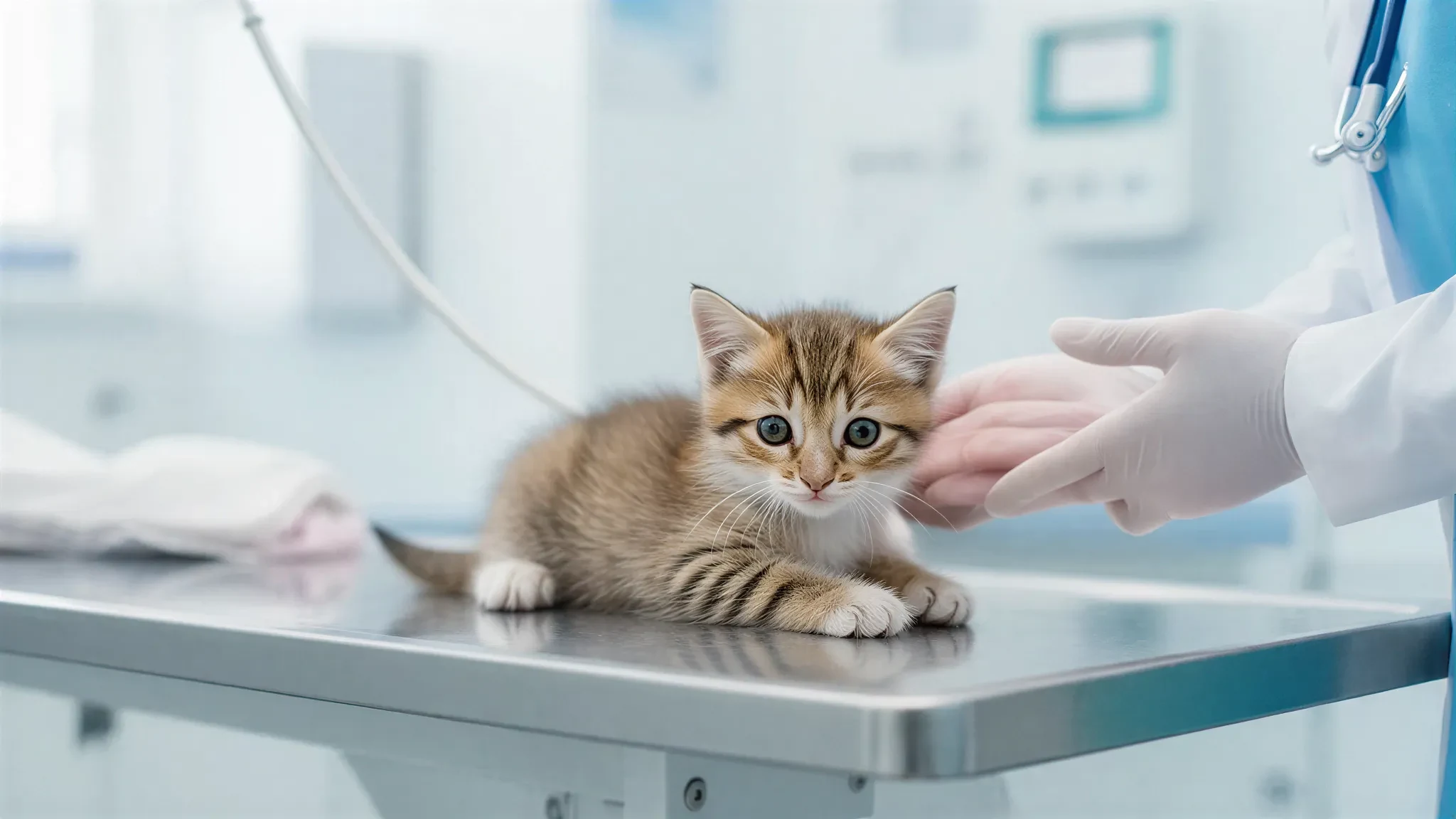
A complete kitten vaccination schedule starts between 6 and 8 weeks of age and repeats every 3 to 4 weeks until your kitten reaches roughly 16 to 20 weeks old. The essential core vaccines protect against feline viral rhinotracheitis, calicivirus, panleukopenia (FVRCP), and rabies, with feline leukemia virus (FeLV) recommended for all kittens under one year old. A single round of shots cannot protect a growing kitten because maternal antibodies naturally block early vaccine responses. Estimate your kitten’s growth stages with our Cat Age Calculator, or follow our clinical guide below to plan veterinary visits, understand costs, and monitor post-shot reactions safely.
Why Kittens Need Multiple Boosters: Maternal Antibodies
Newborn kittens receive temporary disease protection through colostrum, the antibody-rich initial milk produced by their mother during the first twenty-four to seventy-two hours of nursing. These maternally derived antibodies circulate in a kitten’s bloodstream, providing an immediate biological shield against environmental pathogens.
While maternal antibodies provide life-saving early immunity, they also create a medical challenge: they neutralize vaccines before the kitten’s own immune system can learn to produce its own antibodies.
Maternal antibodies gradually degrade over the kitten’s first four months of life. In some kittens, maternal immunity drops significantly by six weeks; in others, it persists past fourteen weeks. Because there is no practical, low-cost way to test exact daily antibody levels in individual pets, veterinary guidelines established by the American Association of Feline Practitioners (AAFP) and the American Animal Hospital Association (AAHA) recommend administering booster shots every three to four weeks.
Each booster serves as a strategic safety net. If maternal antibodies are still high during the eight-week visit, the shot is neutralized, but the twelve-week or sixteen-week booster will catch the kitten as soon as maternal protection fades. The final booster in the initial series—administered at or after sixteen weeks of age—is what establishes durable, long-term immunological memory.
Core vs. Non-Core Kitten Vaccines Explained
Veterinary medicine divides feline vaccines into two distinct classifications: core vaccines, which every cat requires regardless of lifestyle or geographic location, and non-core vaccines, which veterinarians recommend based on individual exposure risks.
The FVRCP Core Combination Vaccine
The FVRCP vaccine is the cornerstone of feline preventative healthcare. It is a 3-in-1 combination injection that shields kittens against three widespread, highly contagious, and potentially fatal viral infections:
Feline Viral Rhinotracheitis (FHV-1) is caused by feline herpesvirus type 1. It triggers severe upper respiratory distress, painful corneal eye ulcers, persistent sneezing, nasal discharge, and chronic conjunctivitis. Once contracted, herpesvirus remains dormant in nerve tissues for life, flaring up during periods of physiological stress.
Feline Calicivirus (FCV) causes virulent upper respiratory infections along with painful oral ulcerations on the tongue, hard palate, and gums. Severe strains can cause transient limping syndrome and systemic vascular damage.
Feline Panleukopenia (FPV), commonly referred to as feline distemper or feline parvovirus, is an aggressive, life-threatening viral disease that attacks rapidly dividing cells in the bone marrow, intestinal lining, and lymph nodes. Panleukopenia causes severe bloody diarrhea, uncontrollable vomiting, extreme dehydration, and sudden death, especially in unvaccinated young kittens where mortality rates can exceed ninety percent.
The Rabies Vaccine
Rabies is a fatal viral zoonotic disease that attacks the mammalian central nervous system. Because rabies is transmissible to humans and has no cure once symptoms appear, the rabies vaccine is mandated by municipal and state laws across most regions. Kittens receive their initial rabies vaccination at twelve to sixteen weeks of age, followed by a booster one year later, and subsequent revaccinations every one to three years depending on local legal requirements and the specific vaccine manufacturer.
Feline Leukemia Virus (FeLV)
Feline Leukemia Virus impairs the immune system and predisposes cats to secondary infections, chronic anemia, and malignant lymphomas. Because young kittens are exceptionally vulnerable to FeLV infection if exposed to saliva, shared bowls, or bite wounds, current AAFP guidelines classify FeLV as a core vaccine for all kittens under one year old, even if owners plan to keep them indoors. After the initial kitten series and the one-year booster, indoor cats with zero outdoor exposure may discontinue routine FeLV revaccination based on your veterinarian’s risk assessment.
Non-Core Vaccines
Non-core vaccines are reserved for specific environmental situations. Chlamydia felis protects against bacterial eye infections and is typically administered only in multi-cat breeding catteries or shelter environments with documented outbreaks. Bordetella bronchiseptica targets a bacterial component of kennel cough and is reserved for cats entering boarding facilities. Vaccines for Feline Infectious Peritonitis (FIP) and Feline Immunodeficiency Virus (FIV) are no longer recommended in standard clinical practice due to efficacy and diagnostic limitations.
Complete Kitten Vaccination Timeline Matrix
Below is the standard clinical schedule recommended by the AAFP and AAHA for kittens starting their veterinary care at two months of age:
| Age Milestone | Recommended Vaccines | Classification | Primary Purpose & Protection | Estimated Cost |
|---|---|---|---|---|
| 6–8 Weeks | FVRCP (1st dose), Deworming, FeLV/FIV baseline test | Core | Initial priming against Distemper, Herpes, Calicivirus | ~$35–$65 |
| 10–12 Weeks | FVRCP (2nd dose), FeLV (1st dose), Fecal exam | Core | Overcoming falling maternal antibodies; FeLV defense | ~$50–$90 |
| 14–16 Weeks | FVRCP (3rd dose), FeLV (2nd dose), Rabies (single dose) | Core | Locks in permanent immune memory; legal rabies compliance | ~$65–$115 |
| 1 Year Booster | FVRCP booster, Rabies booster, FeLV booster (if outdoor) | Core | Establishes multi-year adult immune protection | ~$75–$130 |
Costs vary by region and clinic. Exam fees (~$45–$85) are typically billed alongside individual vaccine costs.
Lower-Limb Injection Safety Standards
In feline veterinary medicine, where a vaccine is injected is just as important as which vaccine is given. Decades ago, veterinarians routinely administered vaccines in the scruff of the neck between the shoulder blades. However, feline connective tissue is uniquely sensitive to localized inflammation, which in rare instances (roughly 1 in 10,000 to 1 in 30,000 cats) can trigger a malignant tumor known as Feline Injection-Site Sarcoma (FISS).
To maximize feline safety, the AAFP developed standardized lower-limb injection protocols that reputable veterinary clinics follow:
The FVRCP vaccine is administered subcutaneously in the lower right front leg below the elbow.
The Rabies vaccine is administered subcutaneously in the lower right hind leg below the stifle (knee).
The FeLV vaccine is administered subcutaneously in the lower left hind leg below the stifle.
Administering injections as low on the limbs as possible keeps vaccines away from the internal organs of the trunk. Always confirm that your veterinary provider adheres to these lower-limb injection site standards.
Normal Side Effects vs. Emergency Allergic Reactions
Vaccines work by challenging the immune system to produce antibodies and memory cells. It is entirely normal for your kitten to experience mild, temporary side effects for twenty-four to forty-eight hours following their appointment:
Normal post-vaccine behaviors include sleeping more than usual, showing slightly less enthusiasm for dry food, and exhibiting minor tenderness or a small, firm bump at the injection site. These symptoms should resolve naturally within two days without medical intervention.
In contrast, severe allergic reactions (anaphylaxis) are rare but require immediate emergency veterinary care. Anaphylactic reactions usually occur within minutes to a few hours after leaving the clinic.
| Reaction Category | Observable Symptoms | Severity & Required Action |
|---|---|---|
| Normal / Mild | Mild sleepiness, slight soreness at injection site, mild reduced appetite for 24 hours | Expected; keep kitten warm, quiet, and well-hydrated |
| Moderate | Persistent fever over 103.5°F, injection site swelling larger than a coin after 3 weeks | Contact your primary vet clinic for advice |
| Emergency / Severe | Facial swelling, hives, repeated vomiting, sudden diarrhea, difficulty breathing, collapse | Immediate Emergency ER Visit; life-threatening anaphylaxis |
If you ever notice your kitten’s face swelling, gums turning pale, or breathing becoming labored after a veterinary visit, transport them to the nearest emergency animal hospital immediately.
Preparing Your Kitten for Vet Visits
A smooth veterinary visit reduces stress for both you and your kitten. Prepare your carrier several days in advance by placing soft bedding and a worn t-shirt inside with the carrier door propped open in your living room.
Keep your kitten comfortable during transit, and avoid letting them walk on the clinic floor or interact with strange animals in the waiting room until their sixteen-week series is complete. Prepare your home with essential supplies using our new kitten checklist, and budget for long-term health using our breakdown of the cost of owning a cat.
Frequently Asked Questions
Can an indoor cat skip vaccinations?
Indoor cats still require core vaccinations. Airborne viral particles from calicivirus and panleukopenia can enter homes on shoes, clothing, or window screens. Indoor cats can also accidentally slip out through open doors, and bats carrying rabies occasionally enter residential living spaces.
What happens if my kitten misses a booster by several weeks?
If a booster window extends past six weeks between doses, your veterinarian may recommend restarting that specific multi-dose series. When too much time elapses between initial boosters, the immune system fails to achieve sufficient antibody concentration, leaving the kitten susceptible to infection.
When is it safe for my kitten to play with other cats?
Your kitten can safely interact with fully vaccinated, healthy resident cats inside your home. However, you should avoid introducing your kitten to unknown outdoor cats, stray animals, or public boarding facilities until two weeks after their final sixteen-week vaccine booster has been administered.
How much do kitten shots cost in total?
A complete kitten vaccine series typically costs between $180 and $350 total across three separate veterinary visits, depending on regional veterinary rates and whether routine wellness exams and fecal parasite testing are included in the clinic invoice. Low-cost community spay and neuter clinics often offer subsidized vaccine packages.