
Ragdoll vs. Siamese: Lap Cat Showdown
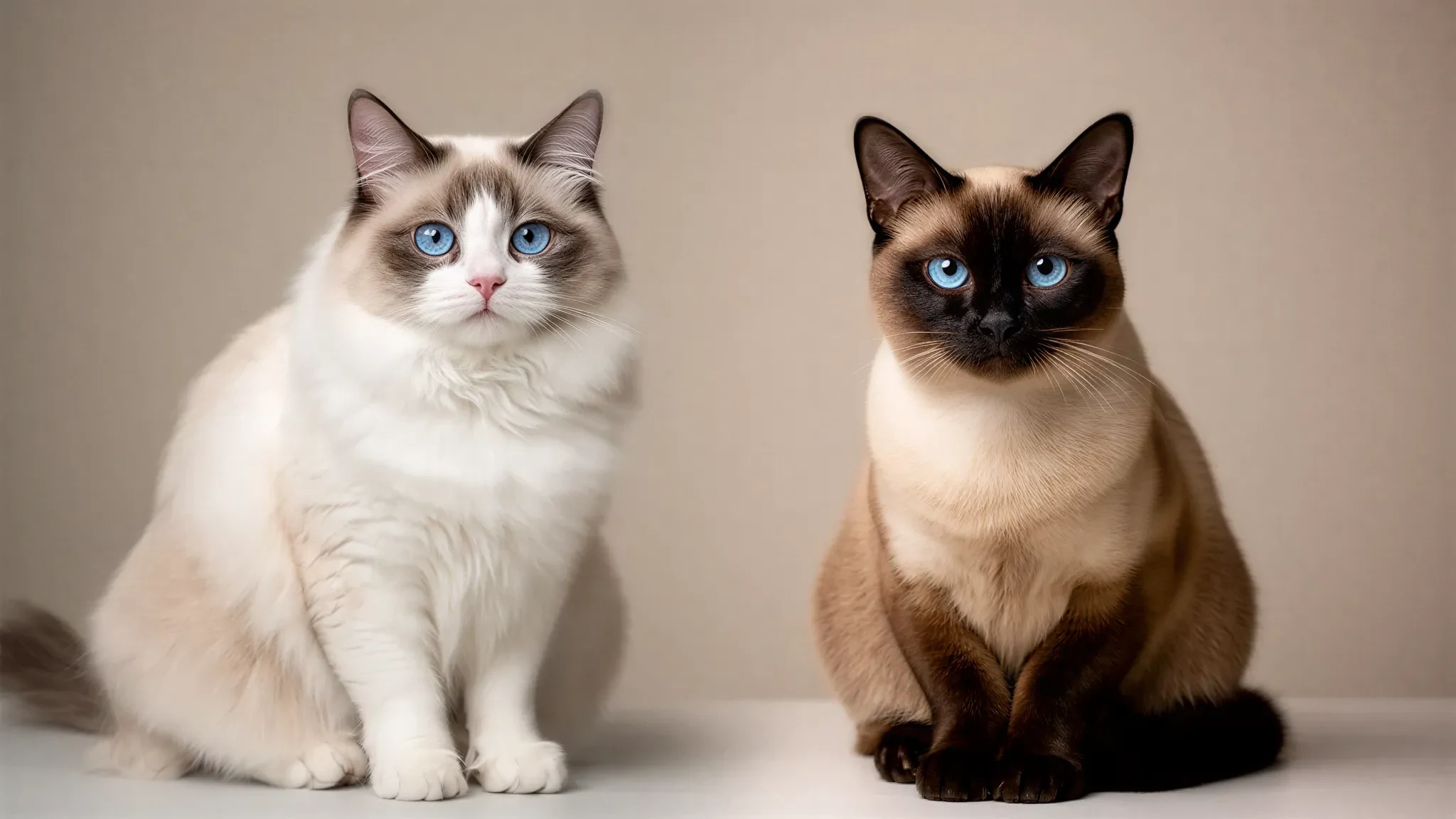
Ragdoll and Siamese cats are both beautiful, affectionate breeds that form strong bonds with their humans. But despite both being social and vocal, they have significant differences in personality, care needs, and lifestyle requirements. Ragdolls tend to be calm and tolerant of handling, while Siamese tend to be active, vocal cats who want a lot of interaction. This comparison breaks down personality, care needs, health concerns, and which breed fits different lifestyles to help you choose the right companion for your home.
Quick Verdict
Choose Ragdoll if: you want a calm, gentle lap cat who usually tolerates handling well and is content with moderate attention. Ragdolls tend to be quieter and less demanding, a good fit for owners who want an affectionate but not clingy companion.
Choose Siamese if: you want an active, vocal companion who demands constant interaction, learns tricks easily, and follows you everywhere. Siamese are better for owners who work from home and want a cat who participates in all activities.
Side-by-Side Comparison
| Feature | Ragdoll | Siamese |
|---|---|---|
| Size | Large (8-20 lbs) | Medium (8-12 lbs) |
| Coat | Semi-long, silky, colorpoint | Short, fine, colorpoint |
| Personality | Gentle, calm, affectionate, docile | Vocal, social, intelligent, demanding |
| Care Level | Medium (regular grooming) | Low (minimal grooming) |
| Lifespan | 12-17 years | 12-15 years |
| Best For | Families, apartments, calm households | Active households, work-from-home owners |
| Health Concerns | HCM, hip dysplasia | PRA, asthma, dental issues |
| Vocal Level | Low to moderate — soft chirps | High — loud, frequent vocalization |
| Activity Level | Low to moderate — calm and relaxed | High — active and playful |
| Grooming | 2-3 times weekly | Once weekly |
Personality Deep-Dive
Ragdoll Personality
Ragdolls are famous for relaxing when picked up, the tendency the breed is named for. Many settle into your arms, though individual cats vary and some would rather keep all four feet on the floor. Handled gently and on their terms, many are tolerant lap cats who rarely use their claws. That is a tendency, not a guarantee, so an adult’s supervision still decides what is safe around children.
These cats form strong bonds with their families but aren’t clingy. They enjoy being near their humans without demanding constant attention. You’ll find your Ragdoll following you from room to room, then settling nearby to nap. They’re affectionate on their own terms and respect your space.
Ragdolls are moderately active but not hyperactive. They enjoy short play sessions but are equally content to nap in sunny spots. Their activity level is well-suited to apartments and less active households. They retain their gentle nature throughout their lives without the kitten energy that persists in some breeds.
These cats are quiet and not particularly vocal. They’ll communicate with soft chirps when needed but don’t hold conversations. Their quiet nature makes them ideal for noise-sensitive households and apartments. They’re not known for being demanding like Siamese.
Siamese Personality
Siamese are famously vocal and will let you know exactly what they think. Their distinctive loud, low-pitched voice is used to communicate everything from hunger to boredom to affection. They’re not cats for people who prefer quiet companions. Your Siamese will hold conversations with you throughout the day.
These cats form intense bonds with their humans and want to participate in everything you do. Your Siamese will follow you from room to room, supervise your activities, and insist on helping with household tasks. They’re not independent cats who prefer solitude. They thrive on interaction and engagement.
Siamese are highly intelligent and can learn tricks, fetch, and even walk on leashes. They’re observant and will watch their humans closely, learning routines and habits. Many Siamese develop strong preferences for specific toys or games. They’re sensitive to their owner’s moods and will offer comfort when needed.
These cats are active and playful throughout their lives. They retain kitten-like energy well into adulthood and beyond. They need regular interactive play sessions and mental stimulation. Without adequate engagement, they can become destructive or develop behavioral problems.
Care Comparison
Grooming Needs
Ragdolls have semi-long, silky coats that require regular grooming. Brush 2-3 times weekly to prevent mats and reduce shedding. Their coats resist matting better than many long-haired breeds but still need consistent attention. During seasonal shedding, increase brushing to daily sessions.
Siamese have short, fine coats that require minimal grooming. Brush once weekly to remove loose hair and distribute oils. Their short coats shed less than Ragdolls and don’t mat. Siamese grooming is among the easiest of all breeds — perfect for owners who want low-maintenance cats.
Both breeds need regular nail trimming, ear cleaning, and dental care. Neither breed needs regular bathing unless they get into something messy. Ragdolls may need occasional bathing to keep their coats in show condition, but pet Ragdolls rarely need baths.
Ragdolls shed more than Siamese due to their longer coats. Both breeds shed moderately year-round with increased shedding during seasonal changes. Ragdolls’ shedding is more visible due to their longer hair.
Exercise Requirements
Ragdolls need 15-20 minutes of interactive play daily. They enjoy wand toys, laser pointers, and gentle fetch. Their calm nature means they’re content with moderate exercise. They’re not likely to demand constant play sessions.
Siamese need 30-45 minutes of interactive play daily. They have high energy and need regular outlets for their physical and mental energy. Without adequate exercise, they can become destructive. They benefit from puzzle feeders, climbing structures, and regular interactive sessions.
Both breeds benefit from cat trees, window perches, and scratching posts. Siamese particularly appreciate tall climbing structures for their athletic abilities. Ragdolls prefer lower perches they can access easily.
Siamese are more likely to initiate play than Ragdolls. They’ll bring toys to their owners and demand attention. Ragdolls are more passive and wait for owners to initiate play sessions.
Feeding Considerations
Ragdolls are large cats needing adequate calories for their size. They typically need 3/4 to 1 cup of high-quality dry food daily. Monitor weight carefully as Ragdolls can become overweight if overfed. Their large frames can hide weight gain.
Siamese are medium-sized cats with moderate calorie needs. They typically need 1/2 to 3/4 cup of high-quality dry food daily. Siamese are generally good eaters but monitor weight to prevent obesity. Their slender build makes weight changes more visible.
Both breeds benefit from wet food for hydration. Fresh water should always be available. Siamese may prefer running water from fountains. Ragdolls are less particular about water sources.
Siamese are more likely to be vocal about meal times. They’ll let you know when they’re hungry. Ragdolls are more patient and wait for scheduled feeding times.
Which Is Right for Your Lifestyle?
Choose Ragdoll If
You want a calm, gentle lap cat. Ragdolls are often relaxed companions who tolerate handling well, though individuals vary. They suit owners who want a cuddle-prone cat and will let the cat decide when the cuddle starts and ends.
You have children or elderly family members. Ragdolls are exceptionally patient and gentle. Their large size means they can handle gentle play from kids. They rarely use claws even when handled roughly.
You live in an apartment or quiet household. Ragdolls are quiet cats who don’t demand attention with loud vocalization. They’re ideal for noise-sensitive environments and close-quarters living.
You work long hours but want an affectionate cat. Ragdolls are content to nap while you’re gone and greet you warmly when you return. They don’t develop separation anxiety like more demanding breeds.
You prefer a low-maintenance personality. Ragdolls are easy-going and adaptable. They don’t demand constant entertainment or attention. They’re happy to entertain themselves when you’re busy.
Choose Siamese If
You work from home and want constant companionship. Siamese thrive when their humans are present. They’ll supervise your work, sit on your keyboard, and participate in video calls. They’re ideal for remote workers.
You want an interactive, trainable cat. Siamese learn tricks, fetch, and leash walking easily. They’re intelligent and enjoy mental challenges. They’re ideal for owners who want to actively engage with their cats.
You don’t mind a vocal companion. Siamese are famously talkative and will converse with you throughout the day. If you enjoy feline conversation, a Siamese will happily oblige.
You have time for daily interactive play. Siamese need 30-45 minutes of daily play and mental stimulation. They’re ideal for active owners who enjoy regular engagement with their pets.
You want a cat who follows you everywhere. Siamese are famously devoted and want to participate in all activities. They’re ideal for owners who want constant feline companionship and don’t mind a shadow.
Health Comparison
Ragdoll Health
Ragdolls are generally healthy with good longevity. Hypertrophic cardiomyopathy (HCM) is the most common heart disease in cats and Ragdolls can be affected. Reputable breeders screen breeding cats through echocardiograms. Medications can manage symptoms.
Hip dysplasia affects this large breed more than average cats. Symptoms include lameness and difficulty jumping. Reputable breeders screen breeding cats through X-rays. Weight management helps prevent joint problems.
Polycystic kidney disease (PKD) can affect Ragdolls. This genetic condition causes cysts in kidneys. Responsible breeders screen through ultrasound. There is no cure, but supportive care manages the condition.
Siamese Health
Siamese are generally healthy but predisposed to certain conditions. Progressive retinal atrophy (PRA) is a genetic eye condition that can lead to blindness. Responsible breeders screen through DNA testing. There is no treatment, but affected cats live quality lives as indoor pets with environmental accommodations.
Asthma is more common in Siamese than many breeds. Feline asthma causes airway inflammation and breathing difficulties. Treatment includes corticosteroids and bronchodilators. Environmental management helps manage the condition.
Dental disease is common in Siamese. Regular dental cleanings and home dental care are important. Watch for bad breath, difficulty eating, and drooling as signs of dental problems. Siamese may need more frequent dental care than other breeds.
Amyloidosis can affect Siamese. This condition causes abnormal protein deposits in organs, particularly the liver. Symptoms include weight loss and lethargy. There is no cure but supportive care manages the condition.
Not Sure What Breed Your Cat Is?
Before choosing between breeds, find out if you already have one. Many domestic cats resemble these breeds without being purebred, and colorpoint cats may have Ragdoll or Siamese ancestry on a DNA test without matching the breed standard. Our What Breed Is My Cat? guide covers the visual clues and their limits — appearance alone will not prove pedigree.
A mixed cat is not automatically healthier or less healthy than a purebred; it depends on the individual cat and its known history. Shelter cats with a Ragdoll or Siamese look make wonderful companions, and an adult with a known temperament tells you more than a kitten photo.
Frequently Asked Questions
Which breed is more affectionate?
Both breeds are affectionate but express it differently. Ragdolls show affection through calm cuddling and lap sitting. Siamese show affection through constant following and vocal interaction. Both form strong bonds.
Which breed is quieter?
Ragdolls are significantly quieter than Siamese. Ragdolls communicate with soft chirps while Siamese are famously vocal with loud, frequent meowing. Choose Ragdolls for quiet households.
Which breed is better with kids?
Both breeds are good with children but Ragdolls are exceptionally patient and gentle. Their docile nature means they tolerate handling better. Siamese are playful but may be too energetic for very young children.
Which breed sheds less?
Siamese shed less due to their short coats. Ragdolls have semi-long coats that shed more visibly. Both breeds shed moderately year-round with seasonal increases.
Can these breeds live together?
Yes, both breeds are social and get along well with other cats. Their different energy levels can complement each other. Proper introductions are still important.
Which breed is more expensive?
Siamese typically cost $800-$1,500 from reputable breeders. Ragdolls cost $800-$2,500. Show-quality kittens from both breeds cost more. Adoption fees are $100-$400 for both breeds.
Which breed lives longer?
Ragdolls typically live 12-17 years while Siamese live 12-15 years. Both breeds have good longevity with proper care. Individual health and genetics affect lifespan more than breed averages.
Want to learn more about cat breeds? Explore our breed identification guide to find out what breed your cat might be, or read our Ragdoll cat guide and Siamese cat guide for complete breed information.