
Single Kitten Syndrome: Why Raising Two Is Easier
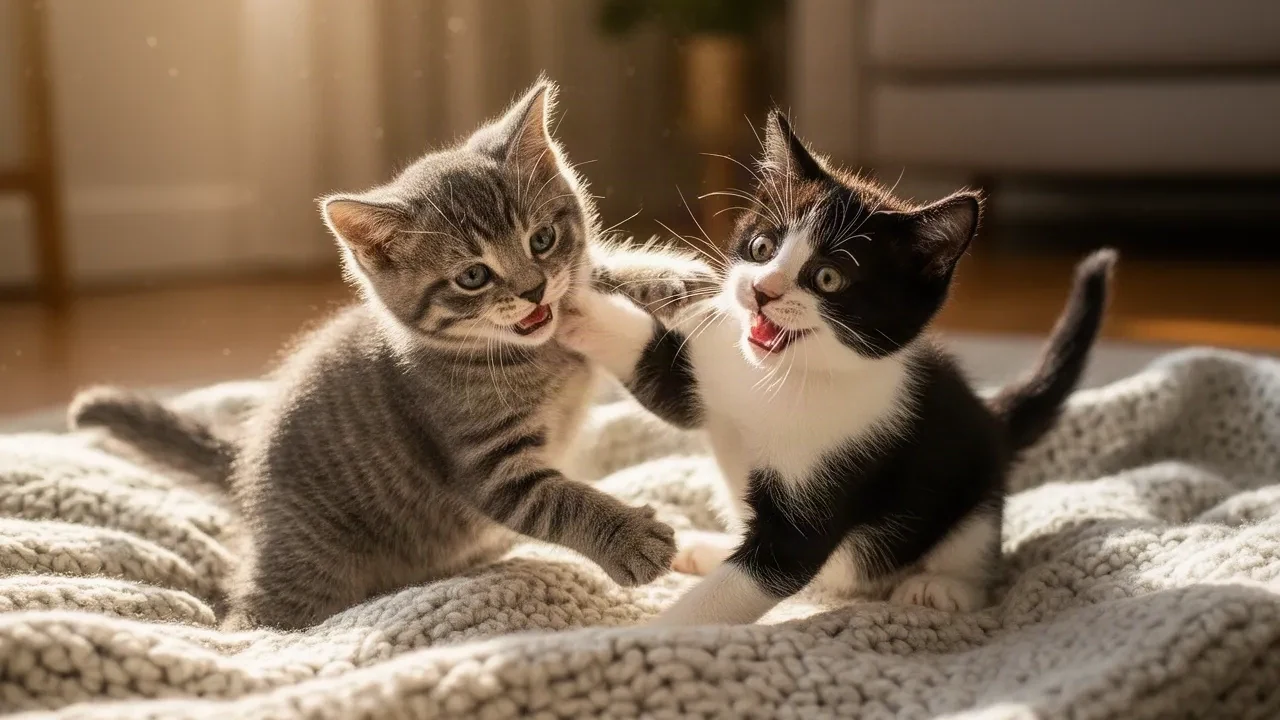
Single Kitten Syndrome refers to a recognized cluster of behavioral and developmental challenges that emerge when a kitten is raised in isolation without a feline companion. Solitary kittens frequently develop painful play aggression, poor bite inhibition, intense nocturnal hyper-arousal, and difficulty coexisting with other animals later in life. Adopting two kittens together allows siblings to burn boundless energy and teach each other essential physical boundaries through mutual play. Track your kitten’s growth with our Cat Age Calculator, or read our practical guide below to understand the science, costs, and solutions.
What Is Single Kitten Syndrome?
Single Kitten Syndrome is not a genetic illness or a neurological disorder. It is an environmental and behavioral development issue that arises when a young kitten lacks interaction with another kitten during the critical primary socialization window, which spans between 6 and 16 weeks of age.
During this developmental window, feline brains develop rapidly through tactile social feedback. In a natural litter, kittens spend hours tumbling, chasing, pouncing, and wrestling with their brothers and sisters. This social play serves a critical evolutionary purpose: it teaches young predators how to moderate the strength of their jaws and the extension of their claws.
When a kitten is adopted alone before this developmental stage finishes, human caregivers inadvertently become the sole target for all predatory play drives. Without the immediate, natural feedback of another furry playmate, a solo kitten often grows into an adolescent cat who treats moving human ankles, hands, and feet as prey targets.
The Science of Bite Inhibition: How Kittens Learn Boundaries
Bite inhibition is the learned capacity of a carnivore to control the force of its jaws during play and social interaction. Kittens are born with razor-sharp deciduous teeth and lightning-fast predatory reflexes, but they possess zero innate understanding of how much pain those teeth cause to others.
According to studies supported by the Cornell Feline Health Center, kittens learn bite inhibition almost entirely through reciprocal rough-and-tumble play with their littermates. When Kitten A bites Kitten B too forcefully during a wrestling match on the carpet, Kitten B lets out a sharp, high-pitched squeal, immediately stops playing, and retaliates with a hard nip or walks away entirely.
This immediate negative feedback creates an unmistakable association in Kitten A’s developing brain: biting too hard brings a swift end to the fun. Over hundreds of play wrestling sessions across several weeks, kittens naturally calibrate their bite pressure to keep the game going. They learn to mouth gently with soft jaws and sheath their claws during friendly grappling.
When a single kitten plays with a human hand, that biological feedback loop breaks down entirely. Human skin lacks protective fur, making it far more vulnerable to micro-punctures and scratches. More importantly, human reactions—pulling away quickly, shouting in pain, or wiggling fingers—mimic the erratic movements of injured prey. Rather than discouraging the kitten, human movement frequently escalates the kitten’s predatory arousal.
| Feedback Element | Sibling Kitten Play | Human Hand Play |
|---|---|---|
| Skin Protection | Thick protective fur coat buffers bites | Delicate bare skin easily punctured |
| Pain Signal | Immediate, sharp feline squeak | Shouting, pulling away, or scolding |
| Reaction to Pain | Immediate counter-bite or play cessation | Erratic pulling motion that mimics fleeing prey |
| Behavioral Result | Rapid, natural calibration of jaw strength | Escalating predatory excitement and harder biting |
| Emotional Impact | Mutual social learning and emotional bonding | Frustration, human fear, and defensive aggression |
Common Symptoms of a Single Kitten
Single Kitten Syndrome manifests through distinct daily behavioral patterns. Recognizing these signs early allows owners to intervene before habits solidify into adult temperament.
Severe Play Aggression & Ankle Ambushes
Solo kittens frequently hide beneath bed frames, behind sofas, or around corridor corners to launch surprise ambushes at passing feet. They latch onto ankles with all four paws and deliver full-strength bites to bare skin. Because the kitten perceives this as standard hunting play rather than malicious aggression, scolding or pushing them away only intensifies their determination to capture the moving target.
Inability to Self-Soothe & Nocturnal Hyper-Arousal
Kittens possess massive bursts of physical stamina that recharge every few hours. In a pair, kittens direct their 3 a.m. energy surges toward each other, racing across cat trees and wrestling until they collapse into a shared nap. A solitary kitten with unspent physical energy will instead gallop across sleeping owners, paw relentlessly at closed bedroom doors, and vocalize loudly for stimulation throughout the night.
Over-Attachment & Separation Distress
Without a peer to share territory, single kittens often develop intense, insecure attachments to their human caregivers. When left alone during standard workdays, they may experience separation anxiety, resulting in destructive scratching of door frames, litter box avoidance, or vocal distress. When the owner finally returns home, the kitten’s demand for stimulation can feel overwhelming.
Chronic Insecurity Around Other Cats
Kittens raised in total feline isolation fail to learn subtle cat communication cues, such as the greeting tail quiver, the slow blink, and submissive body postures. If an owner attempts to introduce a second cat years later when the single cat is an adult, the resident cat often reacts with extreme territorial panic or defensive aggression because they literally do not understand feline body language.
The “Two Kittens Are Easier Than One” Paradox
Prospective adopters often assume that caring for one kitten takes half the effort of caring for two. In practice, animal shelters, veterinary behaviorists, and experienced foster homes know the opposite is true: adopting two kittens is significantly easier than raising a single kitten.
Kittens are social obligate companions in their youth. When you bring home a bonded pair or two unrelated kittens of similar age, they keep each other continuously entertained, exercised, and mentally stimulated. They teach each other bite inhibition, groom each other’s hard-to-reach ears and necks, and provide constant comfort during unfamiliar household adjustments.
For busy owners who work away from home or maintain full schedules, a pair of kittens eliminates the constant guilt of leaving a young animal alone in a quiet room. When you return home in the evening, you are greeted by two content, well-exercised companions ready for peaceful lap cuddles rather than an overstimulated, claw-ready ball of energy demanding four hours of continuous interactive play.
The Real Financial Math: One Kitten vs. Two
Financial responsibility is the primary reason owners hesitate to adopt a second kitten. While routine costs like food, litter, and core vaccinations do double, total household ownership expenses rarely follow a simple two-to-one multiplier.
| Expense Category | Single Kitten Reality | Pair of Kittens Reality |
|---|---|---|
| Kitten Food & Litter | Baseline annual cost for one cat | Approximately double baseline cost |
| Initial Vet Vaccines & Spay/Neuter | Standard single procedure fee | Double routine procedure fee |
| Furniture & Curtain Replacement | High risk of claw shredding from boredom | Low risk; play focused mutually on cat trees |
| Emergency Vet Care for Bite Wounds | Higher risk of severe human bite infections | Minimal; bites directed at feline playmates |
| Mental Stimulation Toys & Gadgets | Constant need for expensive automated toys | Kittens serve as each other’s best interactive toy |
| Shelter Adoption Fees | Standard fee for one kitten | Frequently discounted pair adoption promotion |
Before making your final adoption decision, review our detailed guide on the true cost of owning a cat to balance your monthly budget accurately.
Survival Guide: How to Raise a Single Kitten Successfully
If you already have a single kitten and circumstance prevents you from adopting a second companion, you can raise a well-adjusted, gentle cat through deliberate environmental management and strict behavioral consistency.
Establish the “Hands Are Never Toys” Rule
Never use your bare fingers, hands, or feet to wrestle, tickle, or play with your kitten. Even when a ten-week-old kitten batting at your wiggling thumb looks adorable, allowing hand-play teaches the animal that human flesh is an appropriate target for claws and teeth. Every member of the household and all visiting guests must enforce this boundary without exception.
If your kitten ever grabs your hand or clothing during play, freeze completely. Do not pull away rapidly, as pulling triggers predatory chase instincts. Instead, gently press inward toward the kitten’s mouth slightly, which causes them to release their grip, and immediately substitute a large plush kicker toy.
Schedule Four Daily Interactive Wand Sessions
A solitary kitten needs you to fulfill the physical role of a sibling. Plan three to four structured 15-minute play sessions every day using a long wand toy, such as a feather teaser or flexible wire lure.
Guide the toy across the floor, making it dart behind furniture and freeze under cardboard boxes like real prey. Allow the kitten to stalk, sprint, leap, and capture the lure. End each session by allowing a satisfying final catch, followed immediately by a meal or a protein-rich treat to complete the natural feline predatory sequence: hunt, catch, kill, eat, groom, sleep.
Deploy Body-Length Kick Sticks & Puzzle Feeders
Kittens have an instinctual urge to wrap their front paws around prey and rake violently with their hind claws. Provide several sturdy, fabric kick sticks infused with catnip or silvervine throughout every room. Whenever your kitten exhibits high arousal, redirect their energy onto the kick stick so they learn where their hind-claw power belongs.
Replace standard open food bowls with interactive puzzle feeders and foraging mats. Working for kibble forces a young cat to use their problem-solving intellect, burning mental energy and dramatically reducing boredom-induced antics around the house.
Expand Vertical Territory & Window Enrichment
Install multi-tiered cat trees, sturdy wall shelves, and secure window perches. Kittens love observing the outside world, watching birds at outdoor feeders, and surveying their indoor territory from high vantage points. Vertical highway systems give an energetic kitten constructive outlets for climbing and sprinting without targeting your curtains.
Prepare your living space completely before arrival by reviewing our new kitten checklist. When choosing names for your new companion, check our curated two-syllable cat names for options that help training.
When Aggression Signals Medical Distress
While rough play is typical kitten behavior, sudden or intense aggression can sometimes indicate underlying medical discomfort. Teething occurs between 3 and 7 months of age, causing swollen gums and an intense urge to chew hard objects to relieve oral pressure. Providing safe, chilled rubber chew toys can soothe sore mouths during this stage.
If an older kitten or adult cat suddenly exhibits unprovoked growling, hissing, or swiping when touched in specific areas, schedule an appointment with your veterinarian. Musculoskeletal pain, spinal trauma, or feline hyperesthesia syndrome can cause severe touch sensitivity that mimics behavioral aggression, and behavioral changes that appear suddenly or escalate despite consistent environmental enrichment deserve the same attention.
If you notice any of these signs, consult your veterinarian. This article is for informational purposes and does not replace professional veterinary advice.
For persistent issues in mature cats, consult our deep dive on managing cat aggression.
Frequently Asked Questions
Is Single Kitten Syndrome a recognized medical diagnosis?
Single Kitten Syndrome is not a formal medical diagnosis found in veterinary pathology textbooks, but it is a widely recognized behavioral condition documented by feline behaviorists, shelter medicine specialists, and rescue organizations worldwide. It describes the developmental deficits that result from lack of peer socialization during early life.
Can you fix Single Kitten Syndrome in an adult cat?
You can manage and improve behavioral issues in an adult cat who was raised alone, but reversing ingrained habits requires patience. The most effective approach combines strict redirection of hand-biting, extensive environmental enrichment, predictable daily play routines, and never responding to aggression with physical punishment.
How much daily active play does a single kitten require?
A solitary kitten typically requires at least 60 to 90 minutes of dedicated, interactive play spread across three or four sessions each day. Wand toys that encourage full-body sprinting and jumping are essential to drain the energy that would otherwise be spent wrestling with a sibling.
Can I adopt an older cat as a companion for my single kitten?
Adopting a calm, patient adult cat can sometimes provide positive social modeling for a kitten, but adult cats rarely match a kitten’s boundless energy. If you want a companion who will roughhouse and tumble for hours, choosing a second kitten of similar age and energy level yields the most reliable outcome.