
Tonkinese Cat Breed Guide: Personality & Care
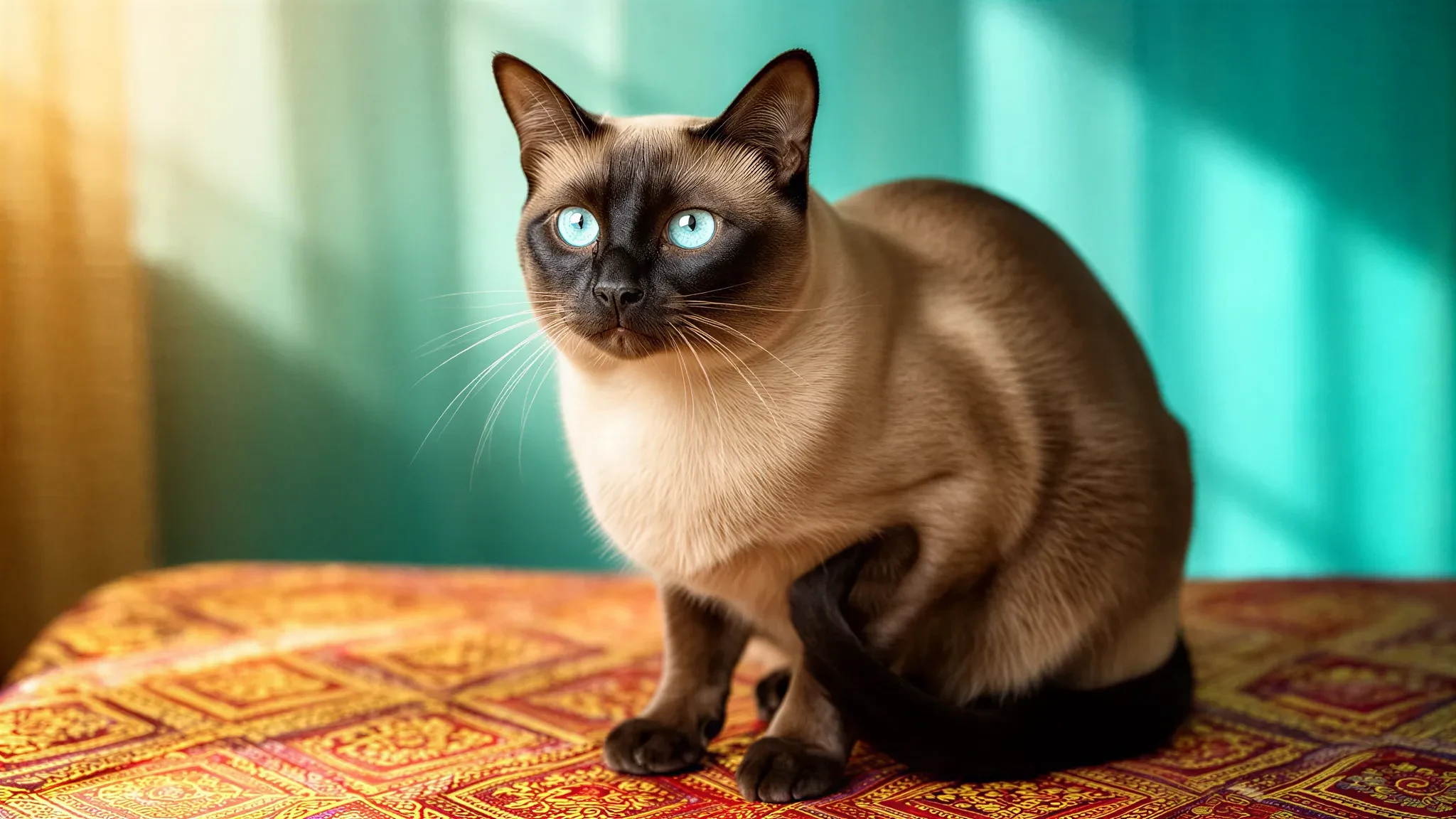
A Tonkinese is a medium, surprisingly heavy, moderate cat from a Siamese-to-Burmese idea: not a tube and not a brick. The profile on this site lists them as social, playful, vocal, and affectionate, short coat, low care, 10–16 years, with progressive retinal atrophy and gingivitis on the health line. The Cat Fanciers’ Association wants an alert, muscular midpoint. Mink coats get aqua eyes. That is not every Tonk. If you wanted a Siamese, that page still exists. If you wanted a Burmese, so does that one.
Quick Facts
| Attribute | Detail |
|---|---|
| Origin | Canada (and parallel US programs) |
| Size | Medium (surprisingly heavy; balance over size) |
| Coat | Short, close, silky; mink, solid, or pointed |
| Personality | Social, playful, vocal, affectionate |
| Lifespan | 10–16 years |
| Care level | Low (coat). High people-demand. |
| Health to ask about | Gingivitis; PRA on our profile |
| Common names | Tonk, Mink, Aqua, Playful — not usable roster names |
History & Origins
CFA’s breed article: some nineteenth-century “chocolate Siamese” were probably this look. Wong Mau, the Burmese foundation cat, wore a natural mink pattern. In the mid-1960s Jane Barletta in the United States crossed Siamese and Burmese on purpose for a moderate cat and used the name Tonkinese. In Canada, Margaret Conroy crossed a shy English Burmese to a Siamese and got tan kittens with aqua eyes; she used Tonkanese. They coordinated. Canadian Cat Association accepted them in 1971. CFA registration October 1978, provisional May 1982, championship May 1984, first championship season 1984–85. In 2001 CFA moved them from hybrid to established breed. Outcrosses have been closed for decades. Allowable outcrosses now: none.
The hard part, CFA says, was not “moderate” as a word. It was producing a cat who did not look like a pet-quality Siamese or a failed Burmese. Some people still do not like the breed because they do not consider it pure. CFA’s article’s answer is that purity is relative once you remember longhairs used to interbreed. I am not going to referee a registry argument. I will tell you the standard is a midpoint on purpose.
Championship showing, for a long time, was mink-only. Pointed and solid cats were AOV: useful in the breeding shed, not in the finals. CFA’s article is blunt about the genetics: two minks can throw all three patterns, and point-to-solid is how you get a litter of minks. If you only wanted a show mink, you still needed the other patterns in the program. Honey and fawn exist as AOVs. CFA notes early worry about honey, then later healthy oddballs. Do not buy an AOV color as a championship mink.
Platinums have done a lot of the winning. Naturals and blues still have people who breed them because they like the color. Ask what you actually want before you fall for a platinum photo and take home a natural who will darken for a year.
Personality & Temperament
Social, playful, vocal, affectionate. CFA’s household version is lap or shoulder, excellent memory, “no” means later, sensitive to your mood, puppy plus monkey plus elephant — the elephant is the noisy gallop. They greet guests. They talk in sentences and expect an answer. Ignore them and they pick a worse channel.
CFA’s article says they are two cats in one body: active but not hyper, and cuddly. Dog-like in wanting attention. Many people keep two because one Tonk wants a playmate. If you wanted an independent cat, this is the wrong moderate.
Vocal on the profile is not Siamese volume all day. It is not silence either. CFA: not just meows — complete sentences that want a prompt response.
Kids, dogs, other cats: CFA says they do well. An adult still owns the house. Supervise. A social cat will still bite if a child corners them.
Indoor Cat Enrichment is how you keep the gallop off the curtains.
Shoulder riding is in CFA’s temperament notes. So are kisses and head-butts. That is charming until you are carrying coffee. A Tonk who wants to be on you while you work is not “needy” as an insult. It is the product. People who work from home either like that or they buy a different moderate cat — there isn’t one. The other fork is a quieter breed.
If there are no other pets, CFA’s article says most people get two Tonks. Budget that as a real option, not a cute idea for later. One bored Tonk plus a full-time job is how couches lose corners.
Physical Characteristics
CFA: intermediate, neither cobby nor svelte, surprisingly heavy, medium, balance over size. Head a modified slightly rounded wedge, longer than wide, blunt muzzle, slight stop at eye level, chin lined up with the nose. Ears medium, as much on the sides as the top. Eyes open almond, slanted along the cheekbones. Coat medium-short, close, fine, soft, silky, sheen.
Twelve colors: four base colors (natural, champagne, blue, platinum) times three patterns (mink, solid, pointed). Mink body is a rich even color with distinct points and aqua eyes. Solids have little contrast and green to yellow-green eyes. Pointeds have off-white bodies, marked contrast, blue eyes. Young cats may be lighter; dilute colors can take up to sixteen months for full body color. Cats darken with age.
Yellow eyes in mink DQ. White lockets DQ. Crossed eyes DQ. Extreme ranginess or cobbiness is a penalty. A definite nose break is a penalty.
I am not printing a fake weight. Pick them up. Surprisingly heavy is the sentence CFA wants you to feel.
Point color should connect mask and ears with tracings except in kittens. Nose leather follows the points. There is more contrast in champagne and platinum than in natural and blue, CFA says. Blues can look almost even. That is not a failed mink. That is the dilute.
A “mink” sold with gold eyes is not meeting the mink eye standard. A solid sold as a Burmese is the other direction. Look at the body first: midpoint. Then look at contrast. Then look at eyes in a window.
Care Requirements
Grooming
Low care on the coat. Silky short hair. Rubber brush in shed season. They still shed. Nails, ears, teeth. Teeth are the extra. CFA wants you to get them used to brushing while young because older Tonks lean toward gingivitis. That is husbandry, not a product table.
Feeding
A heavy-feeling, active cat in a snack house gets round. Use How Much Should I Feed My Cat?. No invented cups. Wet food helps any cat drink. Dental disease is easier to ignore in a cat who still eats. Do not wait for them to stop.
Exercise & Enrichment
Playful and social. Fetch. A tree. A second cat if you work long days. CFA’s article is honest: they demand attention. A closed bathroom is not a lifestyle. Short daily play is the difference between a charming gallop and a destroyed blind.
Aqua eyes are judged in natural light for a reason. CFA: pigment plus reflected light, like sky color, changes with the weather. Do not pick a mink at night under kitchen LEDs and argue later. Window light. Adult eyes. The kitten’s eyes are still a draft.
A week in the house: morning conversation, a shoulder attempt while you make coffee, a gallop, a lap in the afternoon, an evening fetch, a second cat if you have one. If you come home to silence and a destroyed plant, you under-played. Low coat care does not mean low presence.
Health Concerns
Gingivitis is the concern CFA names as breed-specific in older cats. Cornell’s dental page is the general library: plaque, inflamed gums, pain, reluctance to eat. Prevention is home care plus veterinary dentistry when needed. I am not going to name a toothpaste. I am not going to tell you antibiotics alone fix gingivitis — Cornell says there is little evidence they do.
Progressive retinal atrophy is on our profile. CFA’s breed-future paragraph does not name it. I am not going to invent a Tonkinese PRA paper. Ask whether the line has eye disease. Night-blindness or bumping into things is a veterinarian, not a Mink-color quirk.
CFA calls them robust because they started as hybrids. Outcrosses are closed now. Gene-pool worry is in the same article. Ask what they share. A shrug is not a test.
I will not prescribe dental surgery or an eye protocol.
CFA’s article mentions a National Geographic special that used Joan Bernstein’s Tonks in therapy work. That is history, not a claim that your cat is a service animal. It is a reminder the public liked the personality before some judges did. You are shopping a people cat.
Gene-pool math is why closed breeds ask you not to waste rare lines on a whim breeding. If you are not a breeder, that sentence still means: buy from someone who shares lines instead of hoarding a platinum male and calling it a program.
PRA, if it appears, is a veterinarian and a conversation about night vision, not a reason to panic-Google a protocol from a forum. Our profile lists it so you ask. CFA’s breed-future page did not put it in lights. Both of those facts can be true at once.
Is a Tonkinese Right for You?
This breed fits people who want a moderate, talkative, people-oriented short-hair and will play every day. Households that like a cat at the door. People who will look at teeth.
Who should pick a different cat: you, if you wanted a quiet independent short-hair. You, if you wanted a show Siamese head. You, if you wanted a compact Burmese and thought mink was a shortcut. You, if aqua eyes were the whole want and you will not accept a pointed or solid kitten. You, if you work twelve-hour days and thought low care meant low company.
A second Tonk is CFA’s own suggestion when there are no other pets. That is a budget line, not a slogan.
Apartments work if you play. They fail if the cat’s only job is looking at a closed office. First cat: possible, loud, educational. You will learn that “low care” was the coat. Allergies: mink is not hypoallergenic. Champagne is not a different protein.
Travel: a cat who talks in sentences does not love a carrier. Practice early. That is not a Tonk disease. That is a social cat.
Finding a Tonkinese
Ask which pattern the kitten is, and what the parents were. Mink times mink can throw all three. If you only wanted aqua, you needed to say that before the litter arrived. Ask about dental history in the adults. Ask about eyes. CFA has no outcross; “I threw a Siamese in” is not this breed.
Rescue gets Tonk mixes and the occasional registered adult. An adult whose voice and teeth you can assess is better than a mink kitten photo.
Red flags: yellow-eyed mink sold as rare, a Siamese body with a Tonk label, no dental talk, Playful as a name on the contract.
Adopting vs. Buying from a Breeder still applies.
Popular Tonkinese Names
The profile lists Tonk, Mink, Aqua, and Playful. Those are labels. Aqua is a color, not a name I would shout.
Mochi — Japanese, rice cake
Coco — Spanish, cocoa bean; champagne and natural coats
Milo — German, merciful
Luna — Latin, moon; platinum especially
Oliver — English, olive tree
Bella — Italian, beautiful
Sophie — Greek, wisdom
Theo — Greek, gift of God
Willow — English willow tree
Felix — Latin, happy, lucky
More on Tonkinese cat names and the Name Generator.
Frequently Asked Questions
Do all Tonkinese cats have aqua eyes?
No. Aqua is the mink pattern’s eye color, and CFA calls it a definitive mink characteristic. Solids should have green to yellow-green eyes. Pointed Tonks should have blue eyes. Yellow eyes in a mink are a disqualification. Do not buy a pointed kitten because someone promised aqua.
What is the difference between mink, point, and solid Tonkinese?
Same moderate body, different contrast. Mink is medium contrast with aqua eyes. Pointed is high contrast, off-white body, blue eyes. Solid is low contrast, body close to the point color, green to yellow-green eyes. Genetically they are all pointed cats. Two minks can produce all three. Point times solid tends to produce minks.
Are Tonkinese good with children?
They tend to be. CFA says they get along with dogs, other pets, children, and guests, and will greet visitors at the door. Our profile is social, playful, vocal, and affectionate. They want a person. An ignored Tonk will invent a worse hobby. Supervise anyway.
Is a Tonkinese just a Siamese mix?
The breed started as Siamese to Burmese crosses in the 1960s. CFA closed outcrosses as a condition of championship. In 2001 CFA moved them from hybrid classification to an established breed. The point of the standard is a cat who looks like neither parent: not cobby Burmese, not svelte Siamese.
Do Tonkinese need a lot of grooming?
Low care on a medium-short, close, silky coat. A rubber brush when they shed. The real work is people time and, in older cats, teeth. CFA names gingivitis as the breed-specific concern. Our profile also lists progressive retinal atrophy. Ask. Do not skip dental because the coat is easy.
Meet the adult talking. Look at the teeth if they will let you. The Tonkinese gallery is here if you want the mink before you book the visit.
Ask to hear the cat, not just see the color. A quiet mink in a show cage is not the same animal as the paragraph-talker CFA describes. Stay long enough for the gallop. Ten minutes of polite sitting is a Siamese mix’s sales technique.
Color takes months. CFA allows lighter bodies in young cats and up to sixteen months for some dilutes. Buying an eight-week champagne and complaining in December that it “got too dark” is how people end up on forums. Ask what the parents look like at three years, not what the kitten looks like in a blanket. A darkened natural is still a Tonk. It is not a bait-and-switch unless someone promised a permanent cream kitten. People who wanted a frozen kitten color should not buy a pointed breed family. They darken. That is the pattern talking, not a scam by default, and not a reason to skip the adult visit in a window. Kittens are drafts. Adults are the book.