
Manx Cat Breed Guide: Personality & Care
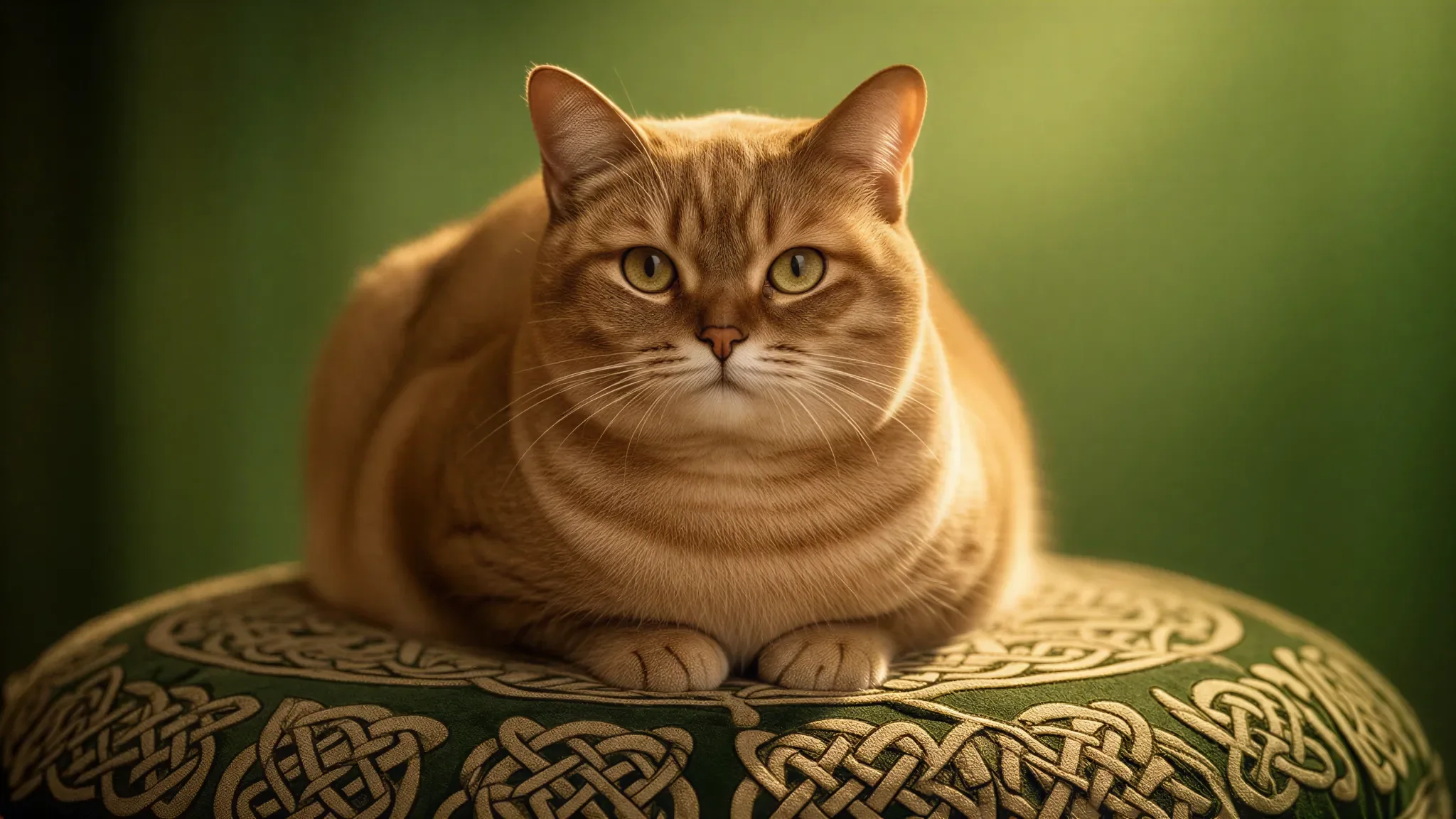
A Manx is a round, surprisingly heavy cat from the Isle of Man whose tail may be missing, short, or present. The profile on this site lists them as loyal, playful, and gentle, medium size, short coat, low care, 8–14 years, with Manx syndrome and arthritis on the health line. The Cat Fanciers’ Association’s first impression is roundness: round head, round rump, short back that arches, hind legs longer than the front. That shape is the breed. The missing tail is only five points on the standard.
Quick Facts
| Attribute | Detail |
|---|---|
| Origin | United Kingdom (Isle of Man) |
| Size | Medium (CFA: males often ~10–12 lb; surprisingly heavy when lifted) |
| Coat | Short (CFA also shows a longhair division) |
| Personality | Loyal, playful, gentle |
| Lifespan | 8–14 years |
| Care level | Low |
| Health to ask about | Manx syndrome, arthritis |
| Tails | Rumpy, rumpy-riser, stumpy, longy — show preference is tailless |
History & Origins
CFA places them on the Isle of Man in the Irish Sea, first noted by visiting sailors in the sixteenth century. The likely mechanism is a mutation in the island’s native shorthair cats, then an incomplete dominant gene spreading through a small population. The Ark door cutting off the tail is a charm, not genetics. CFA thinks the longhair gene arrived with Viking-era cats, ancestors of today’s Norwegian Forest Cats mixing with the island cats. Manx were at early British cat shows and in CFA’s books when registration began in 1906. That is older championship history than the Exotic (1966) or the Forest Cat (1993).
They are not a Japanese Bobtail. Different island, different tail, different standard. A Bobtail keeps a pom-pom of tail; a rumpy Manx may have a dimple. They are not a random DSH who lost a tail in a door.
The isolated island is the genetic point. A small population plus a dominant tail-shortening gene is how you get a lot of tailless cats in one place, and also how you get the spinal cost of shortening too far. CFA’s breeding note — use tailed Manx, do not make rumpy times rumpy the plan — is the practical answer to that island math. A mainland cattery that ignores it is not “preserving history.” CFA lists no allowable outcrosses. The gene pool is the island cats and the tailed Manx already in it. Chocolate, lavender, or pointed coats are listed as hybridization evidence, not as a rare Manx color. If the kitten is pointed and rumpy, you are not looking at this standard.
Personality & Temperament
Loyal, playful, gentle on our profile. CFA fills in the daily version: they often attach hard to one or two people and take a while with newcomers. They fetch. CFA uses “doglike” for that habit, which is the one time I will repeat it. Quiet most of the day, then a burst at 10 p.m. Talkative without being loud: chirps, trills, purrs, head bumps.
CFA says they do well with children because they would rather squirm free with those back legs than escalate. Dogs and other cats are usually fine. Playful on the profile is that fetch-and-leap, not Bengal-level motor.
A cat who cannot jump because the hind end does not work is a different animal than the fridge-leaping cat CFA describes. Watch the kitten move before you write the check.
They also do not have a tail to flag mood. Cat tail language still matters for every other cat in the house; for this one you read ears, eyes, and the rump twitch you can see. A rumpy is not mute. They just lost the banner.
Physical Characteristics
Round. CFA wants you to feel that when you pick them up — surprisingly heavy, stout, deep flanks, arched short back, rump higher than the shoulders. The fleshy flank is deeper than on other breeds; that is why the side view looks so thick. Head round with cheeks, ears set like a cradle rocker when you look from behind. Eyes large and round. Short thick neck. In profile the head has a gentle dip from forehead to nose. CFA disqualifies a pronounced stop or nose break. That is the opposite of an Exotic. Do not shop a flat-faced rumpy and call it a Manx.
The hopping look comes from those longer hind legs. It is in the structure. It is also why people make rabbit jokes. Skip the jokes. CFA shows the breed in two varieties — tailless and tailed — and two coat lengths. The pet you want may be the tailed class. The Instagram silhouette is the tailless class. Those are not the same shopping trip.
Colors run a long CFA menu: white, black, blue, red, silver, smoke, tabby, calico, bi-color. The round silhouette is the ID, not a color. Coat may thin in summer. That is the double coat, not a different breed.
Tail types, in ordinary language CFA also uses: rumpy (no tail, sometimes a dimple), rumpy-riser (a short rise of bone a judge’s hand should still pass over), stumpy (a short visible tail — usually AOV in the tailless class), longy (a near-normal tail). CFA’s tail article is clear: stumpy and long-tailed Manx matter in breeding because rumpy times rumpy is not desirable. The show cat is tailless. The pet cat does not have to be. CFA even suggests adopting a full or partial tail if cost is the issue — same personality, often cheaper.
Coat: thick, plush, weather-minded. Shorthair is this page’s profile. Longhair Manx exist in CFA; on this site that comb lives at the Cymric breed guide. Do not buy a longhair rumpy off this page’s gallery and then complain the Cymric URL exists. CFA treats coat length as a division. This site split the URLs. Read both if you are choosing coat.
CFA’s male weight note is about 10 to 12 pounds, females a bit smaller. Those are their numbers. A cat who feels light for that silhouette may just be young — CFA allows slow maturation — or may be underweight. Hands, not the internet.
Care Requirements
Grooming
Low care on a short, dense coat that CFA says is not prone to mats. Shorthair: comb or brush a couple of times a month. The double coat can look thinner in summer; that is seasonal, not a reason to skip the comb when they blow in spring. Longhair: weekly, watch under the legs and the cheeks — that work lives on the Cymric page if the coat in the carrier is actually long. Baths mostly for the show cats. This is not a Forest Cat spring blow. It is also not zero. They still shed.
Feeding
A stout, heavy-feeling cat is easy to overfeed. Arthritis is on the profile. Extra weight on hind legs that already work overtime is a bad combination. Use How Much Should I Feed My Cat?. No invented cups. If the cat has bowel trouble related to the spine, diet is a veterinarian’s call, not a blog’s.
Exercise & Enrichment
Playful and a jumper, when the hind end allows it. Fetch is the breed cliché because CFA documents it: they will bring you the thing and wait. Ten minutes after dinner is a real routine. A tree they can actually use, a wand, a person who throws the thing. Indoor Cat Enrichment. A Manx who cannot leap still needs a life on the floor that is not a closed bathroom. Low-sided litter boxes help some cats with stiff hind ends get in. That is furniture, not a treatment for Manx syndrome. If they cannot posture in the box, call the vet before you buy a new box in every color.
Stairs are optional in a ranch house and a problem in a walk-up if the cat already hops wrong. Meet the cat on the stairs you actually have.
Health Concerns
Manx syndrome is the conversation. CFA’s breed page: an array of problems involving hind legs, urinary bladder, and colon in a tailless cat. They tell you to ask the breeder about it in the lines. Signs typically before four months, so some breeders hold kittens until they can see the walk and the litter box. Tailed cats in the breeding program are how they keep the gene pool from collapsing into rumpy-rumpy litters.
I am not a neurologist. I will not prescribe manual bladder expression or a stool protocol. If a kitten’s back legs hop wrong, if the litter box is wet or skipped, if the tail end has no feeling, that is a veterinarian the same week, not a wait-and-see Facebook thread. Severely affected kittens may not survive. Mildly affected cats can still be companions. That range is why you meet the kitten moving.
Arthritis is the second profile line. A round, jumping, hind-end-loaded cat can get sore with age. Limping, skipping the tree, cranky when picked up — vet, not a new bed as the only plan. Cornell’s feline health library is for the general joint conversation; this breed’s extra issue is the spine that may already be short.
The lifespan on our profile is 8–14 years, shorter than a Domestic Shorthair’s 12–16. I am not going to inflate it. Ask what the adults in the line actually did.
CFA disqualifies weakness in the hindquarters in the ring. That is a show rule and a hint.
Is a Manx Right for You?
This breed fits people who want a loyal, playful, round cat and will talk about spines before tails. Households that like fetch. People who can wait until four months if the breeder asks.
Who should pick a different cat: you, if the missing tail is the only reason you are shopping. Buy a stuffed animal. You, if a breeder only pairs rumpy to rumpy and shrugs at Manx syndrome. You, if you need a 15-year expectation in writing. You, if you wanted a low-drama mixed cat — that is a Domestic Shorthair. You, if you wanted the long coat specifically — read the Cymric page instead of stretching this one.
Do not poke the rump to “check for a tail.” CFA tells judges not to probe the end of the spine because it hurts. Your fingers are not gentler than a judge’s. Look with your eyes. Watch them walk.
A tailed Manx in a house is still a Manx: round, heavy, fetch-playing, bonded. CFA says so. If the silhouette was the Instagram want, be honest about that before you insist on rumpy.
Best Cat Breeds for Families with Kids did not put Manx in the easy-short-hair row. Loyal and gentle helps. The hind end still has to work.
Finding a Manx
Ask, out loud: how do you use tailed cats? What happens if two rumpies slip through? When do kittens leave? Can I see them walk and use a box? CFA’s own advice is to talk about Manx syndrome in the lines and to consider a tailed pet Manx.
If they will not let you see a litter using the box, walk away. Incontinence is not a surprise you want after the carrier ride home. Four months of waiting at the cattery is cheaper than a lifetime of laundry and infections. That is not a threat. It is the reason CFA mentioned the hold.
Rescue gets Manx and Manx-mixes. An adult whose walk you can see is better information than a rumpy kitten photo.
Red flags: rumpy-rumpy as a selling point, kittens going home at six weeks, joke names as the whole personality (“Stumpy”), a hopping gait sold as the breed standard when the kitten cannot jump, no discussion of bladder or bowel.
Adopting vs. Buying from a Breeder still applies.
Popular Manx Names
The profile lists Hoppy, Bunny, Stumpy, and Tail-less. Those are jokes. I am not putting them on a tag. Loyal, playful, gentle cats get ordinary names.
Max — Latin, greatest; one syllable
Charlie — English, free man
Oliver — English, olive tree
Leo — Latin, lion; a round cat can still carry it
Milo — German, merciful
Bella — Italian, beautiful
Luna — Latin, moon
Willow — if they actually have a longhair coat, you may be on the Cymric page
Bear — English, large fierce animal; CFA says they feel heavy when lifted
Loki — Norse, trickster god; for the 10 p.m. sprint, not the missing tail
More on Manx cat names and the Name Generator. If the names listicle leans on Hoppy and Stumpy, ignore those lines.
Frequently Asked Questions
Why don’t Manx cats have tails?
A mutation on the Isle of Man shortened the tail in the native shorthair population. CFA treats it as an incomplete dominant gene that spread on the island. The Noah’s Ark story is a story. Some Manx are rumpy (no tail), rumpy-risers (a knob of bone), stumpy (a short visible tail), or longies (a near-full tail). Only the tailless look is the usual show cat.
What is Manx syndrome?
CFA describes it as problems with the hind legs, bladder, and colon in a tailless cat — the spine and spinal cord shortened too far. Signs often show before four months, which is why some breeders wait to place kittens. Rumpy-to-rumpy pairings are not desirable. I am not going to tell you how to treat incontinence or a hopping gait. That is a veterinarian.
Are Manx cats good with children?
They can be. CFA calls them patient with kids: a Manx held too tight is more likely to push off with those powerful back legs than to explode. Our profile is loyal, playful, and gentle. They often bond hard to one or two people. Supervise anyway. A cat with hind-end trouble is not a toddler wrestling partner.
Do Manx cats hop like rabbits?
The profile mentions a rabbit-like hopping gait because longer back legs and a higher rump are part of the standard. A healthy Manx can also leap. A hop that looks wrong, or a kitten that cannot jump, is in Manx-syndrome territory. Do not assume every hop is cute.
Manx vs Cymric — are they the same cat?
CFA shows Manx in shorthair and longhair coat lengths. On this site the longhair variety has its own page at the Cymric breed guide. Same island, same tail story, different comb. If you want the tailless round cat in long coat, read that page too. Do not buy two URLs’ worth of kitten.
Watch the kitten walk. Then look at the adults. The Manx gallery is here if you want the silhouette before you book the visit.