
Turkish Van Cat Breed Guide: Personality & Care
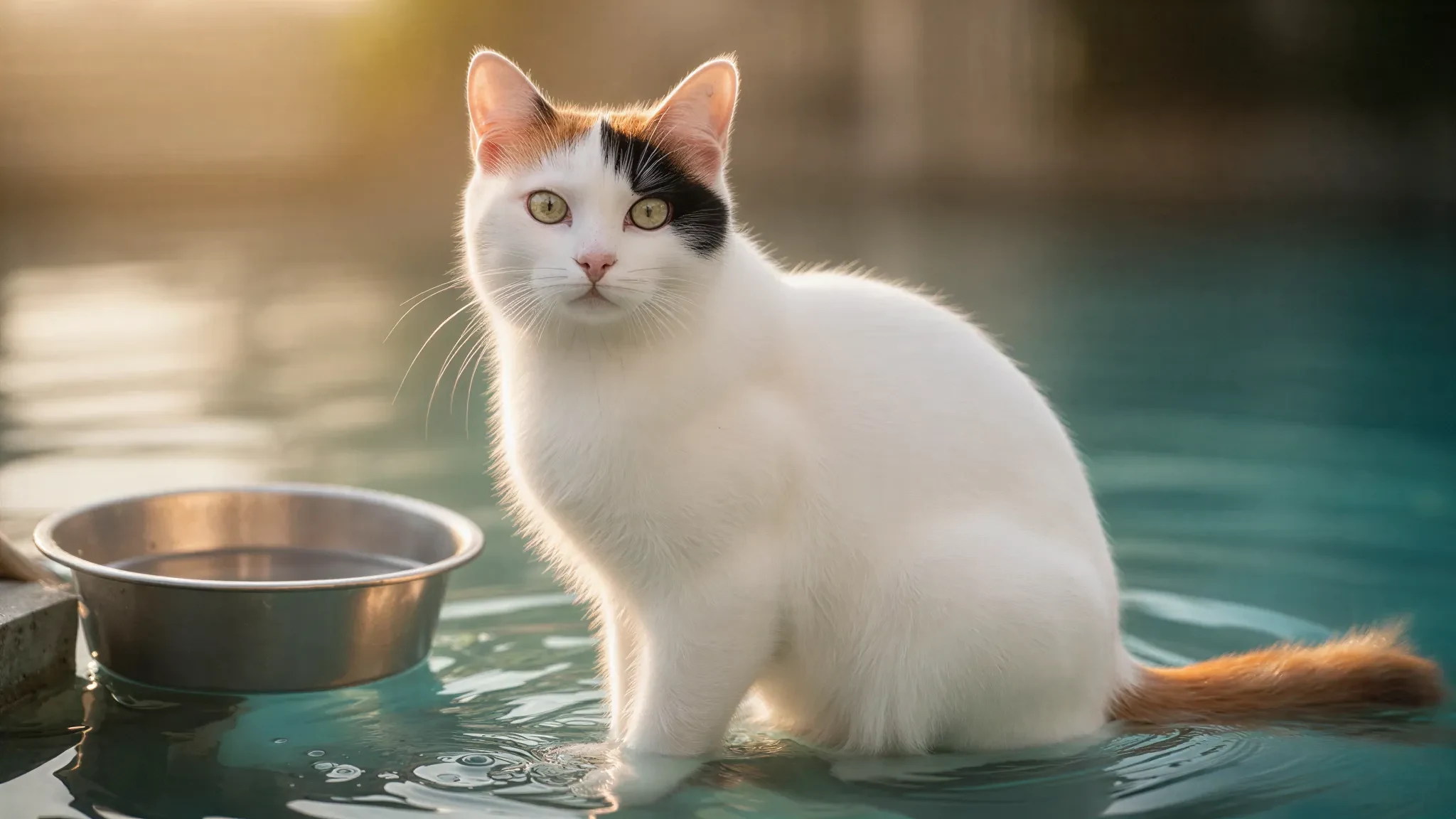
A Turkish Van is a large, substantial, semi-longhaired cat whose color is supposed to live on the head and the tail. The profile on this site lists them as playful, vocal, and independent, medium coat, medium care, 12–17 years, with hypertrophic cardiomyopathy and gingivitis on the health line. The Cat Fanciers’ Association treats the van pattern as this breed’s signature — so much so that other breeds borrowed the word. They take three to five years to finish growing. They are not fond of being carried. If you wanted a white Turkish cat, read the Turkish Angora page before you pay Van money for the wrong silhouette.
Quick Facts
| Attribute | Detail |
|---|---|
| Origin | Turkey (Lake Van region) |
| Size | Large (CFA article: males often 9–20 lb, females 7–12; 3–5 years to mature) |
| Coat | Semi-long, cashmere-like, no undercoat; seasonal |
| Personality | Playful, vocal, independent |
| Lifespan | 12–17 years |
| Care level | Medium |
| Health to ask about | HCM, gingivitis (CFA also says no breed-specific genetic problem is known) |
| Common names | Swimmer, Van, Aqua, Swimmy — jokes. Use real names below. |
History & Origins
CFA: a natural breed from a rugged, climatically varied part of the Middle East. The pattern is the one other people now call “van.” In 1955 Laura Lushington and Sonia Halliday, photographing Turkey for the tourism ministry, were given unrelated Van kittens. The kittens got into the water when the women did. Lushington took them to Britain. GCCF recognized the breed in 1969. CFA’s article quotes her astonishment that they swam out of their depth.
They reached the United States in the 1970s, including with servicemen. CFA accepted Miscellaneous status in May 1988, Provisional in May 1993, and championship in May 1994 for the 1994–95 season. Allowable outcrosses: none.
In Turkey, CFA’s article warns, many people mean a solid white, often odd-eyed Van Kedi — and they will argue with your cage sign. That white cat is closer to what tourists buy on a postcard than to the CFA head-and-tail standard. If a seller in another country is offering a solid white “Van,” you may be looking at a different animal. The Angora page is the other fork.
A van-patterned Maine Coon or Persian is still that breed. The word is a pattern grade. This page is the Lake Van cat.
Personality & Temperament
Playful, vocal, independent. CFA’s daily version: loyal, fetch, puzzle-solvers, not fond of being held, still want to sit next to you when the game is over. Natural-material toys. Paper balls. They talk without being loud. You know they are in the room because you hear them.
CFA says they do well with dogs if introduced, and better with older children who will not haul them around or pull the tail. Independent on our profile is that carrying complaint, not “ignore me.” A large cat who hates being picked up and a toddler who loves carrying cats is a mismatch.
They take three to five years to mature. A year-old Van is not the finished animal. CFA writes the standard for a mature male. Do not decide the breed is “small” at ten months. A young adult who still looks rangy may simply be unfinished. That is also why early championship grands were hard: the kitten class is not the cat in the standard.
CFA says they feel more secure with four feet on a solid surface. That is handling advice for judges and a hint for you: they are not a drape-over-your-shoulder Burmese. Pick them up when you must, put them down on a table or the floor, and do not make carrying the love language.
Indoor Cat Enrichment. They run. CFA’s article is full of moving furniture, flying papers, and a cat who can wedge a sliding door. Space is not optional. A “they swam in Turkey” story does not replace a tree and a hallway.
Physical Characteristics
CFA: solidly built, semi-longhair, broad chest, substantial legs, strength without exaggeration. Broad wedge head, medium nose, prominent cheekbones, slight dip in profile below eye level — not a break. Moderately large ears, well feathered inside. Eyes moderately large, slightly drawn out, amber or blue or odd-eyed. Pink nose leather.
Coat: cashmere-like, soft to the roots, no undercoat. Summer short enough to look shorthaired. Winter longer, with ruff and a full brush tail that gets more obvious with age. Water-repellent. Feathering on ears, legs, feet, belly. Facial fur short.
Pattern: chalk-white body, color on head and tail preferred. CFA’s current standard allows random markings up to 15 percent of the body, not counting head and tail color; more than that and the cat reads as a bi-color, which is a disqualification. Older articles sometimes said 20 percent. Use the live standard, not a yearbook memory. No color from eye level up the back of the head, or no tail color, is also a DQ. Colors include red, cream, black, blue, tabbies, torties; chocolate, lilac, and pointed patterns are hybridization evidence.
I am using CFA’s breed-article weights — males 9 to 20 pounds, females 7 to 12 — as their numbers, not a promise. Hands, not a shipping scale from a blog.
Males are substantially larger, with more neck and shoulder. Allowances for jowls. A petite “Van” adult may be young, female, or not this breed. The brush tail should match the semi-long coat, not a whip.
Eye color on all coat colors: amber, blue, odd-eyed. Pink pads preferred, spots on pads allowed because of the two-color pattern. That is the standard, not a fault you negotiate off the price.
Care Requirements
Grooming
Medium care. No undercoat is the gift. Seasonal length is the catch. Comb when the winter coat is in, especially the trousers and the ruff. Summer may need almost nothing. They still shed. Baths are uncommon in pet homes; the coat dries faster than a double coat, CFA says. This is not a Norwegian Forest blow.
Feeding
Large, high activity, easy to overfeed if the house is snacks and the cat is bored. CFA’s breed-future note: plenty of space and interactive play or they become obese. Use How Much Should I Feed My Cat?. No invented cups. Gingivitis is on our profile; wet food does not replace brushing or a dental vet.
Exercise & Enrichment
Fetch is documented. Paper balls. Height. Room to run. They feel more secure with four feet on a solid surface — CFA says so, which is also why they hate being carried. A walk-up with no tree and a person who wants a lap ornament is the wrong house.
Water: a dripping faucet is a hobby. A swimming pool is an anecdote, not a training plan. Do not test the nickname.
A week in the house: they talk from the hallway, they fetch a paper ball, they sit next to you not on you, they investigate the shower if you leave it open, they knock a pen off the desk when they land. Independent means they have an agenda. Playful means the agenda includes you, on their terms. If you need a cat who usually relaxes when carried, that tendency is associated with the Ragdoll, with individual variation.
The coat in August may look like you bought a shorthair. The coat in January may look like you bought a different cat. Same animal. CFA built seasonal allowance into the standard because Lake Van is not a climate-controlled condo. Do not strip-shave a winter coat because you were surprised.
Health Concerns
CFA’s breed-future paragraph says no specific genetic problems are known, and that large plus active means watch weight. Our profile still lists hypertrophic cardiomyopathy and gingivitis. I am not going to drop those lines because a breed article was optimistic. Ask about hearts. Ask about mouths.
Cornell’s HCM page is the general library. Turkish Van is not on Cornell’s named-breed list. Echocardiograms diagnose HCM. Genetic tests need a veterinarian’s reading.
Cornell’s dental page covers gingivitis: plaque, red gums, pain, bad breath. CFA does not name a Van-specific dental syndrome. Our profile still says ask. Get them used to a mouth check.
Deafness: CFA’s article separates this breed from solid-white blue-eyed cats. Turkish Vans are not solid white. Do not assume an odd-eyed Van is deaf. Do not skip a hearing concern if the cat actually does not hear.
I will not prescribe heart meds or a dental extraction.
Odd-eyed Vans exist on purpose. Amber, blue, or one of each. Eye color may fade with age, CFA says. That is not a disease note. Sudden change plus other signs is a veterinarian.
The no-undercoat coat still needs a comb in winter because “cashmere” mats behind legs if you never look. Medium care is that look, plus the run, plus not scooping them up for a hug they did not request.
Is a Turkish Van Right for You?
This breed fits people who want a large, busy, talkative cat with a head-and-tail pattern, who will not scoop them up every time they walk by, and who can wait years for the finished cat. Houses with floor space. Older kids.
Who should pick a different cat: you, if you wanted a white Angora. You, if you wanted a swimming trick on command. You, if you wanted a kitten who is done growing at a year. You, if you needed a cat who loves being carried. You, if a studio is the whole footprint. You, if a van-patterned Persian was the photo you liked.
Best Cat Breeds for Families with Kids did not make this the easy short-hair. Playful helps. The carrying line still applies.
Apartments: only if there is a real run — a long hall, a tall tree, not a studio with one window. First cat: possible if you like a busy, talkative independent cat and you will not scoop them for cuddles they did not book. Allergies: semi-long seasonal coat still sheds. Cashmere is a texture, not a filter.
Water bowls: some of them drop toys in. That is in CFA’s article. A fountain is optional. A towel is not.
Finding a Turkish Van
Still a small fancy. Waiting for a color is normal. A serious breeder talks about the three-to-five-year clock, shows you adults, and does not dunk kittens. Ask about hearts and teeth anyway.
Rescue gets van-patterned mixes. An adult whose run you can see is better information than a kitten with two auburn spots.
Red flags: solid white sold as CFA Van, a Persian with a van pattern sold under this URL, Swimmy as the contract name, kittens at six weeks, a seller who insists every Van swims.
GCCF recognized them in 1969; CFA championship waited until 1994. That lag is why older British books and newer American listings can sound like different cats. They are not. The pattern and the no-undercoat coat are the through-line. The swimming nickname is the press through-line. Believe the first. Treat the second as optional.
Adopting vs. Buying from a Breeder still applies.
Popular Turkish Van Names
The profile lists Swimmer, Van, Aqua, and Swimmy. Those are jokes.
River — nature, flowing water
Pearl — nature, gem from a shell
Ruby — Latin, red gemstone; auburn head marks
Luna — Latin, moon
Oliver — English, olive tree
Milo — German, merciful
Willow — English willow tree
Felix — Latin, happy, lucky
Oscar — Irish, god spear
Maple — nature, maple tree
More on Turkish Van cat names and the Name Generator. Skip Swimmy.
Frequently Asked Questions
Do Turkish Vans really swim?
Some do. CFA’s breed article traces the ‘swimming cat’ nickname to Laura Lushington’s 1955 kittens in Turkey, who followed her into water. Indoor American Vans are a different experiment. Intrigued by faucets, yes. A guaranteed pool hobby, no. Do not dump a cat in a pool to check.
Is a Turkish Van the same as a Turkish Angora?
No. Different body, different pattern job. In Turkey, people often mean a solid white odd-eyed Van Kedi when they say Van cat. CFA’s Turkish Van is chalk-white with color on the head and tail. The Angora page is the other Turkish breed on this site. Do not buy both URLs’ worth of kitten.
What is van pattern?
Color on the head and tail, white body. The fancy borrowed the word from this breed. A van-patterned Persian is still a Persian. CFA’s Turkish Van standard prefers that pattern and allows random body markings up to 15 percent of the body; too much color and it looks like a bi-color, which is a disqualification.
Are Turkish Vans good with children?
Best with older kids. CFA says they are not fond of being held or carried, get along with dogs if introduced, and do best with children who will not pull that colored tail. Our profile is playful, vocal, and independent. Supervise. A large, busy cat is not a toddler’s carry-around toy.
How much grooming does a Turkish Van need?
Medium care on a semi-long coat with no undercoat. Summer coat can look almost short. Winter coat is longer. Cashmere-like, water-repellent, CFA says dirt does not cling. They still shed. Comb when the coat is long. This is not a Forest Cat blow, and it is not a British Shorthair wipe-down.
Watch them run. Then look at the adults. The Turkish Van gallery is here if you want the pattern before you book the visit.
Ask to pick them up once, then put them down. CFA already told you they would rather have four feet on a table. If they explode, believe it. If they tolerate it and then go sit next to you, that is the breed working as advertised. A cat who melts into a carry is a different URL.
Start showing, if you show, in kitten class the way CFA’s article recommends, so the cat learns the hall is not a threat. Pet homes can skip the ring and still handle the kitten often. A Van who only meets people at twelve weeks will treat a guest like a sliding door: a problem to solve with muscle. That is preventable. It is not a swimming issue. Handle the kitten. Skip the pool. The nickname will survive without a demonstration today.