
Oriental Shorthair Cat Breed Guide: Personality & Care
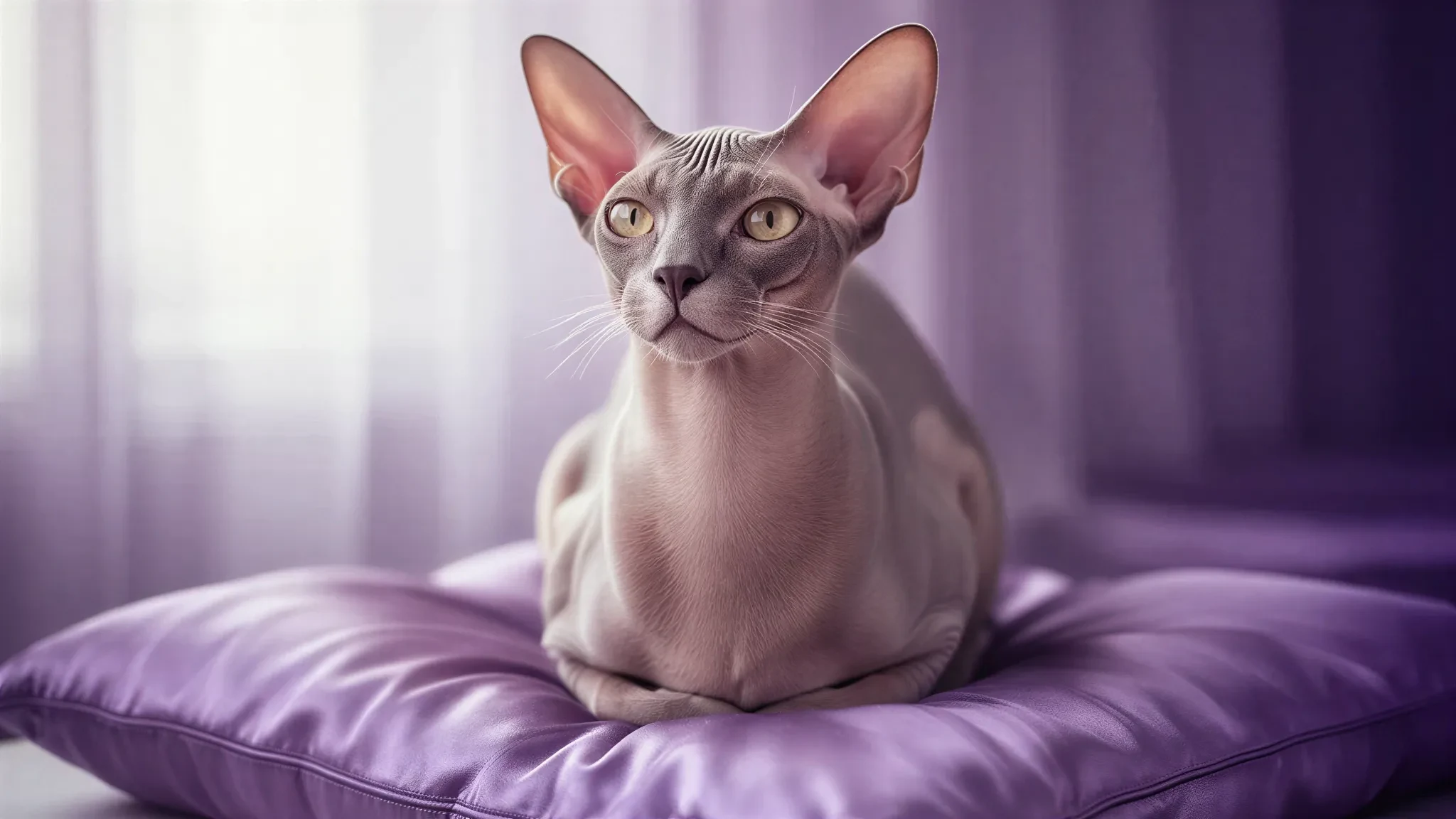
An Oriental Shorthair is a svelte, wedge-headed, people-centered cat with Siamese bones and a paint-box coat. The profile on this site lists them as vocal, social, and intelligent, short coat, low care, 12–15 years, with progressive retinal atrophy and liver amyloidosis on the health line. The Cat Fanciers’ Association’s first sentence is design: from the nose to a whippy tail, Siamese roots without being stuck on seal point. If you wanted the pointed opera, that is the Siamese. If you wanted a quiet independent short-hair, this is the wrong wedge.
Quick Facts
| Attribute | Detail |
|---|---|
| Origin | United States (from European Siamese-type programs) |
| Size | Medium (svelte; not fat) |
| Coat | Short, fine, close; CFA also shows a longhair division |
| Personality | Vocal, social, intelligent |
| Lifespan | 12–15 years |
| Care level | Low (coat). High people-demand. |
| Health to ask about | PRA, liver amyloidosis |
| Common names | Shadow, Midnight, Smokey, Luna |
History & Origins
CFA: the look started in Europe in the 1950s. England’s Governing Council of the Cat Fancy first took chestnut, lavender, and white solids — Havanas, lavenders, and foreign whites in the language of that era. Other colors showed up in the 1960s and 1970s when American breeders started treating the Siamese body as a canvas instead of a pointed-only product. Oriental Shorthairs International was the club that pulled those people into one CFA petition. Registration 1974. Championship 1977, effective May 1. In 1988 the longhair cats were accepted and the breed name became Oriental, with two coat divisions shown separately.
This page’s URL is the shorthair. A silky plume tail is the other division, not a Balinese. Balinese is the pointed longhair Siamese-type. An Oriental longhair is a non-pointed (or many-colored) cat with a medium, silky coat and no downy undercoat. If the seller cannot tell those two stories apart, you are shopping a photo.
Shorthair outcrosses: Siamese or Colorpoint. CFA stopped registering pointed-to-pointed Oriental litters born after June 15, 2010 — any pointed Oriental × Siamese, Colorpoint, or pointed Oriental. Longhair-division outcrosses still list Siamese, Colorpoint, Balinese, or Javanese. Imports from other registries can land as Oriental AOV. That is paperwork, not a reason to call every pointed kitten a Siamese. Ask what the registration actually says.
Pointed Orientals had a messy decade in the 1980s when some of them were shown as Colorpoints. CFA later created a pointed Oriental path of its own. I am not going to relitigate club politics. If the kitten is pointed, you need the association’s current class, not a 1984 anecdote.
They are not an ebony Domestic Shorthair with big ears. Wedge, whip tail, and the conversation are the breed. A Tonkinese is the moderate in this family: mink, aqua, less extreme. If you wanted that middle, do not buy this wedge because the coat came in chestnut.
Personality & Temperament
Vocal, social, intelligent. CFA’s household version is needy in the honest sense: they examine the toothbrush, help with the shoelaces, and have an opinion about breakfast in the refrigerator. Then they sit in your lap when you stop moving. Give them attention and they try to please. Withdraw it and they may pine. That sentence is why this is a bad cat for a person who wanted a decoration.
Conversation is part of the product. CFA: they will share thoughts on pretty much everything. Not every Oriental is a Siamese siren. Enough of them talk that “low care” on the coat will not save you from 6 a.m. opinions. If you wanted a tiny voice, that is a Chartreux, not this wedge.
They fetch. They recruit dogs. They shift laps. CFA calls them wonderful family pets. An adult still runs introductions. Large ears are not handles. A toddler who treats the wedge as a triangle to grab will meet a cat who already has opinions. Supervise.
Intelligence here means they learn the cabinet latch. It does not mean they will amuse themselves for ten hours with a ball. A bored Oriental invents a job: the bread, the screen, the other cat’s tail. Indoor Cat Enrichment is how you keep the wedge off the keyboard. A second Oriental or a very social other cat is a real option, not a cute idea. Two needy cats in an empty apartment is still an empty apartment.
A week in the house: morning commentary, a person to follow from room to room, a window they can actually sit in, an evening of fetch-the-feather, a lap if you sit still, and a closed guest room only if you need one — they would rather be where you are. If you work twelve-hour days and thought a short coat meant a self-employed cat, read CFA again. Bringing Home a New Cat still applies; a people cat in a bathroom for a week will tell you about it. That is not a defect. That is the breed you bought.
Strangers: they are people-centered, not automatically every-visitor-centered. Some Orientals will interview the plumber. Some will yell from the bedroom. Meet the adult. A kitten who is “so sweet” in a carrier is not the 2 a.m. version.
Physical Characteristics
CFA: svelte, long tapering lines, lithe and muscular, not bony, not flabby, not fat. Head a long tapering wedge that makes a triangle from nose to ear tips, no whisker break, flat skull, straight profile, no nose dip. Ears strikingly large, pointed, wide at the base, continuing the wedge. Eyes almond, slanted, uncrossed. Body tubular, hips not wider than shoulders. Tail long, thin, tapered — a whip. Coat short, fine, glossy or satin, lying close. Painted-on is the word people use because you can see the muscle.
The longhair division: medium length, silky, no downy undercoat, longest on a plume tail. Softer outline. This URL is still the shorthair owner. If the kitten in the carrier has a plume, you are shopping the other division.
Eye color is not “whatever.” CFA wants green on most of the color classes. Pointed cats want blue. White and bi-color can be blue, green, or odd-eyed. Incorrect eye color is a penalty. Crossed eyes are a penalty, then a problem if someone is selling them as type. A Siamese-family wedge with crossed eyes is not the ideal. Do not let a seller tell you it is.
CFA says the Oriental’s reason for being is coat color: solid, shaded, smoke, parti-color, bi-color, pointed, or tabby. Ebony is black in this language. Chestnut is rich brown. Lavender is the dilute. Cinnamon is warmer and redder than chestnut. White happens. Tabby happens in classic, mackerel, spotted, and ticked. Smoke looks solid until they move. No one needs the full 150-color inventory to choose a cat. Most breeders keep a handful. If you wanted a specific ebony silver ticked tabby, CFA already warned you there may be a wait.
Disqualifies include mouth breathing from a bad bite or blocked nose, visible tail kink, lockets and buttons, charcoal color, a rosetted pattern, miniaturization, weak hind legs, and — in the longhair division — a true double coat. Eight pointed colors are a longhair-division DQ as those colors. I am not judging your pet. I am saying a locket is not a cute bonus on a show kitten.
I am not printing a fake weight. Medium and svelte. If they feel plump, the standard already told you not fat. Feel the ribs. A tubular body plus free feeding is how the wedge disappears.
Care Requirements
Grooming
Low care. Painted-on coat. A rubber brush when they shed. They still shed; the hair is just shorter. The longhair division needs more comb than this page’s profile — a wide-tooth pass down the plume, not a Persian session, because CFA does not want a downy undercoat. This URL is still the shorthair. Nails, ears, teeth. Large ears collect wax like any other ear. Look. A satin coat that looks greasy is a cat who has not been touched, not a color class.
Feeding
A svelte, active, people-oriented cat in a snack house gets a pot belly the standard does not want. Use How Much Should I Feed My Cat?. Weigh them. No invented cups. Wet food helps any cat drink. Amyloidosis is on the health line; I will not invent a diet that prevents it. Unusual thirst, yellow gums, a cat who stops eating, or a swollen belly is a veterinarian the same week, not a wedge personality.
Exercise & Enrichment
Social and intelligent means a job. Fetch the feather, CFA says. A tree they can actually use. Height they can land from. A person who will throw the thing back. A bored Oriental will open the refrigerator because CFA already told you they help with breakfast. That is a joke until it is leftovers on the floor. A laser they never catch is a worse sport: ankles at 5 a.m. and the other cat’s food. Medium people-time is the real care level. The coat was the easy part.
Health Concerns
PRA and liver amyloidosis are the two profile lines. CFA agrees on both.
PRA: recessive, can cause blindness, genetic test exists. Carriers can be kept out of the pool or bred only to clear cats. Ask for tests, not a shrug. I am not going to describe the retina as if I ran a clinic. Night-bumping into furniture, pupils that look wrong, or a breeder who has never heard of PRA is the conversation.
Amyloidosis: CFA says liver and other issues, genetic and acquired, markers still being researched. Breeders who are serious police relatives. Ask whether anyone in the line developed it. A “we don’t see that” with no records is not a test. I will not invent a blood panel that does not exist yet.
Cornell’s feline health center is the general library. I am not going to dump every Siamese-adjacent disease onto this page. Crossed eyes are a penalty in the standard, not a cute Oriental look. A kinked tail is a DQ. Those are structure. If the kitten’s eyes are crossed, you are not looking at the ideal, and you should not be told it is “breed type.”
Mouth breathing is a DQ because a bad bite or a blocked nose is a health problem, not a wedge look. Weak hind legs are a DQ. Emaciation is a DQ. CFA’s “most Orientals are healthy” line is popularity, not a warranty.
I will not prescribe eye drops or a liver protocol. Pet insurance is a household decision. CFA mentions it on the breed page; I am not selling a policy.
Is an Oriental Shorthair Right for You?
This breed fits people who want a talkative, lap-adjacent, colorful wedge and will be home enough to feed the need. Households that like fetch. People who will ask about PRA and amyloidosis. People who can wait for a color.
Who should pick a different cat: you, if you wanted a silent fridge cat. You, if you wanted a Siamese and thought ebony was a discount. You, if a studio plus a ten-hour job is the whole plan. You, if large ears on a toddler’s height make you nervous and you will not supervise. You, if you wanted a Tonkinese moderate instead of this extreme. You, if a plume tail was the whole photograph and you have not read the Balinese page. You, if you believed a short coat meant a low-maintenance personality.
Best Cat Breeds for Families with Kids is the family-fit owner. An Oriental can live with kids. The pine-without-attention line still applies. A family that is home in shifts can work. A family that is gone until bedtime usually cannot.
Apartments work if you play. Allergies: short coat still sheds. First cat: loud, educational, not a starter statue. If you have never lived with a talking cat, sit with an adult Oriental for an hour before you put money down. The voice is the product.
Finding an Oriental Shorthair
Colors are a wait. CFA says most breeders concentrate on a few colors or patterns, so a specific chestnut smoke or a white with odd eyes is a calendar, not a weekend errand. A cat show is still the usual way to meet more than one wedge in a day. A serious breeder talks PRA tests and amyloidosis in the lines, shows you the adults moving, and can explain pointed paperwork after 2010. Ask to hear the cat. A silent Oriental in a cage for ten minutes is a sales technique.
Ask, out loud: PRA tests on the parents? Any amyloidosis in relatives? What happens if I work late three nights this week? Can I see them fetch? Who do they pine for?
Rescue gets Oriental mixes and the occasional registered adult. An adult whose voice you can stand is better information than a chestnut kitten photo. A mixed wedge-faced cat in a shelter is not automatically this breed. Meet the individual. What Breed Is My Cat? is the guess owner.
Red flags: crossed eyes sold as type, no PRA talk, a pointed kitten with no papers called a cheap Siamese, a plume kitten sold under this shorthair URL as if coat length were optional, kittens going home at six weeks.
Adopting vs. Buying from a Breeder still applies.
Popular Oriental Shorthair Names
The four names on the profile are ordinary on purpose, because the cat is already a conversation:
Shadow — English, shadow
Midnight — English, middle of the night
Smokey — English, gray colored
Luna — Latin, moon
Milo — German, merciful
Oliver — English, olive tree
Willow — English willow tree
Iris — Greek, rainbow
Onyx — Greek, black gemstone; ebony coats
Felix — Latin, happy, lucky
Cinder — English, burnt remnant; smokes and lavenders
More on Oriental Shorthair cat names and the Name Generator.
Frequently Asked Questions
Is an Oriental Shorthair just a Siamese without points?
That is the breeding idea. CFA describes a svelte, wedge-headed cat with Siamese roots, shown in a huge range of colors and patterns, plus a longhair division. A pointed Oriental is a paperwork and outcross conversation, not a shortcut Siamese. If you wanted seal-point opera, read the Siamese page.
How many colors do Oriental Shorthairs come in?
A lot. CFA says more than 150 colors and patterns, and more than 600 combinations once you count coat length. Our profile says 300-plus. Listing them all would not help you choose. Ebony, chestnut, lavender, white, tabby, smoke, bi-color — the wedge is the breed. Color is the menu.
Are Oriental Shorthairs good with children?
They can be. CFA says they make wonderful family pets and will shift laps or recruit other animals for fetch. They also pine without attention. An adult still owns the house. A vocal, needy cat and a toddler who grabs ears are a mix you supervise, not a slogan.
Do Oriental Shorthairs need a lot of grooming?
Low care on a short, fine, close coat. A rubber brush. The longhair division is a different comb and a different CFA class; this URL is the shorthair. Low coat work is not low people work. They still need nails, ears, and teeth.
What health tests should an Oriental breeder show me?
Ask about progressive retinal atrophy. CFA says it is recessive and detectable by genetic test. Ask about amyloidosis in the lines — liver and other organs; genetic and acquired, research ongoing. Treatment is your veterinarian’s call. Cornell’s feline health library is the general backup when a problem shows up.
Meet the adult talking. Then look at the eyes. The Oriental Shorthair gallery is here if you want the wedge before you book the visit. A second visit, after they have decided you are theirs, is the needy-cat version of a temperament test.